

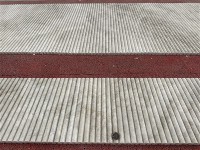
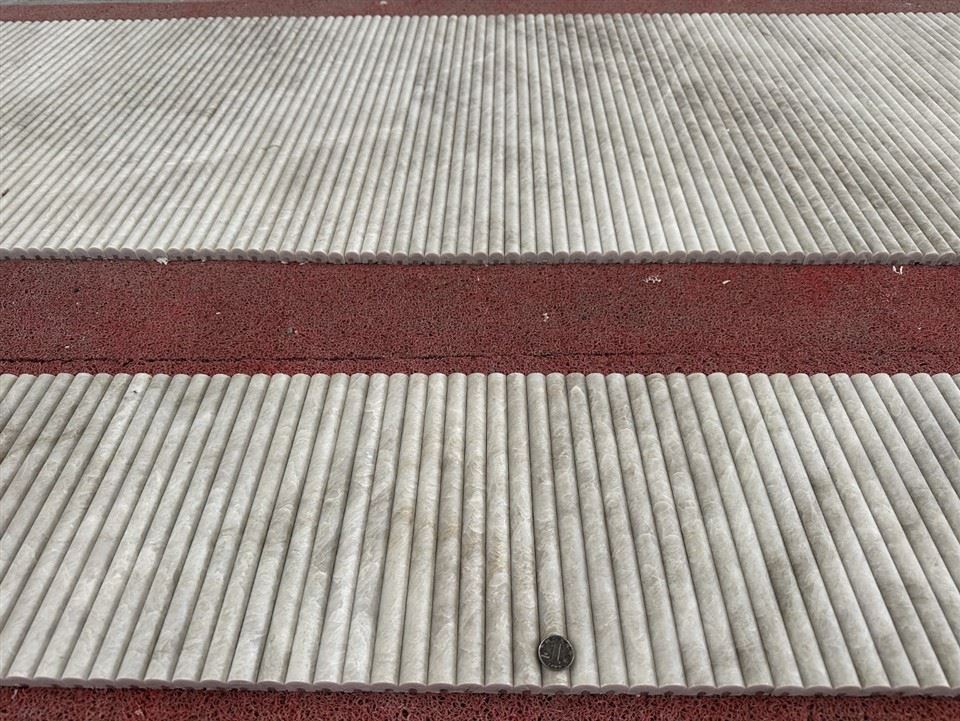

Rows of finished Taj Mahal Quartzite long fluted tiles after water-based protective treatment and before packing
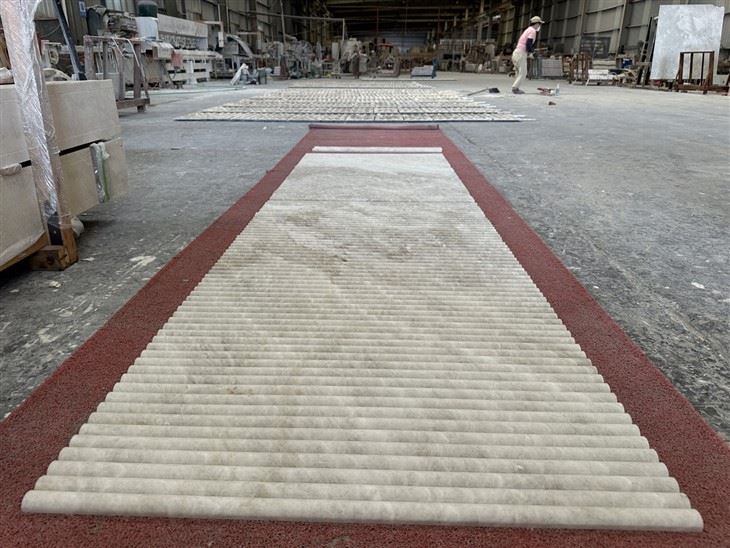
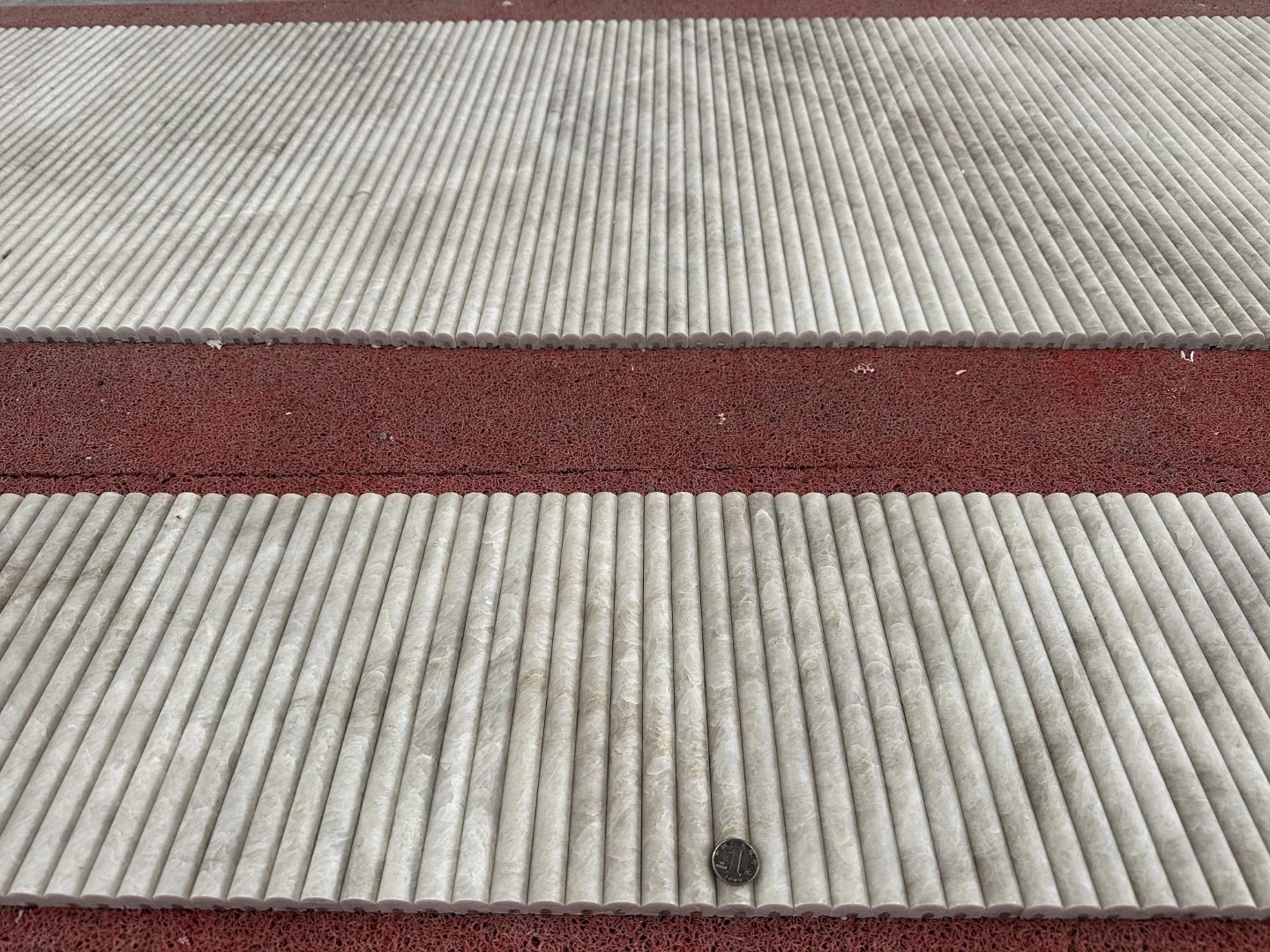
Factory dry layout of Taj Mahal Quartzite long fluted tiles for quality inspection and coordinated vein sequencing
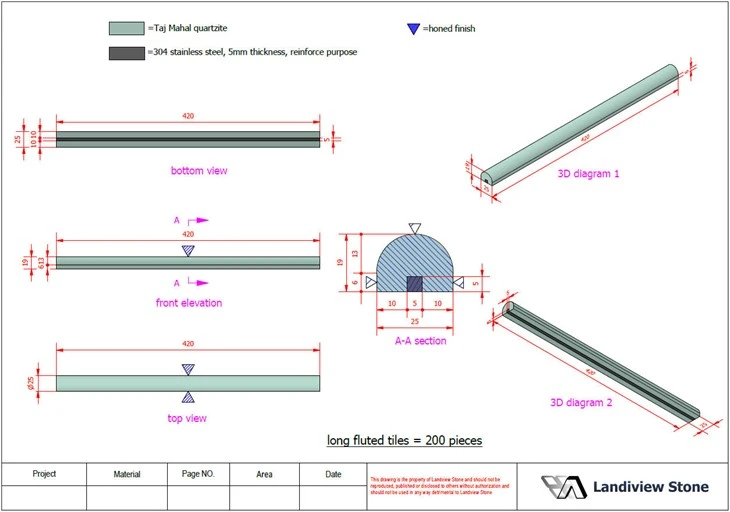
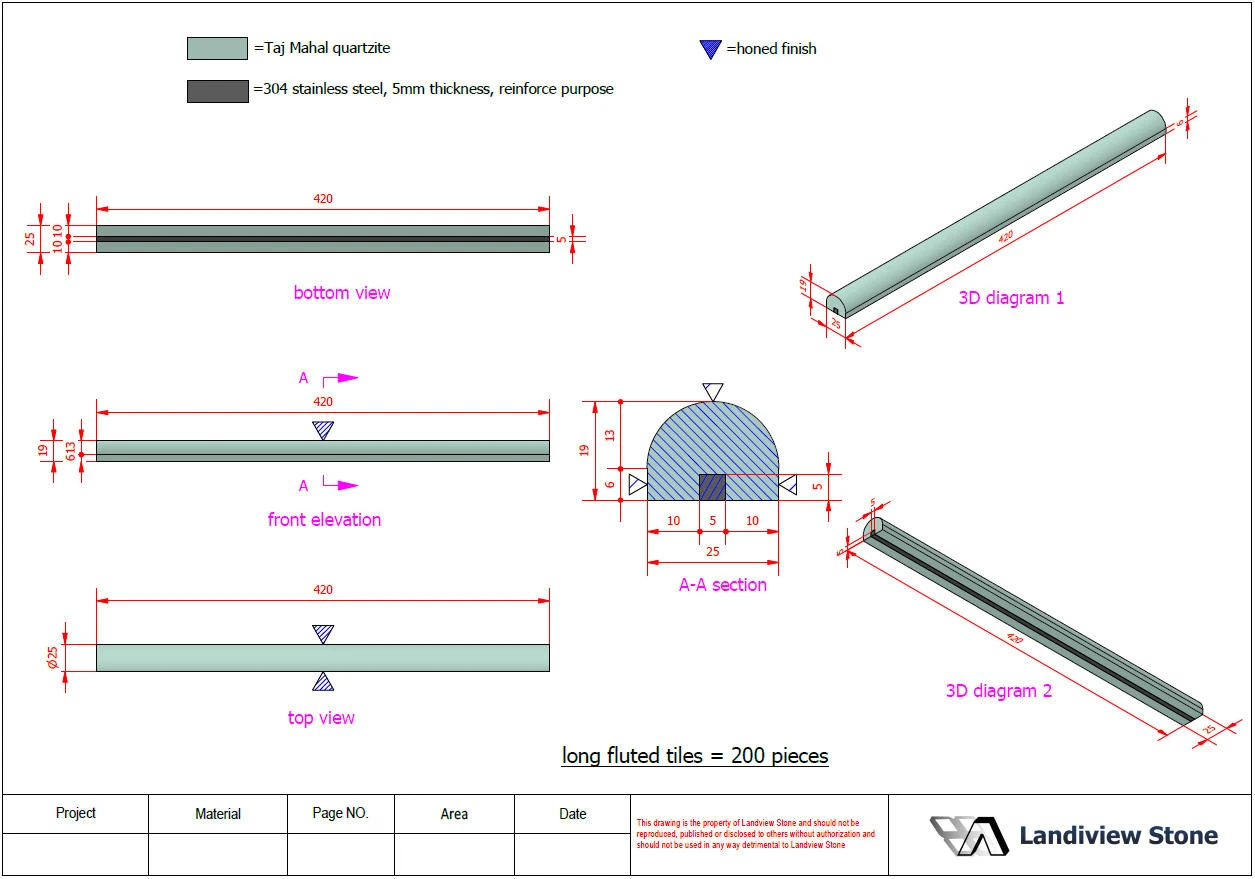
Landiview Stone shop drawing for 420 mm Taj Mahal Quartzite long fluted tiles with honed finish and 304 stainless-steel reinforcement
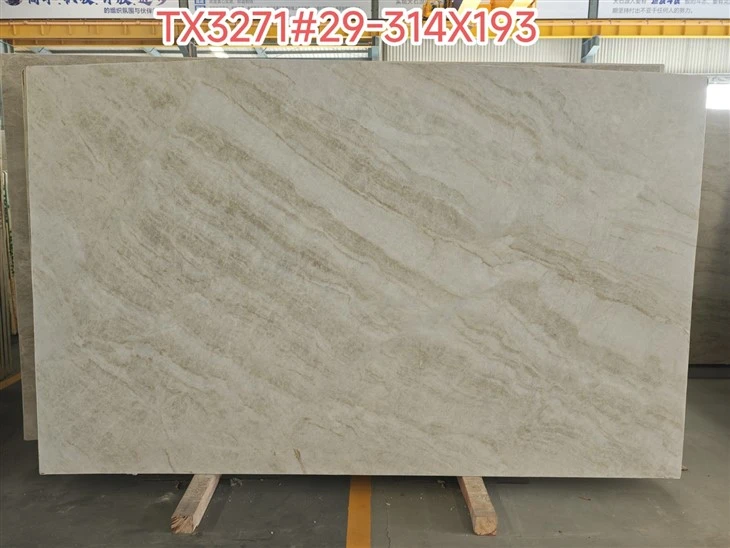
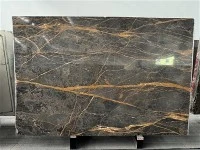
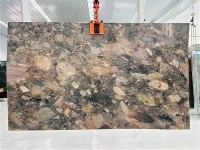
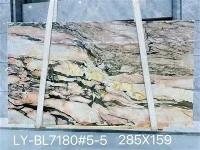
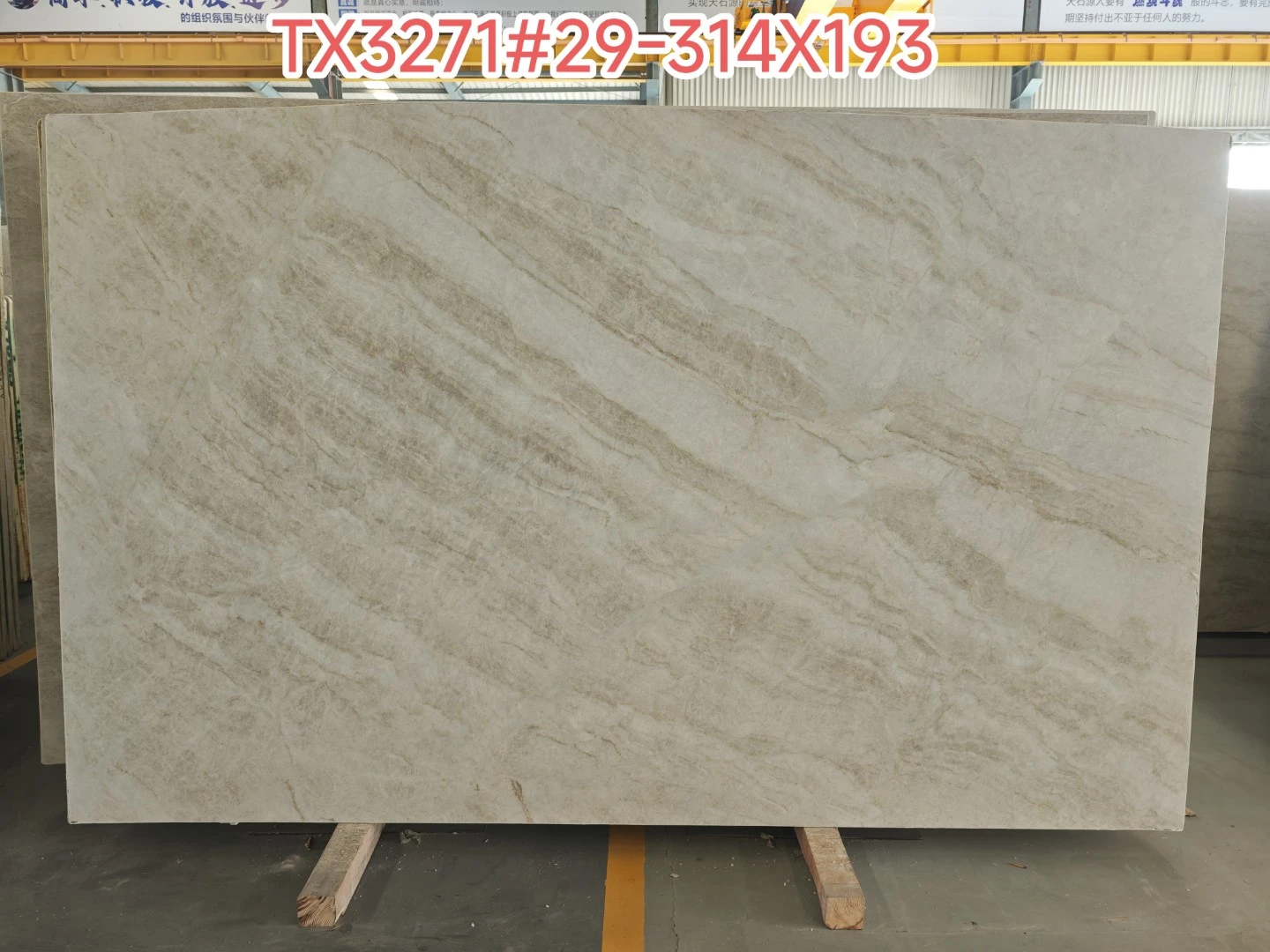
Full Taj Mahal Quartzite slab presented for client approval before cutting long fluted tiles
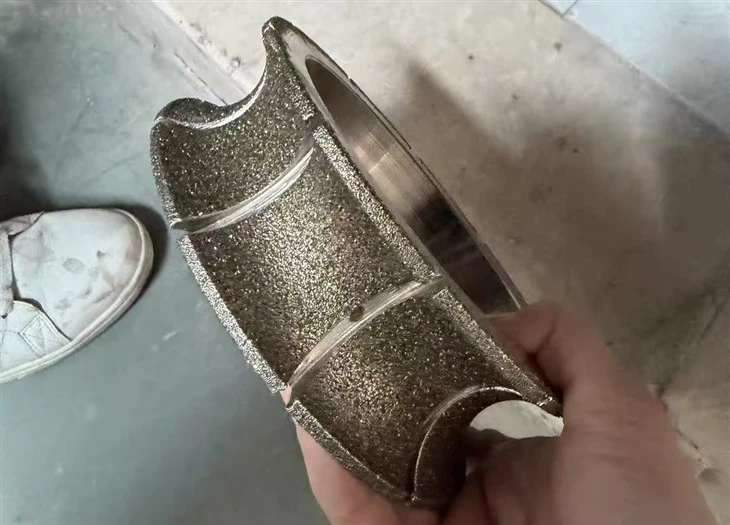
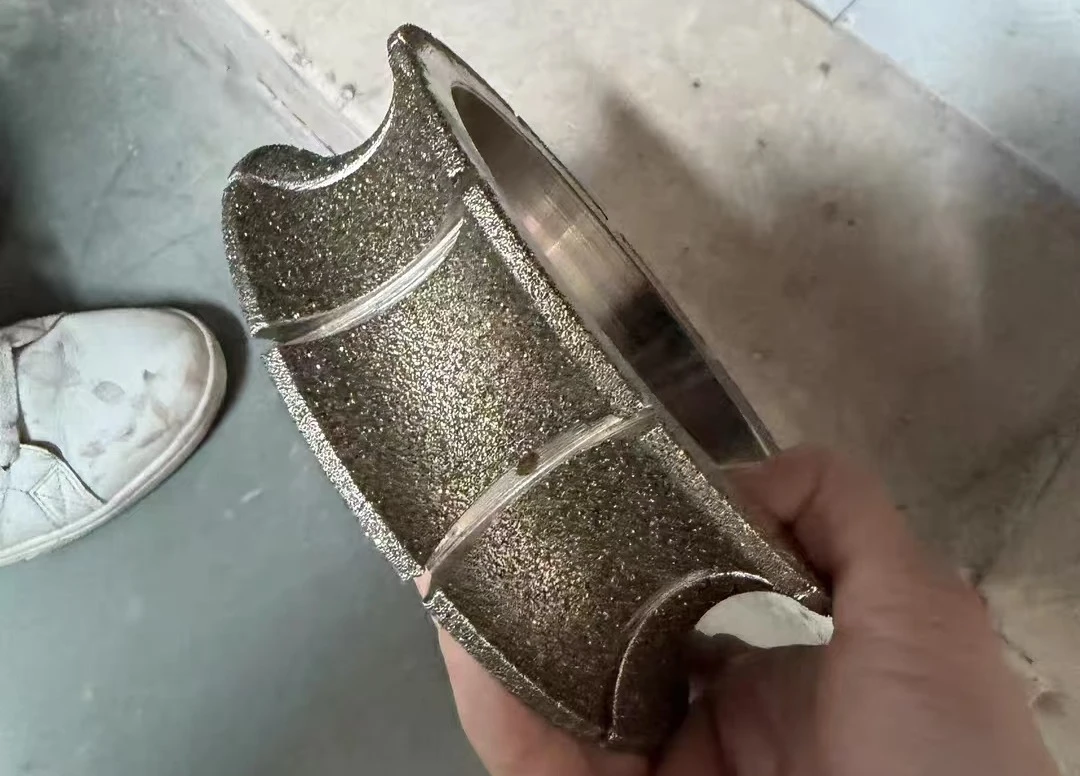
Custom metal-bonded profile wheel manufactured to form the approved curved fluted tile section
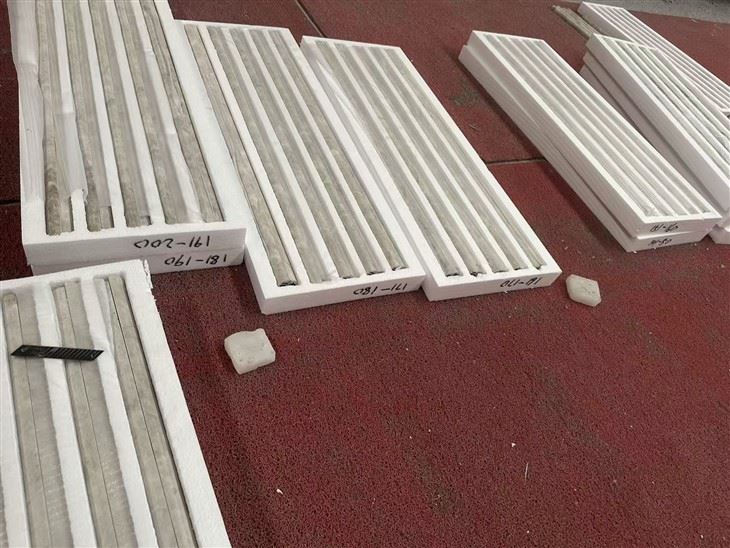
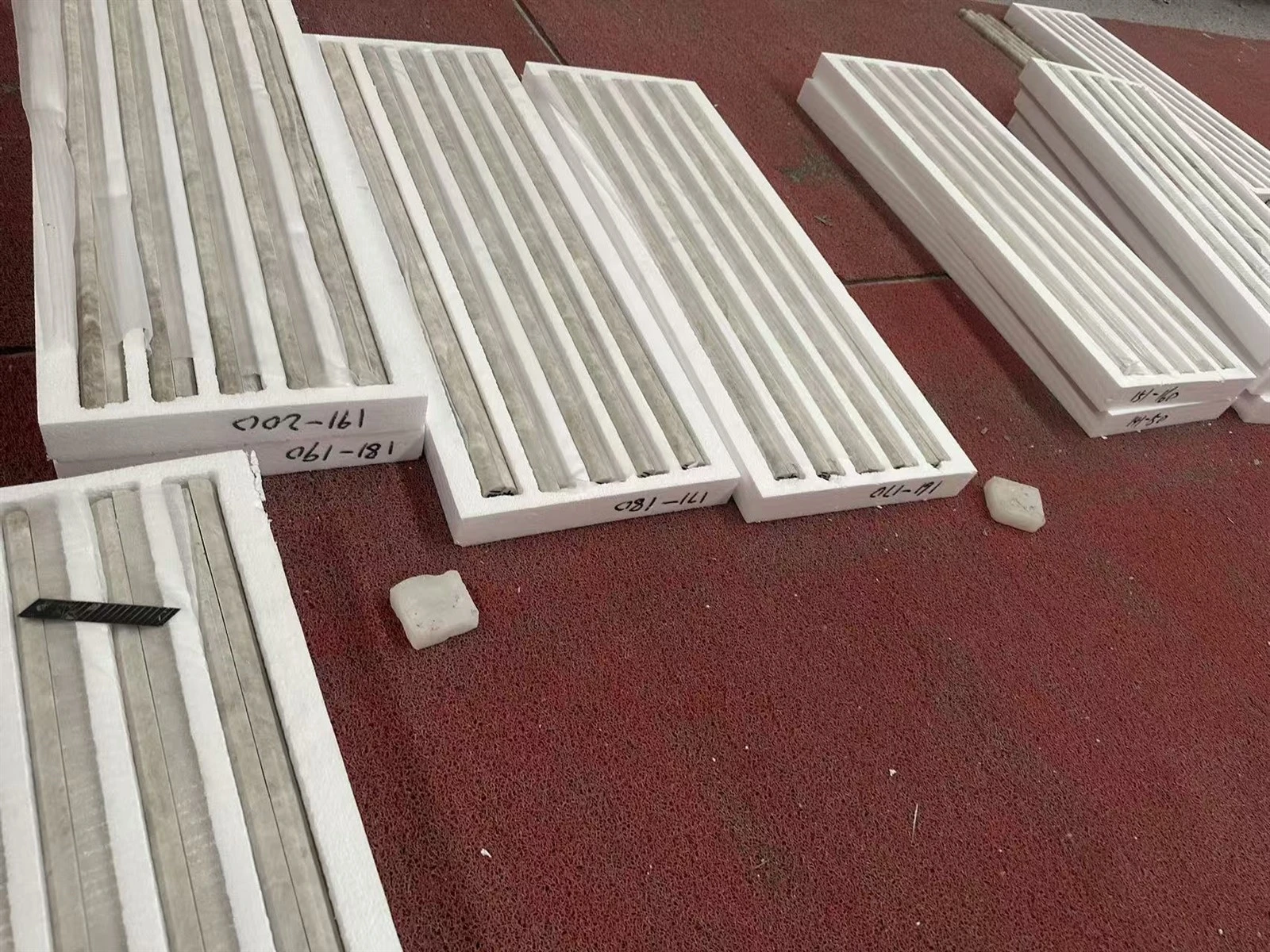
Finished Taj Mahal Quartzite long fluted tiles separated and protected in custom grooved foam trays
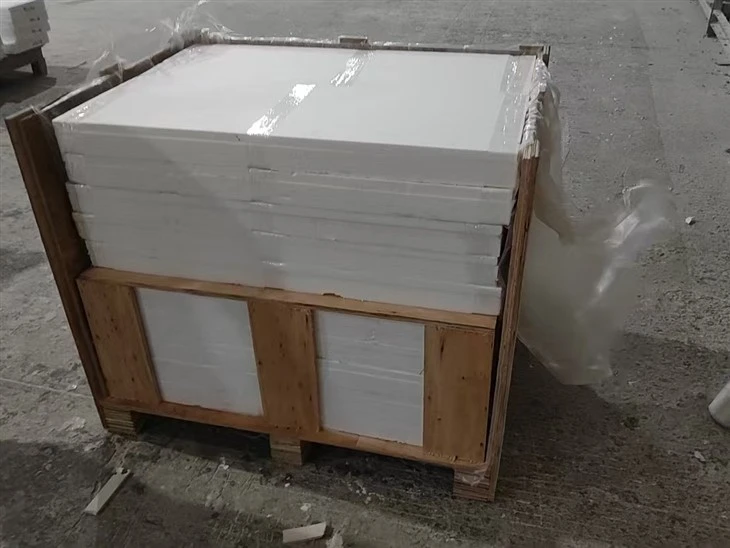
Custom foam-packed long fluted tiles supported with plywood inner protection before crating
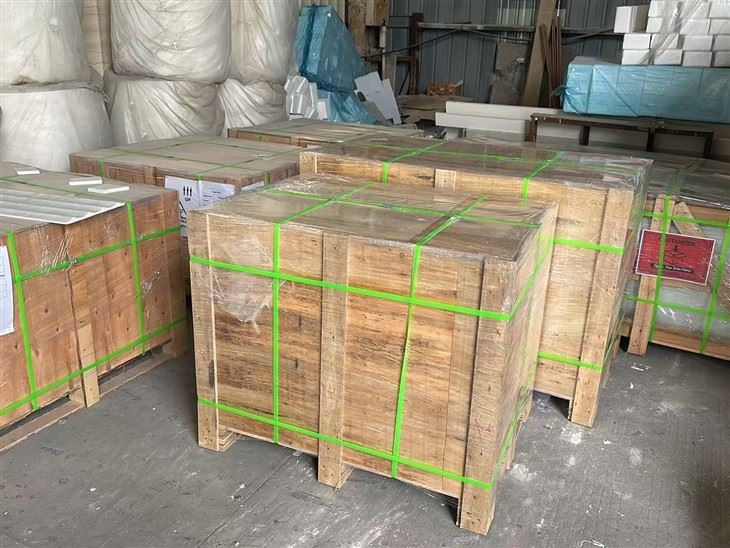
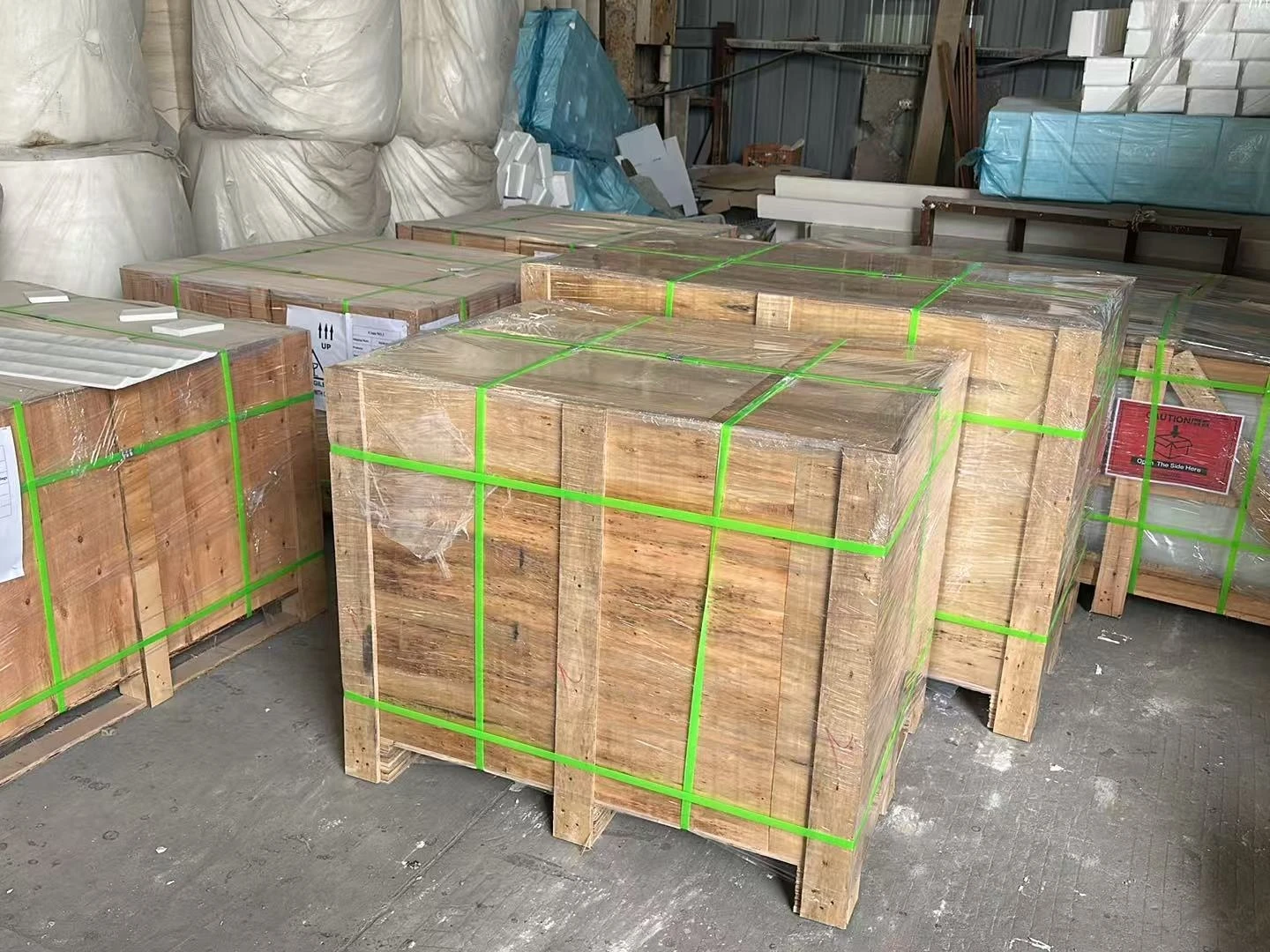
Solid-wood export crates secured with straps and waterproof wrapping for Taj Mahal Quartzite long fluted tiles
Taj Mahal Quartzite Long Fluted Tiles
- Fast Delievery
- Quality Assurance
- 24/7 Customer Service
Executive Summary
For an installation that reads as one coordinated stone composition, long fluted tiles should be cut from approved Taj Mahal Quartzite slabs rather than purchased as unrelated individual strips. Slab-based production allows vein direction, color movement and replacement pieces to be planned as part of the complete installed surface.
Taj Mahal Quartzite long fluted tiles are narrow, profiled natural-stone components designed to create a continuous ribbed surface. Typical applications include feature walls and the curved returns of kitchen islands, bars, reception desks and other architectural elements.
The example documented here comprises 200 honed pieces. The approved shop drawing shows a nominal size of 420 × 25 × 19 mm and a concealed 5 mm 304 stainless-steel reinforcing element. Dimensions, finish, profile and reinforcement remain project-specific and must be confirmed in the approved shop drawings.
Key Facts
| Item | Project Information |
| Product | Custom Taj Mahal Quartzite long fluted tiles |
| Reference order quantity | 200 pieces |
| Reference piece size | Approximately 420 × 25 × 19 mm, subject to approved shop drawings |
| Finish | Honed visible surface in the documented order |
| Material source | Cut from client-approved Taj Mahal Quartzite slabs to coordinate color and vein movement |
| Typical applications | Feature walls, curved island corners, bar fronts, reception features and custom furniture surfaces |
| Profile control | Custom profile wheel manufactured from the approved section |
| Breakage-risk control | Concealed 304 stainless-steel reinforcement embedded in the back because the narrow, elongated geometry has a high aspect ratio |
| Quality control | Piece inspection, full dry layout, visual sequencing and replacement-piece matching |
| Surface protection | Water-based protective treatment used for the documented order; the exact product and maintenance plan depend on project requirements |
| Export protection | Custom foam trays, plywood inner support, solid-wood crates, strapping and waterproof wrapping |
Why Slab-Based Production Matters
Long fluted tiles are normally installed side by side rather than used as isolated pieces. On a feature wall or around a curved island corner, the eye reads the group as one surface. Cutting from approved slabs makes it possible to coordinate background tone, vein direction, mineral movement and replacement pieces across the complete layout.
A small sample can confirm the basic color family and finish, but it cannot represent the full movement of a large natural slab. Current slab photographs, videos, slab numbers and the agreed appearance range should therefore be reviewed before production. ASTM guidance also recognizes that natural color and texture variation should be established using representative samples. [1]
Production Workflow
Digital layout predicts the planned appearance; factory dry layout verifies the actual fabricated pieces. Both stages help align the approved vein layout with the expected installed composition.
1. Review the client's design intent and prepare stone-specific shop drawings showing dimensions, profile, finish, visible surfaces and concealed reinforcement.
2. Submit current Taj Mahal Quartzite slab images, videos and slab identification for client approval, subject to actual availability.
3. After drawing and slab approval, coordinate the cutting and vein-layout plan before physical cutting. Approved slab imagery may be used in AutoCAD to plan piece locations and visual relationships.
4. Manufacture a custom profile wheel from the approved fluted section and use it to form a repeatable curved profile.
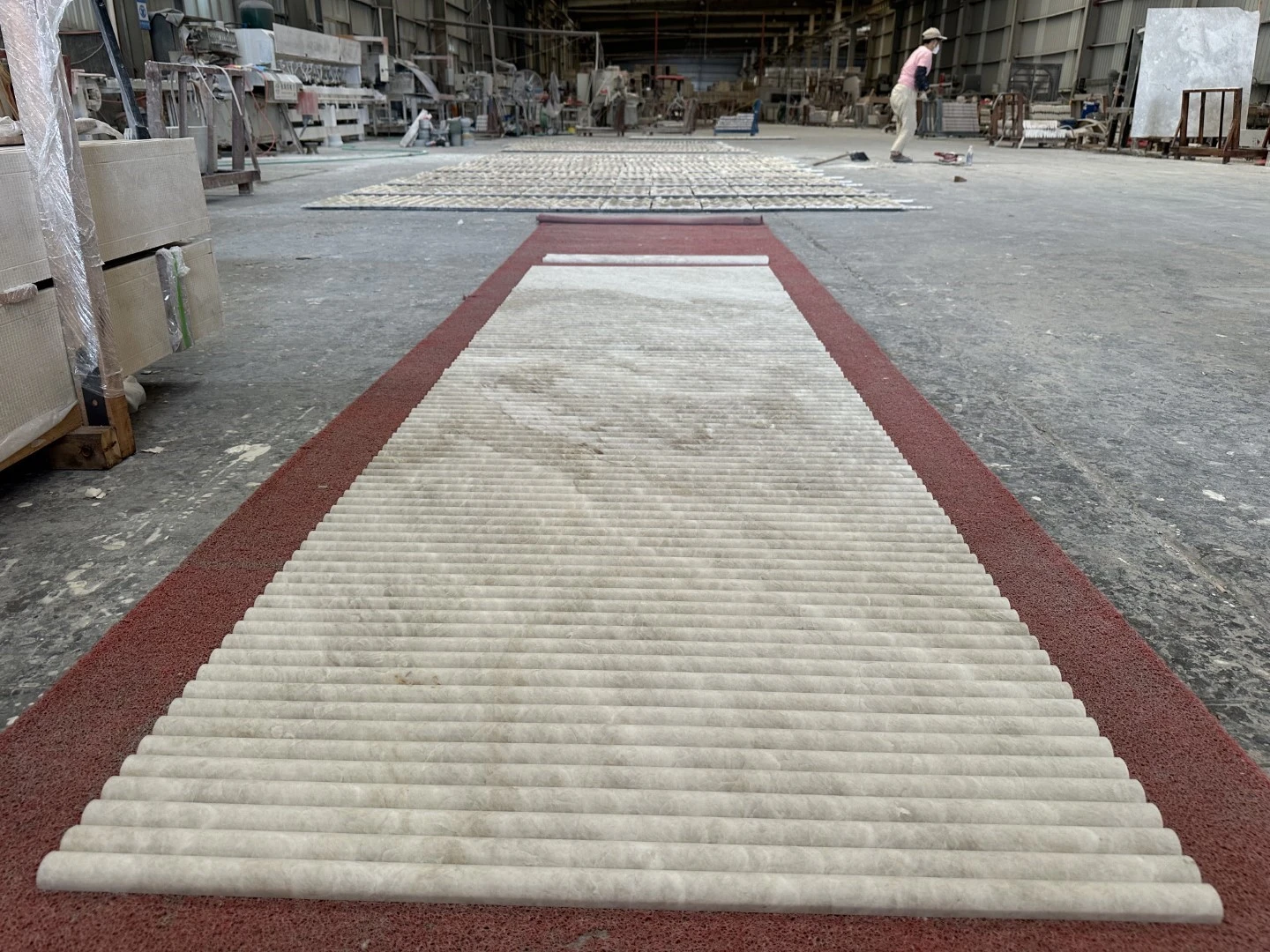
5. Dry lay the fabricated pieces in their intended relationship. Inspect profile consistency, finish, edges, color range, vein sequence, open or unstable fissures and fabrication damage.
6. Remove nonconforming pieces and cut replacements from suitable remaining slab areas, considering the adjoining color and vein movement rather than size alone.
7. Embed the specified 304 stainless-steel reinforcing element in the back and apply the approved water-based protective treatment used for this order.
8. Place inspected pieces in custom grooved foam trays, add plywood inner support, and load the protected units into solid-wood export crates with strapping and waterproof wrapping.
Reinforcement and Breakage-Risk Control
Long fluted tiles combine relatively long length with narrow width, creating a high aspect ratio and limited cross-section. Even though quartzite is hard, hardness does not mean that an elongated fabricated component cannot chip or break during handling, packing or installation.
For the documented design, a concealed 304 stainless-steel reinforcing element is embedded in the back of each tile. The purpose is to improve handling stability and reduce breakage risk; it is not a substitute for project-specific substrate design, attachment engineering or careful handling.
Final reinforcement, adhesive, support, joint and installation details must follow the approved project documents, applicable local requirements and the recommendations of qualified installers and relevant product manufacturers. The Natural Stone Institute's Dimension Stone Design Manual provides broader guidance on stone selection, vertical and horizontal installation, anchoring, tolerances and maintenance. [2]
Quality Control and Dry Layout
Dry layout is essential because the finished installation depends on the relationship between adjacent pieces. Landiview Stone arranges the actual fabricated tiles in sequence and checks the assembled composition before packing.
- • Profile, width, length, finish and visible-edge consistency
- • Chipping, fabrication damage and other nonconforming workmanship
- • Natural fissures and mineral transitions, distinguished from structural cracks or unstable defects
- • Background color, vein direction and visual continuity between adjoining tiles
- • Suitability of replacement pieces within the complete composition
- • Piece numbering and orientation information where required for installation
Dry layout does not make natural stone visually uniform. Instead, it allows the actual variation to be reviewed, sequenced and documented before shipment.
Export Packing
Breakage risk is addressed as a system: concealed reinforcement supports the elongated stone, custom foam separates individual pieces, plywood stabilizes the inner pack, and the solid-wood crate supports handling and international transport.
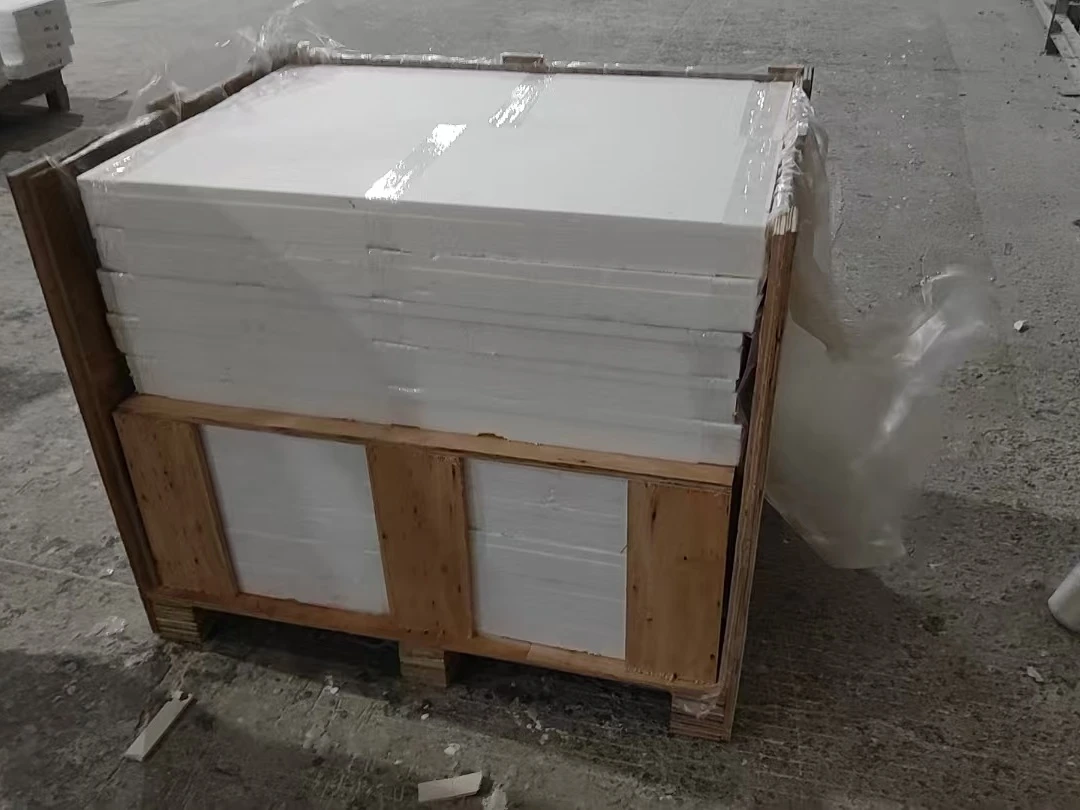
Each approved tile is separated in a custom grooved foam tray to limit direct contact and movement. Plywood is added around the inner pack to increase rigidity and resistance to local compression. The protected units are then secured in solid-wood crates with strapping and waterproof wrapping.
Where raw-wood packaging is used in international trade, destination-specific phytosanitary requirements should be confirmed. ISPM 15 describes measures intended to reduce the movement of quarantine pests associated with raw-wood packaging; processed wood such as plywood is outside its stated scope. [3]
No packing method can eliminate all transport risk. Buyers should confirm unloading equipment, crate-opening sequence, site storage, handling routes and installation responsibilities before delivery.
What Buyers Should Specify Before Ordering
A technically complete inquiry produces a more useful quotation and reduces late-stage assumptions. Buyers should provide:
- • Architectural drawings, field dimensions and the exact installation location
- • Required profile, tile length, width, depth, corner radius, joints and visible-face rules
- • Taj Mahal Quartzite appearance range, slab-approval method and vein-direction intent
- • Finish, exposed ends, returns and transitions to adjoining materials
- • Substrate, attachment concept, reinforcement constraints and responsible design parties
- • Dry-layout, numbering, photography and documentation requirements
- • Quantity, replacement allowance, destination, shipping mode and packing requirements
Frequently Asked Questions
Q: Can you provide samples?
A: Yes. Normally 1–2 samples can be provided without a sample charge. Typical sizes range from 100 × 100 mm to 200 × 200 mm. Courier cost is paid by the customer, and availability depends on the current material. Samples are useful for finish and basic color review, but actual slabs should be approved for vein movement and overall range.
Q: Can I see current slab photos and videos before ordering?
A: Yes. Landiview Stone can provide images and videos of the current lot, slab numbers, surface observations, and the available color and vein range, subject to actual inventory. Selected slabs should be recorded in the approval documents before cutting.
Q: Can Landiview Stone prepare stone shop drawings from architectural drawings?
A: Yes. Landiview Stone can review architectural information and develop stone-specific shop drawings for client and design-team approval. Shop drawings communicate fabrication information but do not replace the structural, code or installation responsibilities of locally licensed professionals. See What is cut-to-size stone?
Q: How is the overall vein effect controlled after installation?
A: The tiles are cut from approved slabs, with piece locations and vein direction planned before cutting. The fabricated pieces are then dry laid in their intended sequence, visually checked, replaced where necessary, and numbered when the installation plan requires traceability. This helps the site team reproduce the approved composition, although natural variation remains inherent.
Q: How do you reduce the risk of breakage during transport?
A: The documented design combines concealed 304 stainless-steel reinforcement with custom foam separation, plywood inner support, a solid-wood outer crate, strapping and waterproof wrapping. Packing is adapted to piece geometry and shipment requirements. Proper unloading, storage and site handling remain essential.
Q: Why must the tiles be cut from slabs?
A: Long fluted tiles are normally installed as a group on a feature wall or around a curved architectural corner. Slab-based production provides a controllable source for color, vein direction, adjoining-piece relationships and visually compatible replacements.
Q: Is every tile reinforced with 304 stainless steel?
A: Reinforcement is project-specific, but it is strongly considered for narrow, elongated profiles with a high aspect ratio. The documented 420 × 25 × 19 mm design includes a concealed 5 mm 304 stainless-steel element. Final details must follow approved drawings and installation conditions.
Q: What finish is available?
A: The documented order uses a honed finish. Other finishes may be evaluated depending on the selected slab, profile geometry, intended location and maintenance expectations. A representative sample and approved shop drawing should define the final requirement.
Q: Does the water-based treatment make the stone stain-proof?
A: No. A protective treatment may help manage absorption and maintenance, but it does not make natural stone stain-proof or maintenance-free. Product selection, application, curing and future care should follow the sealer manufacturer's instructions, project specifications and professional installer recommendations.
Q: What information is required for a quotation?
A: Please provide drawings, required profile and dimensions, quantity, finish, visible-end conditions, appearance expectations, installation location, reinforcement constraints, delivery destination and packing requirements. Pricing and production planning are project-specific and subject to current slab availability.
About Landiview Stone
Landiview Stone supplies natural stone in two principal forms: slabs for importers, distributors and fabricators, and project-specific cut-to-size or finished stone products for contractors, developers, designers, builders and other project buyers.
For slab buyers, Landiview Stone supports current slab selection, slab-image review, color and vein-range confirmation, surface inspection, slab identification and export packing.
For cut-to-size and custom-fabrication projects, the company can coordinate shop drawing review, slab scanning, AutoCAD cutting and vein-layout simulation, fabrication, dry-layout inspection, piece numbering, finished-product inspection, temporary reinforcement for vulnerable components and project-specific export protection.
For more complex fabricated and assembled stone products, the project team may use three-dimensional modeling and virtual assembly review to examine component relationships, material thicknesses, surface treatments, concealed reinforcement and potential interference before fabrication details are finalized.
Landiview Stone's international project experience includes:
- • Marble furniture, bathroom vanity tops and shower wall panels for the Grand Hyatt Singapore renovation project
- • Stone supply for stations on Singapore's Thomson-East Coast Line
- • Interior stone products for the Wynn project in the United Arab Emirates
- • Marble products for public areas of the 255 East 77th Street luxury residential project in New York
- • Interior and exterior marble and granite products for three high-end custom homes on Tuckahoe, a private resort island in Massachusetts, USA
Request A Quote
Send Landiview Stone your architectural drawings, required fluted profile, dimensions, quantity, finish, installation location, appearance expectations and delivery destination. Current stone slab options, sample availability, reinforcement details, dry-layout scope and export packing can then be reviewed against the project requirements.
Hot Tags: Custom Taj Mahal Quartzite long fluted tiles, Taj Mahal fluted stone, quartzite feature wall, fluted island corners, custom stone fabrication, Landiview Stone.
Previous
No InformationYou Might Also Like


Send Inquiry