

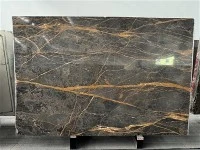
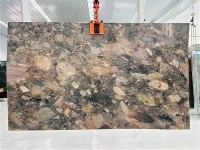
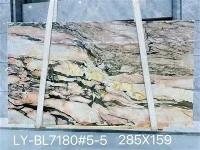


Full Taj Mahal Quartzite slab with a pale gray background and soft flowing beige-gray veining

Taj Mahal Quartzite kitchen island, countertop and full-height backsplash with light wood cabinetry

Taj Mahal Quartzite double vanity tops and wall cladding in a contemporary bathroom

Luxury living room with Taj Mahal Quartzite flooring and contrasting black stone inlays
Brazilian Taj Mahal Quartzite Slab
- Fast Delievery
- Quality Assurance
- 24/7 Customer Service
Executive Summary
Taj Mahal Quartzite is a Brazilian natural quartzite selected for warm, refined interior surfaces. It is considered by importers, fabricators, designers, contractors and custom-home teams for kitchen islands, countertops, vanity tops and floors. Landiview Stone supplies 20 mm slabs and can discuss 30 mm slabs cut from selected blocks. Buyers can request current slab images or video, approve color and movement ranges, and add shop drawing, digital vein-layout, dry-layout, inspection and export-packing services for fabricated work.

Key Facts
| Commercial name | Taj Mahal Quartzite |
| Geological family | Natural quartzite, a metamorphic quartz-based stone. ASTM C616/C616M publicly distinguishes quartzite from artificially aggregated products and lists property categories used in stone selection. [2] |
| Visual range | The attached reference slab reads pale warm gray to creamy beige, with subdued, broad gray movement and occasional warmer traces. Commercial batches can vary, so current slabs control. |
| Thickness | 20 mm standard; 30 mm may be cut from selected blocks, subject to requirements and availability. |
| Finishes | Polished, honed and leathered. |
| Supply forms | Slabs; cut-to-size and finished products by approved drawings and project scope. |
| Thickness tolerance | Stated standard: ±1 mm. Confirm measurement method and acceptance criteria in the contract, drawings or inspection standard. |
Performance note: Quartzite as a rock type can offer high strength, density and hardness, but performance is not universal. Quarry area, block, slab structure, fissures, mineral composition, finish, geometry, fabrication, support, installation and maintenance all matter. Stone and related assemblies should be evaluated together under applicable project requirements and codes. [1][3]
Appearance and Natural Variation
Taj Mahal Quartzite from Brazil typically features a warm ivory, creamy beige or pale gray background with soft, flowing movement. Depending on the block and production batch, the stone may also display subtle shades of sand, taupe, hazelnut and light gold. Some slabs have quiet, cloud-like patterns, while others show more defined linear veining.
Because Taj Mahal Quartzite is a natural stone, no two slabs are identical. Photographs and samples provide useful references, but the actual slabs or bundles selected for the order should remain the final basis for color, pattern and quality approval.
What Buyers Should Review
• Overall background tone, from cooler gray or neutral ivory to warmer beige
• Direction, scale and density of the veining
• Mineral spots and locally contrasting areas
• Natural fissures, filled areas and resin treatment, where present
• Color and pattern consistency within the selected bundle
• Usable slab area for large countertops, islands and focal pieces
• Suitability for bookmatching, vein matching or continuous layouts
Natural Feature or Defect?
Natural fissures, mineral marks and variations in color or veining are part of the geological character of Taj Mahal Quartzite. A fissure may be stable, resin-filled or visually noticeable without affecting the slab's intended use.
A structural crack, by comparison, is a physical separation that may affect handling, fabrication or serviceability. Chipping, saw marks, inconsistent polishing and fabrication damage are processing-related conditions rather than natural characteristics.
Each condition should be evaluated according to its location, continuity, stability and intended application. Final acceptance should be based on inspection of the actual slabs, not on appearance alone.
Available Slab Sizes, Thicknesses and Processing Options
Slab dimensions are not fixed on this page because usable size depends on the block and current slab inventory. Send required finished dimensions before selection. Landiview Stone can review whether available slabs accommodate the cutting yield, movement direction, edge details, joints and reserve pieces.
• 20mm thickness slabs: The standard slab thickness for importer, distributor and fabricator enquiries. Confirm actual dimensions, thickness readings, net usable area and bundle quantities from the offered stock.
• 30mm thickness slabs: May be cut from selected blocks when project requirements justify the thickness. Availability, block suitability, cut schedule, finish and yield require project review.
• Custom processing: Cut-to-size pieces, countertops, islands, vanity tops, tiles, cutouts, edge profiles, miters and assemblies can be discussed against approved drawings and fabrication details.
Available Finishes
Polished, honed and leathered finishes are recommended options. Finish changes reflected light, color depth, tactile quality, cleaning behavior and the visibility of natural mineral features. Approve a finish sample or current finished slab whenever appearance is critical.

• Polished: Provides stronger reflection and usually greater apparent color depth. It suits feature islands and countertops where the client wants crisp movement, but reflections can make surface inspection and photography angle-dependent.
• Honed: Creates a lower-sheen, quieter surface. It may show fingerprints, oils or handling marks differently from polished stone, so approve the finish level and maintenance expectations on a representative sample.
• Leathered: Adds controlled texture and reduced mirror reflection. Texture depth can vary with mineral structure and processing. Confirm tactile expectations, cleanability and edge-finish coordination before production.
Recommended Applications
Taj Mahal Quartzite is commonly considered for interior counters, islands, vanity tops and floors because a warm neutral field can coordinate with timber, metal, painted cabinetry and other stones. Suitability remains project-specific and should account for slab quality, geometry, support, traffic, finish, cleaning regime and local requirements.
▌ Kitchen islands
Taj Mahal Quartzite is well suited to kitchen islands and countertops, where its broad, flowing movement can be displayed across large surfaces with minimal visual interruption. Slab selection should consider the usable area, vein direction, focal surfaces, waterfall returns, joint locations and overall cutting yield.
Before fabrication, carefully review sink and cooktop openings, mitered edges, seams, overhang support and vulnerable narrow sections. For large openings, a semi-cutout may be considered when the slab condition, fabrication method and site requirements permit. Any retained connections, temporary reinforcement and on-site cutting responsibilities should be clearly identified in the approved shop drawings.

▌ Bathroom vanity tops

The soft palette can support calm, residential or hotel-style bathrooms. Confirm sink-template dimensions, faucet and backsplash clearances, cabinet openings and concealed support before fabrication. Wet-area performance depends on waterproofing, joints, sealants, installation details and maintenance, not on the vanity material alone. Follow the project specification and qualified installer or product-manufacturer guidance.
▌ Floor tiles
Floor designs can use the low-contrast field for continuous visual flow, but tile size, thickness, slip considerations, finish, substrate, joints, expected traffic and maintenance must be specified. Dry-lay visual review may help distribute natural variation. Abrasive grit can affect stone floors, so entrance mats and routine dust control are useful maintenance measures. [4]

Why Specify Taj Mahal Quartzite?
The material combines a warm, marble-like visual language with the potential wear characteristics of natural quartzite. The strongest procurement reason is not a universal performance promise but the ability to select specific slabs whose color, movement, structure and usable yield suit the project.
• Warm neutral design range: works with wood, bronze, brass, black or light cabinetry without requiring high-contrast veining.
• Large-surface continuity: broad movement can be planned across islands, counters and wall-related components.
• Quartzite geology: the Natural Stone Institute describes quartzite as metamorphosed sandstone that can exhibit exceptional strength, density and hardness. [1]
• Multiple finish directions: polished, honed and leathered treatments allow different sheen and texture objectives.
Comparison with Similar Stone Choices
Compare stones by the actual slab, geological class, finish, fabrication risk, maintenance expectation and project fit. Commercial names alone do not establish performance. The table below is a procurement framework rather than a substitute for samples, testing or professional specification.
| Material | Typical visual direction | Material category | Maintenance considerations | Selection focus |
| Taj Mahal Quartzite | Warm ivory, beige or gray field with soft sand, gray or fine golden movement; batches vary | Natural quartzite | Neutral stone cleaner; sealing decision based on actual absorption, finish and sealer guidance | Current slab range, fissures, usable yield, movement and finish |
| White or beige marble | Can offer soft backgrounds and elegant veining | Natural calcareous stone | More acid-sensitive; approve patina and care expectations | Etching expectations, finish, soundness and intended use |
| Engineered quartz | Manufactured patterns can provide higher repeatability | Manufactured composite, not natural quartzite | Follow the brand's heat, chemical and cleaning instructions | Brand data, slab format, color consistency, warranty and fabrication rules |
| Light granite | Granular to flowing natural patterns depending on variety | Natural igneous stone | Stone- and finish-specific | Actual mineral pattern, testing, finish and batch range |
How to Select Current Slabs
Request current slab photographs or video with slab numbers, finish, dimensions and bundle sequence. Approve the acceptable color and movement range, not only one attractive close-up. For fabricated projects, map the approved scans to the cutting plan before physical cutting.
1. Send the scope: required sizes, quantity, thickness, finish, application, drawings and destination.
2. Review available material: current slab images or videos, slab identification, dimensions and visual range are provided subject to stock.
3. Set acceptance priorities: identify focal pieces, acceptable variation, excluded visual areas and matching goals.
4. Reserve and approve: reference approved slab numbers and images in the order documentation.
5. Plan fabrication: for cut-to-size work, import slab scans into AutoCAD to simulate piece locations and vein relationships.
6. Inspect actual output: dry layout checks finished surfaces, damage, unstable features, visual relationships and replacement needs.
7. Number for installation: align piece marks with installation drawings to communicate position and orientation.
Digital layout helps align the approved vein plan with the expected installed appearance, but natural variation, cutting kerf, fabrication, lighting, joint width and site installation can affect the final view. See how natural stone slab scans support AutoCAD cutting and vein-layout planning.
What Affects Taj Mahal Quartzite Pricing?
A useful quotation depends on the selected material and project yield, not only a square-meter figure. Slab grade and visual range, thickness, finish, dimensions, fabrication, matching requirements, inspection, packing and logistics can materially change the total cost.
• Current block or slab availability and bundle continuity
• Background color, movement, fissures, repairs and usable area
• 20 mm versus project-specific 30 mm production
• Polished, honed or leathered processing
• Required slab quantity and selection constraints
• Cutting yield from finished piece geometry
• Cutouts, edge profiles, miters, drilling and assembly
• Bookmatching or vein-matching complexity
• Shop drawings, scanning, layout and dry-lay scope
• Replacement and spare-piece requirements
• Crate or A-frame design and temporary reinforcement
• Destination, shipment mode and documentation requirements
No fixed price, MOQ or lead time is stated because these depend on current availability and the approved scope.
Quality Control, Packing and Export Service
Quality control should connect the approved slab range to the material actually packed. Landiview Stone can review surface condition, color and movement, slab identity and finished-piece relationships, then select crate, support, cushioning and temporary reinforcement methods for the geometry and transport route.
▌ Slab inspection
Inspection focuses on cracks that may affect handling or fabrication, overall visual coordination, unusually large discordant black areas, and color or movement within the buyer-approved range. Natural features are not automatically classified as defects; inspectors should distinguish geological characteristics, stable or filled fissures, structural concerns and processing damage.
▌ Finished-product control
After fabrication, a dry layout can identify edge or corner damage, processing damage, open or unstable fissures, unexpected visual differences and areas outside agreed criteria. Replacement parts are selected for size, color, movement direction and continuity, then pieces are numbered against installation drawings.
▌ Export protection
• Slabs may use a robust wooden crate or an A-frame/support arrangement designed for the actual container load.
• Finished products may receive liners, vibration cushioning, custom foam, dividers, plywood support, edge protection and positioning blocks according to shape and weight.
• Sink and cooktop cutouts, narrow backsplashes, thin strips, vanity tops, fireplace parts, narrow wall panels and vulnerable corners may receive temporary support strips over protective film.
• Temporary reinforcement is for transport protection and should be removed before installation following the supplied guidance.
• Raw-wood packaging should use ISPM 15 compliant material where required by the destination; plywood is outside the raw-wood scope described by the standard. [6]
Stone slabs are heavy and can create crushing and struck-by hazards during handling, loading, unloading and storage. Packing does not replace a site-specific handling plan, trained personnel, suitable equipment or compliance with applicable safety rules. [5]
Related guide: how Landiview Stone plans transport protection for natural stone.
Frequently Asked Questions
These answers address the information buyers typically need before requesting slabs or custom-fabricated Taj Mahal Quartzite. Confirm project-specific requirements in the order documents, drawings and inspection criteria.
Q: Can you provide samples?
A: Yes. Normally one or two samples can be provided without a sample charge, with typical sizes from 100 × 100 mm to 200 × 200 mm. The customer pays the courier cost. Sample availability depends on the current material. A small sample can show approximate color, mineral character and finish, but it cannot represent the full movement or variation of a slab. Pair samples with current slab photos or video for selection.
Q: What is your slab thickness tolerance?
A: The stated standard thickness tolerance is ±1 mm. Confirm the required thickness, measurement method and acceptance rule before ordering. The contract, approved drawings or inspection standard should state where and how thickness is measured, whether local finish texture is considered and what project-specific criteria apply. Fabricators should also verify edge build-ups, seams, supports and adjoining materials.
Q: How do you inspect slab surface quality?
A: We focus on cracks that may affect handling or fabrication, overall movement coordination, abnormal large black areas that conflict with the approved range, and color or veining within the buyer-approved limits. Natural mineral marks and fissures should not be simplified into "good" or "defective." Inspection considers continuity, openness, stability, location, resin treatment, intended cut areas and use. Processing marks, polish issues, chips or damage are evaluated separately from natural features.
Q: Can I see current slab photos and videos before ordering?
A: Yes, subject to actual stock. Landiview Stone can provide current-batch photos or videos, slab numbers, surface-review information and an overview of the color and movement range. Ask for full-slab views, close-ups and bundle sequence where matching matters. Lighting, camera angle, screen calibration and wet or polished reflection can change perceived color, so documented approval should clearly identify the slab numbers and acceptable range.
Q: Can you supply cut-to-size and finished products, not only slabs?
A: Yes. Landiview Stone supplies slabs and project-specific cut-to-size or finished stone products. The client submits architectural drawings. The technical team prepares stone shop drawings for review, then provides current slab images or, when suitable slabs are unavailable, can study block cutting according to the project. After shop drawings and slabs are approved, slab scans are used for AutoCAD cutting and vein-layout simulation. Following approval, the factory fabricates, dry-lays and inspects the pieces, replaces nonconforming items where needed, applies piece numbers, protects vulnerable locations and prepares export packing. Read the step-by-step guide to ordering cut-to-size stone from China.
Q: Can Landiview Stone prepare stone shop drawings from architectural drawings?
A: Yes. The technical team can extract the stone scope from architectural drawings and prepare stone-specific shop drawings for client or design-team review. Drawings may communicate dimensions, thicknesses, cutouts, edge details, visible surfaces, finishes, joints, reinforcement and fabrication requirements. They require formal review and approval. Stone shop drawings do not replace structural design, licensed-professional responsibilities, local code compliance or the installer's duty to verify site conditions. See what cut-to-size stone documentation should define.
Q: How do you help control the final vein layout and installed appearance?
A: Approved slab scans are placed in AutoCAD so proposed piece locations, vein direction and adjoining relationships can be reviewed before cutting. Factory dry layout then checks the actual fabricated pieces. After approval, cutting follows the planned layout, pieces are inspected and numbered against installation drawings. This workflow reduces information loss between selection, fabrication and site installation. It cannot guarantee an identical final view because natural variation, kerf, fabrication, lighting, joint treatment and site installation can affect appearance. Learn more about AutoCAD slab layout for natural stone.
Q: How do you protect slabs and finished stone during shipping?
A: Slabs use a strong export crate or A-frame/support solution designed around the actual container load. Finished products receive internal and external protection according to geometry, weight, openings and vulnerable sections. Protection may include liners, custom foam, dividers, plywood, edge guards and temporary support strips. Sink or cooktop cutouts, backsplashes, thin strips, vanity tops, fireplace components, narrow panels and fragile corners may be reinforced over protective film for transport, then removed before installation. Raw-wood packaging is selected to meet destination-country ISPM 15 requirements where applicable. [6] Review the natural stone shipping-protection guide.
Q: How should Taj Mahal Quartzite be cleaned and maintained after installation?
A: Use a pH-neutral stone cleaner or mild cleaner approved for natural stone, blot spills promptly and avoid unknown acidic, alkaline or abrasive products and tools. The Natural Stone Institute recommends neutral cleaners, stone soap or mild dishwashing detergent with warm water, thorough rinsing and soft-cloth drying. It also advises against acidic cleaners even for siliceous stones because trace minerals may be acid-sensitive. [4] Sealer selection and reapplication depend on the actual stone, finish, use and sealer manufacturer's instructions. Follow the project specification and installer or product-manufacturer guidance.
Q: Is Taj Mahal Quartzite suitable for kitchen countertops?
A: It can be suitable for kitchen countertops when the selected slabs, design, fabrication, support, installation and care plan are appropriate. Quartzite can offer high strength, density and hardness as a rock type. [1] Do not treat hardness as protection against every risk. Edges, cutout corners, narrow rails and unsupported overhangs can chip or crack, while liquids can stain some surfaces. Review the slab, finish, cutouts, supports, seams, cleaners and sealer strategy with qualified project professionals.
Q: What finishes are available for Taj Mahal Quartzite?
A: Recommended finishes are polished, honed and leathered. Availability should be confirmed against the current slabs and production plan. A polished finish increases reflection and apparent color depth; honed reduces sheen; leathered adds texture. Request a representative finish sample because mineral structure, resin treatment and processing can affect gloss, texture, color and cleanability. Edge finish should coordinate with the face finish.
Q: How does natural quartzite differ from engineered quartz?
A: Natural quartzite is quarried stone formed by metamorphism, while engineered quartz is a manufactured composite. The names sound similar but describe different materials. Natural quartzite has non-repeating geological variation, fissures and mineral features. Engineered quartz is produced with binders and mineral content under a manufacturer's specifications, which can offer more controlled patterning but has brand-specific heat, fabrication, cleaning and warranty rules. ASTM C616/C616M's public scope specifically excludes artificially aggregated units from quartz-based dimension stone. [2]
Q: Can I choose individual slabs for bookmatching or vein matching?
A: Yes, when suitable current slabs and sequence relationships are available. Selection is subject to inventory, slab dimensions, finish, usable areas and the required finished-piece geometry. Bookmatching depends on how adjacent slab faces were processed, while vein matching depends on cut orientation and piece relationships. Request slab numbers and sequence, then use scaled scans and an approved layout for critical areas. Natural variation and cutting constraints mean the match should be described as a reviewed layout, not a universal guarantee.
Q: What factors affect Taj Mahal Quartzite slab and project pricing?
A: Pricing depends on current slab or block selection, thickness, finish, usable yield, fabrication complexity, matching requirements, inspection, packing and logistics. Warmth and consistency of the background, movement, fissures, repairs and bundle continuity can influence material selection. For projects, the number and shape of pieces, cutouts, edges, miters, shop drawings, scanning, dry layout, replacement pieces and export protection also matter. Send a complete scope for a project-based quotation rather than relying on a generic unit price.
Q: What information should I send to receive an accurate quotation?
A: Send required sizes, thickness, quantity, finish, application, drawings or drawing status and destination port. Add your preferred color range, slab or finished-product scope and required delivery timing. For fabricated work, include edge profiles, cutouts, visible faces, joints, vein direction, matching goals, support conditions, tolerances, spare pieces and packing or inspection requirements. Landiview Stone can then review current slab availability and identify information still needed.
Q: Is 30 mm Taj Mahal Quartzite available?
A: 30 mm slabs may be cut from selected blocks depending on project requirements and material availability. It is not presented as continuously stocked. Provide required dimensions, quantity, finish and timing so block suitability, expected yield and cutting schedule can be reviewed. Confirm the final thickness and agreed tolerance in the order documents.
Q: Can Taj Mahal Quartzite be used for flooring?
A: It may be considered for interior floors when the selected material, thickness, tile format, finish, substrate and installation system suit the traffic and safety requirements. Specify slip considerations, jointing, flatness, movement accommodation, cleaning and maintenance. Natural variation may benefit from dry-lay distribution. Follow project specifications, local requirements and qualified installation guidance. ASTM's public stone-selection guidance emphasizes evaluating stone with related assemblies and applicable codes. [3]
Q: Do Taj Mahal Quartzite countertops need sealing?
A: Do not assume one universal sealing schedule. The decision depends on the actual slab, finish, absorption behavior, factory treatments, use and the selected sealer. Test a representative area and follow the sealer manufacturer's preparation, compatibility and reapplication guidance. A sealer can improve resistance to liquid penetration but does not make stone stain-proof or maintenance-free. Approval should consider any color or sheen change.
Why Landiview Stone
Landiview Stone supplies Brazilian Taj Mahal Quartzite slabs to importers, distributors and fabricators, while also providing project-specific cut-to-size and finished stone products for contractors, developers, designers and builders. Our services connect material selection, technical coordination, fabrication, quality control and export packing to help reduce communication gaps throughout the stone procurement process.
▌Support for Slab Buyers
For slab enquiries, Landiview Stone can provide current slab photographs or videos, slab identification, available dimensions and finish information. We also help buyers review background color, veining, natural variation, surface condition and bundle consistency before final approval.
▌Support for Fabricated Projects
For cut-to-size and finished stone projects, our services can include stone shop drawing coordination, slab scanning, AutoCAD cutting and vein-layout simulation, fabrication, factory dry layout, finished-product inspection and piece numbering. Vulnerable components may also receive project-specific temporary reinforcement and export protection according to their geometry and transportation requirements.
▌Technical Coordination for Complex Stone Assemblies
For complex stone products and assemblies, three-dimensional modeling and virtual assembly review may be used to evaluate component relationships, stone thicknesses, surface finishes, concealed reinforcement, internal clearances and potential interference before details are finalized. The appropriate workflow is determined according to the stone, product geometry, project specifications, transport route and site conditions.
▌International Project Experience
Landiview Stone has supplied natural stone and fabricated stone products for a range of international hospitality, transportation, residential and custom-home projects, including:
Marble furniture, bathroom vanity tops and shower wall panels for the Grand Hyatt Singapore renovation project
Stone products for stations on Singapore's Thomson-East Coast Line
Interior stone products for the Wynn project in the United Arab Emirates
Marble products for public areas of the 255 East 77th Street luxury residential project in New York
Interior and exterior marble and granite products for three high-end custom homes on Tuckahoe, a private resort island in Massachusetts, USA
Authoritative References
- [1] Natural Stone Institute. "Sandstone and Quartzite." No publication date shown. Natural Stone Institute material overview. Accessed July 22, 2026. Used for the geological description and broad performance potential of quartzite.
- [2] ASTM International. "ASTM C616/C616M-22: Standard Specification for Quartz-Based Dimension Stone." Last updated September 9, 2022. ASTM C616/C616M public abstract and scope. Accessed July 22, 2026. Only publicly visible scope and abstract information is used.
- [3] ASTM International. "ASTM C1528/C1528M-20: Standard Guide for Selection of Dimension Stone." Page last updated April 10, 2025; standard shown as historical. ASTM C1528/C1528M public scope. Accessed July 22, 2026. Used only for the broad principles of evaluating related assemblies and complying with applicable codes.
- [4] Natural Stone Institute. "Learn About Cleaning Products for Natural Stone." No publication date shown. Natural Stone Institute care guidance. Accessed July 22, 2026. Supports conservative cleaning, spill and floor-care advice.
- [5] U.S. Occupational Safety and Health Administration. "Hazards of Transporting, Unloading, Storing and Handling Granite, Marble and Stone Slabs." SHIB 08-12-2008. OSHA advisory bulletin. Accessed July 22, 2026. Advisory information, not a product certification.
- [6] International Plant Protection Convention. "ISPM 15: Regulation of Wood Packaging Material in International Trade." Published July 13, 2021. IPPC ISPM 15 page. Accessed July 22, 2026. Supports statements on raw-wood packaging and processed-wood exclusions.
- [7] Favorita do Brasil. "Taj Mahal Quartzite." No publication date shown. Brazilian supplier's material description. Accessed July 22, 2026. Used cautiously to corroborate the broad beige, gray, sand, hazelnut and fine golden visual range; current offered slabs remain controlling.
Request Current Slabs or a Project Quotation
Send the required size, thickness, quantity, finish, application, drawing status and destination port. Landiview Stone can review current slab availability, provide available slab photos or videos, discuss layout or dry-lay requirements and prepare a project-based quotation.
Hot Tags: Brazilian Taj Mahal Quartzite slabs, Taj Mahal Quartzite slabs from Brazil, Taj Mahal Quartzite supplier, Brazilian quartzite supplier, Taj Mahal stone slabs, 20 mm quartzite slabs, 30 mm quartzite slabs, Taj Mahal Quartzite countertops, Taj Mahal Quartzite kitchen island, custom quartzite fabrication
You Might Also Like
Send Inquiry