

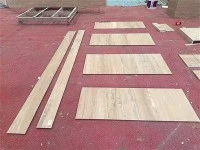
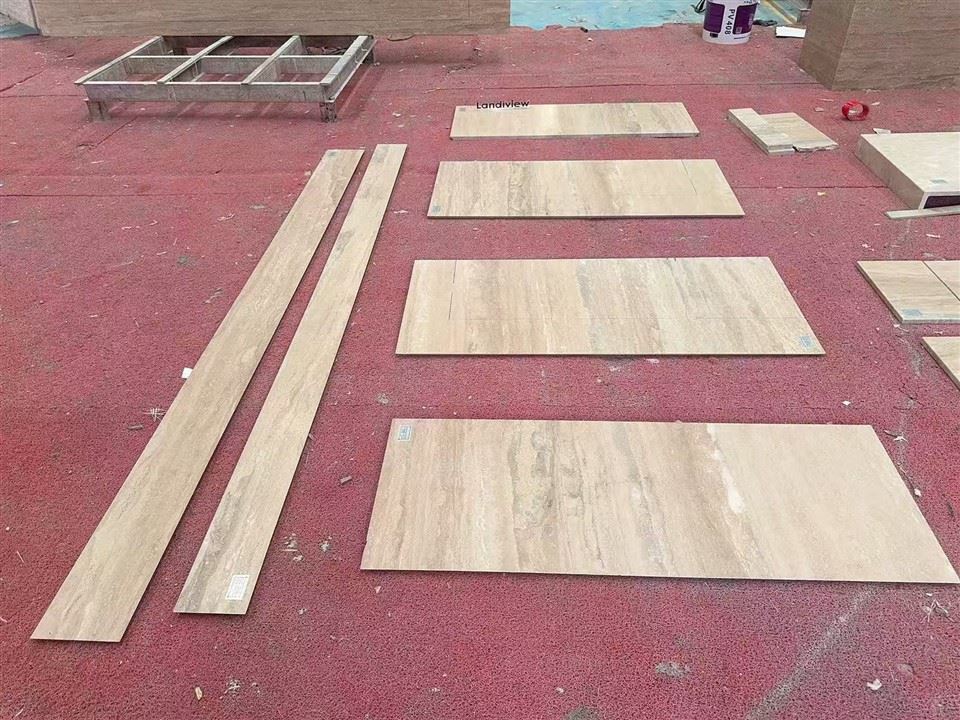

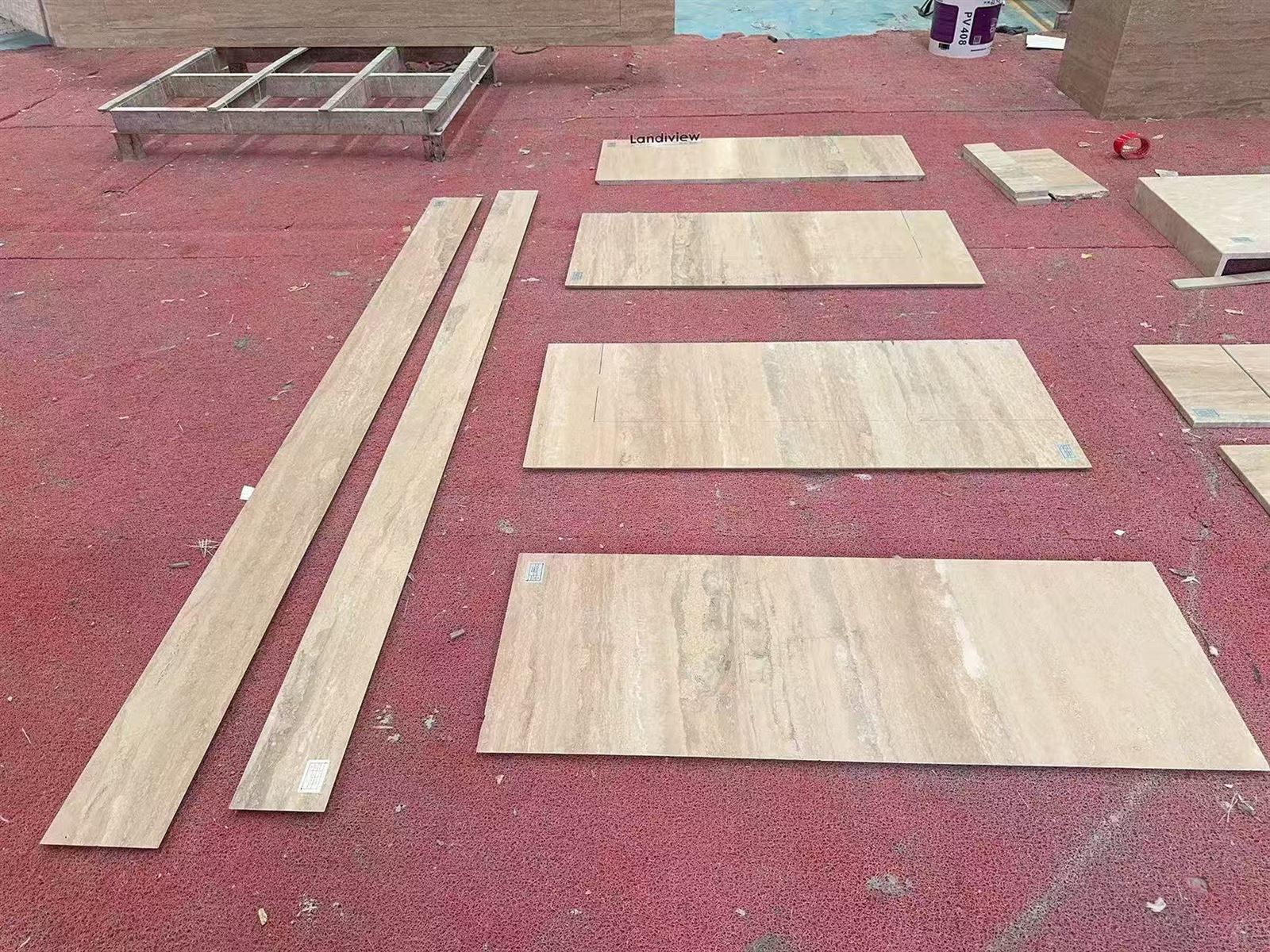
Cut Italian Silver Travertine bathtub panels arranged on the factory floor for quality, color, vein direction and component-matching inspection.
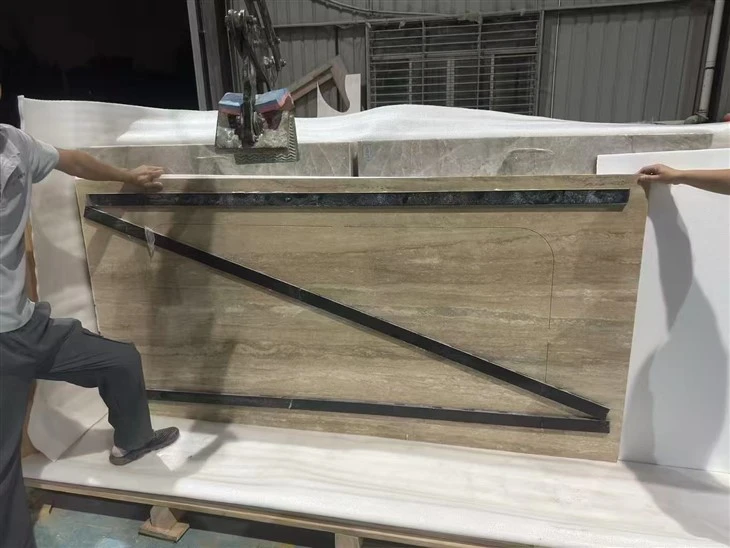
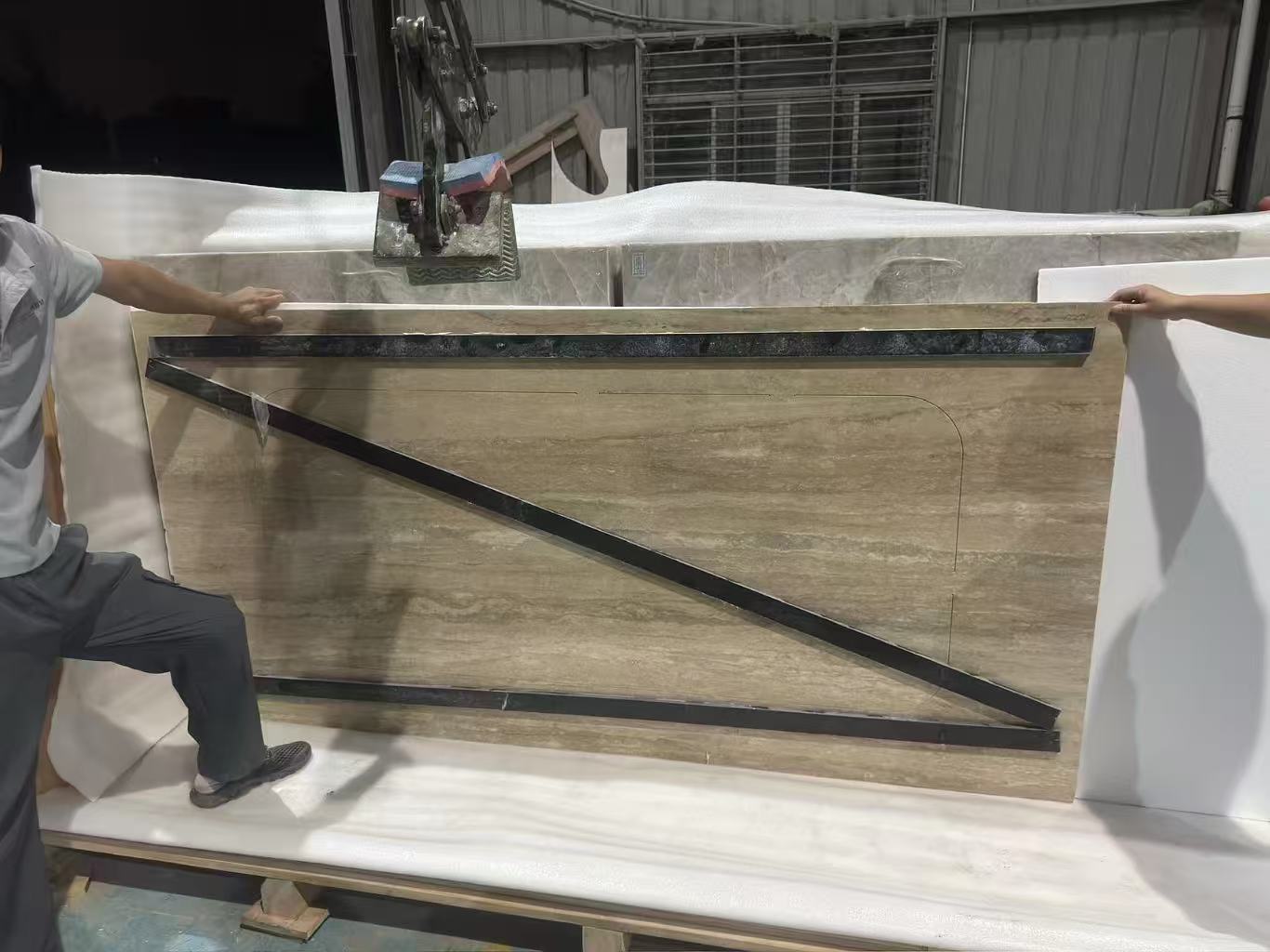
Large Italian Silver Travertine bathtub panel with a factory semi-cutout, protective film and temporary engineered-stone reinforcement strips for transport.
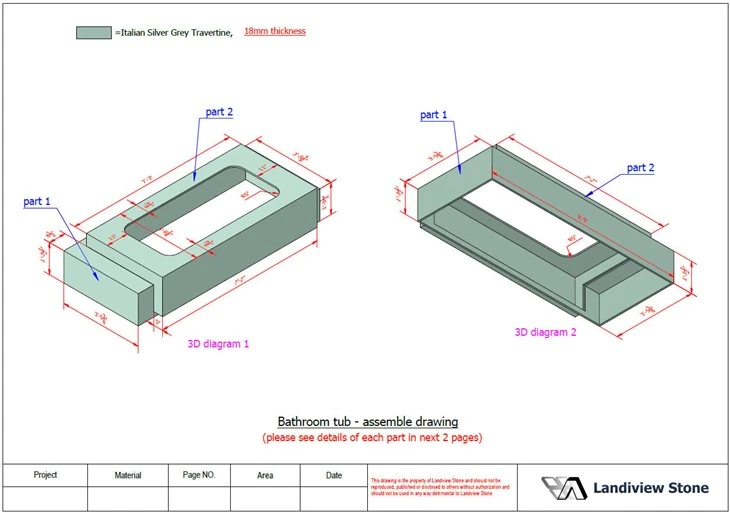
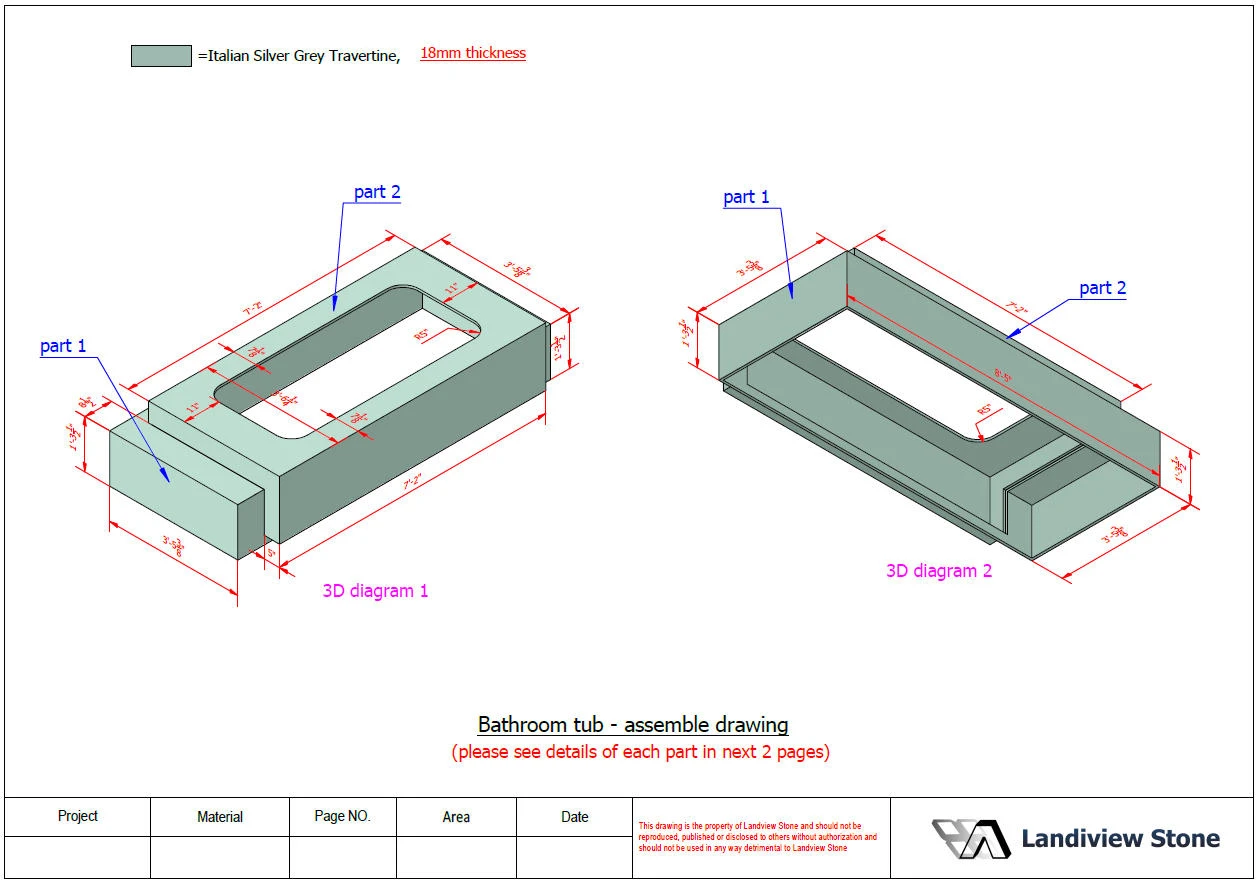
Three-dimensional assembly model showing the dimensional relationship between two groups of 18 mm Italian Silver Travertine bathtub panels.
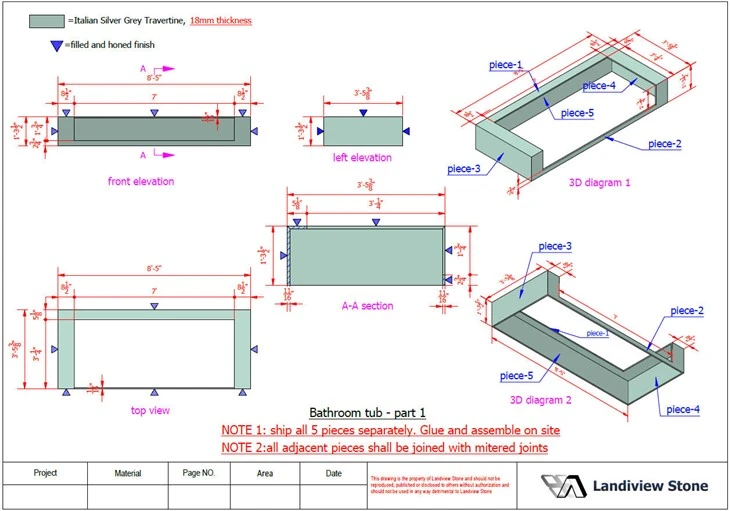
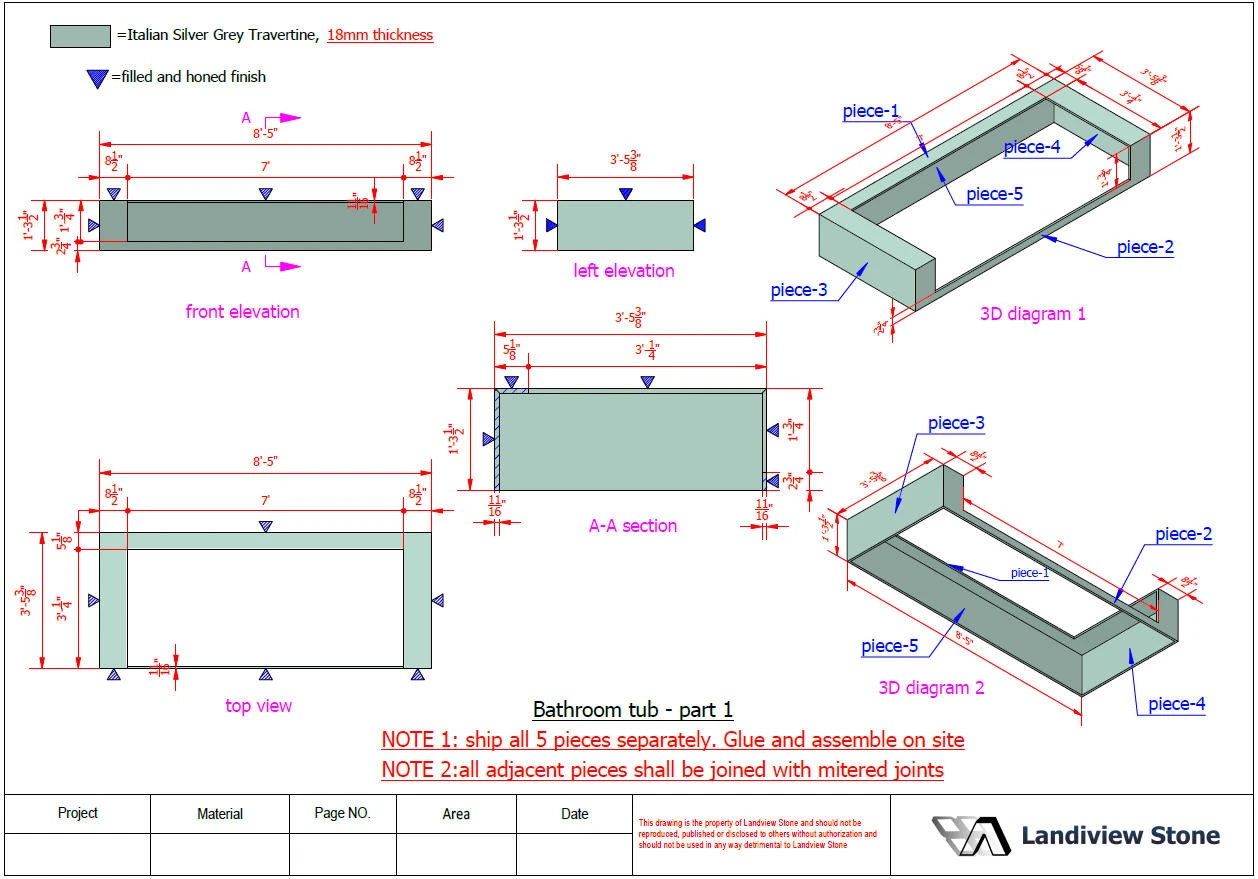
Stone shop drawing for five filled and honed Italian Silver Travertine bathtub panels with dimensions, mitered joints and on-site assembly notes.
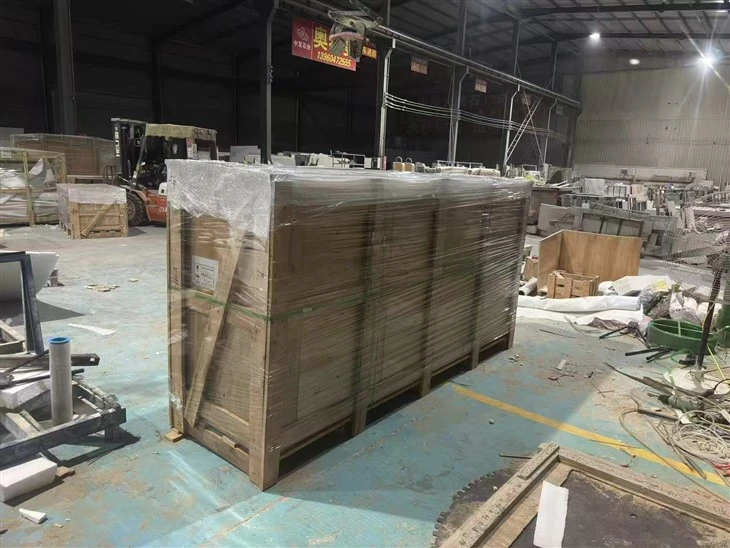
Custom solid-wood export crate containing protected Italian Silver Travertine bathtub panels and wrapped with waterproof film.
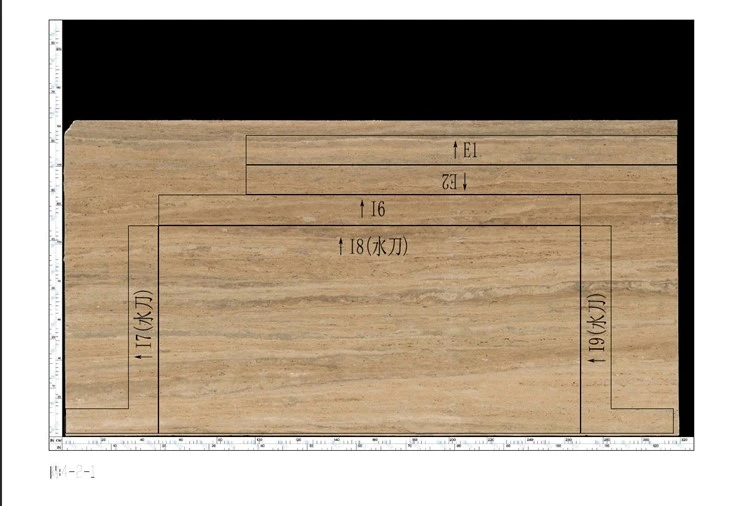
AutoCAD cutting layout placing numbered bathtub panels over a scanned Italian Silver Travertine slab image to coordinate yield and vein direction.
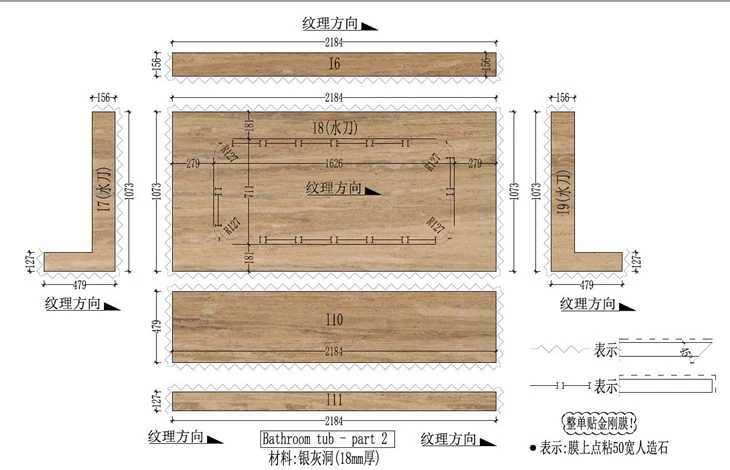
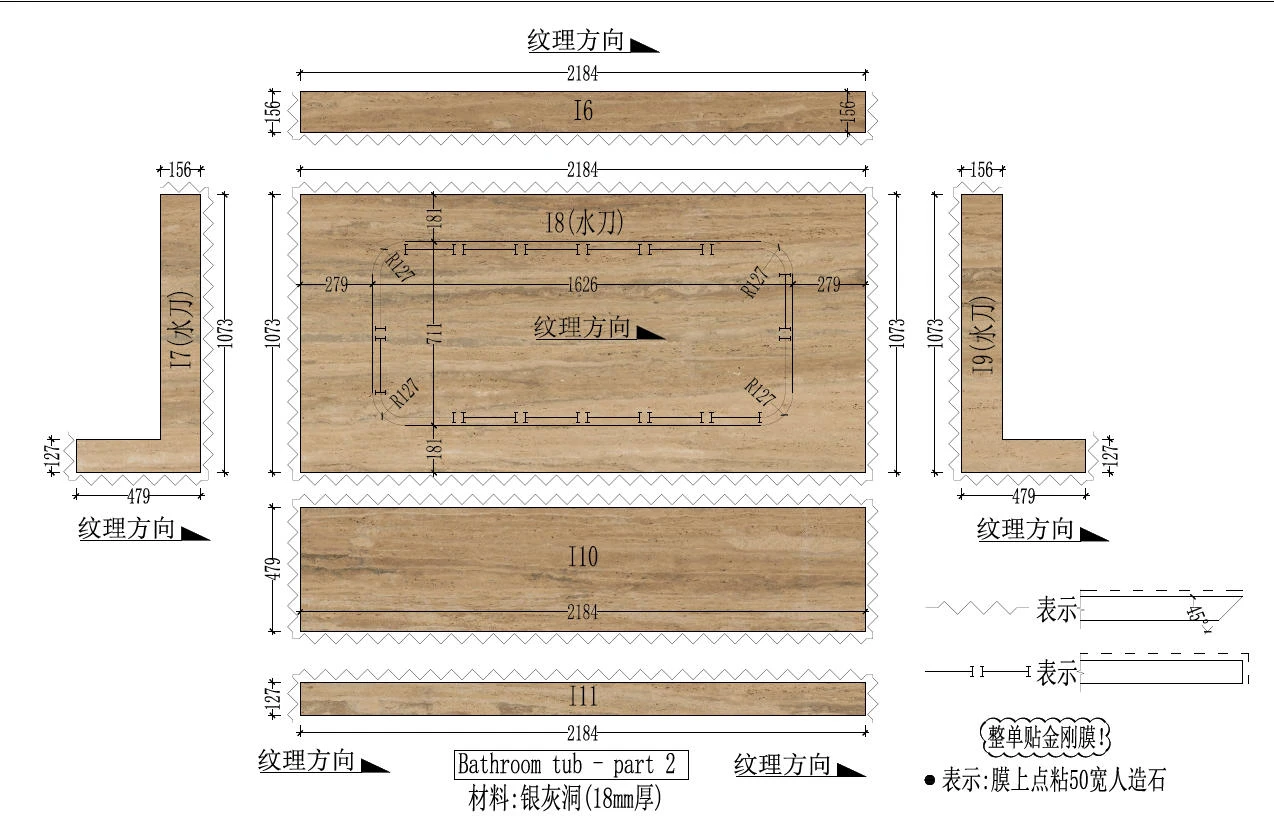
AutoCAD virtual assembly drawing showing numbered Italian Silver Travertine bathtub panels, cutout geometry, dimensions and vein directions.
Italian Silver Travertine Bathtub Panels
- Fast Delievery
- Quality Assurance
- 24/7 Customer Service
Executive Summary
This is a panel-built bathtub surround assembled with miter joints on site, not a freestanding bathtub carved from a solid travertine block. The project result depends on approved drawings, actual slab selection, coordinated vein layout, careful fabrication and qualified installation.
Italian Silver Travertine bathtub panels are custom-fabricated from 18 mm slabs with a filled and honed finish. The panels have mitered adjoining edges and are shipped separately for on-site assembly around the specified bathtub construction. This is a panel-built surround, not a freestanding bathtub carved from a solid stone block.
Landiview Stone's workflow includes three-dimensional modeling, stone shop drawings, current slab approval, scanned-slab AutoCAD cutting and vein layout, virtual assembly review, factory fabrication and dry-layout inspection. These steps help coordinate dimensions, vein direction and adjoining-panel relationships before shipment.
Accepted panels receive a suitable water-based protective sealer. Panels with large openings may use semi-cutouts and removable temporary reinforcement for transport. The products are then packed with project-specific cushioning and plywood protection in solid-wood export crates with waterproof wrapping.
Key Facts
| Specification Item | Project Information |
| Product | Custom Italian Silver Travertine bathtub panels |
| Stone origin | Italy |
| Nominal thickness | 18 mm |
| Finish | Filled and honed |
| Construction method | Slab panels with mitered adjoining edges, shipped separately and assembled on site |
| Product distinction | Not a freestanding bathtub carved from a quarried block |
| Digital coordination | Three-dimensional model, stone shop drawings, scanned-slab AutoCAD cutting layout and virtual assembly review |
| Factory quality control | Physical dry layout, inspection, piece identification and replacement of nonconforming panels when required |
| Surface protection | Water-based protective sealer applied to accepted panels, subject to the selected product instructions and project requirements |
| Transport protection | Semi-cutouts where appropriate, protective film, temporary reinforcement, custom foam and plywood inner protection, solid-wood crate and waterproof wrapping |
What Are Italian Silver Travertine Bathtub Panels?
These are cut-to-size stone components designed to surround and integrate with the specified bathtub and supporting construction. The major faces, returns and narrow connecting pieces are fabricated separately from approved Italian Silver Travertine slabs. Mitered edges allow adjoining components to form visually substantial corners after site assembly.
The stone panels are decorative and architectural components. The bathtub fixture, substrate, waterproofing, structural support, adhesives, movement joints and installation method must be coordinated by the responsible project professionals and qualified installers in accordance with the approved documents, applicable local requirements and product-manufacturer instructions.
Material, Finish and Natural Variation
Italian Silver Travertine is a natural calcareous stone from Italy. This project uses 18 mm panels with a filled and honed finish: appropriate voids are filled during processing and the visible surface is refined to a smooth, low-reflective appearance.
Travertine remains a natural material. Tone, banding, pores, filled areas and vein movement can vary between and within slabs. Natural features should be assessed separately from open or unstable fissures, structural cracks, edge damage and fabrication defects. Approval of current slabs, finish samples and the planned layout helps establish a realistic appearance range.
Engineering and Production Workflow
1. Review the client's bathtub design, architectural dimensions, plumbing interfaces and stone scope.
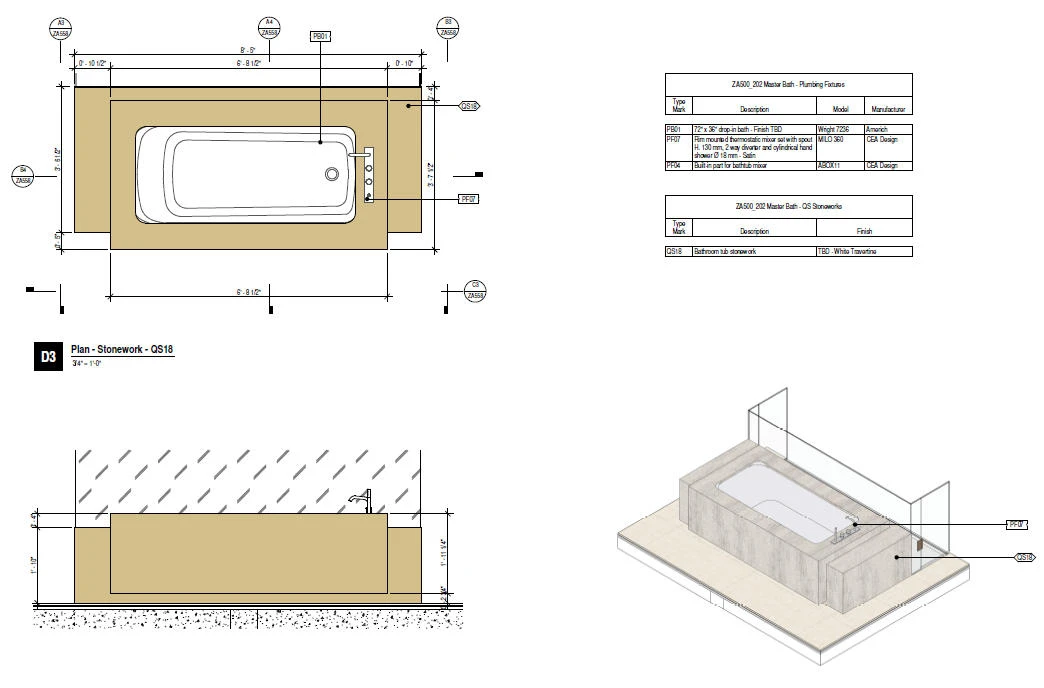
2. Develop a three-dimensional assembly model and detailed stone shop drawings showing panel sizes, thickness, visible faces, cutouts, mitered joints and site-assembly relationships.
3. Submit current Italian Silver Travertine slab images, identification and appearance information for client review, subject to availability.
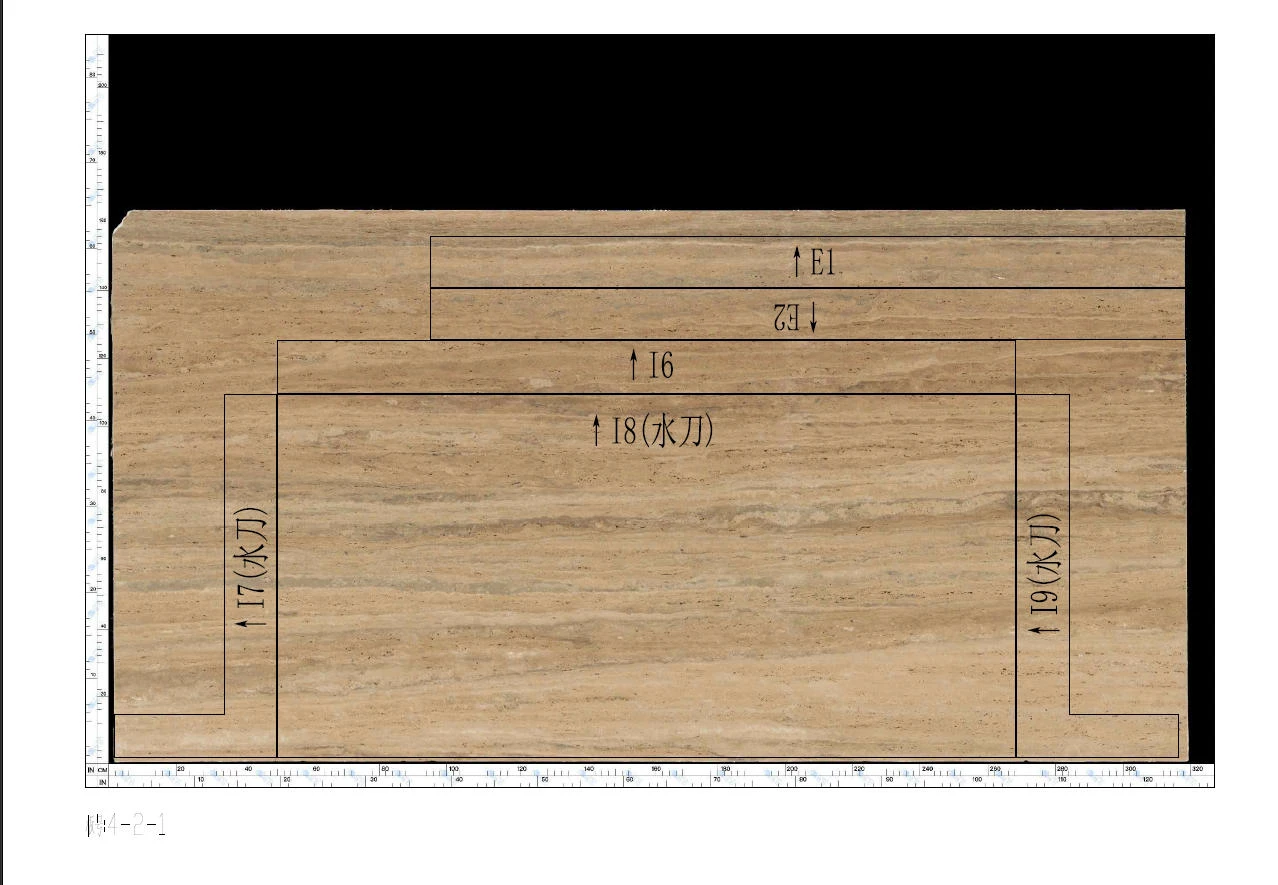
4. Attach the approved slab scan in AutoCAD and position each panel over the image to simulate cutting, yield, vein direction and adjoining-piece relationships. AutoCAD supports linked raster images within drawings, enabling a slab scan to be used as a controlled visual reference. [3]
5. Virtually assemble the simulated pieces and submit the proposed composition for client approval before physical cutting.
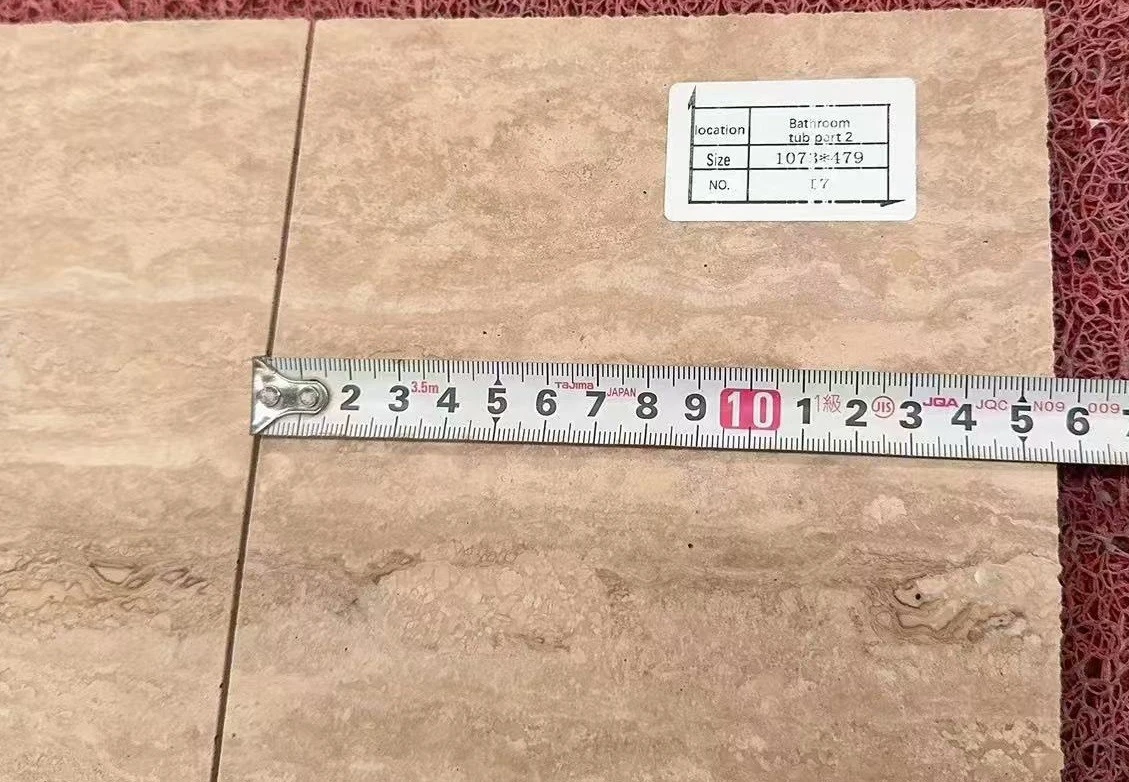
6. Cut the panels, arrange the actual pieces in the factory, inspect quality and replace nonconforming pieces while considering adjacent color and vein movement.
7. Apply a suitable water-based protective sealer to accepted panels in accordance with the sealer manufacturer's instructions and project requirements.
8. Retain temporary connections in large openings where a semi-cutout is appropriate, then add protective film and removable reinforcement strips to vulnerable panels.
9. Pack the panels with project-specific cushioning, foam, plywood separation or support, edge protection and positioning elements.
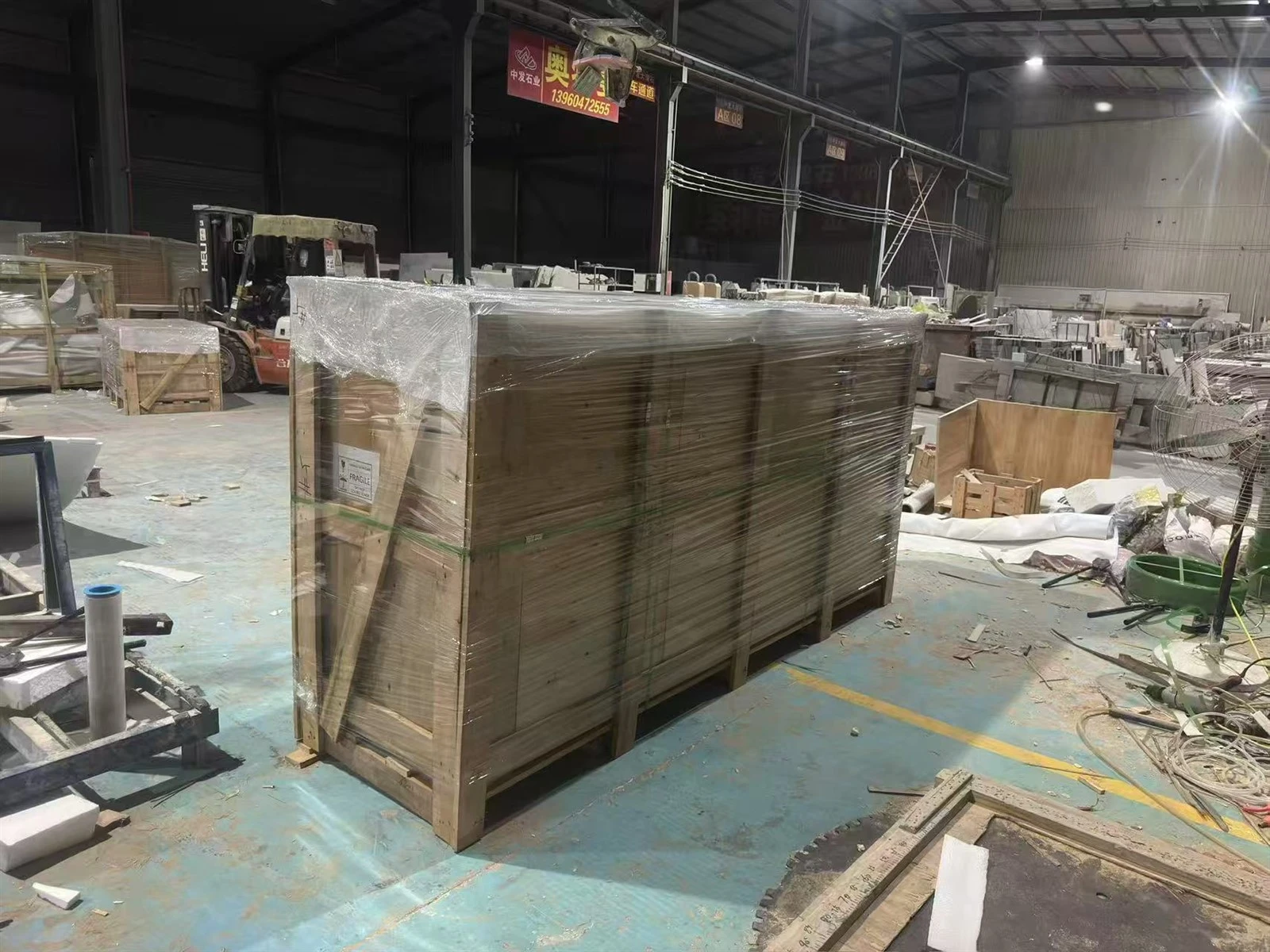
10. Place the protected products in a strong solid-wood export crate and apply waterproof wrapping. Solid raw-wood packaging should comply with destination requirements, including ISPM 15 where applicable. [4]
Shop Drawings and Digital Slab Layout
Clients commonly provide architectural or design drawings rather than stone-specific production documents. Landiview Stone converts the relevant design information into coordinated stone shop drawings for client and design-team review. The drawings clarify geometry, panel divisions, mitered edges, openings, finish, vein direction and site-assembly intent.
After slab approval, the actual scan is used for AutoCAD layout. This makes the proposed cutting positions and relationships visible before fabrication. It helps align the approved vein plan with the expected installed composition, but it cannot eliminate natural stone variation or the effects of final site workmanship.
Factory Dry Layout and Quality Control
Digital planning shows the intended result; factory dry layout shows the actual cut pieces. The accepted panels are arranged together so the inspection team can compare the completed components with the approved drawings and visual plan.
- • Check dimensions, labels, orientation, cutouts, mitered edges and finish;
- • review color range, banding, filled areas and vein direction across adjoining pieces;
- • identify chips, processing damage, open or unstable fissures and other nonconforming conditions;
- • select replacement material with attention to both dimensional compliance and visual compatibility;
- • maintain piece identification so the approved arrangement can be communicated to the site team.
Semi-Cutouts and Temporary Transport Reinforcement
Large openings reduce the remaining stone section around the cutout. When the geometry, material and site conditions permit, Landiview Stone may machine most of the opening at the factory while leaving selected temporary connections uncut. The site team completes the opening with suitable tools and procedures before installation.
For vulnerable panels, a protective film is applied first and temporary engineered-stone or similar support strips are bonded over the film. These strips support narrow edges, corners and the area around the opening during handling and transport. They are temporary shipping protection, not permanent structural reinforcement, and should be removed according to the supplied instructions before final installation.
The retained semi-cutout locations, removal method and responsible site party should be identified in the approved drawings and installation information.
Sealing, Export Packing and Site Responsibilities
Accepted panels receive a water-based protective sealer selected for the stone, finish and intended wet-area conditions. A sealer can help manage absorption and staining, but it does not make natural stone stain-proof, waterproof or maintenance-free. Compatibility, application rate, curing and reapplication must follow the product manufacturer's instructions.
Inner protection is configured around the actual panel shape and vulnerable geometry. Depending on the project, it may include foam board, plywood, separators, edge protection and immobilizing supports. The outer solid-wood crate provides handling support, while waterproof film helps protect the package from incidental moisture exposure. International raw-wood packaging is subject to phytosanitary rules such as ISPM 15 and the destination country's implementation requirements. [4]
Site installation must be completed by qualified parties who verify the substrate, waterproofing, support, adhesives, joint treatment, plumbing clearances and installation sequence. The Natural Stone Institute's Dimension Stone Design Manual includes broader guidance for stone selection, wet areas, horizontal and vertical installations, countertops, sealers and maintenance. [1]
What Buyers Should Specify Before Ordering
A technically complete inquiry produces a more useful quotation and reduces late-stage assumptions. Buyers should provide the following where available:
• Architectural drawings, bathtub and plumbing specifications, field dimensions and installation location;
• required stone, thickness, filled and honed finish, visible-face rules and acceptable appearance range;
• substrate, waterproofing, support concept, adhesive system and responsible design or installation parties;
• miter-joint preferences, cutout geometry, site-completion responsibilities and access requirements;
• slab-selection method and required deliverables for scan-based cutting and vein-layout approval;
• sample, mockup, inspection, photography, labeling and documentation requirements;
• crate-opening method, lifting limits, unloading equipment and installation sequence;
• destination, shipping mode, packaging compliance and any non-stacking requirements.
Frequently Asked Questions
Q: Are these panels a freestanding bathtub carved from a solid block?
A: No. They are 18 mm Italian Silver Travertine slab panels with mitered edges, fabricated as separate components and assembled around the specified bathtub construction on site.
Q: What finish is used on the bathtub panels?
A: The specified finish is filled and honed. Appropriate natural voids are filled, and visible faces receive a smooth, low-sheen honed finish. Appearance should be approved from current material and representative finish samples.
Q: Can you provide samples?
A: Yes. Normally one or two samples can be provided without a sample charge, with typical sizes from 100 × 100 mm to 200 × 200 mm. Courier cost is paid by the customer. Availability depends on the current material. A small sample is mainly useful for reviewing finish and general surface character; current slabs should also be approved.
Q: Can I see current slab photos and videos before ordering?
A: Yes. Subject to current slab availability, Landiview Stone can provide photographs, videos, slab numbers, surface-review information and the available color and vein range for buyer approval.
Q: Can Landiview Stone prepare stone shop drawings from architectural drawings?
A: Yes. Landiview Stone can identify the stone scope and prepare stone-specific shop drawings for client and design-team review. Shop drawings communicate fabrication intent but do not replace the structural, waterproofing, code or installation responsibilities of locally licensed professionals. See What is cut-to-size stone?
Q: How do you help control the final vein layout and installed appearance?
A: Approved slab scans are used in AutoCAD to plan cutting positions and vein relationships. The proposed virtual assembly is reviewed before cutting, and the actual panels are dry laid after fabrication. These steps reduce information gaps, but natural variation and site installation still affect the final appearance. See Natural stone slab layout in AutoCAD.
Q: Why is factory dry layout required after AutoCAD layout?
A: AutoCAD shows the planned composition; factory dry layout shows the completed physical pieces. Dry layout supports dimensional and visual inspection, replacement selection, piece numbering and communication of the approved arrangement to the installation team.
Q: How are panels with large openings protected during transport?
A: Depending on geometry, Landiview Stone may use a semi-cutout, protective film, removable support strips, custom foam, plywood separation, edge protection and positioning supports. Similar measures may be used for sink or cooktop cutouts, integrated-sink countertops, narrow backsplashes, vanity tops, fireplace parts, narrow wall panels and vulnerable corners. Temporary reinforcement is removed before installation according to instructions. Raw-wood packaging should meet destination requirements, including ISPM 15 where applicable. See How to protect natural stone during shipping.
Q: Does a water-based sealer make the travertine waterproof?
A: No. A compatible sealer can help manage absorption and staining, but it does not replace the specified waterproofing system or make the stone stain-proof. Selection, application and curing should follow the sealer manufacturer's instructions and project requirements.
Q: How should the installed travertine be maintained?
A: Use a pH-neutral cleaner intended for natural stone, address spills promptly, rinse and dry as appropriate, and avoid unknown acidic or alkaline cleaners and abrasive tools. Travertine is calcareous and sensitive to acids. Sealer choice and reapplication interval depend on the stone, finish, wet-area exposure, use and manufacturer's instructions. The Natural Stone Institute also recommends mild non-acidic cleaning and notes that a squeegee can reduce soap scum in wet areas. [5]
About Landiview Stone
Landiview Stone supplies natural stone in two principal forms: slabs for importers, distributors and fabricators, and project-specific cut-to-size or finished stone products for contractors, developers, designers, builders and other project buyers.
For slab buyers, Landiview Stone supports current slab selection, slab-image review, color and vein-range confirmation, surface inspection, slab identification and export packing.
For cut-to-size and custom-fabrication projects, the company can coordinate shop drawing review, slab scanning, AutoCAD cutting and vein-layout simulation, fabrication, dry-layout inspection, piece numbering, finished-product inspection, temporary reinforcement for vulnerable components and project-specific export protection.
For more complex fabricated and assembled stone products, the project team may use three-dimensional modeling and virtual assembly review to examine component relationships, material thicknesses, surface treatments, concealed reinforcement and potential interference before fabrication details are finalized.
Landiview Stone's international project experience includes:
- • Marble furniture, bathroom vanity tops and shower wall panels for the Grand Hyatt Singapore renovation project
- • Stone supply for stations on Singapore's Thomson-East Coast Line
- • Interior stone products for the Wynn project in the United Arab Emirates
- • Marble products for public areas of the 255 East 77th Street luxury residential project in New York
- • Interior and exterior marble and granite products for three high-end custom homes on Tuckahoe, a private resort island in Massachusetts, USA
Request A Quote
For a project-specific quotation, send the architectural or bathroom drawings, required dimensions, bathtub and plumbing specifications, quantity, destination, preferred finish, installation concept and any slab-layout or inspection requirements. Landiview Stone can review the available information, identify the stone scope and advise which additional details are required for shop drawings, slab selection, digital layout, fabrication and export packing. Material selection, lead time and quotation remain subject to the approved scope and current slab availability.
Request a Project-Specific Quote
Hot Tags: Landiview Stone, Italian Silver Travertine bathtub panels, travertine bathtub surround, mitered stone panels, filled and honed travertine, AutoCAD slab layout, custom stone fabrication.
Previous
No InformationYou Might Also Like



Send Inquiry