

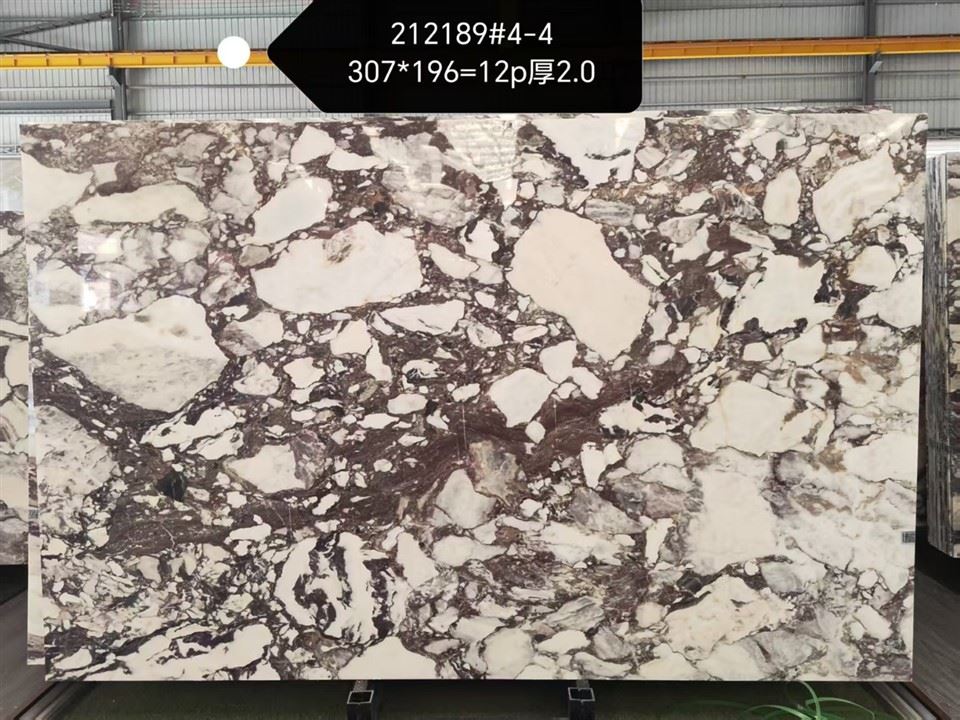

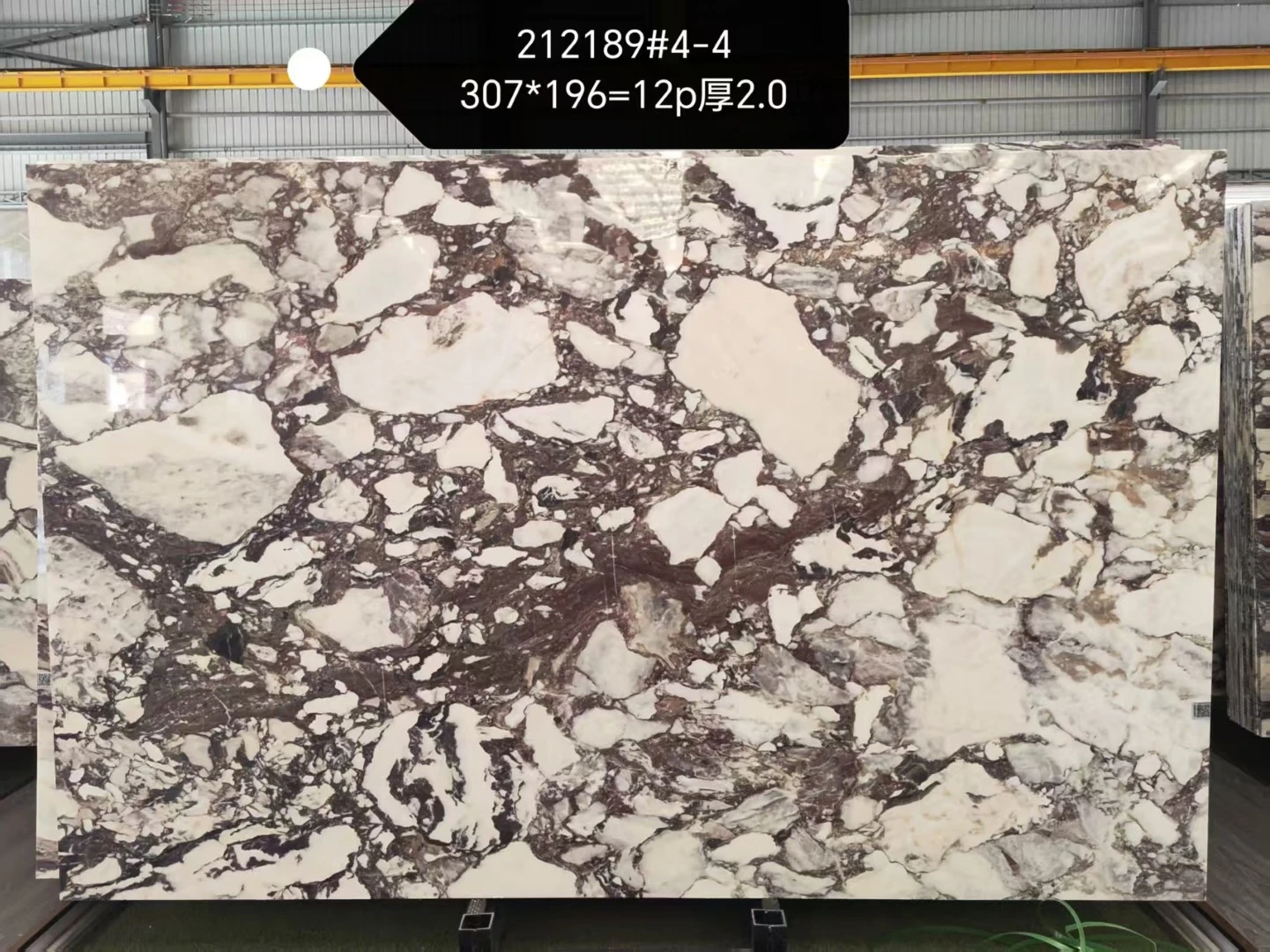
Polished Calacatta Viola Marble slab with an ivory white background and dramatic burgundy-purple brecciated veining displayed in Landiview Stone factory
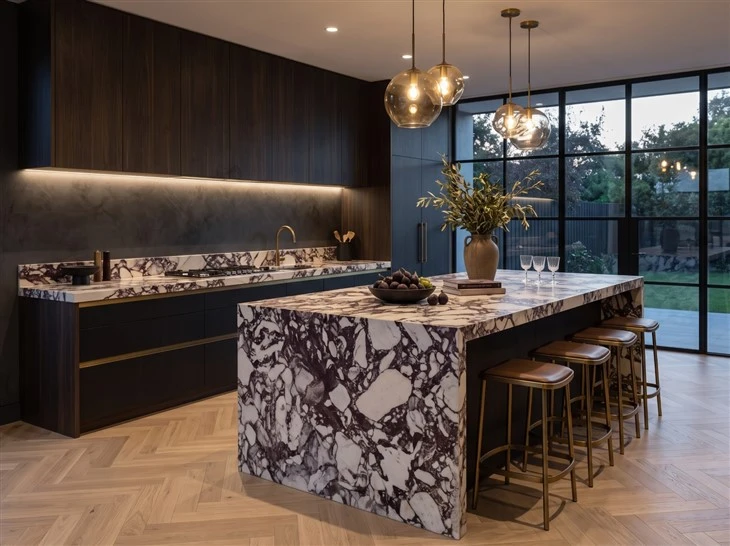
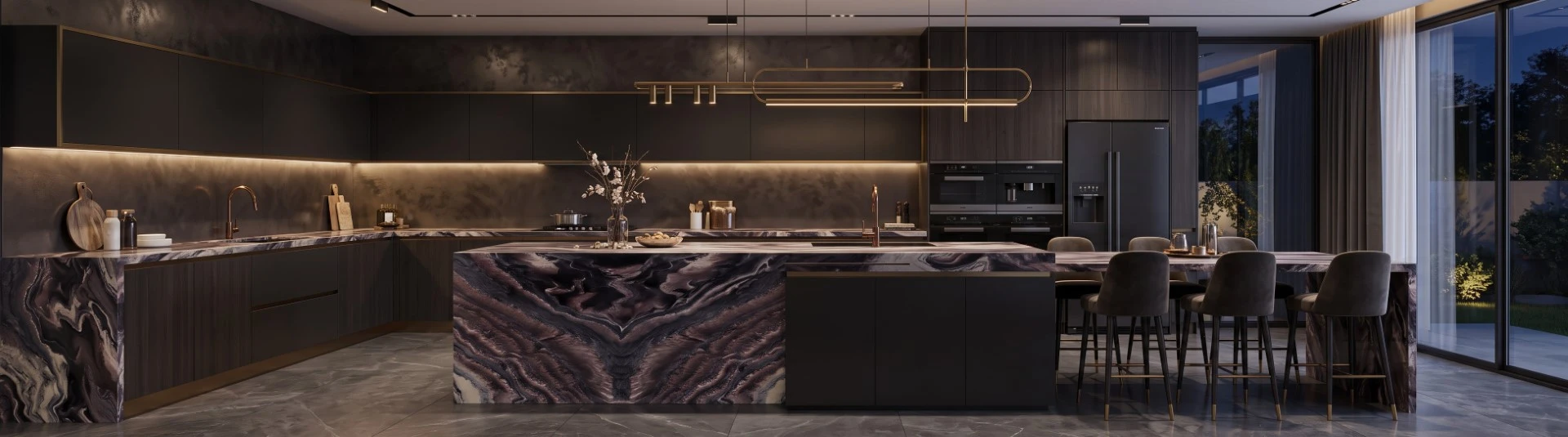
Calacatta Viola Marble kitchen island with waterfall edges, seating and matching countertops in a contemporary open-plan kitchen
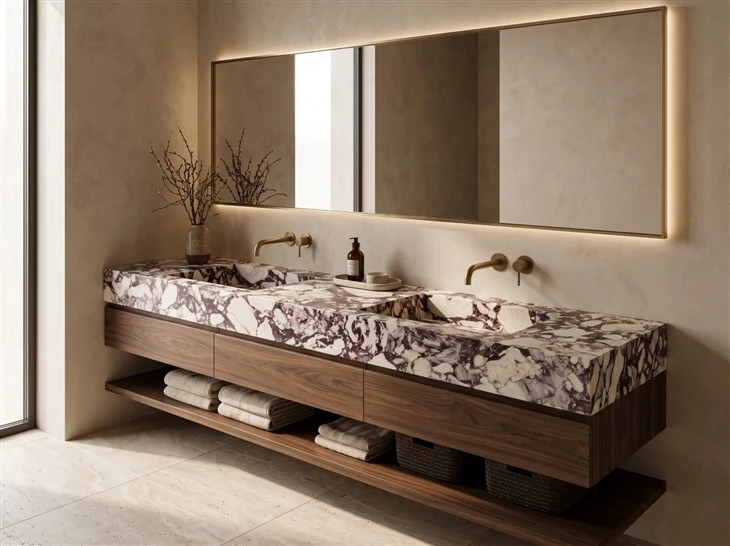
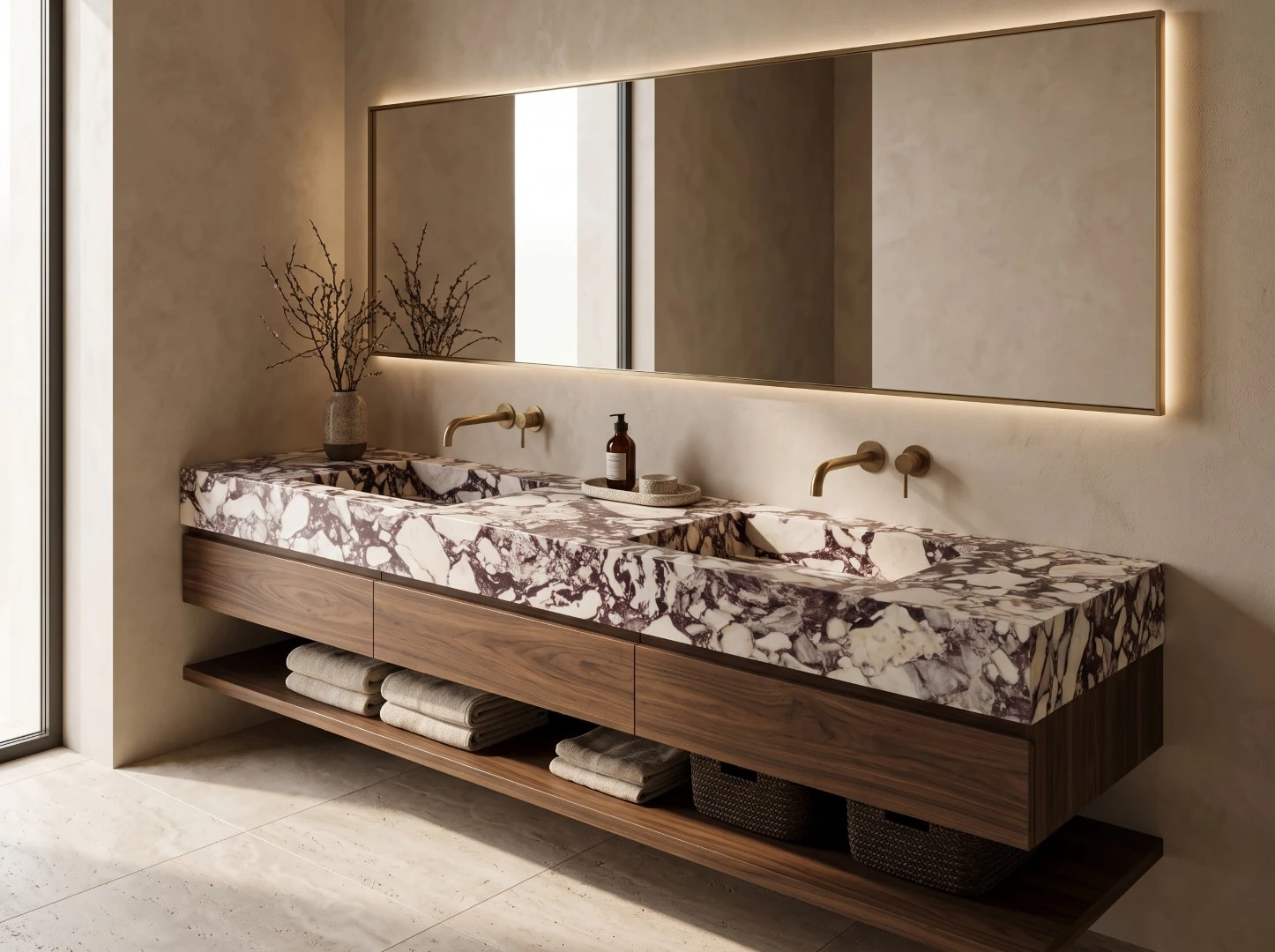
Calacatta Viola Marble double vanity with integrated sinks, mitered edges and a floating walnut cabinet in a modern luxury bathroom
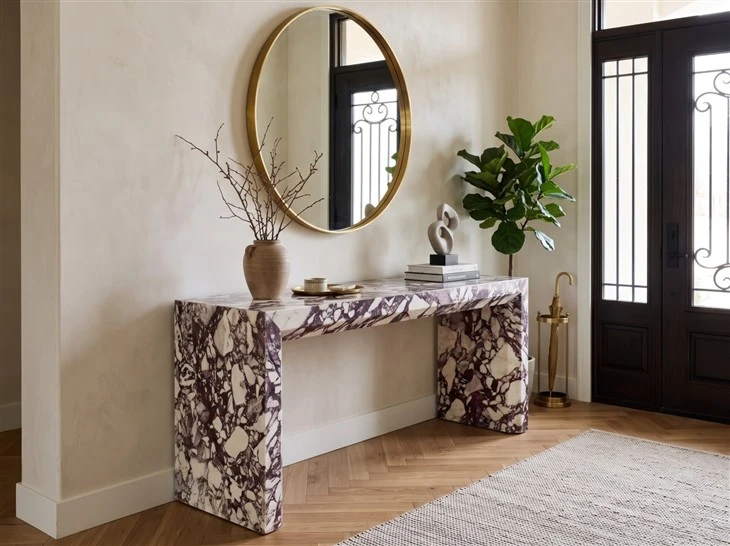
Calacatta Viola Marble console table with waterfall-style legs and dramatic burgundy veining in a refined entrance hall
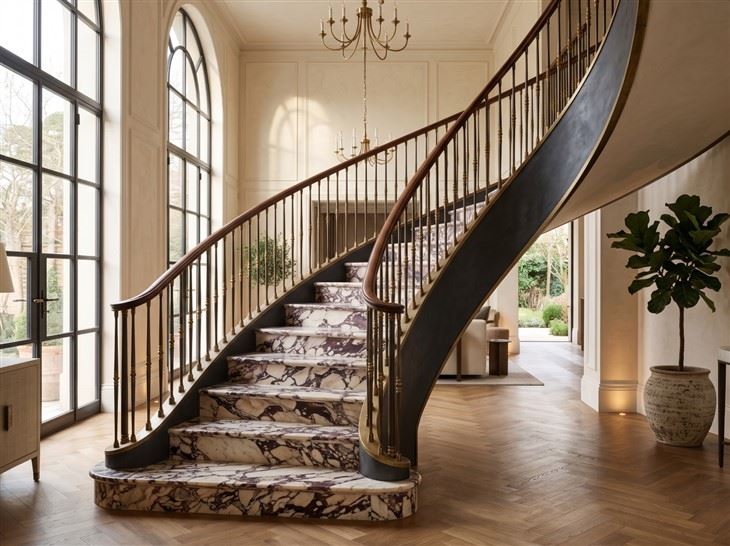
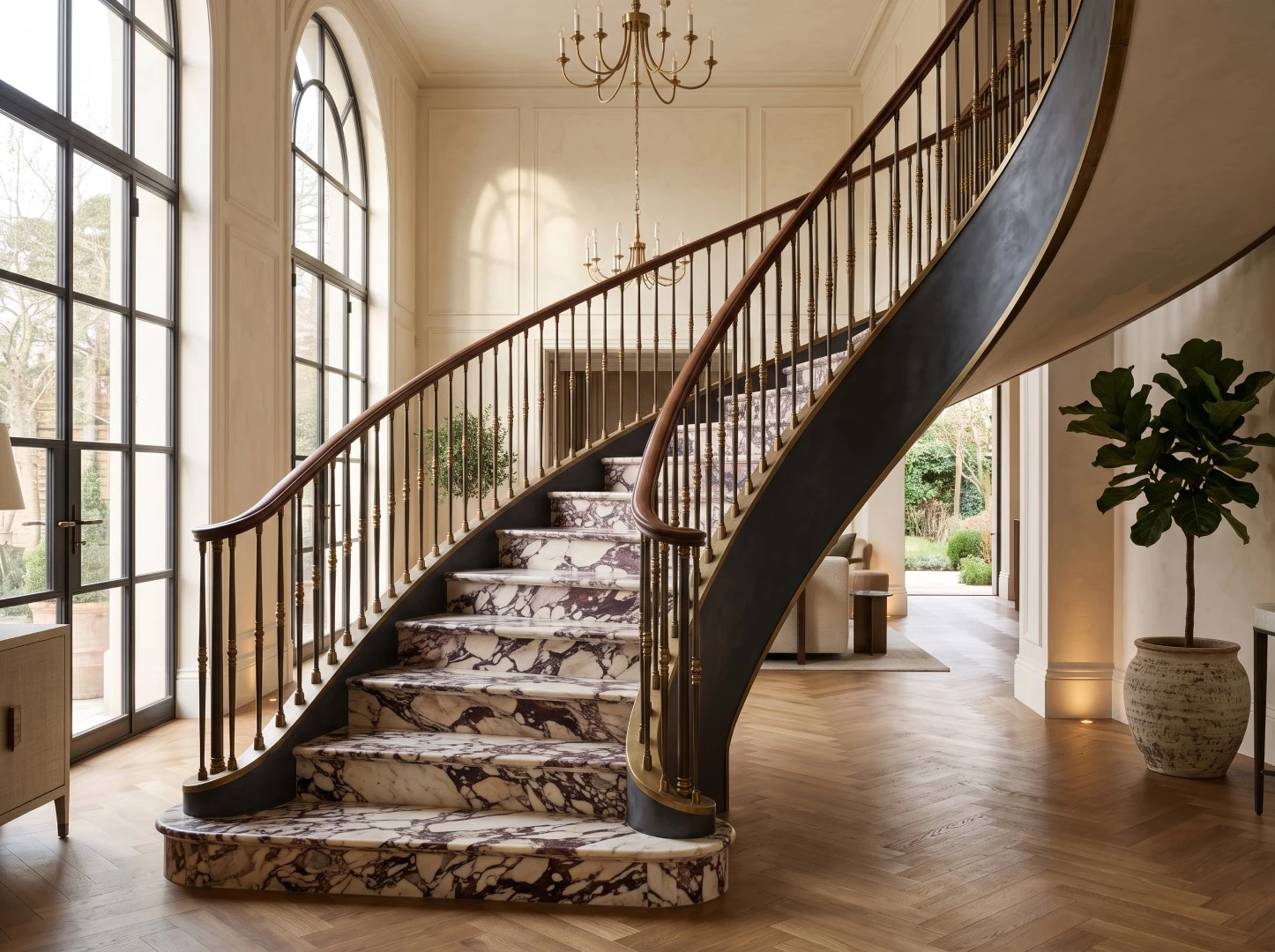
Calacatta Viola Marble curved interior staircase with matching treads and risers in an elegant double-height entrance hall
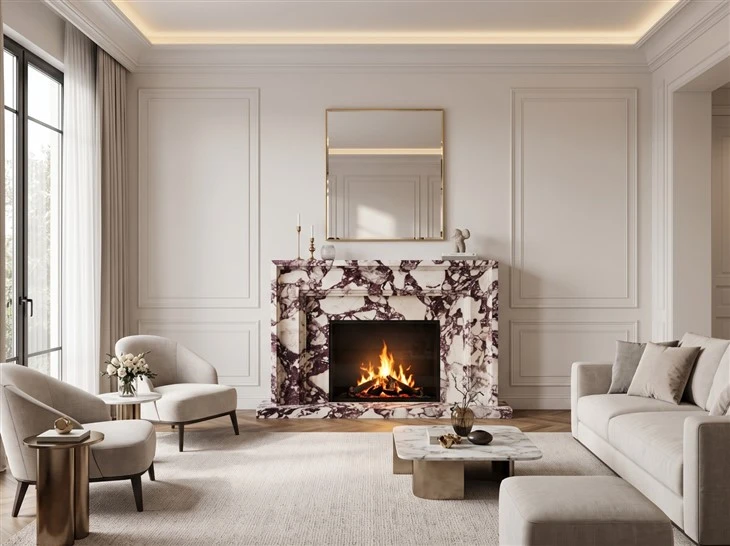
Calacatta Viola Marble fireplace surround with a traditional mantel design and dramatic burgundy veining in an elegant living room
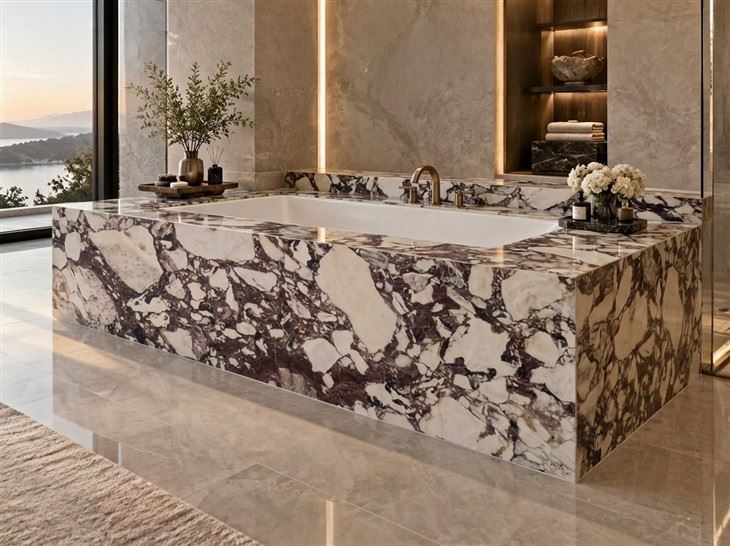
Calacatta Viola Marble bathtub deck and surround with mitered corners and dramatic burgundy veining in a luxury bathroom
Portuguese Calacatta Viola Marble Slab
- Fast Delievery
- Quality Assurance
- 24/7 Customer Service
Executive Summary
Choose Portuguese Calacatta Viola when a project needs a bold burgundy-and-ivory natural-marble composition at a more accessible commercial position than scarce Italian Calacatta Viola. The purchasing decision should be based on actual slab appearance, usable yield, fabrication scope and approved vein layout rather than the trade name alone.
Calacatta Viola marble is suited to slab importers, distributors, fabricators, stone contractors, designers, developers and builders seeking a dramatic statement material for kitchens, bathrooms, furniture, stairs, fireplaces and bathtub surrounds. Landiview Stone can supply current slabs or coordinate finished, cut-to-size products. Buyers may review available slab images, videos, slab numbers and visual range before approval. For fabricated work, the scope can extend from shop drawings and slab-scan layout to dry-lay inspection, piece numbering, temporary reinforcement and export packing. Availability, price, yield, schedule and block-cut options remain subject to the selected lot and project requirements.
Key Facts
The confirmed specification is Portuguese natural marble with an ivory-white field, burgundy-purple brecciated movement, a standard slab thickness of 18 mm and polished or honed finish options. Thicker 20 mm and 30 mm material can be investigated through block selection and special cutting.
| Specification | Confirmed Product Information |
| Product name | Calacatta Viola marble |
| Material | Natural marble |
| Origin | Portugal |
| Color and visual character | Ivory-white background with dramatic burgundy-purple brecciated veining |
| Standard slab thickness | 18 mm |
| Other thicknesses | 20 mm and 30 mm may be specially cut from selected blocks, subject to block availability, yield and project requirements |
| Slab thickness tolerance | ±1 mm stated tolerance; measurement method and acceptance criteria should be confirmed in the contract, drawings or inspection standard before ordering |
| Recommended finishes | Polished and honed |
| Supply formats | Slabs; cut-to-size pieces; project-specific finished stone products |
| Recommended applications | Kitchen islands and countertops, bathroom vanity tops, stone furniture, interior staircases, fireplaces and bathtubs |
| Lot approval | Current slab images, videos, slab numbers and visual-range review can be provided subject to actual availability |
Available Finishes and Processing Options
Polished finish gives the burgundy-purple network stronger depth and contrast; honed finish creates a quieter, matte presentation. Finish approval should use a representative sample or current material because gloss, resin treatment, fill, natural fissures and surface character can vary between lots.
▌ Polished Finish
Polishing intensifies the ivory-and-burgundy contrast and gives broad surfaces a reflective, decorative presence. It is especially effective on statement islands, vanity tops, console tables, bathtub surrounds and fireplace components where the brecciated composition is intended to read as a focal material. Buyers should review the actual slab surface under suitable lighting and agree expectations for resin, fill and natural features.
▌ Honed Finish
Honing reduces reflection and gives the stone a softer architectural character. The matte surface can suit restrained interiors, stair components and furniture where the visual movement should remain strong without a high-gloss effect. Honing does not remove marble's acid sensitivity; finish samples and maintenance expectations should still be reviewed.
▌ Project-Specific Processing
Depending on approved drawings, available slabs and fabrication feasibility, processing may include cut-to-size production, edge profiling, built-up or mitered edges, sink or cooktop cutouts, integrated-sink assemblies, stair treads and risers, fireplace elements, bathtub decks and furniture components. Large openings may use a documented semi-cutout approach when material and site conditions permit, leaving selected connections for completion by the installation team. Structural, support and installation decisions remain subject to project specifications and qualified local professionals.
Recommended Applications
Use Calacatta Viola where the stone should function as a deliberate visual centerpiece. Its fragmented ivory fields and burgundy-purple network create stronger graphic impact than quiet white marble, so slab selection and the relationship between adjoining cuts are central to the final design.
▌ Kitchen Island and Countertop
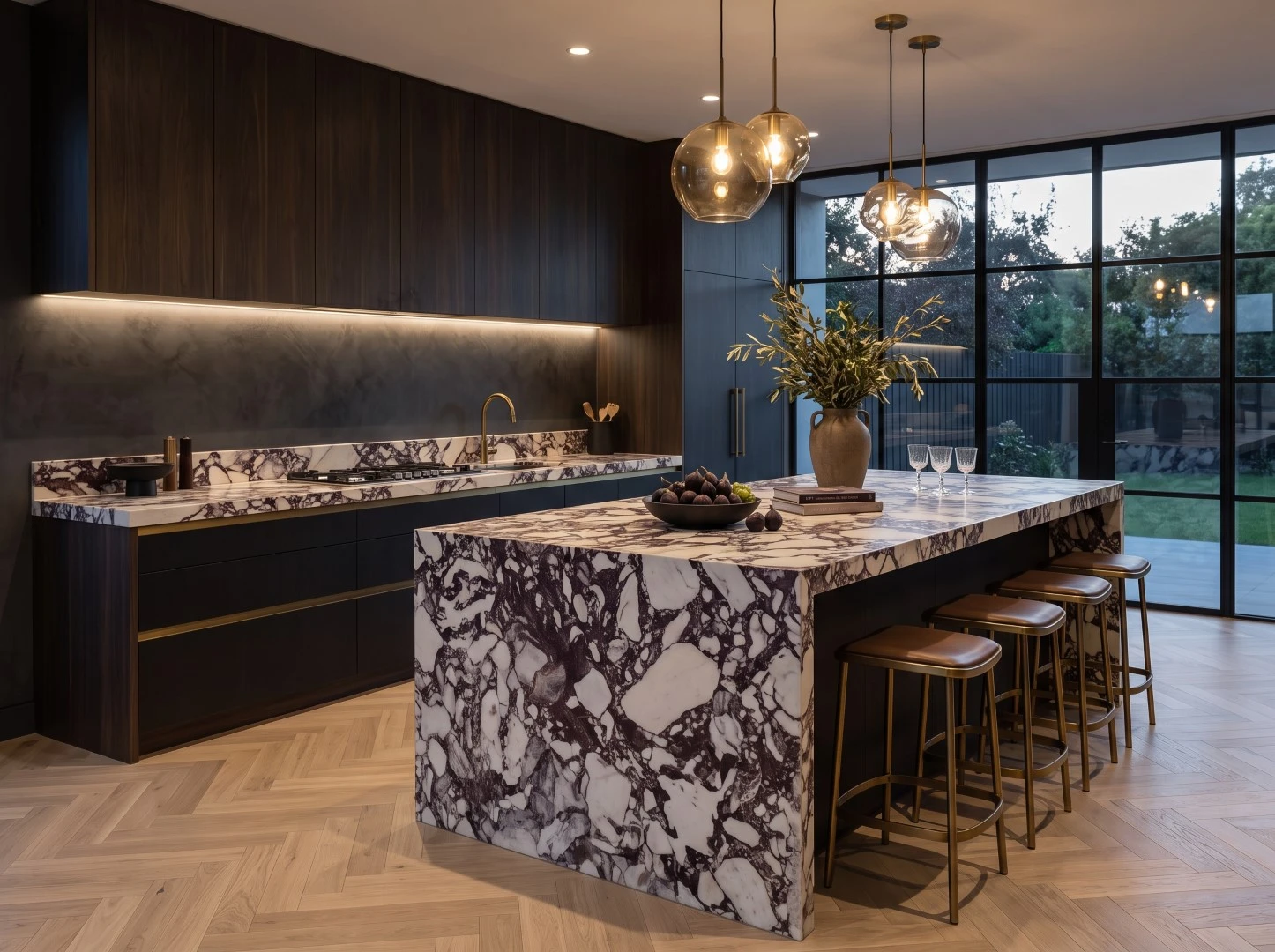
On a kitchen island, the brecciated pattern creates a sculptural central volume, particularly with waterfall or mitered edges that continue the stone across visible faces. For countertops, select slabs around the complete run rather than evaluating isolated pieces. Review cutout positions, usable yield, seam locations and vein direction, and accept that marble may etch when exposed to acids. Use qualified fabrication and installation practices, and follow the project specification for support and sealing.
▌ Bathroom Vanity Top
The ivory ground adds brightness while burgundy-purple movement gives a vanity the character of custom furniture. Integrated sinks or thick-looking mitered aprons can make the composition more continuous, but the arrangement should be planned from actual slab scans. Faucet reach, sink template, backsplash, cabinet clearance and narrow stone zones around openings must be coordinated before fabrication.
▌ Stone Furniture
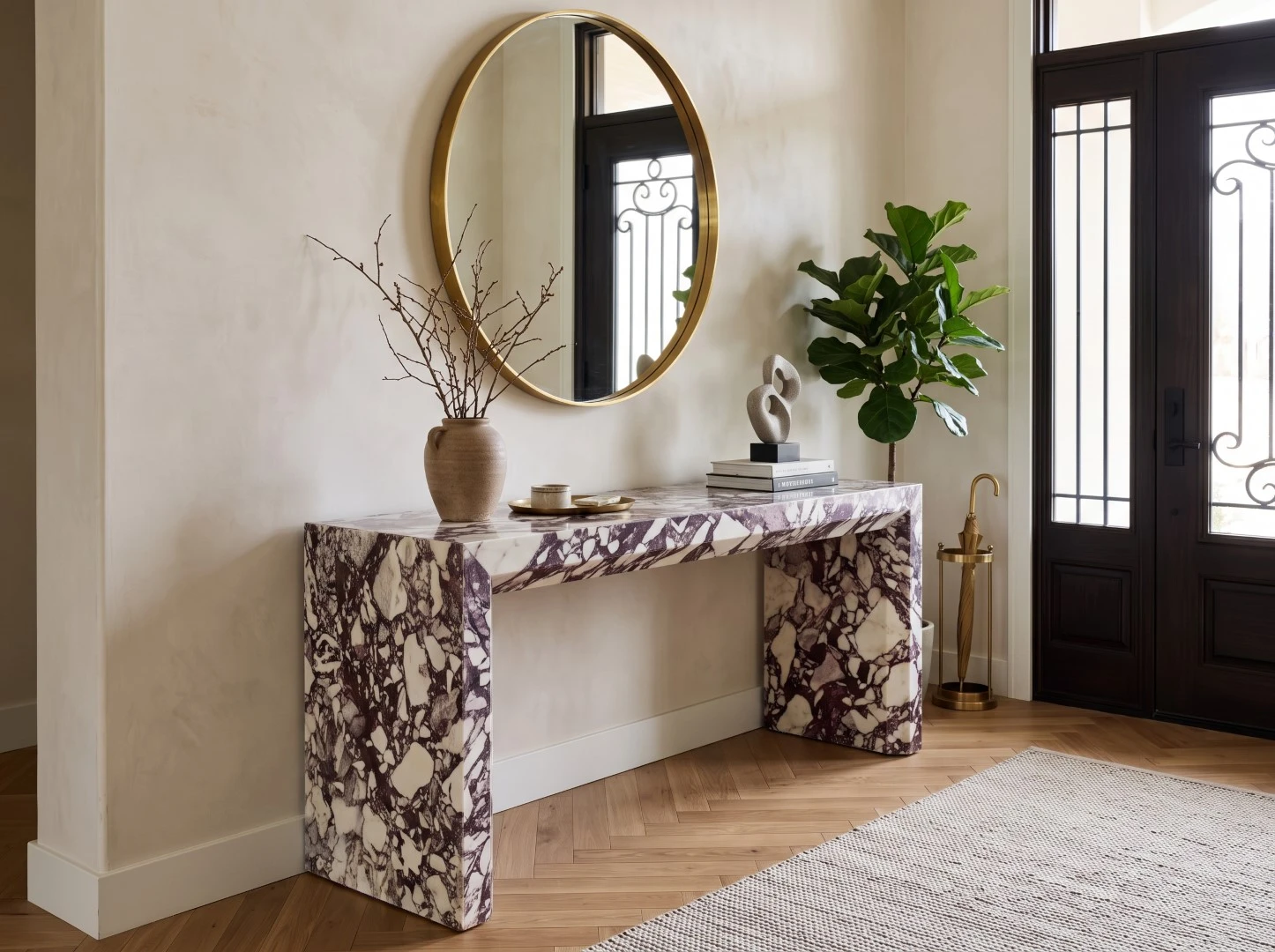
Console tables, side tables and monolithic furniture use the marble's pattern at a close viewing distance, turning each visible face into part of one composition. Mitered corners can create a substantial appearance while controlling weight, subject to engineering and fabrication review. Buyers should approve the face allocation, corner relationships, internal support and transport protection for the specific design.
▌ Interior Staircases
Calacatta Viola can turn an interior staircase into a continuous architectural feature, with burgundy movement leading the eye through treads, risers and landings. The strongest effect comes from coordinating the entire flight rather than selecting each step independently. Slip resistance, substrate, edge details, piece thickness, support and local code requirements must be resolved by the project team.
▌ Fireplace
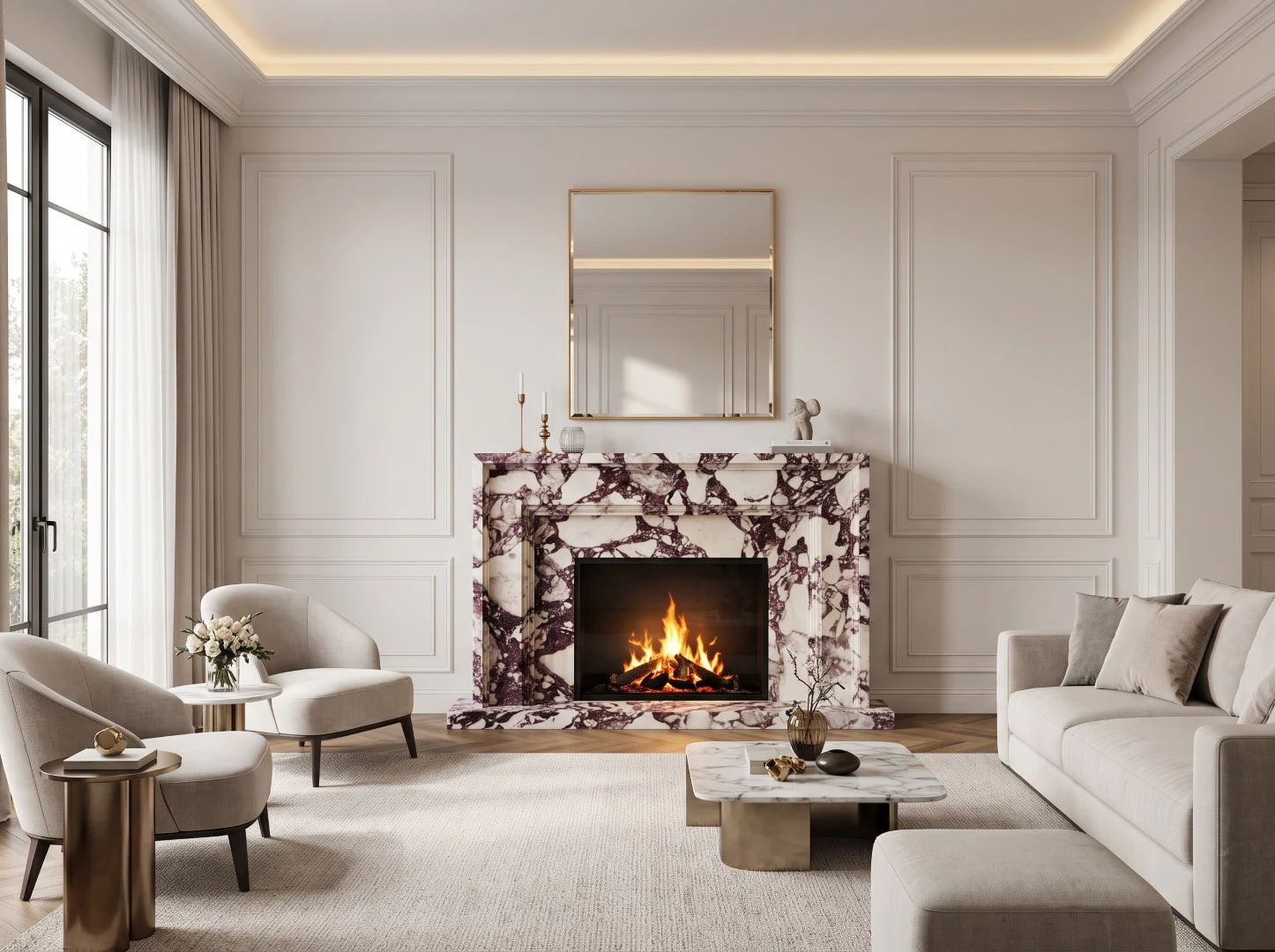
A fireplace surround or mantel concentrates the stone around a natural focal point. Bold fragments can be balanced symmetrically or deliberately sequenced across legs, header and hearth to create either a formal or expressive composition. Heat exposure, clearances, substrate, anchoring and installation details must follow the fireplace manufacturer's instructions, project specifications and applicable local requirements.
▌ Bathtub
A bathtub deck and surround can use large mitered planes to create a calm monolithic form, while the purple-burgundy veining provides contrast against neutral walls and sanitary fittings. Prioritize slab areas that connect naturally around visible corners and backsplashes. Wet-area detailing, waterproofing, slip considerations, joint design, sealant compatibility and maintenance requirements remain part of the professional installation scope.

Why Choose This Stone
Portuguese Calacatta Viola offers the broad design language buyers associate with ivory-and-purple brecciated marble, but it should be specified transparently as Portuguese material rather than represented as Italian quarry material. Its main value is dramatic appearance combined with a generally lower purchasing position than scarce Italian Calacatta Viola.
- • Distinctive visual identity: large ivory fragments and burgundy-purple movement create an immediately recognizable focal surface.
- • Multiple design scales: the pattern can work across slabs, islands, large bath components, stair runs, fireplaces and furniture.
- • Flexible visual direction: polished finishing emphasizes color depth, whereas honed finishing gives the same pattern a quieter architectural reading.
- • Origin-transparent alternative: the Portuguese variety is a newer commercial material and differs visibly from the original Italian Calacatta Viola. Italian material is historically established and commonly positioned at a substantially higher price; the exact difference must be checked against current lots and quotes.
Comparison with Similar Stones
The closest name comparison is Italian Calacatta Viola, but buyers should not assume that materials sold under the same commercial name share the same quarry origin, pattern or price. Compare actual slabs, provenance, usable yield, finish, thickness and fabrication scope on a like-for-like basis.
| Stone | Typical Visual Direction | Material / Origin Position | Typical Uses | Buyer Considerations |
| Portuguese Calacatta Viola | Ivory-white fragments with dramatic burgundy-purple brecciated movement | Natural marble from Portugal; a newer commercial variety sold under the Calacatta Viola name | Islands, countertops, vanities, furniture, interior stairs, fireplaces and bathtubs | Approve actual slabs; state Portuguese origin clearly; confirm thickness, yield, fissures, resin treatment and layout |
| Italian Calacatta Viola | Classic Italian white-to-cream field with violet, burgundy or wine-colored movement; lot character varies | The original and historically established Calacatta Viola associated with Italy | Premium interiors, furniture, wall features, kitchens and bathrooms | Typically much more expensive and limited; verify quarry or supplier provenance, current slabs and commercial terms |
| Breccia Capraia | Bold brecciated white field with purple, gray, greenish or burgundy mineral movement depending on lot | Natural Italian marble sold under its own commercial name | Statement walls, furniture, baths and selected countertops | Can overlap visually with Viola selections; compare the complete slab rather than relying on naming |
| Arabescato or Calacatta-family white marble | White or cream background with gray, gold or occasional darker movement rather than dominant purple brecciation | Natural marble; origin and trade name vary by selection | Countertops, baths, walls, floors and feature elements | Often visually lighter and less purple; marble remains acid-sensitive and lot approval is important |
| Printed porcelain with Calacatta Viola styling | Designed repetition of ivory and purple marble-like graphics | Manufactured ceramic product, not natural marble | Walls, floors and some fabricated surface systems subject to manufacturer guidance | More repeatable pattern and different edge, repair and fabrication behavior; verify body color, print repetition and system details |
Frequently Asked Questions
The safest way to buy this marble is to define origin, approve the current slabs, document dimensions and tolerance, coordinate the layout before cutting, and agree inspection and packing requirements in the order documents.
Q: Can you provide Calacatta Viola marble samples?
A: Yes. Normally one or two samples can be provided without a sample charge, while courier cost is paid by the customer. Typical sample sizes range from 100 × 100 mm to 200 × 200 mm, subject to current material availability. Because one small sample cannot represent the full scale of a brecciated slab, use it mainly to review finish, base color and surface character. Current slab photos, videos and slab numbers should still be approved for lot-specific appearance.
Q: What is your slab thickness tolerance?
A: The stated slab thickness tolerance is ±1 mm. Before ordering, the buyer and supplier should confirm the nominal thickness, measurement method, sampling locations and acceptance criteria in the contract, approved drawings or inspection standard. Fabricated products may also require local thickness coordination at joints, mitered edges, cutouts or reinforced areas.
Q: How do you inspect Calacatta Viola slab surface quality?
A: Inspection focuses on cracks or unstable conditions that may affect handling or fabrication, overall pattern coordination, unusually large discordant black areas, surface processing and the color-and-vein range accepted by the buyer. Natural veins, fissures and filled areas must be distinguished carefully from structural cracks or processing defects. Acceptance should be based on the intended use, approved range and written quality criteria rather than a simplified rule that every natural mark is either acceptable or defective.
Q: Can I see current slab photos and videos before ordering?
A: Yes, subject to actual inventory. Landiview Stone can provide current-lot slab images or videos, slab numbers, surface-review information and an indication of the available color and pattern range. Buyers should identify the required quantity, dimensions, thickness and finish so that the review focuses on slabs with realistic yield for the order. Reserved status and continued availability should be confirmed when the selection is approved.
Q: Can you supply cut-to-size and finished products, not only slabs?
A: Yes. The workflow normally begins with architectural drawings. Landiview Stone prepares stone shop drawings for review, submits available slab information and, if current slabs are unsuitable, may investigate block selection and special slab cutting when appropriate. After shop drawings and slabs are approved, slab scans are used in AutoCAD for cutting and vein-layout simulation. Approved pieces are fabricated, dry laid where applicable, inspected, replaced if nonconforming, numbered and protected for export. See how to order cut-to-size stone from China.
Q: Can Landiview Stone prepare stone shop drawings from architectural drawings?
A: Yes. The technical team can identify the stone scope in the architectural documents and prepare stone-specific shop drawings covering relevant dimensions, thicknesses, cutouts, edges, visible surfaces, finishes, joints and fabrication details. Drawings must be reviewed and approved by the client and design team before production. Stone shop drawings coordinate fabrication; they do not replace structural design, code review or installation responsibility assigned to locally licensed professionals. Read what cut-to-size stone means for project procurement.
Q: How do you help control the final vein layout and installed appearance?
A: Approved slab scans are placed into AutoCAD to simulate cutting locations, vein direction and relationships between adjoining pieces before cutting. After fabrication, a dry layout can verify the actual pieces, help identify replacement needs and support piece numbering for installation. Client approval at the layout stage reduces information gaps, but it cannot remove natural variation or control site workmanship. Explore the natural stone slab layout process in AutoCAD.
Q: How do you protect slabs and finished stone during shipping?
A: Slabs use a sturdy crate, frame or A-frame/support solution designed for the actual container-loading plan. Finished products may use liners, separation, vibration cushioning, custom foam, plywood support and geometry-specific restraints. Sink or cooktop cutouts, narrow backsplashes, thin strips, vanity tops, fireplace parts, narrow panels and vulnerable corners may receive temporary support strips over protective film. These supports are for transport and should be removed before installation according to instructions. Regulated wood packaging should use ISPM 15-compliant material where required by the destination [3]. See how natural stone is protected during shipping.
Q: How should installed Calacatta Viola marble be maintained?
A: Use a pH-neutral cleaner intended for natural stone, address spills promptly and avoid unidentified acidic or alkaline cleaners and abrasive tools. Marble is calcareous and acid-sensitive, so citrus, vinegar and similar substances can etch the surface [1]. Sealer selection and reapplication frequency depend on the particular stone, finish, exposure, use and product manufacturer's instructions. Follow the project specification and the advice of the installer, stone professional and sealer manufacturer.
Q: Is Portuguese Calacatta Viola the same as Italian Calacatta Viola?
A: No. This product is Portuguese natural marble sold commercially as Calacatta Viola and has a visibly different color and brecciated structure from the original, historically established Italian material. Italian Calacatta Viola is generally rarer and much more expensive, while the Portuguese variety is a newer and usually more economical option. Buyers should require transparent origin identification and compare actual slabs rather than assuming equivalence from the shared trade name.
Q: Is Calacatta Viola marble suitable for kitchen countertops?
A: It can be used for kitchen countertops when the buyer accepts the behavior and care requirements of natural marble. The material creates a strong decorative surface, but acids may etch it and daily use can develop patina. Review slab soundness, cutout geometry, seam locations, support, edge design, finish and sealing requirements with qualified professionals. Use cutting boards and trivets, clean spills promptly and follow stone-care guidance [1].
Q: What affects the price of Calacatta Viola marble?
A: Pricing is project-specific. The main factors include current slab or block availability, slab dimensions and usable yield, visual selection, thickness, finish, resin or mesh treatment, quantity, cutting complexity, mitering, cutouts, integrated components, digital layout, dry-lay requirements, replacement allowance, packing and destination logistics. For a fair comparison, request quotations against the same approved origin, slabs, scope and inspection criteria rather than comparing only a headline square-metre price.
Why Landiview Stone
Landiview Stone supports both slab procurement and drawing-led custom fabrication. The practical advantage is a connected workflow that carries approved information from slab selection and shop drawings through cutting layout, inspection, numbering, protection and export packing.
▌ Supply Formats
Landiview Stone supplies natural stone in two principal forms: slabs for importers, distributors and fabricators; and project-specific cut-to-size or finished products for contractors, developers, designers, builders and other project buyers.
For slab buyers, support can include current-slab selection, slab-image review, confirmation of color and vein range, surface inspection, slab identification and export packing. Slab handling, loading, unloading and storage require trained procedures and appropriate hazard controls because large stone slabs can create serious caught-by, crushed-by and struck-by hazards [4].
▌ Custom Fabrication Workflow
- 1. Review architectural drawings and identify the stone scope.
- 2. Prepare stone shop drawings for client and design-team approval.
- 3. Submit available slabs; if unsuitable, investigate block selection and special slab cutting when appropriate.
- 4. Use approved slab scans in AutoCAD to simulate cutting and vein layout before production.
- 5. Fabricate to approved documents, then dry lay, inspect and number finished pieces where applicable.
- 6. Replace nonconforming pieces when required while considering adjacent color, vein direction and visual continuity.
- 7. Apply project-specific protection, including temporary reinforcement for vulnerable geometry, before export packing.
For complex products assembled from multiple stone and reinforcement components, the project team may create three-dimensional part models and conduct virtual assembly review in Autodesk Inventor or SolidWorks. This allows component relationships, material thicknesses, surface treatments, concealed reinforcement, cutouts, clearances and potential interference to be examined before fabrication details are finalized.
▌ International Project Experience
- • Marble furniture, bathroom vanity tops and shower wall panels for the Grand Hyatt Singapore renovation project
- • Stone supply for stations on Singapore's Thomson-East Coast Line
- • Interior stone products for the Wynn project in the United Arab Emirates
- • Marble products for public areas of the 255 East 77th Street luxury residential project in New York
- • Interior and exterior marble and granite products for three high-end custom homes on Tuckahoe, a private resort island in Massachusetts, USA
Request A Project Quote Or Slab Availability
Send Landiview Stone the required dimensions, nominal thickness, quantity, finish, application and delivery destination. Include architectural drawings, stone schedules, cutout templates or reference details when available. The team can respond with current availability, relevant slab photos or videos and a quotation based on the defined scope. For project orders, coordination may also include stone shop drawings, slab-scan cutting and vein layout, dry-lay inspection, piece numbering, temporary reinforcement and export packing. All proposals remain subject to current material availability, technical review and agreed order documents.
Hot Tags: Calacatta Viola marble, Portuguese Calacatta Viola marble, Calacatta Viola marble slabs, burgundy veined marble, marble supplier, custom marble fabrication, Landiview Stone
Previous
No InformationYou Might Also Like




Send Inquiry