


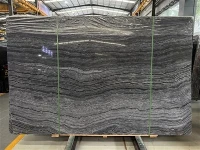
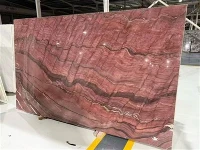
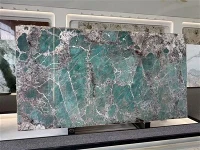
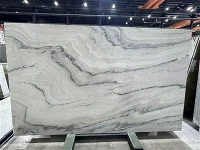
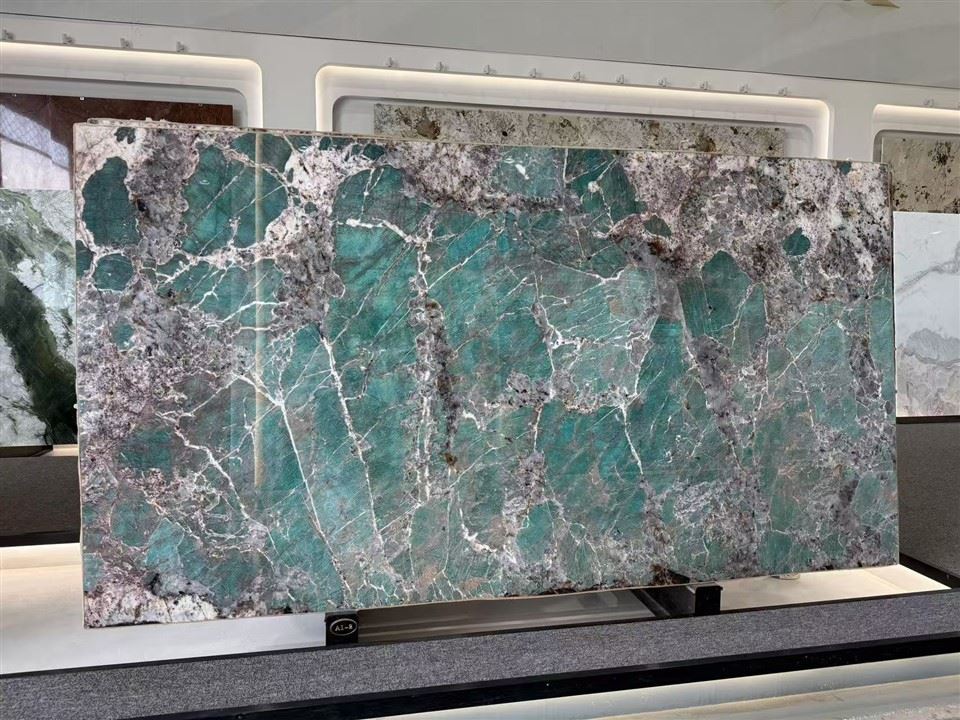

Amazonite Quartzite natural stone slab with turquoise-green mineral formations, gray crystalline areas and white veining
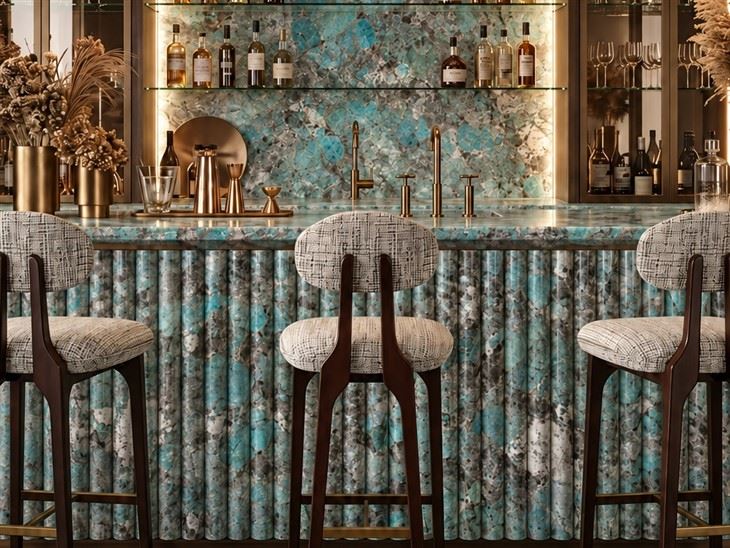
Luxury bar counter featuring Amazonite Quartzite countertops, backsplash and fluted stone panels
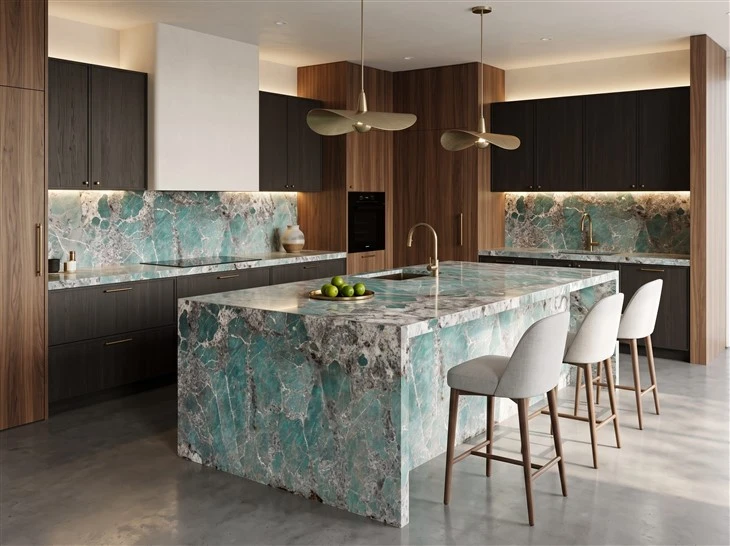
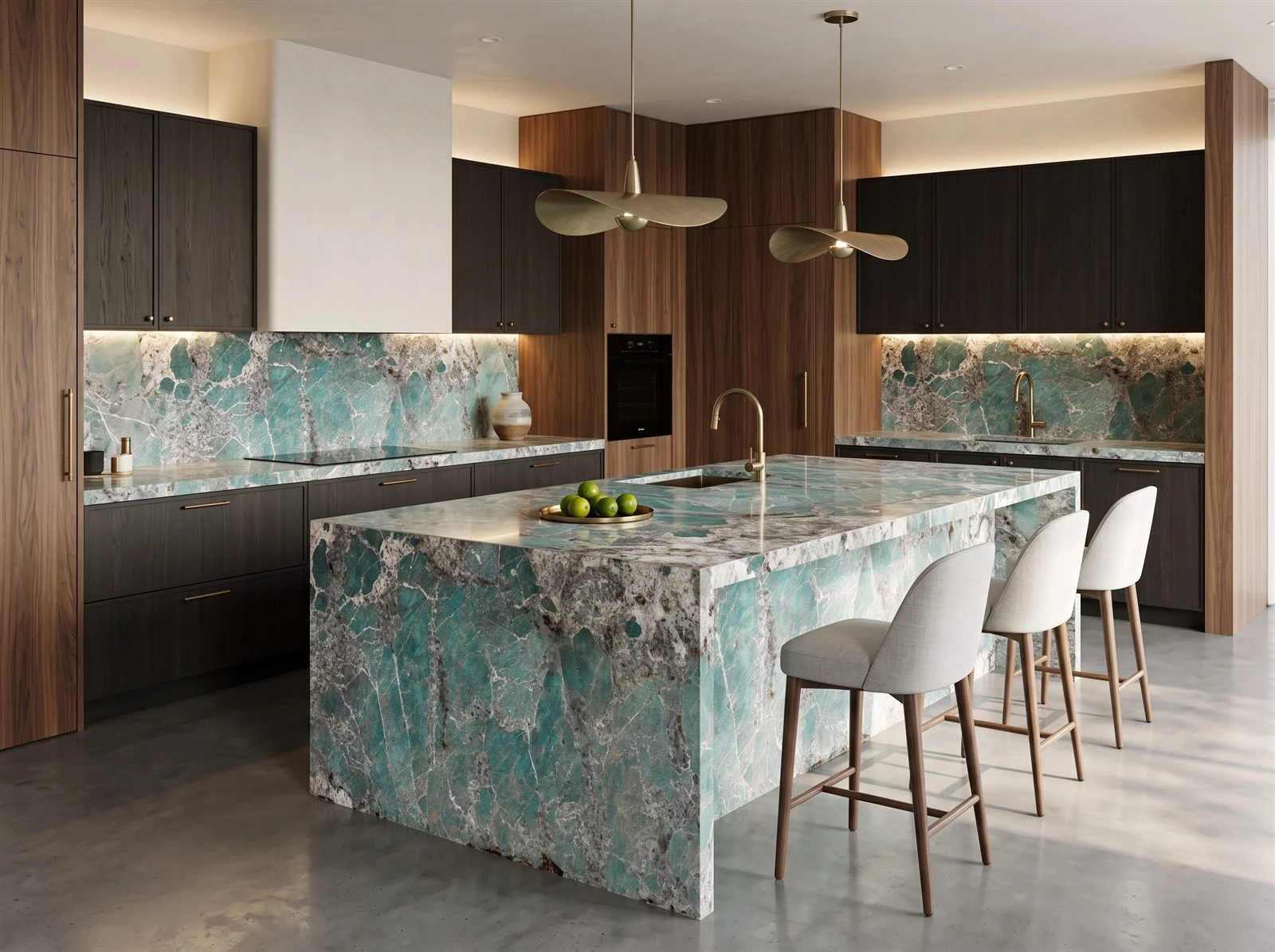
Amazonite Quartzite kitchen countertops, backsplash and waterfall island with dark wood cabinetry
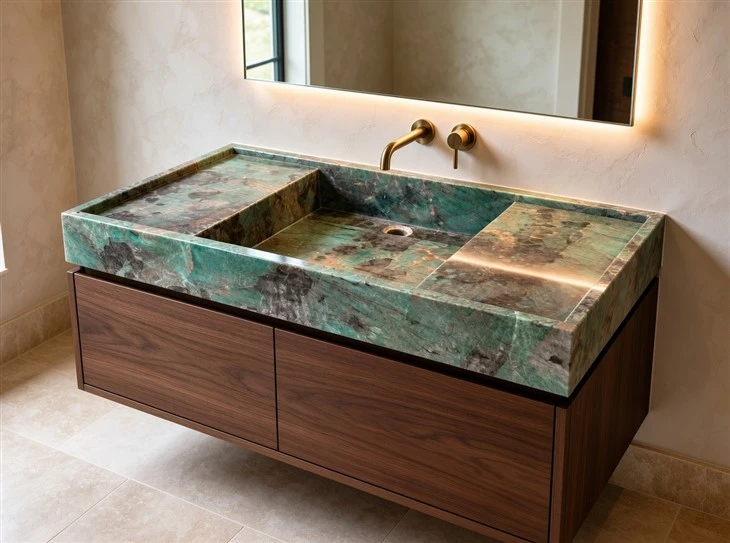
Amazonite Quartzite integrated sink vanity with mitered stone edges and a floating walnut cabinet
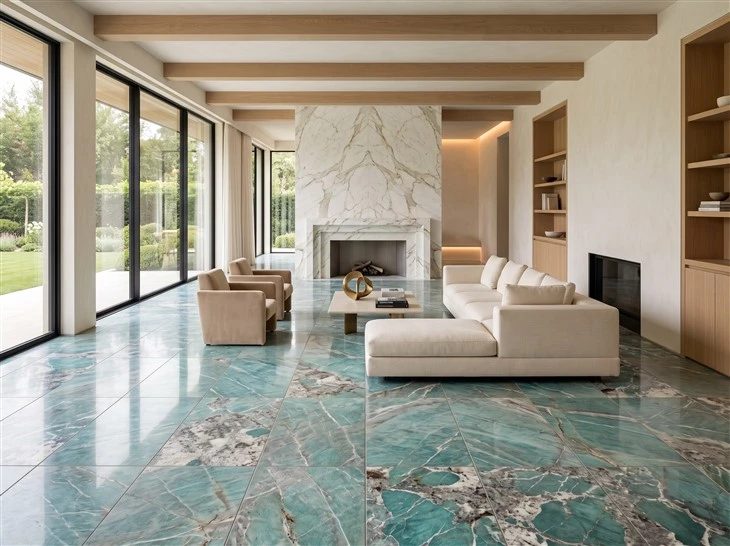
Large-format Amazonite Quartzite floor tiles with visible grout joints in a custom home living room
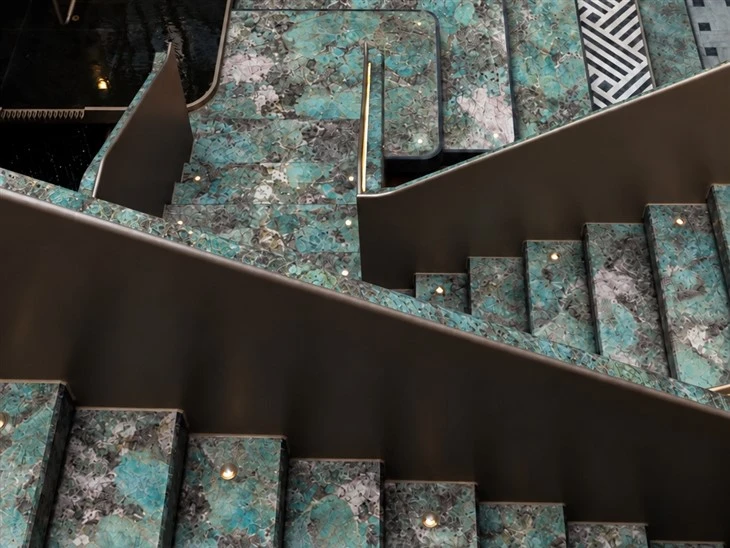
Amazonite Quartzite interior staircase with polished stone treads, integrated step lighting and dark side panels
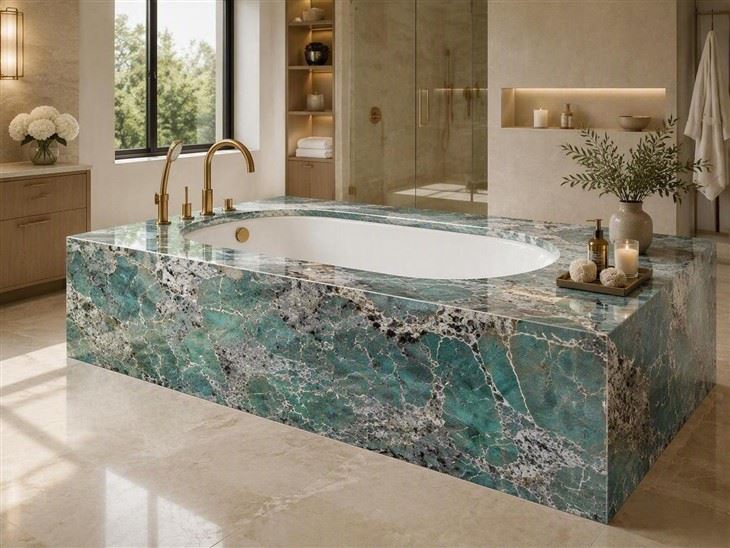
Amazonite Quartzite bathtub deck with polished surfaces, mitered edges and matching stone apron panels
Brazilian Amazonite Quartzite Slab
- Fast Delievery
- Quality Assurance
- 24/7 Customer Service
Executive Summary
Amazonite Quartzite is selected for projects that need a vivid turquoise-green natural surface rather than a uniform green pattern. The purchasing decision should be based on current slab approval, usable yield and a fabrication plan that respects the stone's crystalline areas, white veining and natural variation.
Amazonite Quartzite is a natural quartzite from Brazil for slab importers, stone fabricators, contractors, designers, builders and developers specifying expressive interior stone. Its recommended uses include bar countertops, kitchen islands and countertops, vanity tops, floor tiles, interior staircases and bathtub decks. Buyers may source polished slabs or request project-specific cut-to-size and finished products. Before ordering, confirm current slabs, required thickness, finish, dimensions, drawings, color range, cutout geometry, layout expectations, inspection criteria and destination. Natural-stone suitability must be evaluated for the specific application and supported by project specifications and qualified professionals.

Key Facts
The confirmed commercial specification is Brazilian natural Amazonite Quartzite with a polished finish and a standard slab thickness of 18 mm. Special 20 mm or 30 mm slab cutting may be investigated from selected blocks, subject to block availability and project requirements.
| Buyer Question | Confirmed Product Information |
| Product name | Amazonite Quartzite slab |
| Material | Natural quartzite |
| Origin | Brazil |
| Color and visual character | Turquoise-green mineral formations, gray crystalline areas and white veining |
| Standard slab thickness | 18 mm |
| Alternative thicknesses | 20 mm and 30 mm may be specially cut from selected blocks according to customer requirements, subject to suitable block availability and project review |
| Stated thickness tolerance | ±1 mm; measurement method and project acceptance criteria should be confirmed before ordering |
| Recommended finish | Polished |
| Supply forms | Slabs; project-specific cut-to-size and finished stone products |
| Required pre-order confirmation | Current availability, slab dimensions, slab numbers, usable yield, surface condition, treatment, quantity, lead time, packing and destination |
Available Finishes and Processing Options
Polished is the recommended finish because it emphasizes Amazonite Quartzite's saturated green mineral areas, crystalline gray structure and white veining. Final gloss, resin treatment, mesh backing, edge details and cutout strategy should be checked against current slabs and the intended use.
▌ Polished Finish
A polished surface increases color depth and makes the contrast between turquoise-green formations, gray crystalline areas and white veins more legible. Buyers should review the actual slab under suitable lighting because photography, screen settings and reflections can change perceived color. For floors, stair treads and wet-area horizontal surfaces, the design team must evaluate slip resistance and local requirements rather than selecting gloss only for appearance [1].
▌ Processing Options
- • Slab selection by current images, videos and slab numbers
- • Stone shop drawings developed from architectural drawings for approval
- • Slab scanning and AutoCAD cutting and vein-layout simulation before cutting
- • Straight or shaped cutting, edge fabrication, cutouts and project-specific detailing
- • Factory dry layout, finished-piece inspection, replacement review and piece numbering
- • Three-dimensional modeling and virtual assembly review for complex multi-component work
- • Temporary reinforcement for vulnerable geometry and project-specific export packing
For large sink or cooktop openings, a semi-cutout may be considered when material and site conditions permit. Selected bridges remain temporarily connected for transport and are completed on site by the installation team. The retained locations, tools, responsibility and installation procedure must be documented in approved drawings and instructions.
Recommended Applications
Amazonite Quartzite is most effective where a prominent natural pattern can be treated as part of the composition. Each application requires slab-scale review, planned cut locations and professional assessment of supports, joints, cutouts, wet exposure and installation conditions.
▌ Bar Countertop

The turquoise-green field can create a strong focal surface for hospitality or residential bars, especially where a backsplash, front panel or mitered edge is intended to read as one coordinated composition. Buyers should map visible faces before cutting, confirm beverage-related maintenance expectations and coordinate sink, tap and equipment cutouts. Narrow rails around openings require careful handling and may need temporary transport reinforcement.
▌ Kitchen Island and Kitchen Countertop
Large islands can display broad mineral formations and are suitable for waterfall ends or matched aprons when slab yield permits. Approve the exact slabs, the relationship between adjoining faces and the locations of seams, faucets, sinks and cooktops. Quartzite is generally hard, but hardness does not prevent edge chipping, impact damage or breakage around weak geometry. Support, overhangs, cabinet levelness, appliances and semi-cutout decisions require professional coordination.
▌ Bathroom Vanity Top

A vanity top can use a selected green-and-white area as a controlled focal point and may be coordinated with an integrated stone sink or separate basin. Shop drawings should confirm faucet clearances, sink templates, backsplash thickness, front and rear rails, cabinet space and visible edges. Water exposure makes correct installation, compatible sealers and prompt maintenance important. Integrated products may benefit from virtual assembly review before fabrication.
▌ Floor Tiles
Floor tiles can distribute the Amazonite pattern across a room either as a balanced mixed field or a more deliberate continuous composition. The buyer should approve tile format, cutting direction, joint width, dry layout, piece numbering and acceptable visual variation. The design team must also confirm substrate, movement joints, setting materials, finished floor level, wet-area requirements and slip resistance under project and local rules [1].

▌ Interior Staircases

Polished Amazonite Quartzite treads can create a continuous visual route through an interior, while dark side panels or neutral risers can limit material use and keep the green stone prominent. Tread geometry, nosing, substrate, reinforcement, anchoring, joints, lighting recesses and slip-control strategy require coordinated details. Piece numbering helps transfer the approved color and vein sequence from factory dry layout to site installation.
▌ Bathtub Deck
A bathtub deck can use mitered edges and matching apron panels to form a monolithic appearance. The stone layout should account for faucet penetrations, access panels, tub clearances, support, waterproofing interfaces and removable components. Water management belongs to the complete assembly, not to the stone alone. Follow the project specification, local requirements and qualified installer recommendations for waterproofing, sealants, setting products and maintenance.

Why Choose This Stone
Choose Amazonite Quartzite when the design calls for natural turquoise-green mineral structure with visible crystalline depth and white veining. The value is visual and project-specific: approval of the right slabs and deliberate placement of each cut matter more than relying on the commercial name alone.
▌ Material Selection Value
- • Distinct turquoise-green formations create a recognizable natural-stone identity.
- • Gray crystalline areas and white veins provide contrast and help the surface work with neutral woods, metals and dark cabinetry.
- • Slab-scale variation supports statement islands, bars, stairs and feature bathroom elements.
- • Slabs and custom finished products can be coordinated through one technical workflow.
▌ What Buyers Should Approve
Approve actual current slabs rather than a name or small sample alone. Review slab number, dimensions, color range, veining, crystalline zones, fissures, dark areas, resin or mesh treatment, surface quality and usable yield. Natural mineral formations and stable fissures should not automatically be classified as defects; structural cracks, unstable openings and processing damage require separate evaluation. Where performance is critical, specify representative testing and project acceptance criteria. ASTM's public abstract for C616/C616M-22 describes material characteristics, physical requirements and sampling categories for quartz-based dimension stone, but this page does not claim Amazonite Quartzite test values [3].
Comparison with Similar Stones
Amazonite Quartzite should be compared with green quartzites, green marbles and other green decorative stones by material category, actual slab appearance, treatment, application demands and required maintenance. Similar color does not mean identical geology or fabrication behavior.
| Stone | Typical Visual Direction | Material Category | Typical Uses | Buyer Considerations |
| Amazonite Quartzite | Turquoise-green mineral formations with gray crystalline areas and white veining | Natural quartzite | Bars, kitchens, vanities, floors, stairs and bathtub decks | Approve current slabs, usable yield, fissures, treatment, thickness and layout plan. |
| Botanic Green or similarly traded green quartzites | Green fields with lighter mineral movement; pattern varies by commercial lot | Often sold as natural quartzite; verify the selected material | Countertops, feature panels, vanities and furniture | Commercial names vary. Compare actual slabs and request identification or test documentation when required. |
| Verde Guatemala-style green marble | Deep forest green with lighter branching veins | Calcareous or serpentine-rich material sold in the marble trade, depending on source | Vanities, walls, floors and decorative interiors | Maintenance and acid response may differ from quartzite. Confirm exact geology, finish and intended exposure. |
| Green onyx | Translucent layered green, cream or amber movement | Onyx or banded calcite decorative stone | Backlit panels, bars and focal elements | Usually selected for translucency rather than countertop durability. Requires specialist fabrication, support and lighting coordination. |
| Green granite | Granular or flowing dark-to-medium green pattern | Commercial granite category; geological type varies | Countertops, floors, stairs and exterior work where suitable | May offer a quieter or more granular pattern. Verify current-lot properties, finish, resin treatment and application suitability. |
Frequently Asked Questions
The most important buying controls are approval of the current slabs, clear thickness and inspection criteria, coordinated drawings, a reviewed cutting layout and packing designed for the actual product geometry. The answers below state what can be coordinated and what remains subject to availability or project confirmation.
Q: Can you provide Amazonite Quartzite samples?
A: Yes. Normally one or two samples can be provided without a sample charge, with typical sizes from 100 × 100 mm to 200 × 200 mm. Courier cost is paid by the customer, and availability depends on the current material. A small sample is useful for reviewing the polished finish, basic color family and surface character, but it cannot represent the complete turquoise-green, gray and white composition of a full slab. Current slab photos or videos should therefore be approved before ordering.
Q: What is your Amazonite Quartzite slab thickness tolerance?
A: The stated slab thickness tolerance is ±1 mm. Before ordering, the buyer should confirm the measurement method, sampling points and acceptance criteria in the contract, drawings or inspection standard, because calibration, surface treatment and project-specific fabrication requirements can affect how thickness is assessed.
Q: How do you inspect Amazonite Quartzite slab surface quality?
A: Inspection focuses on conditions that may affect handling or fabrication, overall visual coordination, unusually large and discordant dark areas, and the agreed range of color and veining. Inspectors distinguish natural mineral formations and stable natural fissures from structural cracks, unstable openings or processing damage that could impair the intended use. Acceptance should be tied to approved slabs, representative images, project requirements and, where needed, test documentation.
Q: Can I see current slab photos and videos before ordering?
A: Yes, subject to current slab availability. Landiview Stone can provide images or videos of the available lot, slab numbers, surface observations and a review of the expected color and vein range. Buyers should identify the selected slab numbers in the commercial documents and confirm whether images are for selection, reference or final approval.
Q: Can you supply cut-to-size and finished products, not only slabs?
A: Yes. The usual workflow starts with the buyer's architectural drawings. Landiview Stone develops stone shop drawings for review, submits current slab images and, if available slabs are unsuitable, may investigate block selection and special slab cutting. After drawings and slabs are approved, slab scans are used in AutoCAD for cutting and vein-layout simulation. Approved pieces are fabricated, dry laid, inspected, replaced when necessary, numbered, protected and export packed. See how to order cut-to-size stone from China.
Q: Can Landiview Stone prepare stone shop drawings from architectural drawings?
A: Yes. The technical team can identify the stone scope in architectural drawings and prepare stone-specific shop drawings showing relevant dimensions, thicknesses, joints, cutouts, edges, visible faces, finishes and fabrication details for client or design-team review. These drawings coordinate stone production, but they do not replace the structural, code or installation responsibilities of locally licensed professionals. See what cut-to-size stone means in project procurement.
Q: How do you help control the final vein layout and installed appearance?
A: Selected slabs can be scanned and placed behind the approved piece geometry in AutoCAD. This allows buyers to review cut locations, vein direction and relationships between adjoining components before cutting. After fabrication, a factory dry layout checks the actual pieces, supports replacement decisions and provides piece numbering for installation. This process reduces information loss, but natural variation, lighting, joint treatment and site installation still influence the finished appearance. See natural stone slab layout in AutoCAD.
Q: How do you protect slabs and finished stone during shipping?
A: Slab packing is designed for the actual load and may use a robust timber frame or a supported A-frame arrangement; higher-risk slabs may require a steel A-frame with enclosed plywood protection. Finished products can receive liners, cushioning, custom foam, plywood separators, edge protection and positioning elements. Large sink or cooktop cutouts, narrow backsplashes, thin strips, vanity tops, fireplace parts, narrow wall panels and vulnerable corners may receive removable support strips over protective film. Solid-wood packaging must use materials compliant with applicable destination rules, including ISPM 15 where required [4][5]. See stone shipping protection methods.
Q: How should installed Amazonite Quartzite be maintained?
A: Use a pH-neutral cleaner intended for natural stone, a soft cloth or sponge, and prompt spill removal. Avoid unidentified acidic or alkaline cleaners and abrasive pads. Use cutting boards, trivets and coasters as practical protection. Whether a sealer is needed, which product is compatible and how often it should be renewed depend on the selected stone, finish, exposure and sealer manufacturer's instructions [2]. Follow the project specification and the recommendations of the fabricator, installer and product manufacturer.
Q: Is Amazonite Quartzite suitable for kitchen countertops?
A: It can be considered for kitchen countertops when the selected slabs are confirmed as natural quartzite and the design is professionally fabricated and supported. Quartzite is generally valued for hardness and abrasion resistance, but hardness does not eliminate chipping, fissure, edge-impact or transport risks. Large cutouts, narrow rails, overhangs, joints, supports and appliance clearances require project-specific review. Current-lot testing can be requested when performance documentation is required.
Q: What determines the price of Amazonite Quartzite slabs or fabricated products?
A: Pricing is project-specific. Relevant inputs include current slab or block availability, dimensions and usable yield, selection range, thickness, polished finish, resin or mesh treatment, cut complexity, edge work, cutouts, vein matching, dry layout, replacement allowance, packing and destination logistics. Compare quotations against the same approved scope rather than only a headline square-metre price. Send drawings and required quantities for a more meaningful quotation.
Q: Can you supply 20 mm or 30 mm Amazonite Quartzite?
A: The standard slab thickness offered is 18 mm. For projects requiring 20 mm or 30 mm, Landiview Stone can investigate block selection and custom slab cutting, subject to suitable block availability, yield and project quantity. Thickness, tolerance, finish, reinforcement, testing and acceptance criteria should be confirmed before production.
Q: What should buyers approve before production starts?
A: Buyers should approve the material identity, selected slab numbers, acceptable color and vein range, thickness, polished finish, shop drawings, visible faces, joints, edge details, cutouts, layout direction, tolerances, inspection criteria, packing method and delivery terms. For cut-to-size work, approval of the AutoCAD slab layout should occur before cutting. Site support, anchoring, waterproofing and installation methods remain subject to the project specification, local rules and qualified professionals.
Why Landiview Stone
Landiview Stone supplies slabs to importers, distributors and fabricators, and project-specific cut-to-size or finished products to contractors, developers, designers, builders and other project buyers. The practical difference is coordination from material approval through fabrication, inspection and export protection.
▌ Slab Supply
For slab buyers, Landiview Stone supports current slab selection, slab-image review, color and vein-range confirmation, surface inspection, slab identification and export packing. Slab handling, loading, unloading and storage involve serious hazards; OSHA advises trained procedures, suitable equipment and controls for slab movement [6].
▌ Cut-to-Size and Custom Fabrication
- 1. Review architectural drawings and identify the stone scope.
- 2. Prepare stone shop drawings for client and design-team approval.
- 3. Submit available slabs; if unsuitable, investigate block selection and special slab cutting when appropriate.
- 4. Use approved slab scans in AutoCAD to simulate cutting and vein layout before production.
- 5. Fabricate to approved documents, then dry lay, inspect and number finished pieces.
- 6. Replace nonconforming pieces when required while considering adjacent color and veining.
- 7. Apply project-specific protection, including temporary reinforcement for vulnerable geometry, before export packing.
▌ Complex Assemblies
For complex fabricated and assembled stone products, the project team may use three-dimensional modeling and virtual assembly review to examine component relationships, material thicknesses, surface treatments, concealed reinforcement, internal clearances and potential interference before fabrication details are finalized. Methods must be evaluated for the specific stone, geometry, transport route, site conditions and project specification.
▌ Practical Project Experience
- • Marble furniture, bathroom vanity tops and shower wall panels for the Grand Hyatt Singapore renovation project
- • Stone supply for stations on Singapore's Thomson-East Coast Line
- • Interior stone products for the Wynn project in the United Arab Emirates
- • Marble products for public areas of the 255 East 77th Street luxury residential project in New York
- • Interior and exterior marble and granite products for three high-end custom homes on Tuckahoe, a private resort island in Massachusetts, USA
Request A Quote
For a useful quotation, send the required dimensions, thickness, quantity, polished finish, application and delivery destination. Include architectural drawings, stone schedules, sink or appliance templates and layout preferences when available.
Planning to import Amazonite Quartzite slabs or order custom cut-to-size stone? Landiview Stone can review current slab availability, provide current-lot photos or videos and prepare a quotation against the confirmed scope. For project orders, the team can also coordinate stone shop drawings, scanned-slab vein layout, factory dry-lay inspection, piece numbering and export packing.
Hot Tags: Amazonite Quartzite slab, Brazilian quartzite supplier, green quartzite slabs, custom quartzite fabrication, Amazonite stone countertop, Landiview Stone
Previous
No InformationYou Might Also Like


Send Inquiry