


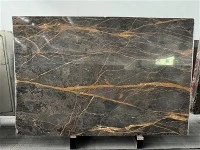
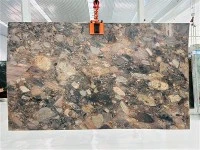
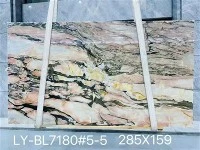
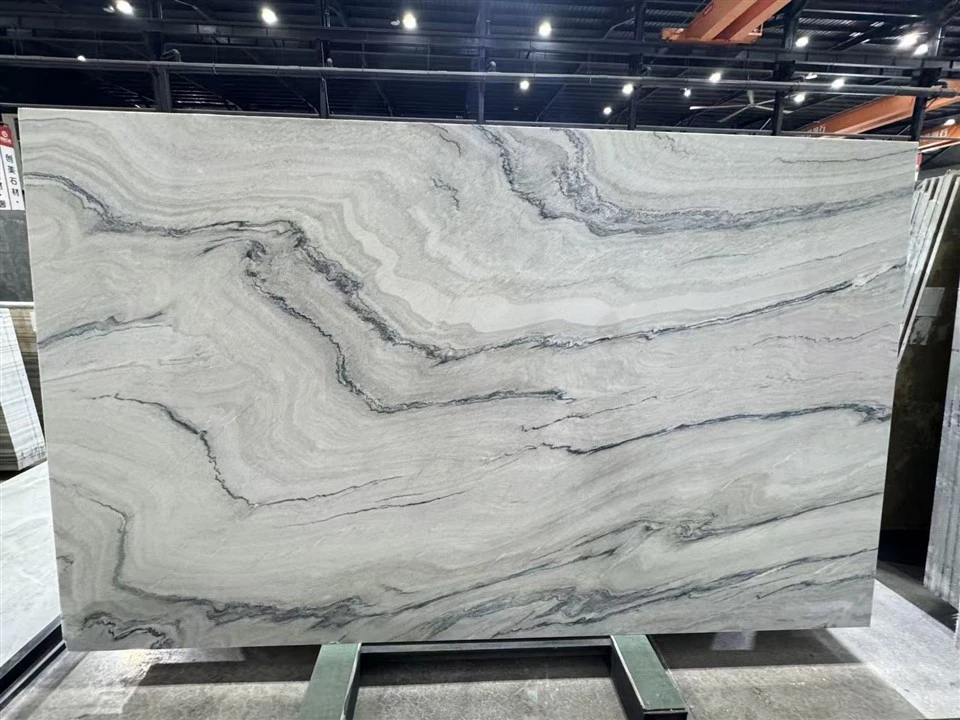

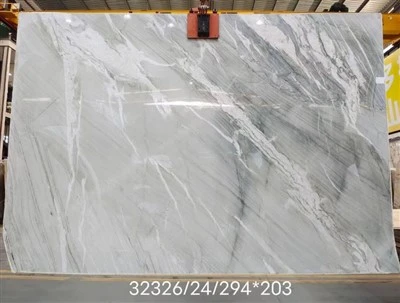
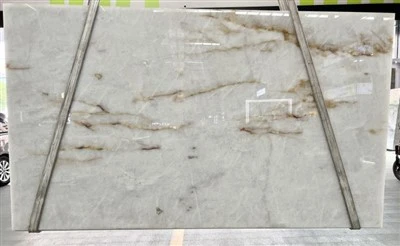
Luce Di Luna quartzite slab with a silver-white background and flowing charcoal-gray natural veining
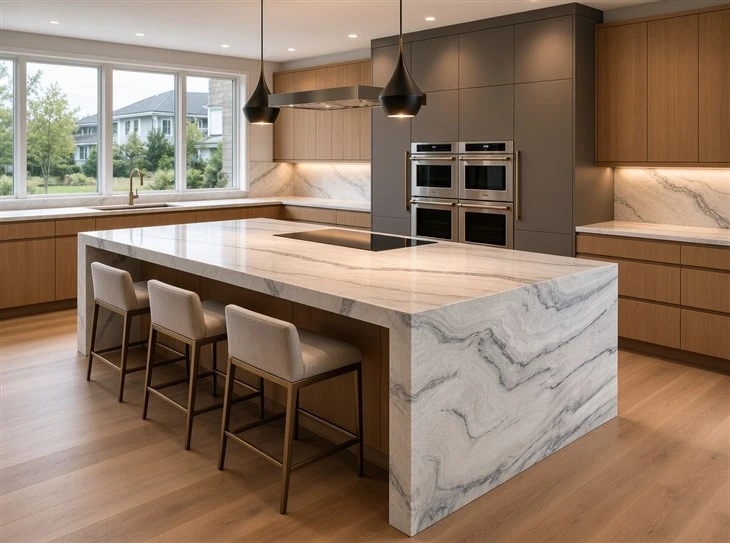
Luce Di Luna quartzite kitchen countertops and waterfall island with mitered edges in a luxury custom kitchen
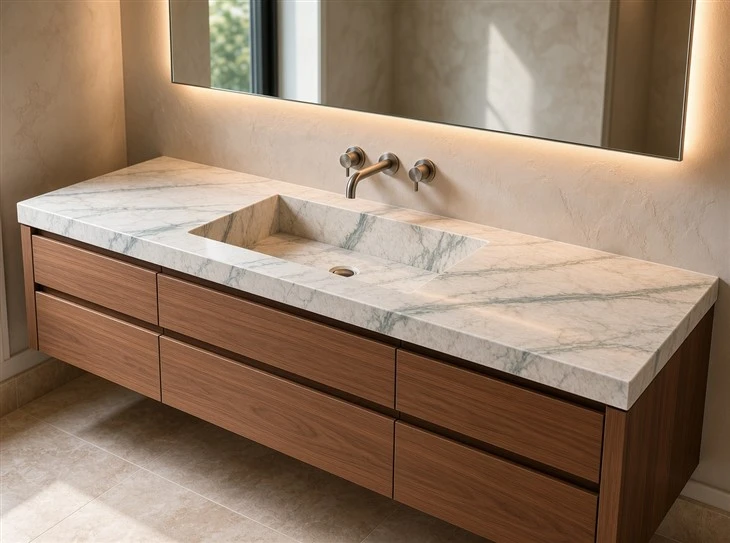
Luce Di Luna quartzite bathroom vanity with an integrated stone sink, mitered edges and floating wood cabinetry
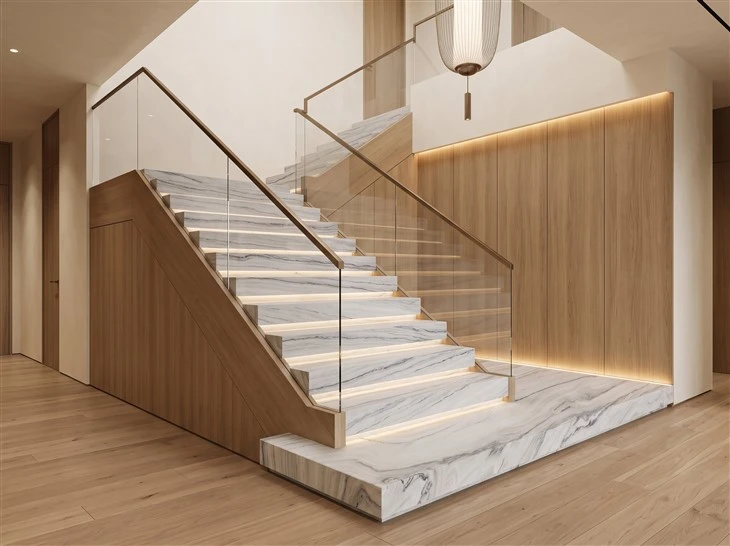
Luce Di Luna quartzite interior staircase with stone treads, matching risers, glass railings and warm wood side panels
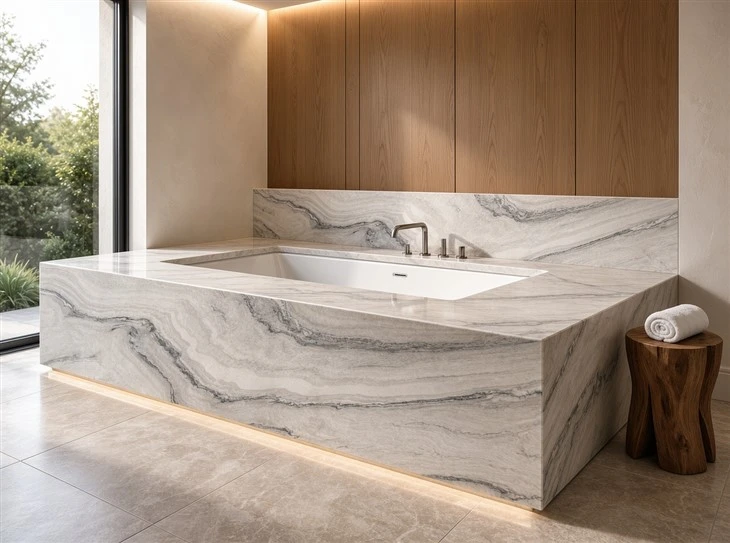
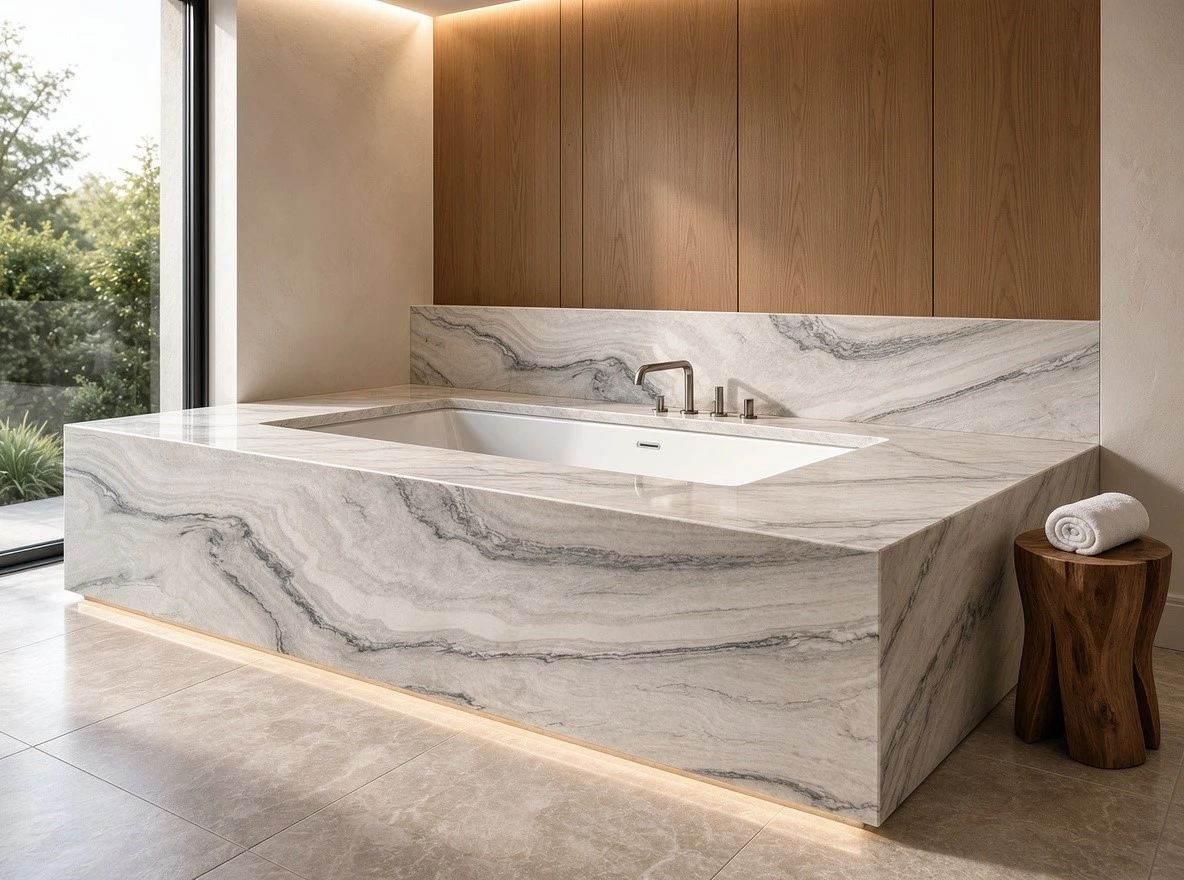
Luce Di Luna quartzite bathtub deck with mitered edges, matching apron panels and coordinated natural veining
Brazilian Luce Di Luna Quartzite Slab
- Fast Delievery
- Quality Assurance
- 24/7 Customer Service
Executive Summary
Luce Di Luna is a Brazilian natural quartzite selected for projects that need a light silver-white surface with expressive charcoal-gray movement. It is offered as slabs for importers and fabricators, or as coordinated cut-to-size and finished stone products for project buyers.
Luce Di Luna quartzite is suitable for slab importers, stone distributors, fabricators, contractors, interior designers, developers and builders considering kitchen islands, countertops, bathroom vanity tops, interior staircases or bathtub decks. Landiview Stone can support current-slab selection, identified slab photos or videos and export packing. For custom work, the workflow may extend from stone shop drawings and slab approval to AutoCAD cutting and vein-layout simulation, fabrication, dry-lay inspection, piece numbering and project-specific protection. Standard slab thickness is 18 mm; 20 mm and 30 mm may be specially cut from suitable blocks when required.

Key Facts
The confirmed offer is natural Luce Di Luna quartzite from Brazil, with a silver-white background, flowing charcoal-gray veining, an 18 mm standard slab thickness and polished or honed finishes. Optional 20 mm and 30 mm slab cutting is project-dependent.
| Attribute | Confirmed Product Information |
| Product name | Luce Di Luna quartzite slab |
| Material | Natural quartzite |
| Origin | Brazil |
| Visual character | Silver-white background with flowing charcoal-gray natural veining |
| Standard slab thickness | 18 mm |
| Optional thickness | 20 mm or 30 mm slabs may be specially cut from selected blocks, depending on project requirements and suitable block availability |
| Thickness tolerance | Stated standard: ±1 mm; confirm the measurement method and project acceptance criteria in the contract, drawings or inspection standard before ordering |
| Recommended finishes | Polished or honed |
| Recommended applications | Kitchen islands and countertops, bathroom vanity tops, interior staircases and bathtub decks |
| Supply formats | Current slabs for importers, distributors and fabricators; cut-to-size or finished products for project buyers |
| Selection basis | Approve current slab numbers, images or videos, usable dimensions, surface condition, color range and vein range before production |
| Testing | No project-specific physical test values are claimed on this page; request available documentation or project-specific testing when required |
Available Finishes and Processing Options
Polished and honed are the recommended finishes. Finish selection should be approved on the actual material because sheen changes contrast, color depth, tactile character and how natural mineral features are perceived.
▌ Polished Finish
A polished surface emphasizes color depth and increases the visual contrast between the silver-white field and charcoal-gray veining. It is a practical presentation choice for feature islands, vanity tops and bathtub-deck components where the approved slab movement is intended to remain visually prominent. Final gloss and surface acceptance should be agreed against samples or current material.
▌ Honed Finish
A honed finish produces a softer, lower-reflectance appearance. It may suit quieter interiors, stairs or designs where glare control matters. Honing can make color appear lighter or less saturated and may change the visibility of fingerprints, oils or natural surface features. Review a representative finish sample and maintenance expectations before production.
▌ Thickness and Custom Processing
The standard slab thickness is 18 mm. Suitable rough blocks may be selected for special cutting at 20 mm or 30 mm, depending on project needs and availability. Fabrication can include cutting, edge work, cutouts, mitered assemblies and piece-specific finishing where shown on approved drawings. Large openings, narrow returns and long thin parts require special review for support, handling and shipping.
Recommended Applications
Luce Di Luna is recommended here for kitchen islands and countertops, bathroom vanity tops, interior staircases and bathtub decks. Each use requires approval of the actual slabs and coordination of joints, support, cutouts, edge details, finish and installation conditions.
▌ Kitchen Island and Kitchen Countertop

The broad flowing movement can make a kitchen island the primary stone composition in an interior, especially when the waterfall ends or adjoining tops are planned from identified slab areas. Buyers should coordinate sink and cooktop openings, faucet clearances, seams, overhang support, miter joints and appliance interfaces. When material and site conditions permit, a semi-cutout may be considered for a large opening so selected sections remain temporarily connected during shipping and are completed on site under approved instructions.
▌ Bathroom Vanity Top
The silver-white field can work with warm wood, painted cabinetry and metal finishes, while the darker veins provide useful visual definition. Review basin geometry, faucet reach, backsplash thickness, cabinet clearance, edge build-up and support around openings. Integrated stone sinks or multi-part assemblies require additional attention to joints, drainage geometry, water testing where specified and transport protection. Waterproofing and installation must follow the project specification and local professional requirements.

▌ Interior Staircases
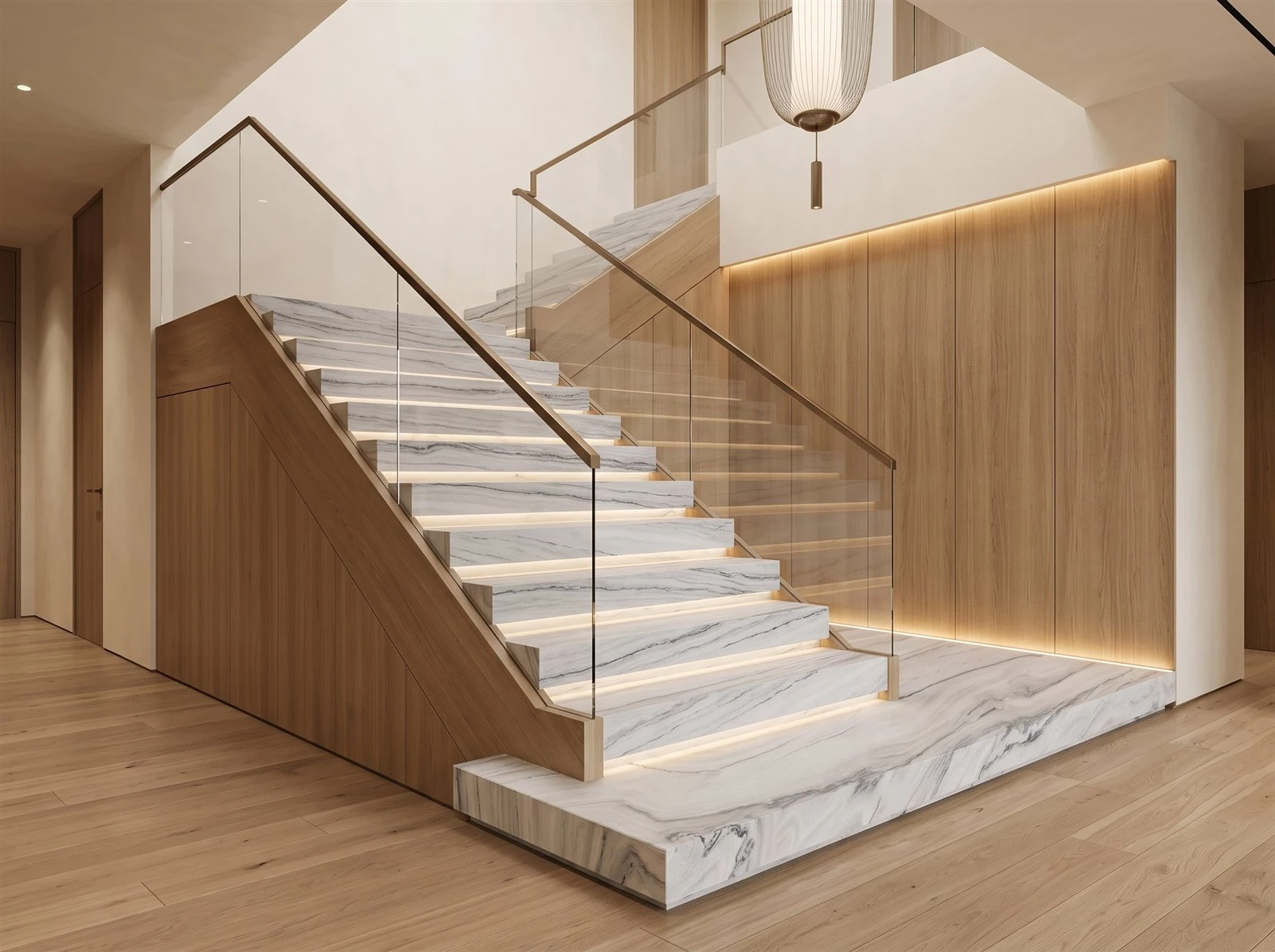
Directional veining can be coordinated across treads and risers to create a deliberate sequence rather than unrelated pieces. Confirm tread thickness, nosing detail, riser alignment, substrate flatness, joint layout, slip-resistance expectations and edge exposure. A polished or honed sample alone does not establish slip performance. The designer and installer should select the finish and assembly based on local codes, traffic, cleaning and site conditions.
▌ Bathtub Deck
A bathtub deck can use the material across the horizontal deck, apron panels and mitered edges, with slab layout used to coordinate visible transitions. Key decisions include tub access, service openings, joint positions, substrate and waterproofing, movement accommodation, edge support and installer access. Large cutouts and narrow edge zones should be reviewed before fabrication and protected during handling. Sealers and setting products must be compatible with the stone, finish and wet-area system.
Why Choose This Stone
Choose Luce Di Luna when the design calls for a pale natural-stone field with broad, flowing dark-gray movement and when the project team is prepared to approve actual slabs and plan each visible cut. Its value comes from composition, not uniformity.
- • The silver-white background supports light, contemporary interiors without appearing visually flat.
- • Flowing charcoal-gray veining can connect adjoining countertop, riser, apron or waterfall components when slab layout is planned.
- • Polished and honed options allow the same material family to support either higher contrast or a quieter surface expression.
- • Slab-only and fabricated-product purchasing routes suit both inventory buyers and project buyers.
- • Current-slab approval, scan-based layout and dry-lay inspection can reduce ambiguity between material selection and fabrication.
Natural quartzite is a quartz-based stone, but hardness should not be interpreted as immunity from edge damage, fracture, fissure-related risk or shipping damage. Buyers should evaluate the selected lot, geometry, fabrication method and support conditions. Trade names are not a substitute for petrographic identification or project-specific test documentation where performance is critical.
Comparison with Similar Stones
Luce Di Luna should be compared by actual slab appearance, verified material category, finish, usable yield and project risk rather than by trade name alone. White Macaubas, Mont Blanc, Super White and engineered quartz can satisfy different priorities.
| Stone | Typical Visual Direction | Material Category | Maintenance Profile | Typical Uses | Buyer Considerations |
| Luce Di Luna | Silver-white field with flowing charcoal-gray movement | Natural quartzite | Use stone-safe neutral cleaning; sealing decisions depend on the tested slab, finish and exposure | Countertops, islands, vanities, stairs and bathtub decks | Approve actual slabs, vein layout, fissures, thickness, finish and usable yield |
| White Macaubas | Usually linear gray veining on a white to pale-gray background | Natural quartzite | Similar conservative care approach; confirm porosity and finish for the selected lot | Countertops, walls, vanities and stairs | Often more directional; compare actual bundles rather than relying on trade names |
| Mont Blanc quartzite | White to warm-gray ground with gray movement that may range from soft to dramatic | Commercially sold as natural quartzite; verify the selected lot | Stone-safe cleaning and project-specific sealing assessment | Countertops, islands, wall panels and vanities | Names and appearances overlap in the market; request source, slab images and documentation |
| Super White | Cloudy white-gray movement, often with darker veins | Frequently sold commercially as quartzite, but some material may be dolomitic marble; verify geology and test records | If calcareous, acid etching risk differs from quartzite | Vanities, countertops and feature surfaces | Do not treat the trade name as proof of composition or performance |
| Engineered quartz with gray veining | More repeatable printed or engineered pattern | Manufactured surface, not natural quartzite | Follow the manufacturer's care, heat and installation instructions | Countertops and vanities | Offers consistency, but not the unique geological variation of a natural slab |
Commercial stone names can overlap across suppliers and markets. If geological category or physical performance affects the specification, request current-lot documentation and appropriate testing rather than assuming that similarly named or similarly colored stones are equivalent [1].
Frequently Asked Questions
The answers below address the practical questions buyers most often need resolved before ordering: samples, tolerance, slab approval, surface inspection, fabrication, shop drawings, vein layout, packing, maintenance, thickness, suitability and pricing.
Q: Can you provide Luce Di Luna quartzite samples?
A: Yes. Normally one or two samples can be provided without a sample charge, with typical sizes from 100 × 100 mm to 200 × 200 mm. Courier cost is paid by the customer, and sample availability depends on the current material. A small sample is useful for reviewing finish, base color and surface character, but it cannot represent the full movement of a large slab. Final purchasing approval should therefore include current slab images or videos and identified slab numbers.
Q: What is your slab thickness tolerance?
A: The stated standard thickness tolerance is ±1 mm. Before ordering, the buyer should confirm the nominal thickness, measurement locations, measuring method and acceptance criteria in the contract, approved drawings or inspection standard. Where pieces interface with cabinets, metalwork, glazing, steps or adjacent finishes, the project team should also coordinate the actual build-up and allowable variation rather than relying on a nominal thickness alone.
Q: How do you inspect Luce Di Luna slab surface quality?
A: Inspection focuses on cracks that may affect handling or fabrication, overall visual coordination, unusually large black areas that fall outside the approved appearance range, and color and vein variation against the buyer-approved range. Natural mineral movement, healed fissures, open or unstable fissures, structural cracks and fabrication damage are not treated as interchangeable terms. Their significance depends on location, continuity, intended use and agreed criteria, so findings are documented and reviewed cautiously.
Q: Can I see current slab photos and videos before ordering?
A: Yes, subject to actual stock availability. Landiview Stone can provide current-lot images or videos, slab numbers, surface-review information and an explanation of the observed color and vein range. Digital images can vary with lighting, camera processing and display settings, so identified slab approval is more reliable than choosing only from a generic product photograph. Buyers should also confirm usable dimensions, thickness, finish and visible features relevant to planned cutting.
Q: Can you supply cut-to-size and finished products, not only slabs?
A: Yes. The buyer submits architectural drawings, and the technical team develops stone shop drawings for review. Current slabs are submitted, or block selection and special slab cutting may be investigated if appropriate. After drawings and slabs are approved, slab scans are used in AutoCAD for cutting and vein-layout simulation. Following approval, the factory fabricates, dry lays, inspects, replaces nonconforming pieces when required, numbers pieces and adds project-specific protection and export packing. See how to order cut-to-size stone from China.
Q: Can Landiview Stone prepare stone shop drawings from architectural drawings?
A: Yes. Many buyers provide architectural drawings rather than stone-specific production drawings. Landiview Stone can identify the stone scope and develop shop drawings covering dimensions, thicknesses, joints, visible surfaces, finishes, cutouts, edge details and relevant reinforcement for client and design-team review. Approved shop drawings coordinate fabrication, but they do not replace the structural, code, waterproofing or installation responsibilities of locally licensed professionals. See what cut-to-size stone means in a project workflow.
Q: How do you help control the final vein layout and installed appearance?
A: After approval of the shop drawings and actual slabs, the selected slab scans can be placed in AutoCAD to simulate cut locations, vein direction and relationships between adjoining parts. The client reviews the proposal before cutting. A factory dry layout then checks the actual fabricated pieces and supports piece numbering for installation. This reduces information gaps, but natural variation, photographic differences, fabrication tolerances and site installation can still affect the final appearance. See natural stone slab layout in AutoCAD.
Q: How do you protect slabs and finished stone during shipping?
A: Slabs use a robust export crate or an A-frame and support arrangement designed around the actual container-loading plan. Finished products may receive liners, shock-absorbing material, custom foam, separators and edge protection. Sink or cooktop cutouts, narrow backsplashes, thin strips, vanity tops, fireplace parts, narrow panels and vulnerable corners may receive temporary support strips applied over protective film and removed before installation. Wood packaging is assessed for destination-country and ISPM 15 requirements [3]. See stone export protection practices.
Q: How should installed Luce Di Luna quartzite be maintained?
A: Use a pH-neutral cleaner intended for natural stone, remove spills promptly, rinse as appropriate and avoid unknown acidic or alkaline chemicals and abrasive tools. The Natural Stone Institute recommends neutral cleaners or stone soap and following the cleaner manufacturer's directions [2]. Whether a sealer is appropriate, which product to use and how often to reapply depend on the selected slab, finish, exposure and sealer manufacturer's instructions. Follow project specifications and the recommendations of the stone fabricator, installer and product manufacturer.
Q: Is Luce Di Luna quartzite suitable for kitchen countertops?
A: It can be a strong candidate for kitchen countertops and islands when the selected slabs, fabrication details and support conditions suit the design. Natural quartzite is a quartz-based dimension stone category, but a trade name alone does not establish project-specific performance [1]. Review cutouts, overhangs, seams, edge profiles, cabinet support, handling routes and any test requirements. Hardness does not eliminate the risks of edge chipping, fracture or transport damage.
Q: Can you provide 20 mm or 30 mm Luce Di Luna slabs?
A: Yes, those thicknesses may be produced by selecting suitable rough blocks and arranging special slab cutting, depending on project requirements and block availability. The regular slab thickness offered here is 18 mm. Special thickness orders should define nominal thickness, tolerance, finish, quantity, slab size expectations, repair or treatment acceptance and inspection method. Block-to-slab yield, visual range and lead time must be reviewed for the actual order rather than assumed from standard stock.
Q: How is Luce Di Luna quartzite priced?
A: Pricing is project-specific. Important variables include current slab or block availability, slab dimensions and usable yield, grade and visual selection, thickness, finish, reinforcement or treatment, cut-to-size complexity, edge work, cutouts, dry layout, replacement allowance, packing and destination logistics. For a meaningful comparison, send the same approved scope and quality criteria to each supplier and distinguish slab-only pricing from fabricated-product pricing, packing and freight.
Q: What information should I send for a quotation?
A: Send the required slab or finished-piece dimensions, quantity, thickness, finish, intended application and delivery destination. For fabricated work, include architectural drawings, schedules, edge details, cutout templates, joint expectations and any project inspection or testing requirements. If vein continuity or matching matters, identify the elevations or component relationships that require review. Landiview Stone can then respond with current slab availability, images or videos and a quotation based on the defined scope, subject to current material availability.
Why Landiview Stone
Landiview Stone supports two purchasing models: slabs for importers, distributors and fabricators, and project-specific cut-to-size or finished products for contractors, developers, designers, builders and other project buyers. The technical workflow is scaled to the actual scope.
▌ Support for Slab Buyers
For slab buyers, Landiview Stone supports current slab selection, slab-image review, color and vein-range confirmation, surface inspection, slab identification and export packing. Availability, dimensions and lot characteristics are confirmed against current material rather than assumed from a generic product image.
▌ Workflow for Cut-to-Size and Custom Fabrication
- 1. Review architectural drawings and identify the stone scope.
- 2. Prepare stone shop drawings for client and design-team approval.
- 3. Submit available slabs; if unsuitable, investigate block selection and special slab cutting when appropriate.
- 4. Use approved slab scans in AutoCAD to simulate cutting and vein layout before production.
- 5. Fabricate to approved documents, then dry lay, inspect and number finished pieces.
- 6. Replace nonconforming pieces when required while considering adjacent color and veining.
- 7. Apply project-specific protection, including temporary reinforcement for vulnerable geometry, before export packing.
▌ Complex Assemblies and Digital Review
For more complex fabricated and assembled stone products, the team may create three-dimensional component models and conduct virtual assembly review. This supports examination of component relationships, material thicknesses, surface treatments, concealed reinforcement, internal clearances and possible interference before fabrication details are finalized. The method is selected according to project complexity and does not replace required local engineering or installation review.
▌ International Project Experience
- • Marble furniture, bathroom vanity tops and shower wall panels for the Grand Hyatt Singapore renovation project
- • Stone supply for stations on Singapore's Thomson-East Coast Line
- • Interior stone products for the Wynn project in the United Arab Emirates
- • Marble products for public areas of the 255 East 77th Street luxury residential project in New York
- • Interior and exterior marble and granite products for three high-end custom homes on Tuckahoe, a private resort island in Massachusetts, USA
Request A Project Quote Or Slab Availability
For an actionable quotation, send the required dimensions, thickness, quantity, finish, application and delivery destination. Include drawings, schedules and cutout information when available so the slab and fabrication scope can be reviewed on the same basis.
Looking for Luce Di Luna quartzite slabs or custom cut-to-size stone? Landiview Stone can check current slab availability and provide identified slab photos or videos, subject to actual stock. For fabricated products, the team can review architectural drawings and quote against approved dimensions, details and quality requirements.
Hot Tags: Luce Di Luna quartzite slab, Luce Di Luna quartzite supplier, Brazilian quartzite slabs, white quartzite slab, quartzite countertop, Landiview Stone
You Might Also Like
Send Inquiry