

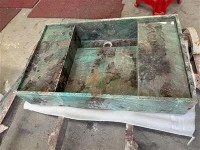
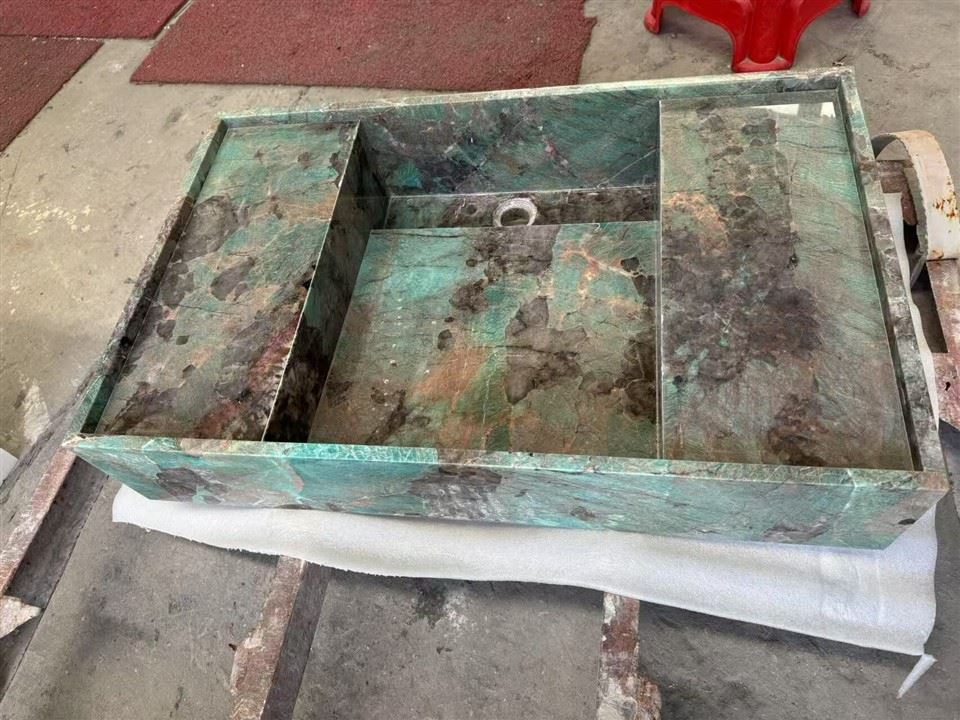

Front workshop view of a fabricated Amazonite Quartzite countertop with integrated sink, drain opening and mitered assembly.
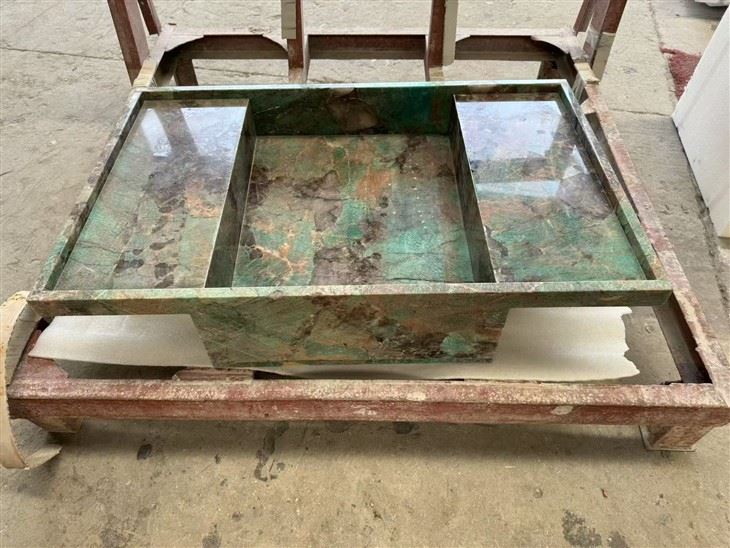
Rear workshop view of an Amazonite Quartzite countertop with an integrated stone sink and raised side surfaces.
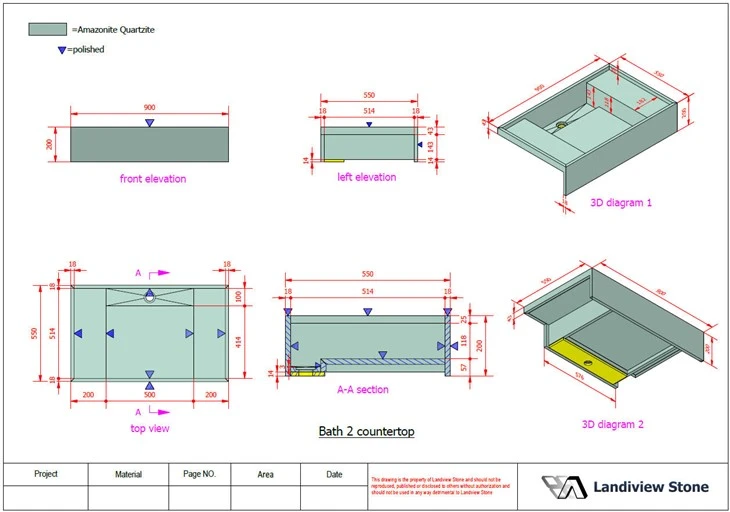
Landiview Stone shop drawing showing dimensions, elevations, section and three-dimensional views for an Amazonite Quartzite integrated sink countertop
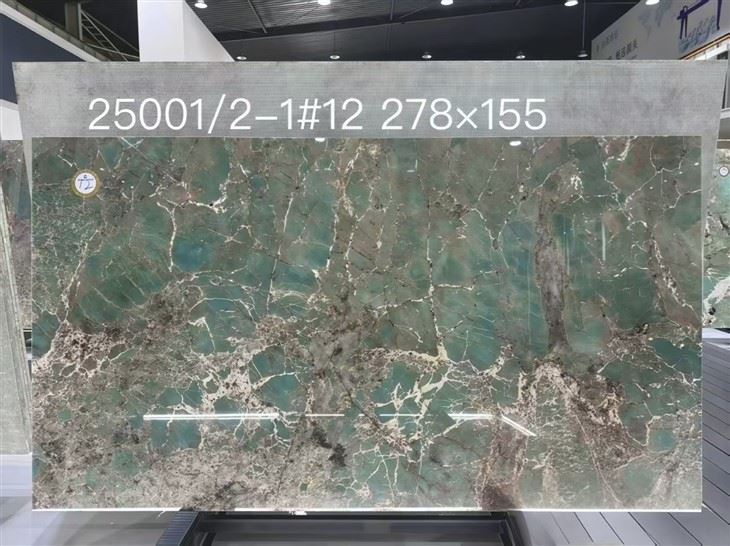
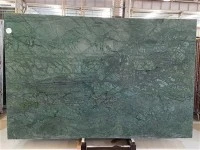
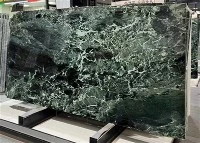
Approved Brazilian Amazonite Quartzite slab with green, gray, brown and white natural veining for an integrated sink countertop.
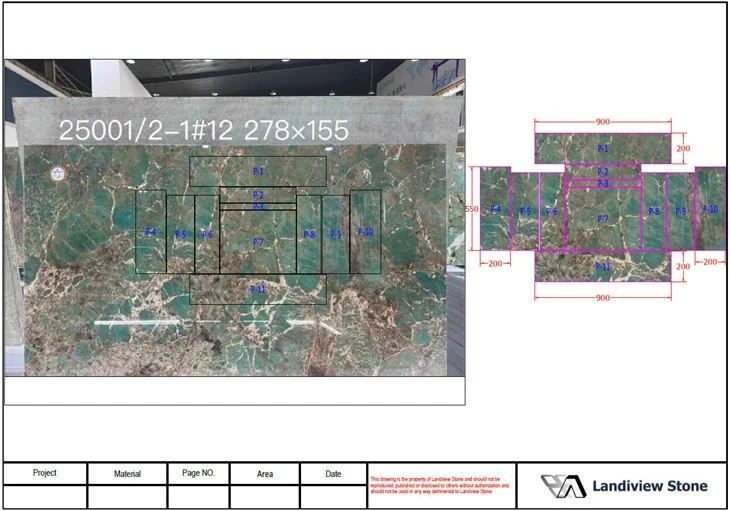
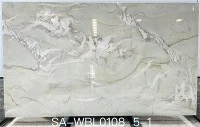
AutoCAD cutting and vein-layout simulation positioning numbered countertop and sink components on the approved Amazonite Quartzite slab image.
Amazonite Quartzite Countertop With Integrated Sink
- Fast Delievery
- Quality Assurance
- 24/7 Customer Service
Executive Summary
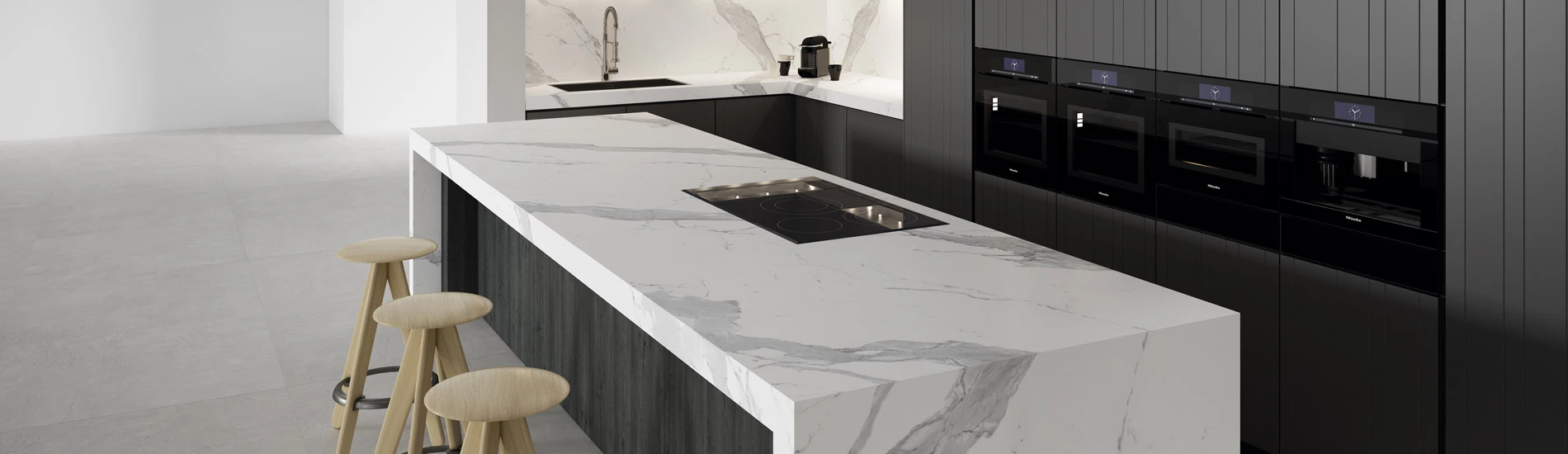
This product is a made-to-order Amazonite Quartzite countertop in which the sink and surrounding surfaces are fabricated as one coordinated stone assembly. Its principal quality controls are approval before cutting, deliberate vein positioning, miter-jointed edge construction, an integrated-sink water test, final inspection and project-specific export protection.
The approved design measures approximately 900 × 550 × 200 mm and uses 18 mm stone components. The visible composition was developed around the actual selected slab rather than a generic material sample. Amazonite Quartzite is commercially supplied as a Brazilian natural stone, but color, fissures, mineral movement and usable yield remain slab-specific; current slabs should therefore be approved before fabrication [1].
Landiview Stone converted the design intent into a stone shop drawing, submitted the available slab for approval, and attached the slab image in AutoCAD to position each numbered component. AutoCAD supports referenced raster images within drawings, which makes an image-based layout a practical coordination tool [2]. The approved digital layout guided fabrication, while physical inspection remained necessary to identify chips, processing damage, unstable or open fissures, and unacceptable appearance areas that a scan cannot fully predict.

Key Facts
| Item | Project Detail |
| Product | Custom countertop with integrated stone sink |
| Material | Natural Amazonite Quartzite from Brazil [1] |
| Stone thickness | 18 mm components assembled into the finished form |
| Finish | polished, according to the approved shop drawing |
| Approximate overall size | 900 × 550 × 200 mm, subject to the approved drawing |
| Edge construction | All connecting edges use miter joints |
| Visual-control method | Approved slab image, AutoCAD cutting and vein-layout simulation, then physical inspection and dry review |
| Functional test | Water-retention test after integrated-sink assembly |
| Final protection | Water-based stone protector applied after testing and acceptance |
| Export packing | Custom foam enclosure, plywood reinforcement or lining, solid-wood outer crate and waterproof wrapping |
What Makes This Integrated Sink Countertop Different?

An integrated stone sink is not simply a countertop with a separate basin placed below it. The basin walls, bottom, drain zone, side surfaces and surrounding countertop must be coordinated as one fabricated assembly. Dimensions, falls, internal clearances, joint positions, visible faces and support conditions should be resolved before production.
The key buyer benefit is coordinated control: the stone selection, component layout, joints, sink geometry, testing and packing are managed as one product rather than as unrelated parts.
Natural coloration and veining are not printed patterns. The supplied slab shows green to turquoise fields with gray-brown mineral areas and white linear movement. Natural fissures and mineral boundaries must be assessed individually. A natural fissure is not automatically a structural crack, while an open or unstable fissure, fabrication break or impact damage may require rejection or replacement depending on location and project criteria.
How Is the Countertop Produced?
1. Review the design intent and prepare a stone-specific shop drawing showing dimensions, thickness, visible faces, integrated-sink geometry, drain position, finish and miter-joint conditions.

2. Submit the shop drawing to the client or design team for review and approval before manufacturing decisions are released.

3. Provide photographs, video and identification for currently available Brazilian Amazonite Quartzite slabs, subject to stock availability, so the buyer can assess color, movement and visible features.
4. After drawing and slab approval, place the actual slab image in AutoCAD and simulate the cutting and assembled vein relationships of the numbered components [2].

5. Submit the proposed layout for approval, then cut the stone according to the controlled layout.
6. Physically review the cut components, reject pieces that do not meet the agreed quality criteria, and cut coordinated replacement pieces where required.
7. Assemble the 18 mm components with miter joints to form the countertop and integrated sink, following the approved fabrication details.
8. Conduct a water-retention test because the basin is an integrated fabricated assembly. Inspect the joints, drain area and relevant surfaces under the agreed test procedure.
9. After the test and final acceptance, apply a compatible water-based stone protector in accordance with the product manufacturer's instructions and project requirements.
10. Place the finished unit in a custom foam enclosure with plywood support or lining, secure it in a solid-wood outer crate, and add waterproof wrapping for shipment.
Why Are Stone Shop Drawings Required?
Architectural drawings usually define the wider design, not every fabrication condition of a custom stone assembly. A stone shop drawing translates the relevant design intent into coordinated dimensions, elevations, sections, material thicknesses, surface finish, drain geometry, edge details and visible-face requirements.
For this product, the drawing establishes the 18 mm construction, polished finish, overall 900 × 550 mm plan, approximate 200 mm front depth, internal basin arrangement and mitered component relationships. Approval creates a common technical reference, but the drawing does not replace structural engineering, plumbing design, local-code review or the responsibilities of licensed professionals and qualified installers.
How Are Slab Selection and Vein Layout Controlled?
The client first approves the actual slab rather than relying only on a small sample. The selected slab image is then used as the visual base for an AutoCAD layout. Numbered pieces are positioned to review usable yield, dominant color, vein direction and the relationships between the countertop, sink bottom, walls and fascia.
Autodesk documents that raster images can be attached to AutoCAD drawings by a linked path [2]. In this workflow, the feature supports visual planning, but it is not presented as a substitute for physical stone inspection or final dry review.
Scan-based layout helps align the approved piece locations and vein relationships with the expected finished composition. It reduces interpretation gaps, but natural variation, image calibration, cutting kerf, finishing and site installation can still influence the final appearance.
What Happens During Physical Quality Control?
Digital approval establishes the planned result. Physical quality control examines the actual result after cutting and finishing. The team reviews edge integrity, surface condition, dimensions, miter preparation, drain details, visible-face consistency and the stability of natural features.
- • Chips, broken corners and processing damage are identified.
- • Open or unstable fissures in critical locations are evaluated separately from stable natural mineral features.
- • Color and pattern relationships are checked against the approved visual direction.
- • Nonconforming pieces are replaced when required, with the replacement selected for compatibility with adjacent pieces.
- • Finished components may be numbered so approved positions and orientations remain clear.
Why Are Water Testing and Water-Based Protection Necessary?
An integrated stone sink contains fabricated joints and a drain zone, so a water-retention test is a required project control for this product. The assembled basin is tested before final protection and packing. The test method, duration, acceptance criteria and drain-interface responsibility should follow the approved project documents.
After the sink passes the agreed test and the product passes final inspection, a compatible water-based stone protector is applied. A protector can help manage absorption and soiling, but it does not make natural stone maintenance-free or eliminate the need to clean spills promptly. Product selection, application, curing and future reapplication must follow the protector manufacturer's instructions, the stone fabricator's advice and local project requirements [3].
How Is the Integrated Sink Countertop Packed for Export?
The packaging is developed around the finished geometry, weight, drain opening, mitered corners and vulnerable projections. The inner system uses a custom foam enclosure for cushioning and positioning, together with plywood support or lining to improve rigidity and separation. The outer system uses a robust solid-wood crate and waterproof wrapping for handling, container loading and ocean transport.
- • Custom foam supports the specific geometry and limits contact movement.
- • Plywood elements provide separation, load distribution and additional internal protection.
- • Temporary support strips may be applied over protective film when a cutout, narrow backsplash, thin strip or vulnerable corner needs added transport stability.
- • Temporary reinforcement is removed on site before final installation according to the supplied instructions.
- • Solid-wood packaging must use ISPM 15-compliant material when required by the destination country. ISPM 15 addresses phytosanitary measures for raw-wood packaging used in international trade [4].
Packaging reduces foreseeable handling and transport risks but cannot justify improper lifting, stacking or unloading. The receiver should follow crate markings, use suitable equipment and arrange qualified handling.
What Should Buyers Provide for a Quotation?
A technically complete inquiry supports a more accurate review and reduces late assumptions.
- • Architectural, interior, cabinet and plumbing drawings, plus confirmed field dimensions where available.
- • Required overall size, sink geometry, drain components, faucet specification, backsplash condition and internal cabinet clearance.
- • Material, thickness, finish, visible-face rules, edge details and acceptable appearance range.
- • Support, reinforcement, installation and interface requirements defined by the responsible project professionals.
- • Slab-approval, AutoCAD vein-layout, water-test, inspection and documentation requirements.
- • Destination, packing rules, lifting limits, unloading method, site access and crate-opening constraints.
Frequently Asked Questions
Q: Can you provide Amazonite Quartzite samples?
A: Yes. Normally one or two samples can be provided without a sample charge. Typical sizes range from 100 × 100 mm to 200 × 200 mm. Courier cost is paid by the customer, and availability depends on the current material. A small sample is useful for reviewing finish and basic color family, but it cannot represent the full movement of a large slab.
Q: Can I see current slab photos and videos before ordering?
A: Yes. Subject to current stock, Landiview Stone can provide slab photographs, videos, slab numbers, surface observations and a review of the available color and vein range. Final selection should identify the approved slab or slabs and the accepted appearance range.
Q: Can Landiview Stone prepare stone shop drawings from architectural drawings?
A: Yes. Landiview Stone can extract the relevant stone scope and prepare stone shop drawings for review by the client and design team. Approval is required before fabrication. Shop drawings do not replace the structural, plumbing, code or installation responsibilities of locally licensed professionals. See what is cut-to-size stone?
Q: How do you help control the final vein layout and installed appearance?
A: The workflow combines actual slab imaging, AutoCAD cutting and vein-layout simulation, client approval, controlled fabrication, physical review and dry layout where applicable. This reduces information gaps and helps communicate numbered piece positions. It cannot provide an absolute visual guarantee because natural stone variation, image calibration, finishing and site installation can affect the final appearance. See natural stone slab layout in AutoCAD.
Q: Are all visible connections made with miter joints?
A: For this specific product, all connecting edges are specified as miter joints. Joint location, adhesive system, support and allowable tolerances must follow the approved fabrication details and installation conditions.
Q: Why must an integrated stone sink be water tested?
A: The basin is assembled from stone components and includes fabricated joints and a drain area. A water-retention test checks the assembled unit against the agreed acceptance procedure before protection and packing. Site plumbing connections must still be completed and tested by qualified trades under local requirements.
Q: How do you protect the countertop with integrated sink during transport?
A: Protection is configured around the geometry. It may include inner lining, cushioning, custom foam, plywood dividers or supports, edge protection and positioning blocks. Sink or cooktop cutouts, narrow backsplashes, thin strips, vanity tops, fireplace parts, narrow wall panels and vulnerable corners may receive temporary support strips over protective film. These strips are transport protection and should be removed before installation according to instructions. Raw-wood packaging must meet destination requirements, including ISPM 15 where applicable [4]. See how to protect natural stone during shipping.
Q: How should the installed Amazonite Quartzite sink countertop be maintained?
A: Use a pH-neutral cleaner intended for natural stone, a soft cloth and clean water; wipe spills promptly. Avoid unidentified acidic or alkaline cleaners and abrasive tools. The Natural Stone Institute advises selecting care products according to the stone's composition and application and explains that cleaner and sealer behavior varies [3]. Sealer selection and reapplication frequency depend on the actual stone, finish, use, exposure and product manufacturer's instructions.
Q: Does a stone protector make the countertop waterproof and maintenance-free?
A: No. A compatible protector can help reduce absorption and make routine care more manageable, but performance depends on the stone, finish, application and exposure. It does not replace correct fabrication, plumbing, prompt cleaning or periodic assessment.
Q: What information is needed to price a custom integrated sink countertop?
A: Please provide drawings, dimensions, sink and drain details, faucet and backsplash conditions, stone and finish requirements, visible-face rules, support concept, destination and packing constraints. Pricing is project-specific and depends on current slab availability, usable yield, fabrication complexity, testing, documentation and logistics.
About Landiview Stone
Landiview Stone supplies natural stone in two principal forms: slabs for importers, distributors and fabricators, and project-specific cut-to-size or finished products for contractors, developers, designers, builders and other project buyers.
For slab buyers, Landiview Stone supports current-slab selection, slab-image review, color and vein-range confirmation, surface inspection, slab identification and export packing. For custom fabrication, the team can coordinate shop drawing review, slab scanning, AutoCAD cutting and vein-layout simulation, fabrication, dry-layout inspection, piece numbering, final inspection, temporary reinforcement for vulnerable components and project-specific export protection.
For more complex assembled stone products, three-dimensional modeling and virtual assembly review may be used to examine component relationships, material thicknesses, surface treatments, concealed reinforcement and potential interference before fabrication details are finalized.
Landiview Stone's international project experience includes:
- • Marble furniture, bathroom vanity tops and shower wall panels for the Grand Hyatt Singapore renovation project
- • Stone supply for stations on Singapore's Thomson-East Coast Line
- • Interior stone products for the Wynn project in the United Arab Emirates
- • Marble products for public areas of the 255 East 77th Street luxury residential project in New York
- • Interior and exterior marble and granite products for three high-end custom homes on Tuckahoe, a private resort island in Massachusetts, USA
Request A Quote
Send Landiview Stone your architectural drawings, desired dimensions, sink and drain specifications, faucet information, finish, destination and approval requirements. The project team can review fabrication feasibility, current Amazonite Quartzite slab availability, shop drawing needs, slab-layout deliverables, testing and export packing.
Hot Tags: Landiview Stone, Amazonite Quartzite countertop with integrated sink, Amazonite Quartzite sink, custom stone fabrication, AutoCAD slab layout, stone shop drawings.
Previous
No InformationYou Might Also Like


Send Inquiry