
High-end Custom Home in QLD, Australia
Executive Summary
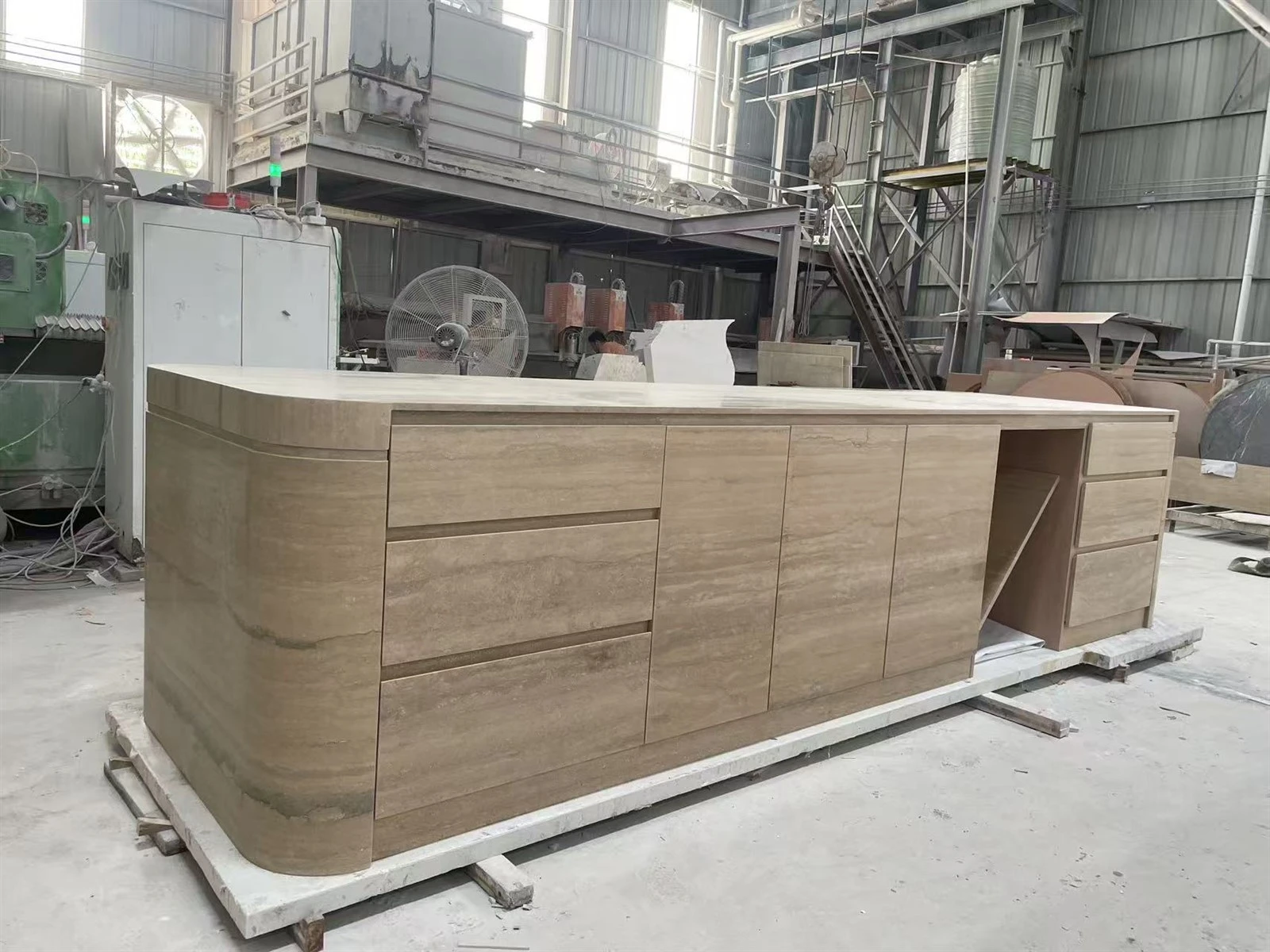
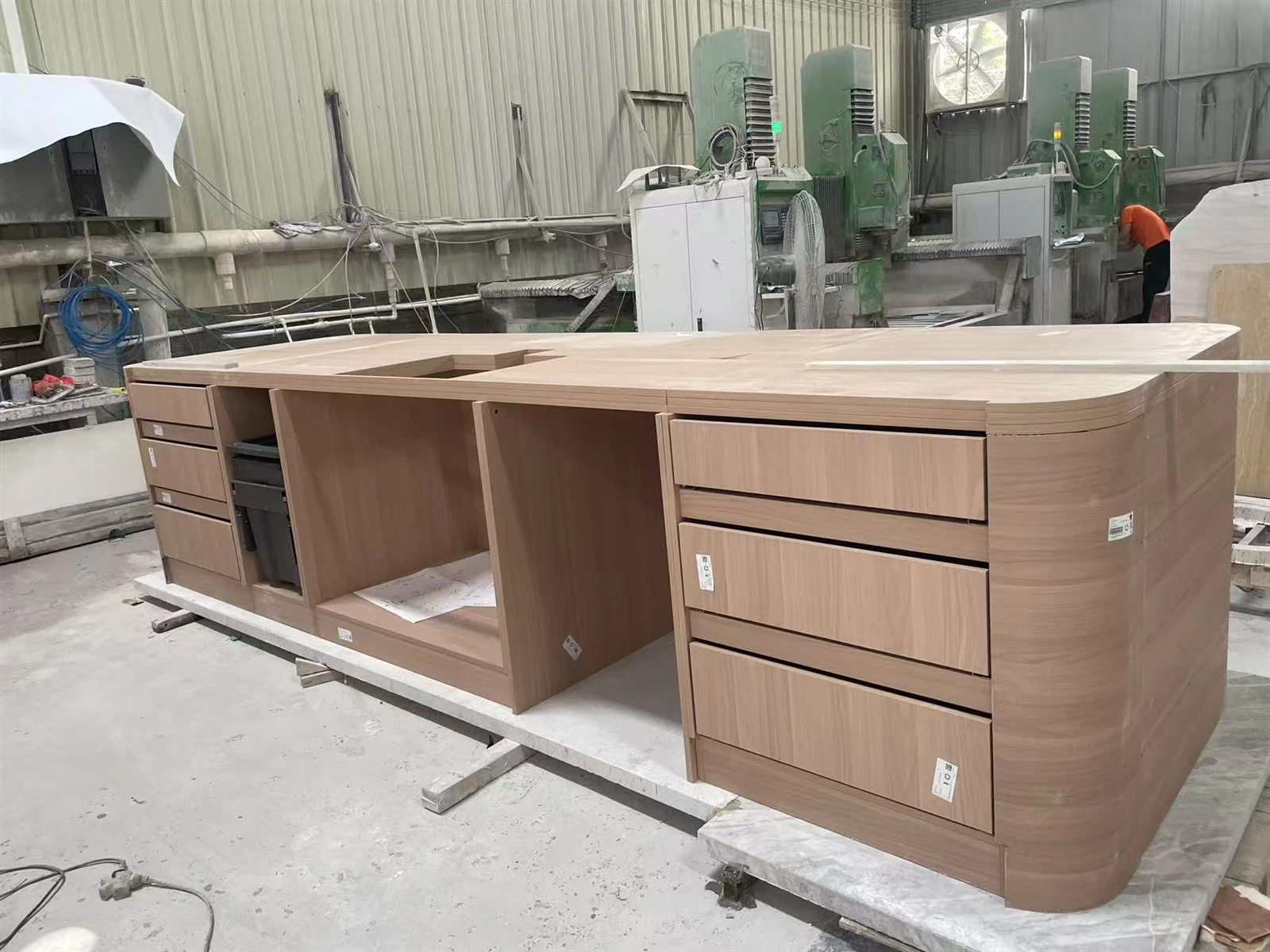
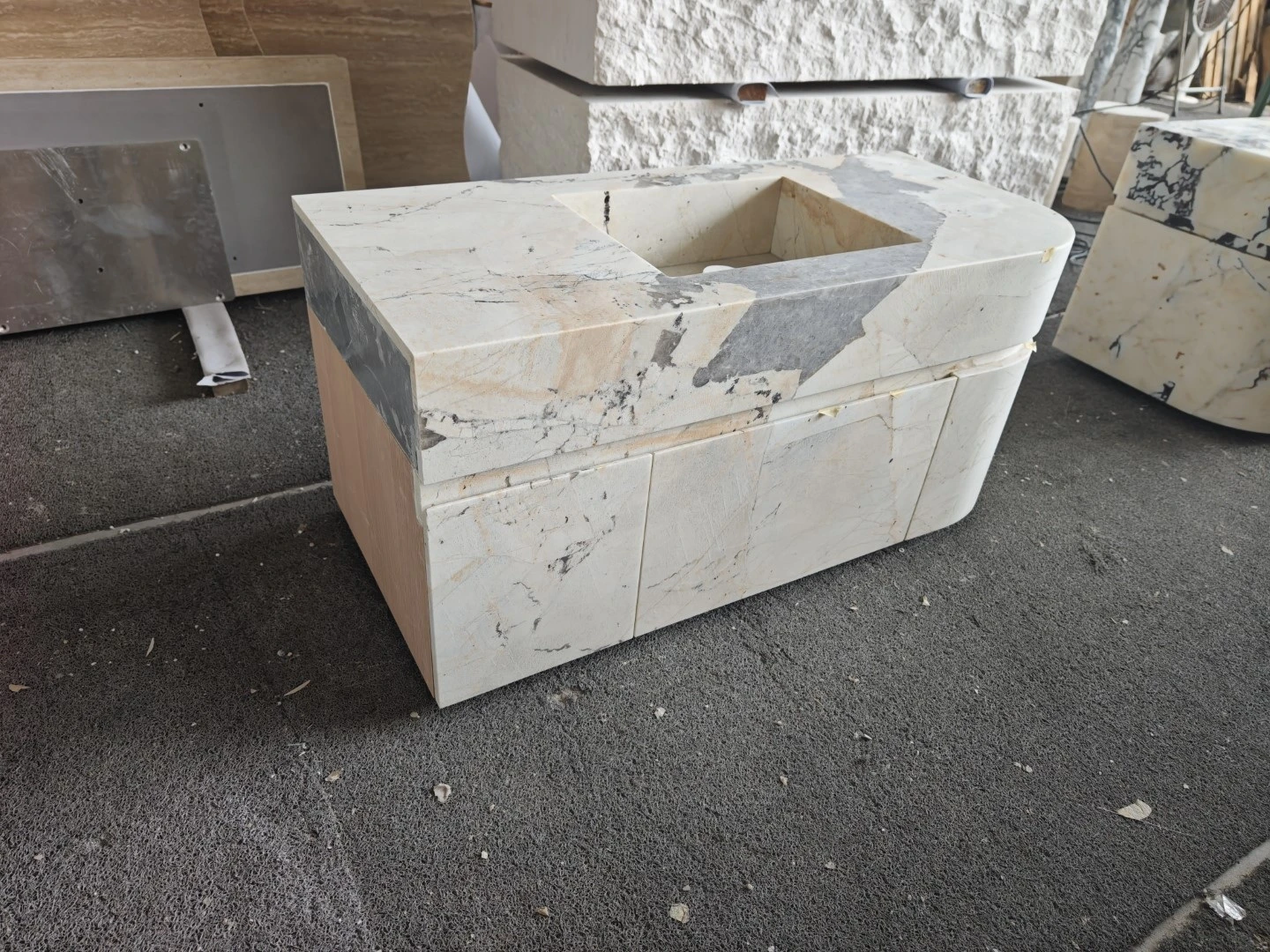
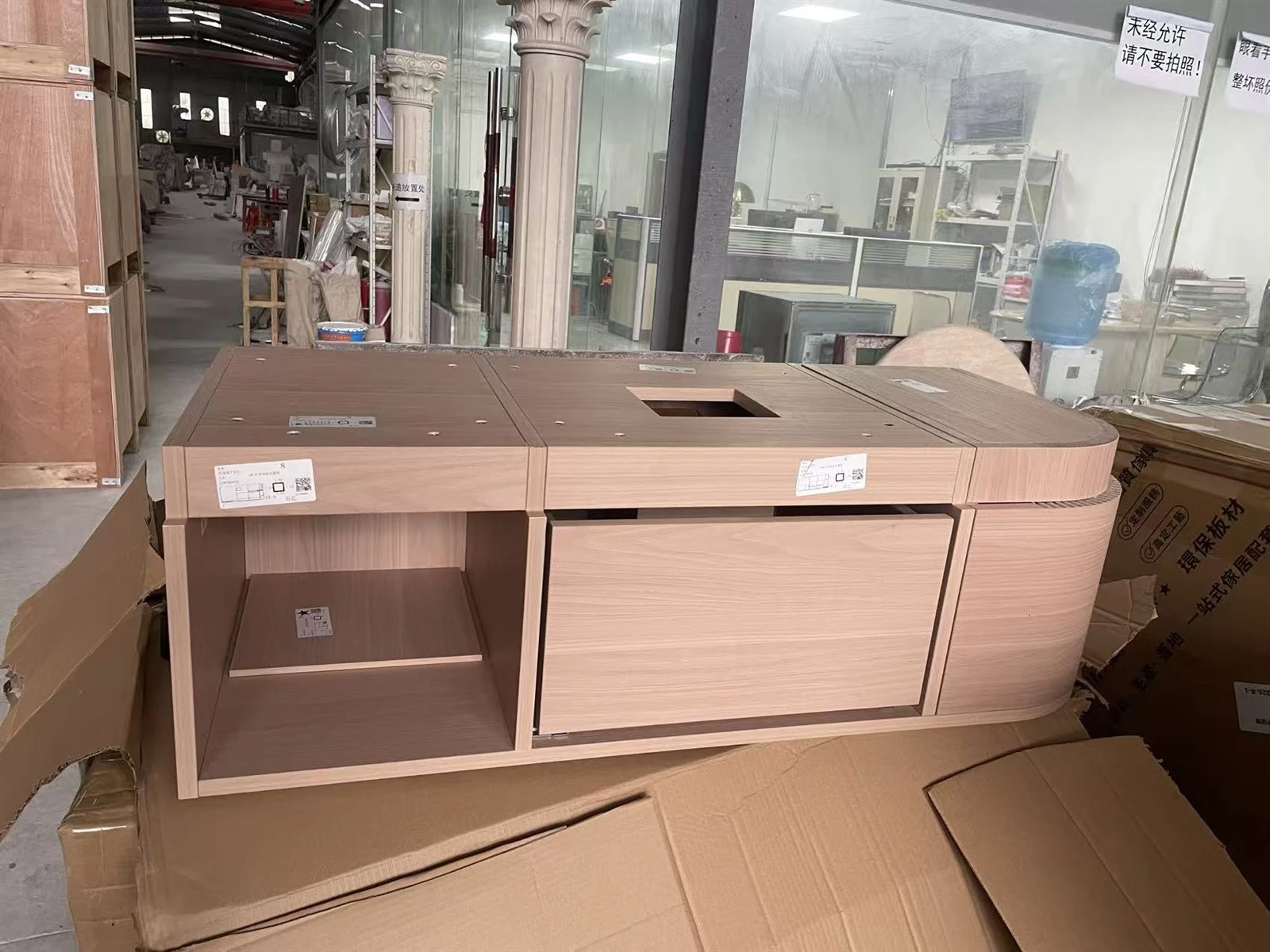
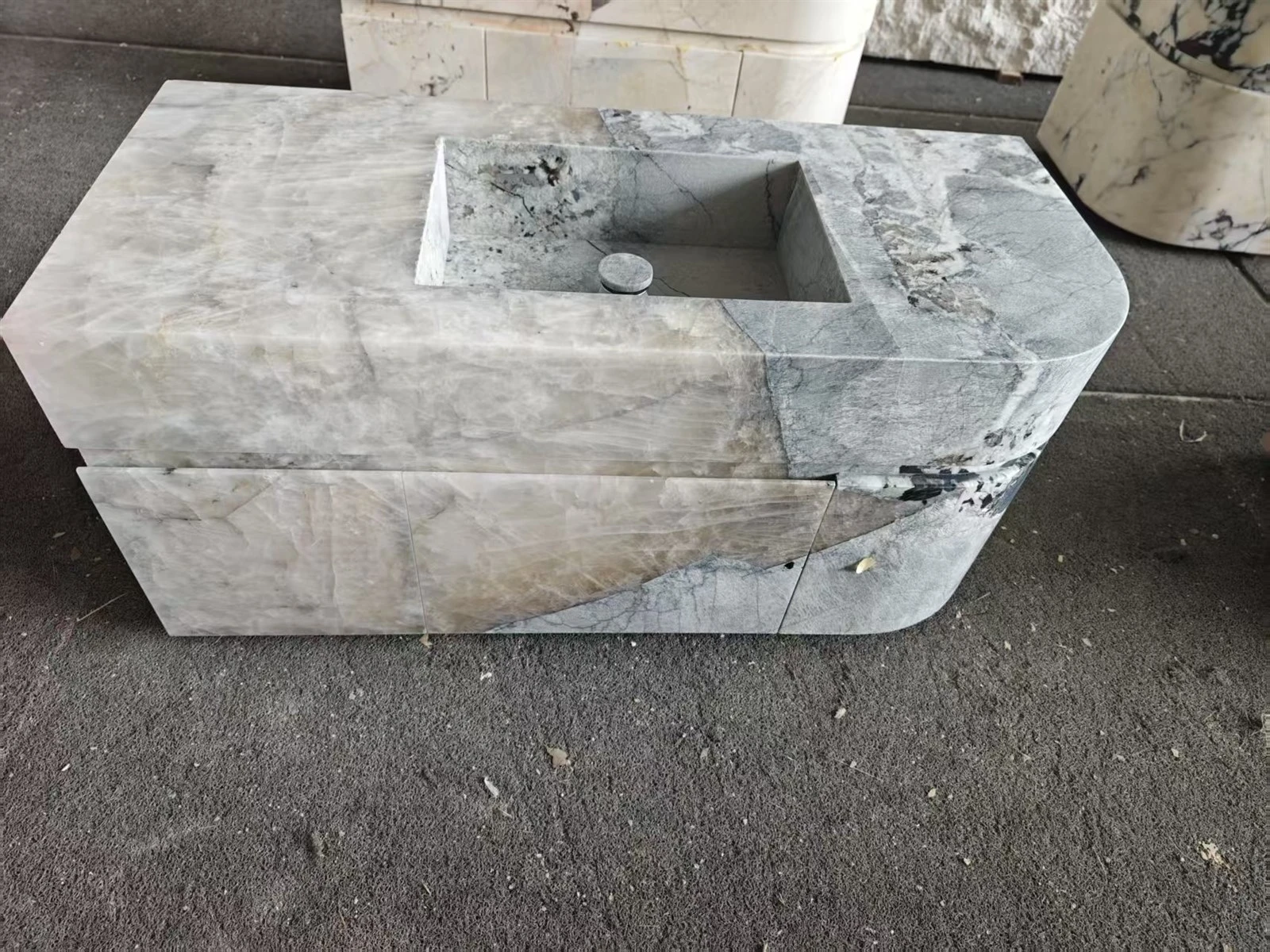
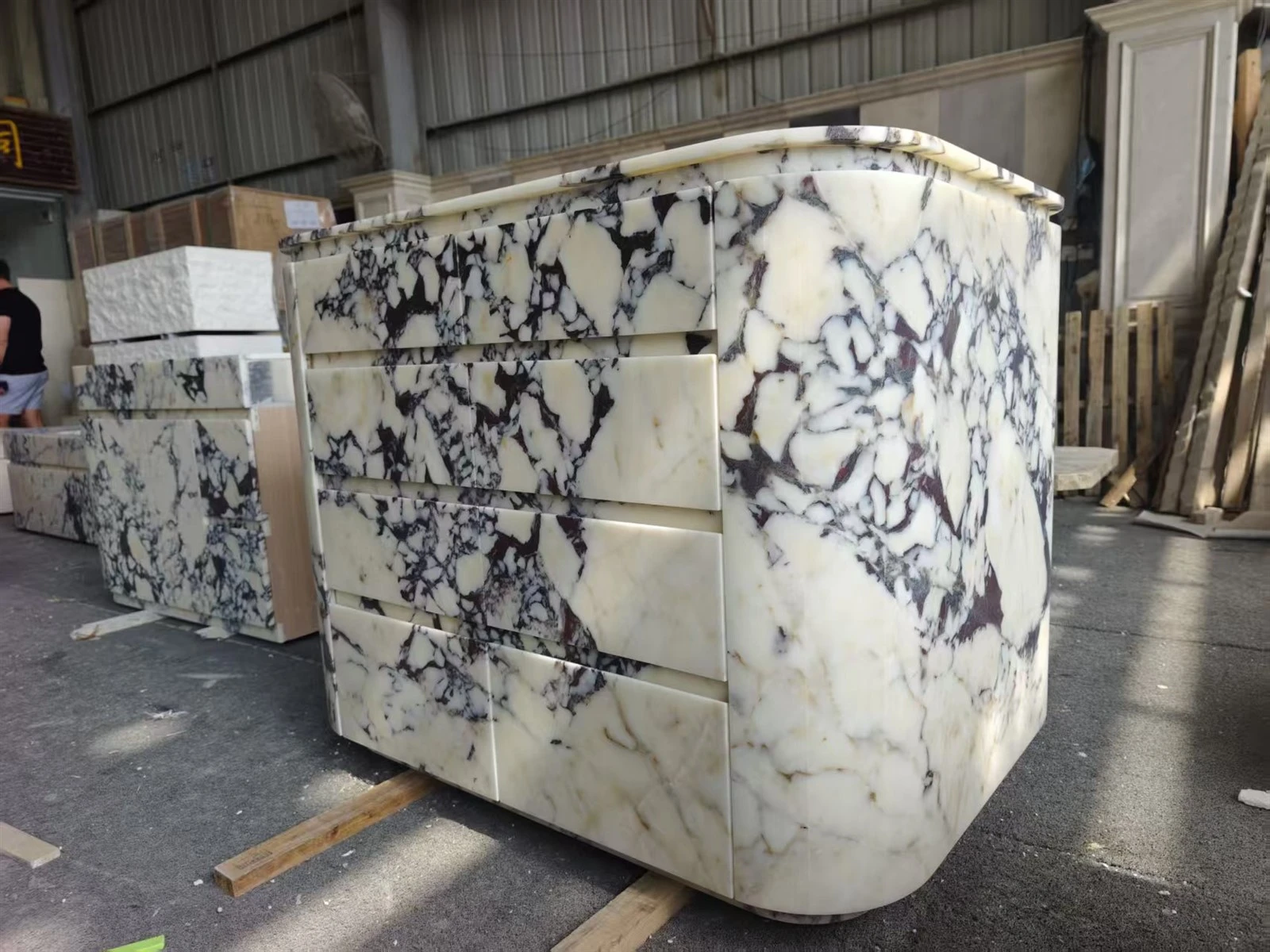
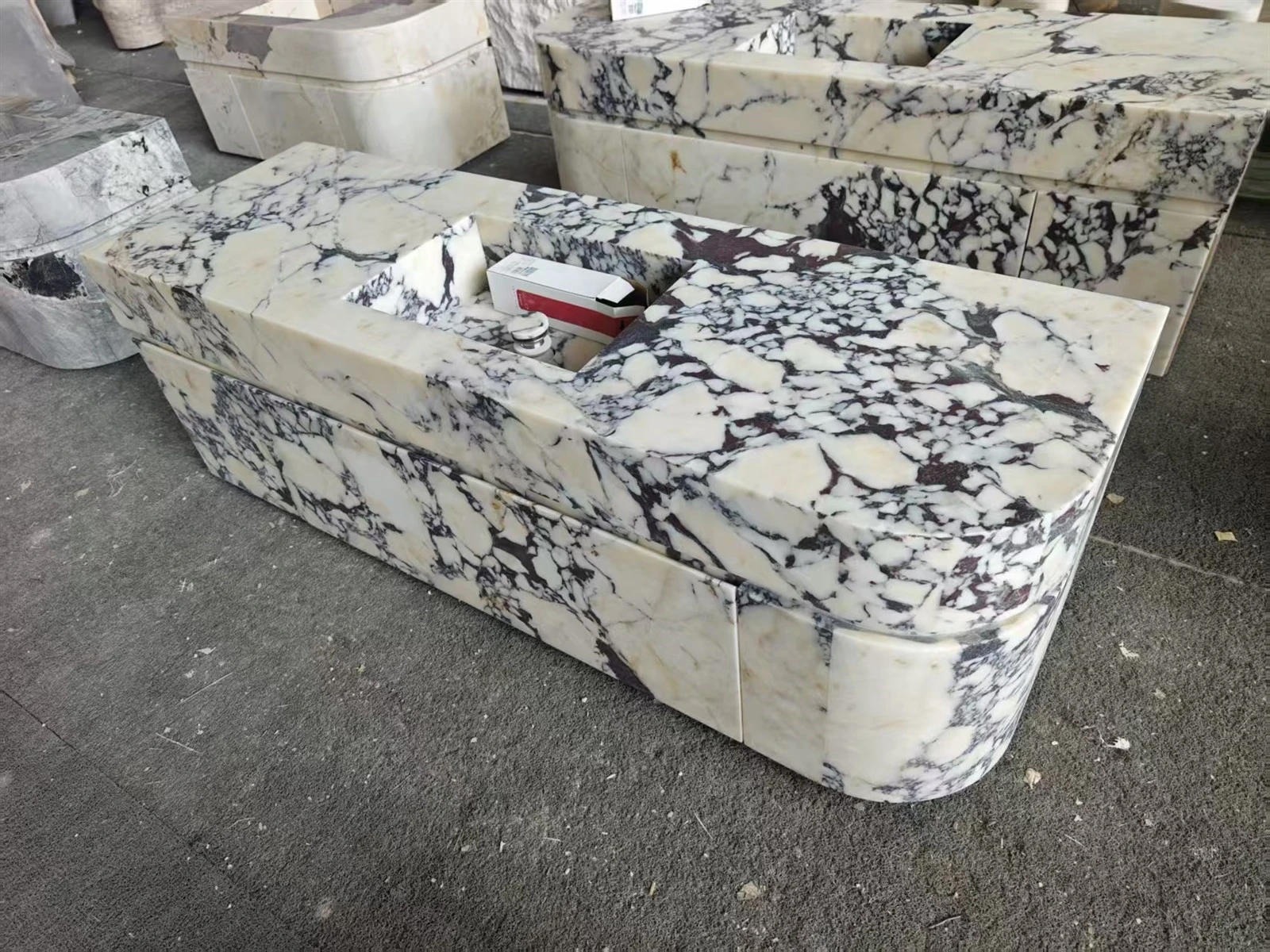
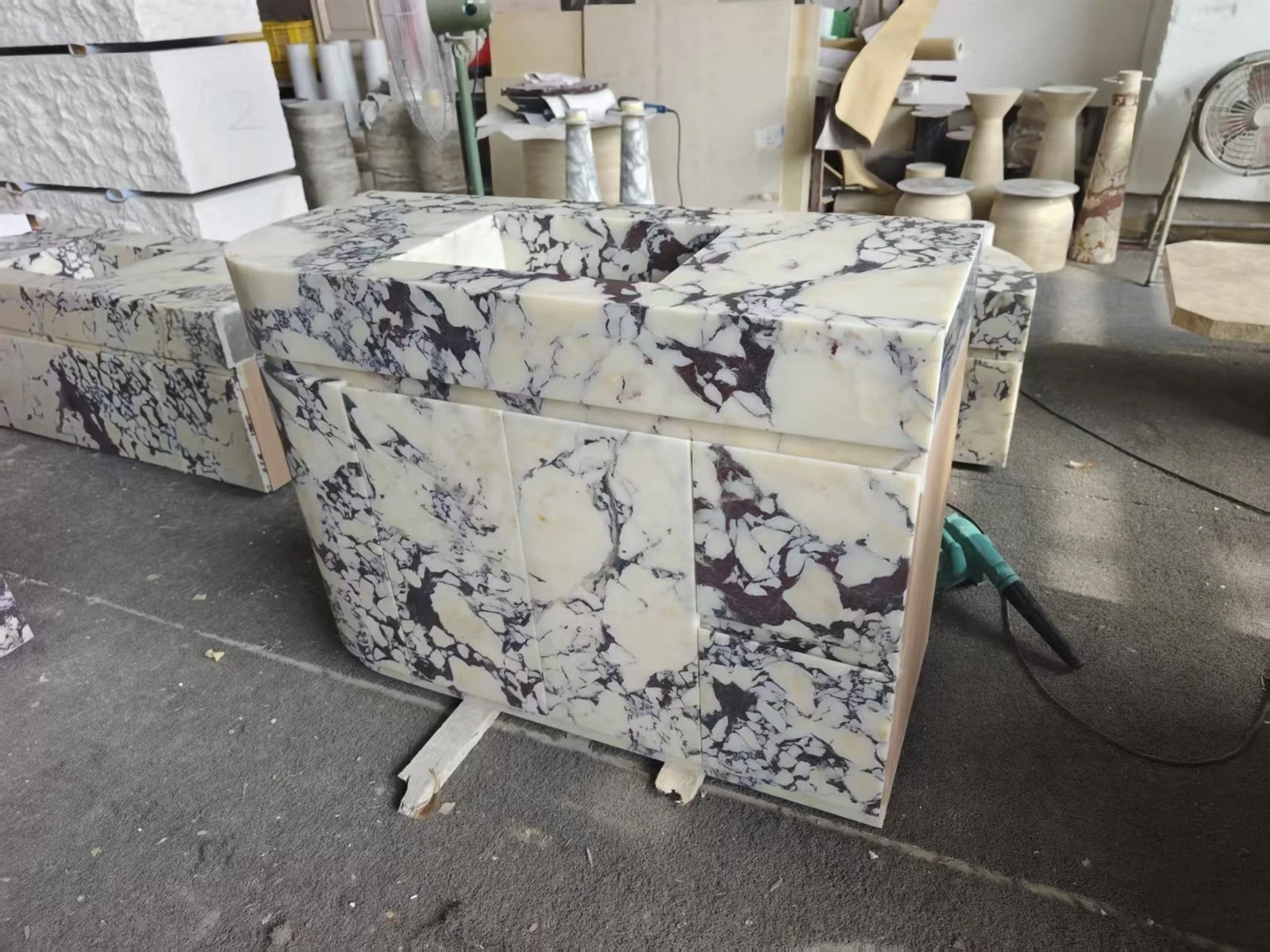
The central project decision was to engineer the stone and cabinetry as coordinated assemblies, not as unrelated packages. Selected stone panels were bonded to custom multilayer plywood cabinets in the factory, reducing loose-piece handling and simplifying the installer's work on site.
This Queensland residence required more than cut-to-size stone. The order joined architectural stonework, custom cabinetry, bathrooms, kitchen and laundry surfaces, sculptural fabrication and export logistics in one coordinated production scope.
The principal palette was filled and honed Italian Silver Travertine, specified at 18 mm for benchtops, tiles and architectural panels. Its controlled matte surface and linear movement connected the kitchen, bathrooms, laundry, fireplace and master-bedroom portal. Turkish Calacatta Viola Marble introduced dramatic burgundy and black brecciation to the walk-in-robe island and selected floating vanities. Brazilian Pink Patagonia, Patagonia and Blue Patagonia Quartzites created individual bathroom statements while preserving a consistent cabinet-and-stone construction logic.
Production followed an approval-led workflow:
- 1. Review architectural and cabinet information and define the complete stone scope.
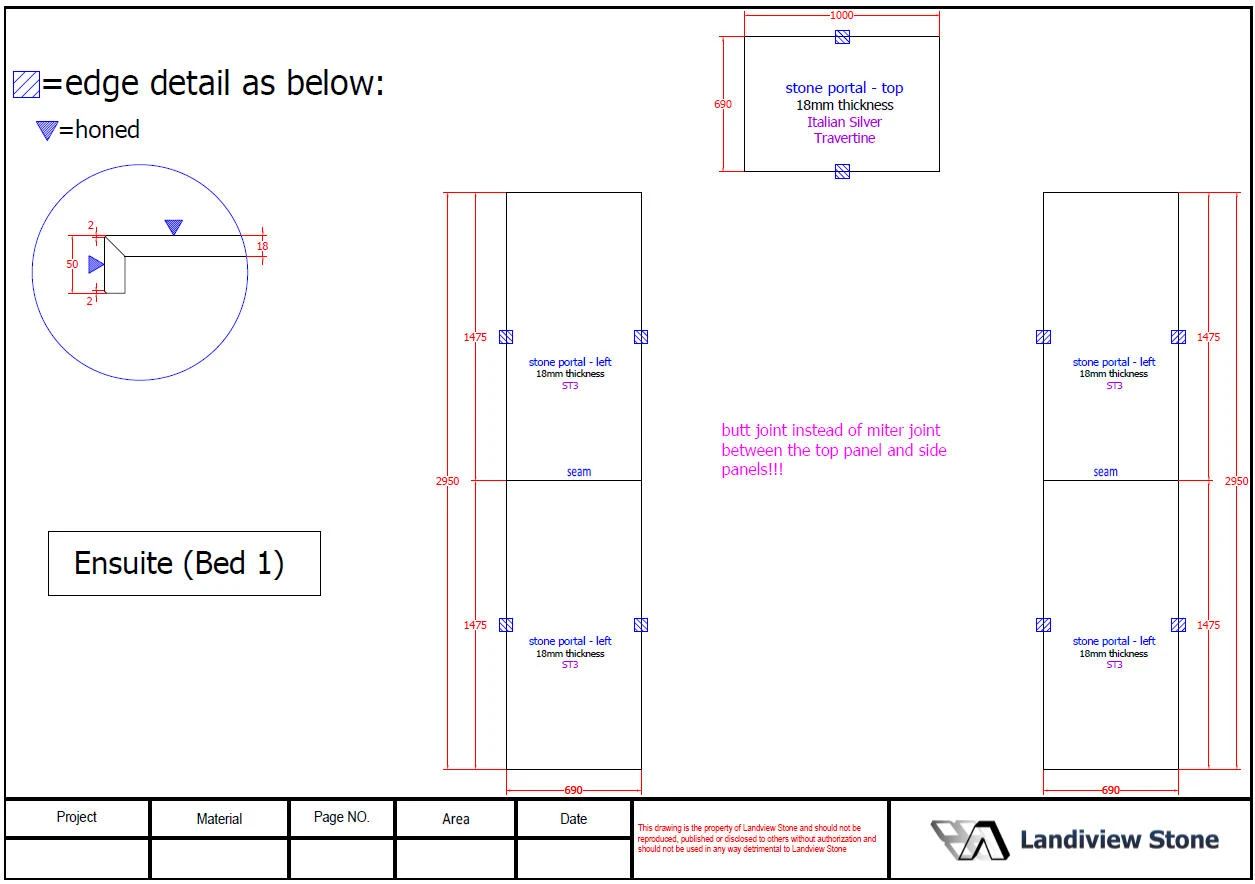
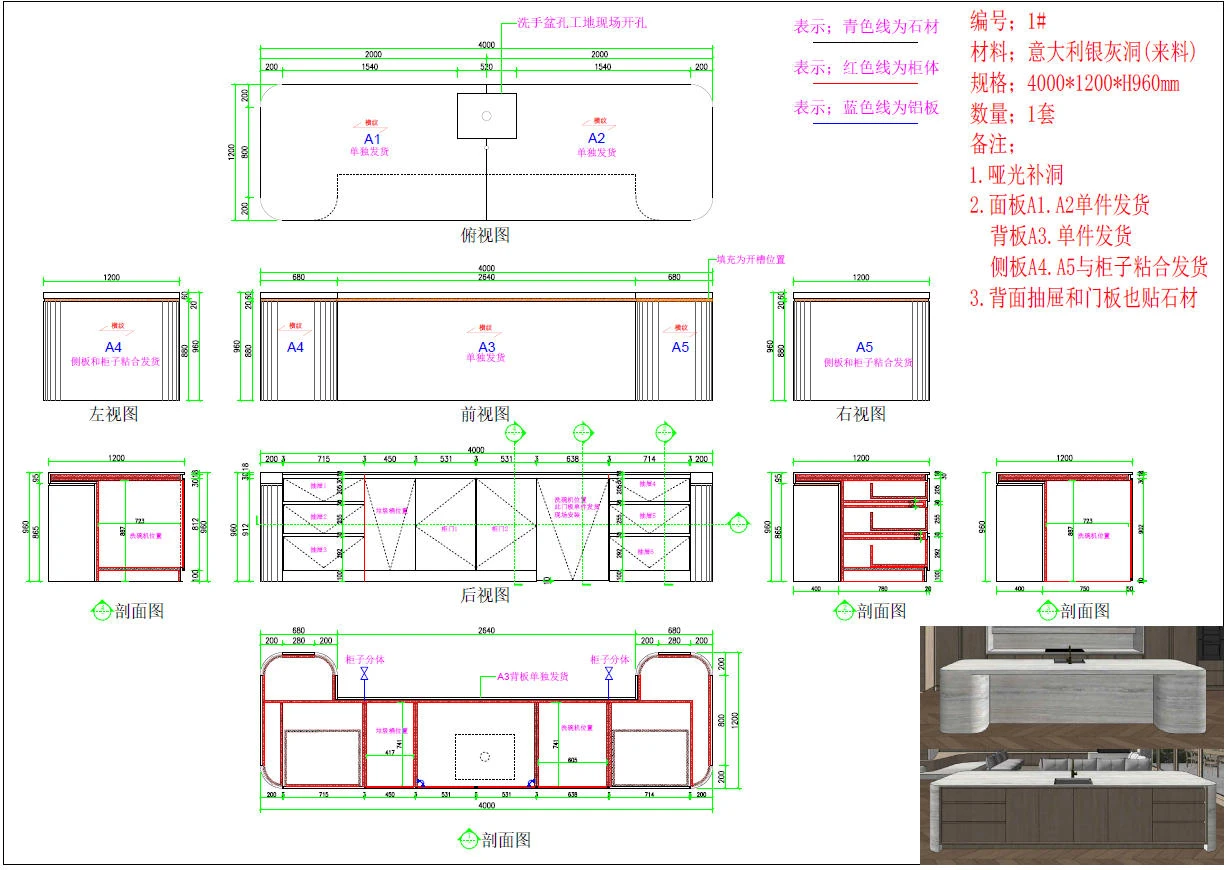
- 2. Prepare stone shop drawings covering dimensions, seams, radii, cutouts, edge details, vein direction and delivery condition.
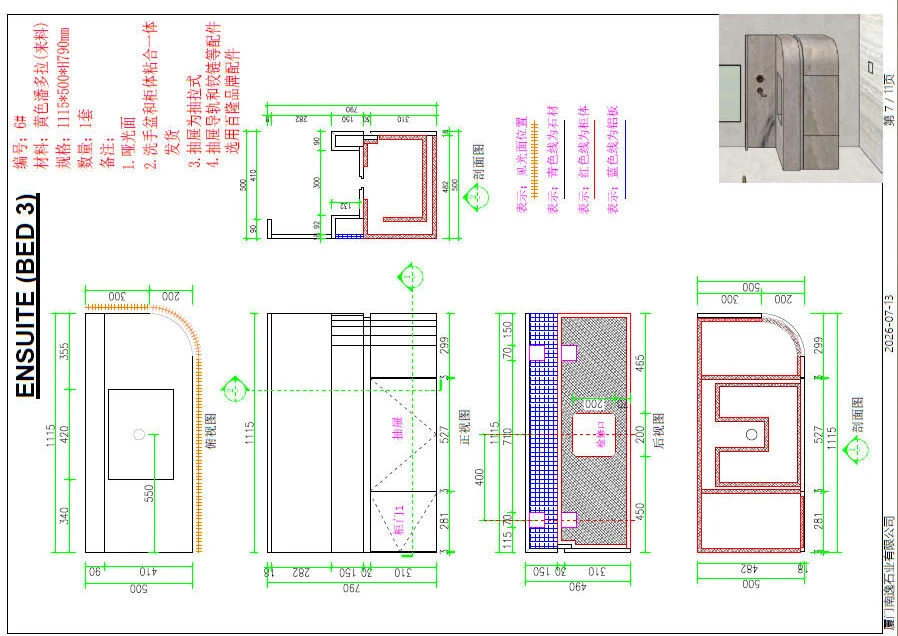
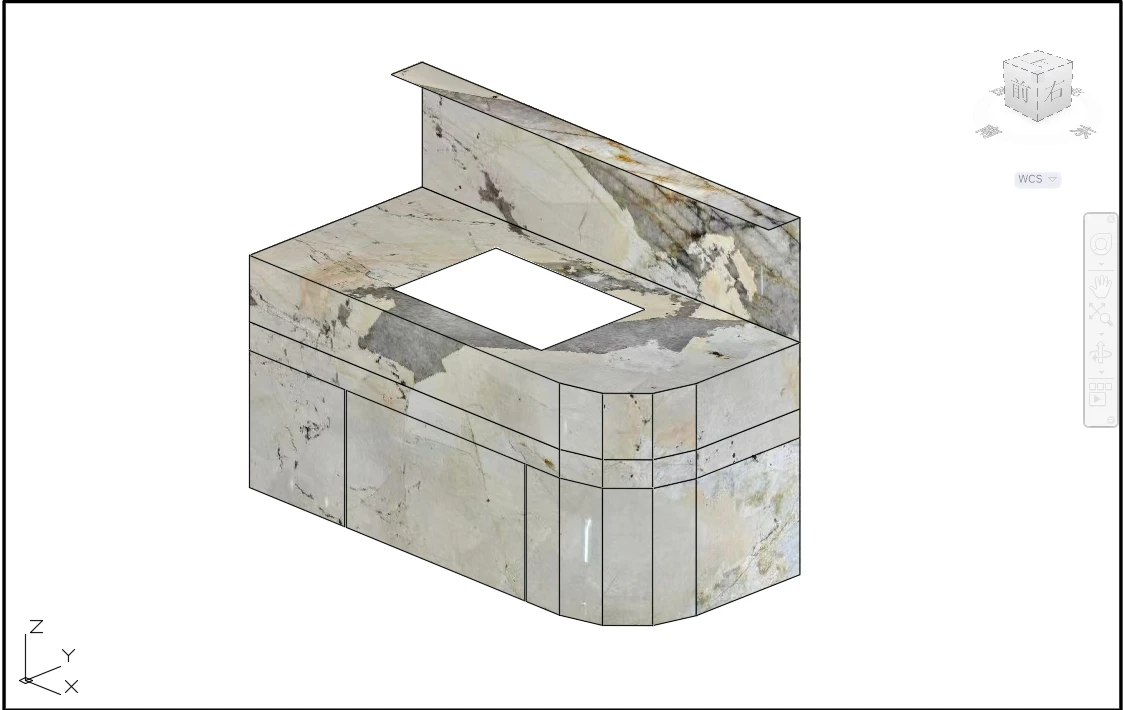
- 3. Develop three-dimensional models where curved geometry, component relationships or assembly risks required additional review.
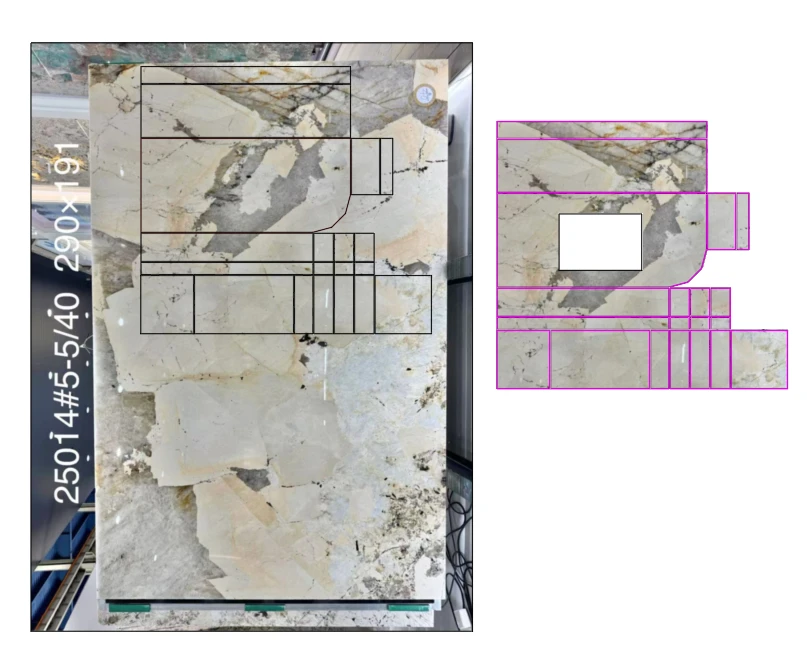
- 4. Scan selected slabs and use AutoCAD cutting layouts to coordinate yield, feature placement and visible vein movement.
- 5. Fabricate the stone, dry lay numbered tiles and inspect finished components against approved drawings.
- 6. Bond designated 18 mm stone panels to custom multilayer plywood cabinets in the factory and check drawer, door and service clearances.
- 7. Add temporary protection for vulnerable corners, cutouts and sculptural pieces, then pack for export to Australia.
Key Facts
For B2B buyers, the value of this package lies in coordination: each drawing, slab layout, cabinet interface and crate was developed around the final installation sequence rather than treated as an isolated purchase.
| Project Item | Confirmed Scope |
| Project | High-end custom home in Queensland, Australia |
| Italian Silver Travertine | 18 mm, filled and honed for one kitchen island, nine additional benchtop sets, one fireplace hearth, one master-bedroom stone portal and bathroom tile packages |
| Kitchen island | One 4,000 × 1,200 × H960 mm assembly with custom multilayer plywood cabinetry, travertine benchtop and factory-bonded stone panels |
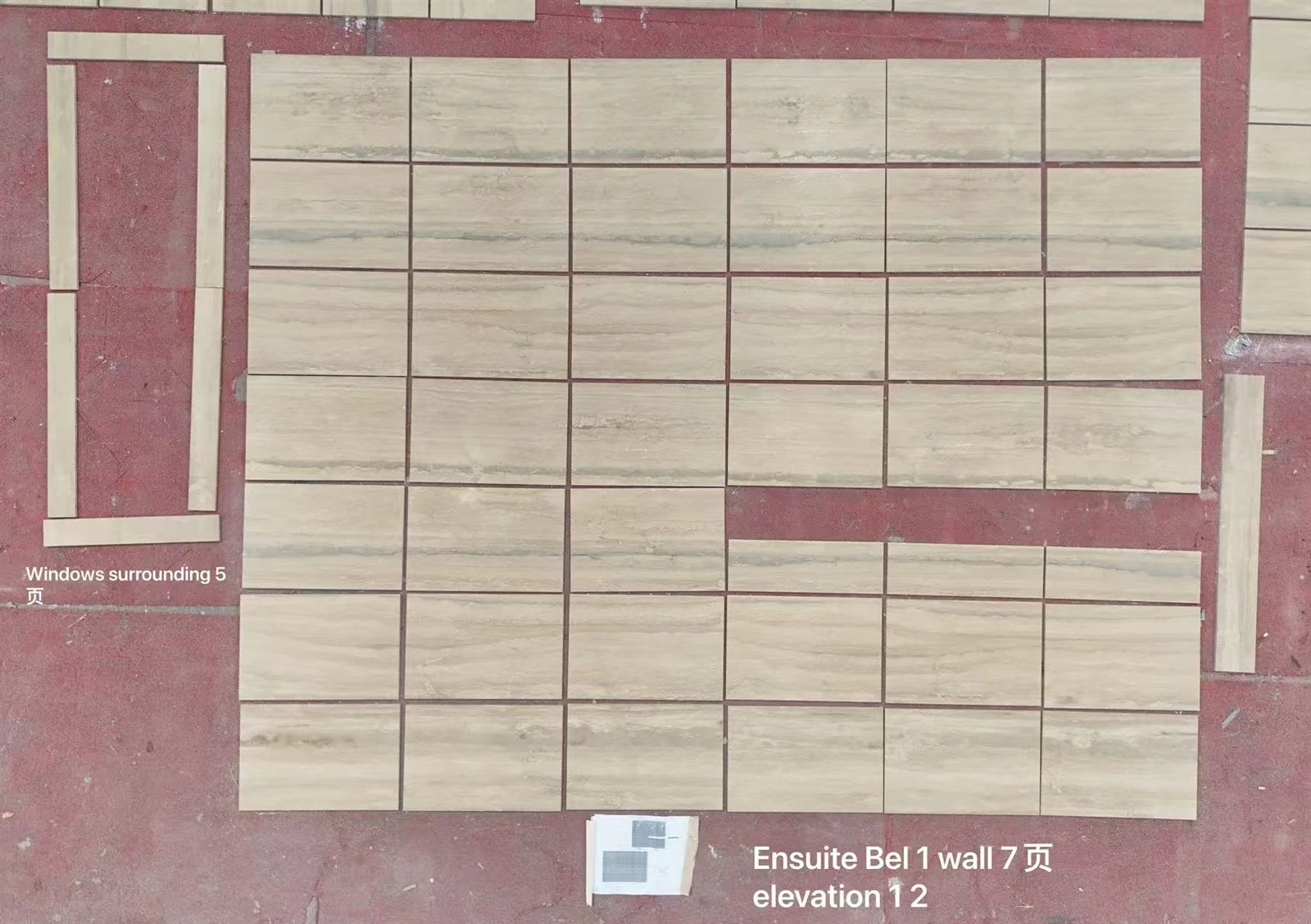
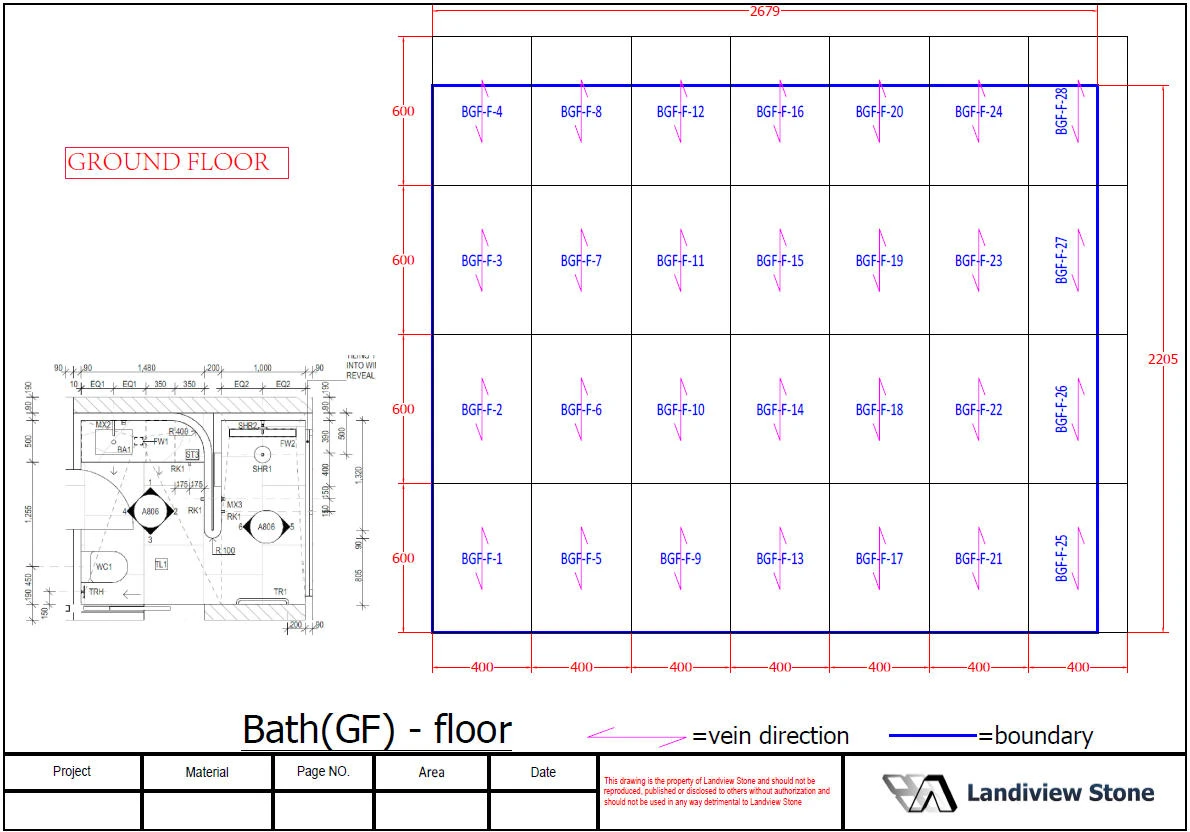
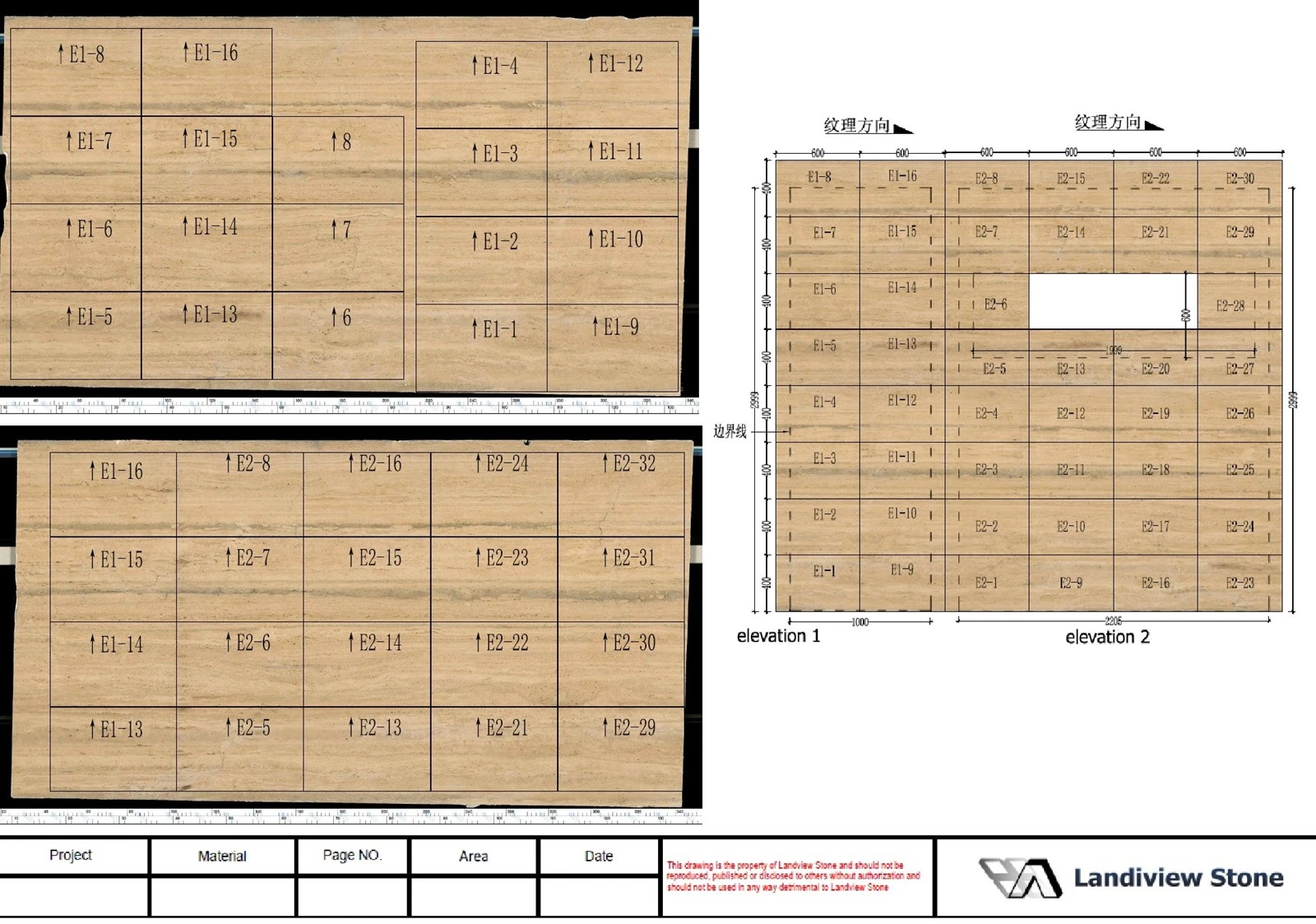
| Bathroom tiles | Floor and wall tiles for seven bathrooms; nominal 600 × 400 mm; 538 pieces; 18 mm filled and honed Italian Silver Travertine |
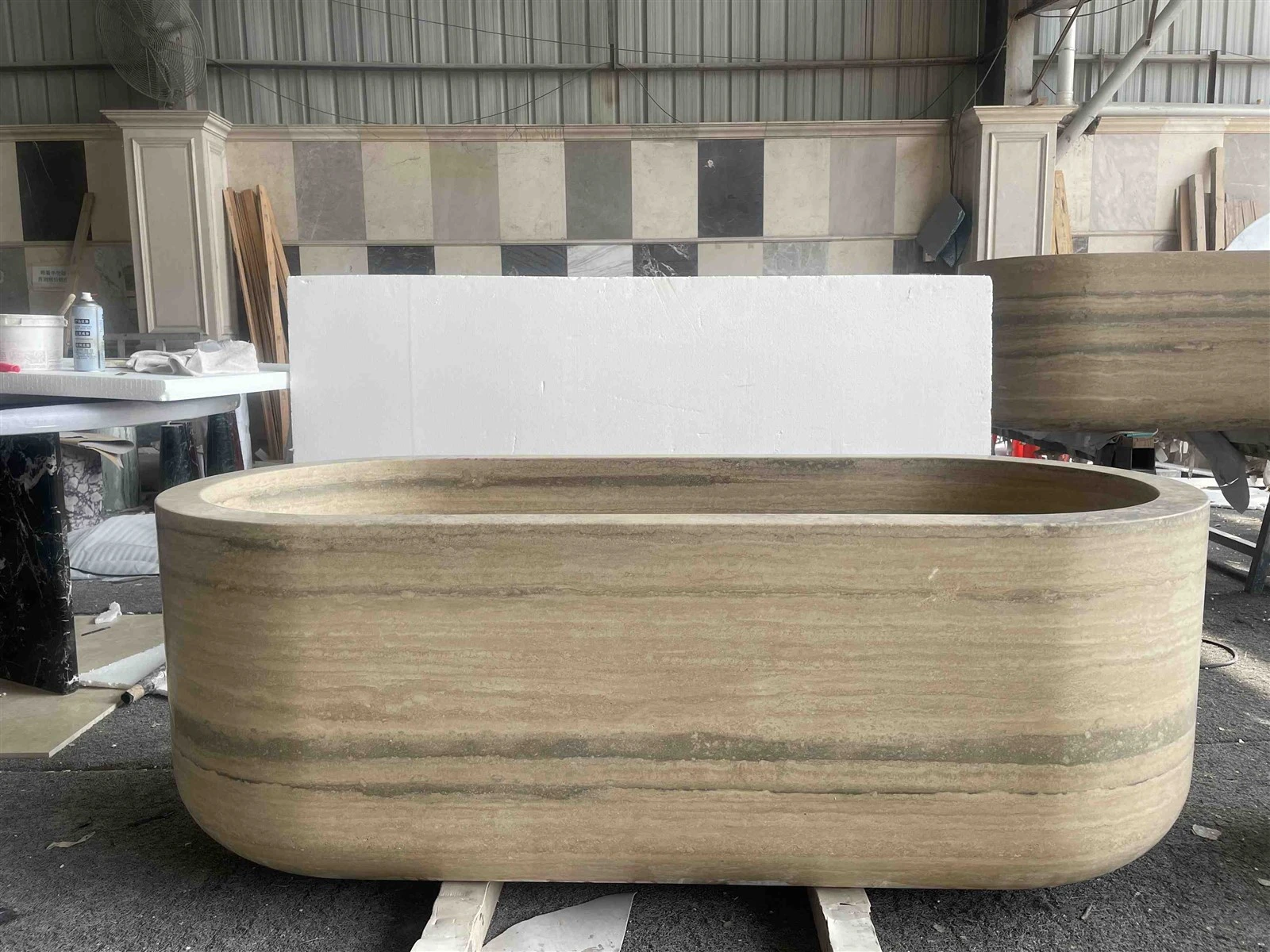
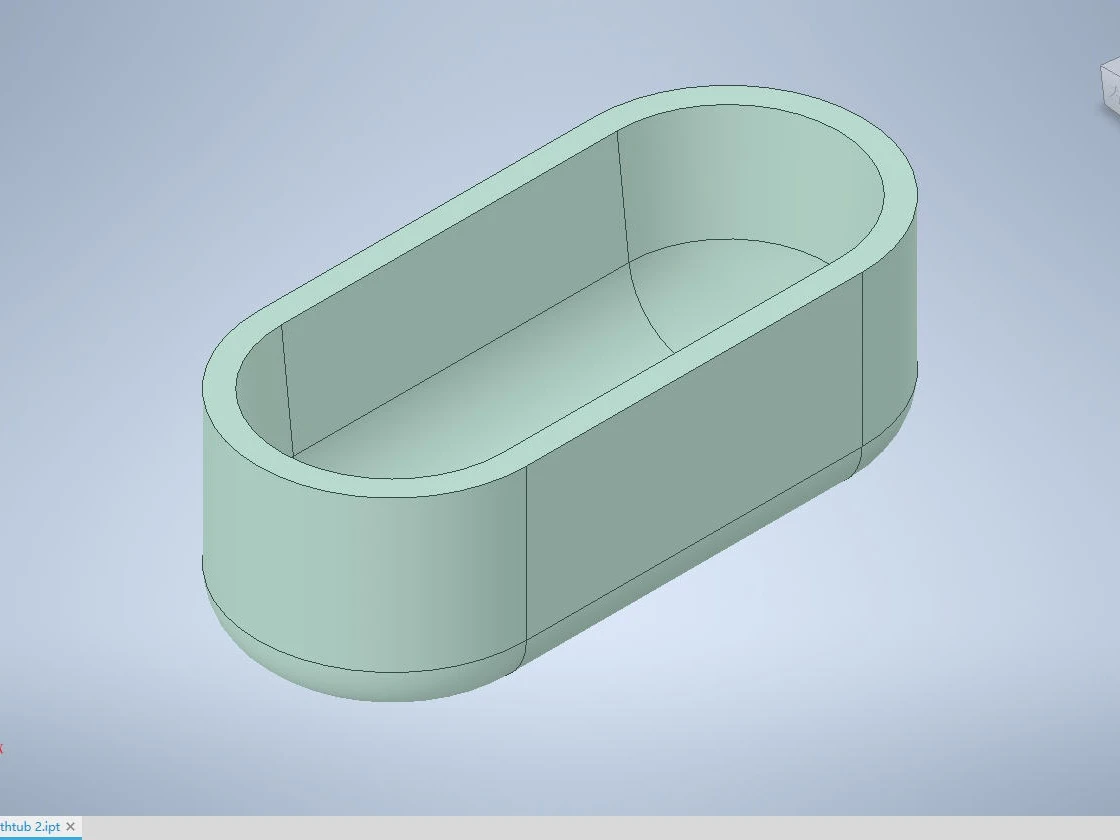
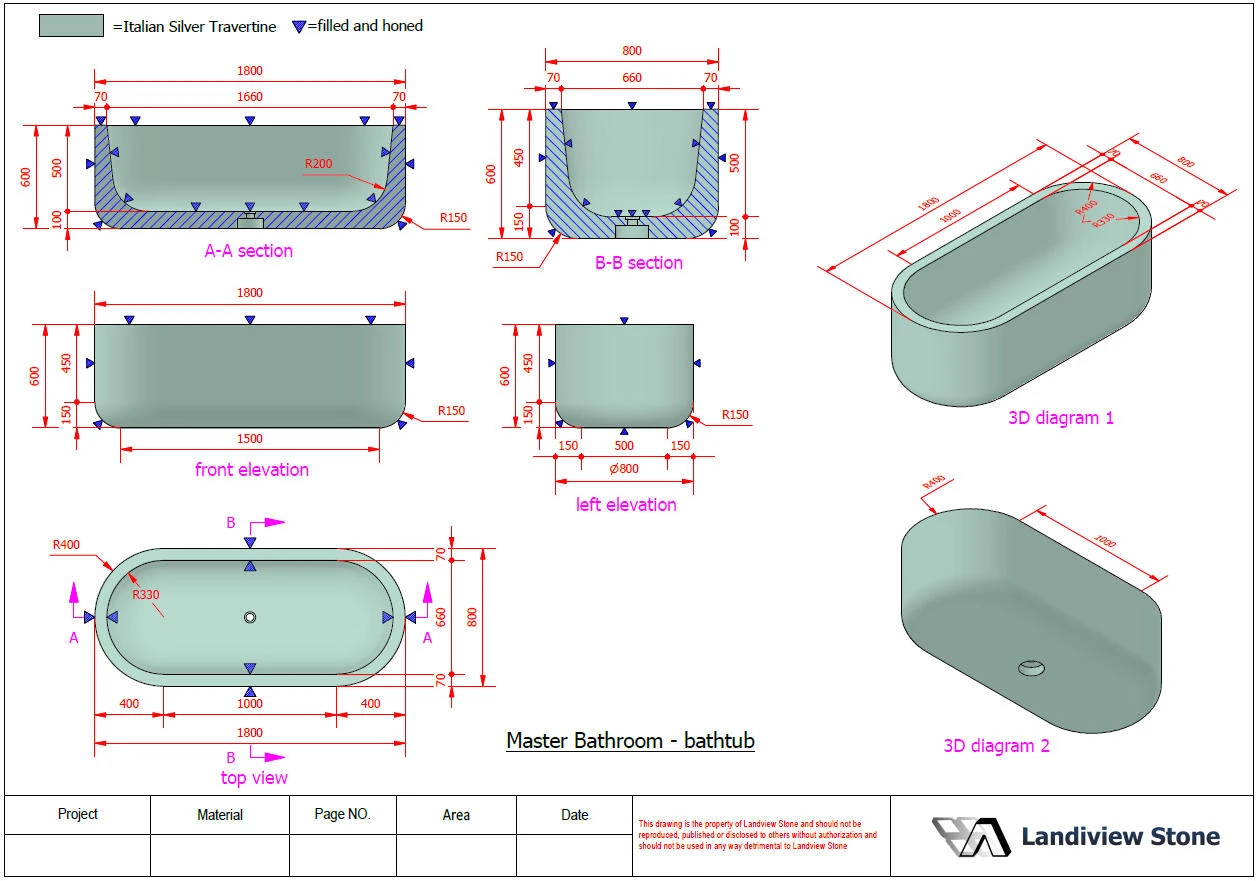
| Monolithic bathtub | One custom Italian Silver Travertine bathtub, approximately 1,800 × 800 × H600 mm, supported by shop drawings and three-dimensional modeling |
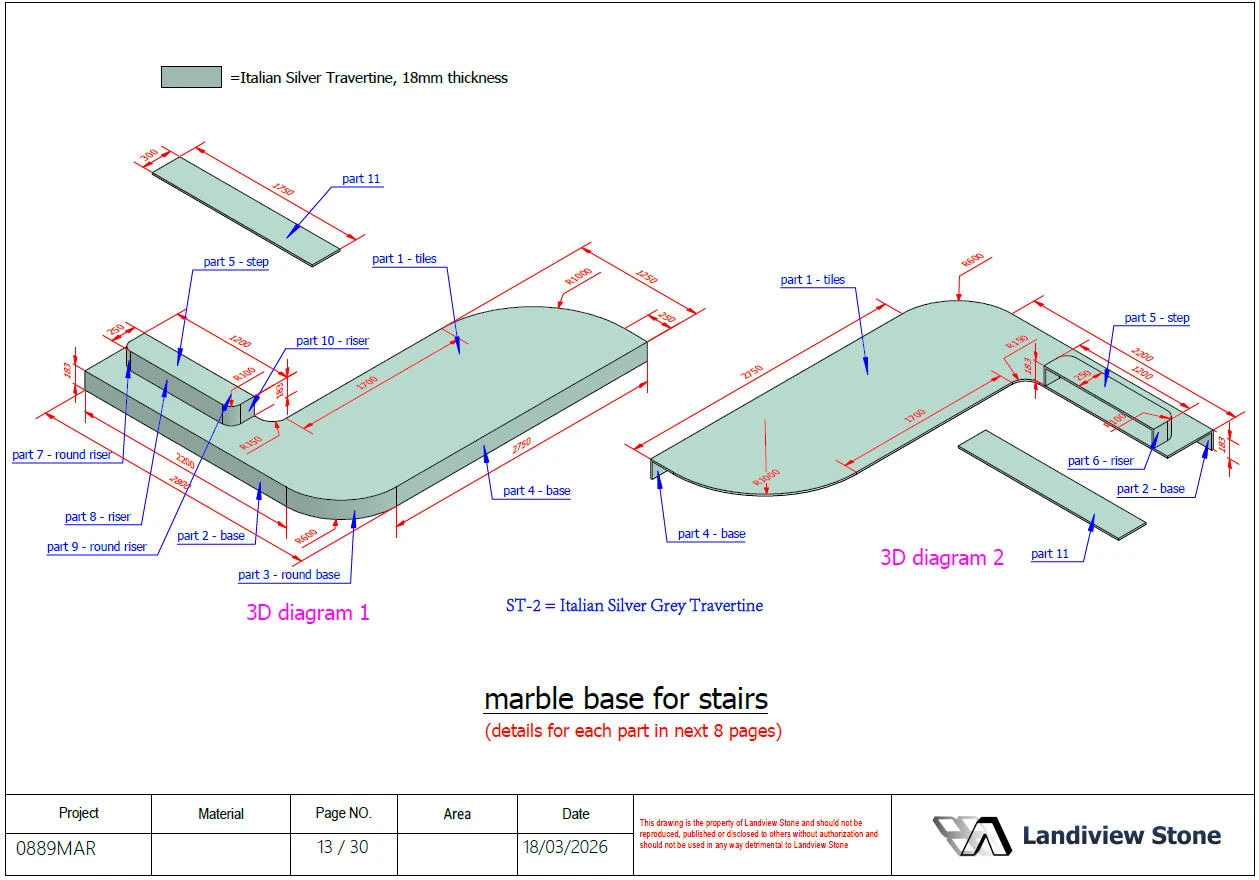
| Master-bedroom stone portal | One 18 mm Italian Silver Travertine portal with documented seams, honed visible faces and butt-jointed top-to-side panel connections |
| Walk-in-robe island | One Turkish Calacatta Viola Marble island with multilayer plywood cabinetry, 18 mm honed stone top and factory-bonded stone panels |
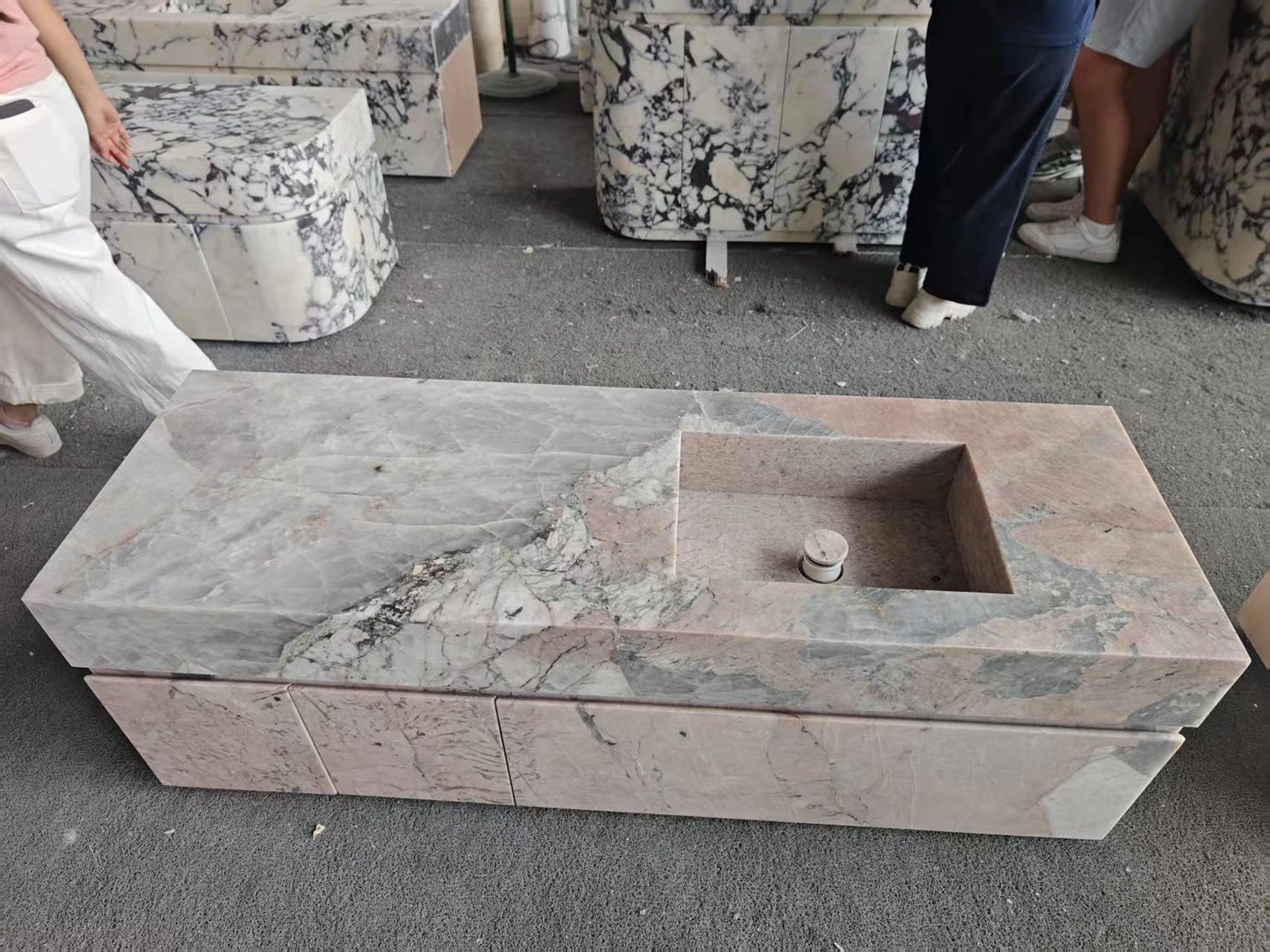
| Calacatta Viola floating vanities | Two master-ensuite units, one ground-floor powder-room unit, one rooftop powder-room unit and one gym washroom unit; honed 18 mm stone over custom multilayer plywood cabinets |
| Patagonia Quartzite floating vanities | One Brazilian Pink Patagonia vanity for Guest Bathroom 1, one Brazilian Patagonia vanity for Guest Bathroom 2 and one Brazilian Blue Patagonia vanity for the first-floor shared bathroom |
| Digital coordination | Stone shop drawings, slab-scan AutoCAD cutting and vein-layout simulations, three-dimensional modeling and virtual assembly review |
| Factory preparation | Selected stone cladding bonded to cabinetry before dispatch, plus dry-layout checks, piece numbering and finished-product inspection |
| Export protection | Project-specific foam cushioning, plywood lining, timber crating and temporary protection for vulnerable geometry; solid timber packaging for Australia must meet applicable Australian biosecurity conditions |
Stone Products and Packaging
Project Stone Shop Drawings
Frequently Asked Questions
Q: What did Landiview Stone supply for this Queensland custom home?
A: The package included a kitchen island with cabinetry and stone cladding, nine additional benchtop sets, a fireplace hearth, a master-bedroom stone portal, floor and wall tiles for seven bathrooms, a monolithic travertine bathtub, one walk-in-robe island and eight floating bathroom or powder-room vanities in Italian Silver Travertine, Turkish Calacatta Viola Marble and Brazilian Patagonia Quartzites.
Q: Why were stone panels bonded to the cabinets in the factory?
A: Factory bonding allowed the stone panels, curved ends, drawer fronts and cabinet interfaces to be checked as assemblies before shipping. It reduced the number of loose site-installed pieces, protected the intended alignment and simplified installation for the Australian project team. Final lifting, substrate fixing, plumbing and site tolerances still remained installation responsibilities.
Q: How were color and vein relationships controlled across the project?
A: Selected slabs were photographed or scanned, then part outlines were simulated over the slab images in AutoCAD. The resulting layouts coordinated feature placement, vein direction, yield and visible relationships between tops, fronts, curved ends, backsplashes and numbered wall tiles before cutting.
Q: What does filled and honed Italian Silver Travertine mean?
A: Travertine contains natural pores and cavities. In a filled and honed finish, selected voids are filled and the face is abraded to a smooth matte or low-sheen surface. The treatment creates a more controlled appearance and easier-to-clean face than open-pore travertine, but the material remains natural and calcareous, so sealing, suitable cleaning products and realistic maintenance expectations are still important.
Q: How was the monolithic travertine bathtub engineered and protected?
A: The bathtub was developed through dimensioned shop drawings and a three-dimensional model covering the 1,800 × 800 × H600 mm envelope, internal cavity, base, curved ends and radii. For export, the finished bathtub was isolated with foam and flexible cushioning, restrained inside a plywood-lined timber crate and supported to limit shock and contact damage.
Q: How were the 538 bathroom tiles prepared for installation?
A: Floor and wall elevations defined boundaries, nominal 600 × 400 mm modules, openings, window surrounds, individual piece numbers and vein arrows. Finished pieces were dry laid in the factory so the production team could review size, sequence and visual continuity before numbering and packing.
Q: What export-packing requirement matters for stone shipments to Australia?
A: Packaging must protect heavy stone from shock, abrasion, moisture and movement while also satisfying Australian biosecurity conditions. Australia incorporates ISPM 15 into its import conditions for solid wood packaging; relevant timber packaging and dunnage must be treated, declared and documented as required. Noncompliant packaging may be treated, exported or destroyed at the importer's expense. Buyers and suppliers should confirm the current BICON conditions before dispatch.
About Landiview Stone
Landiview Stone is best suited to projects where the buyer needs one technical workflow connecting drawings, actual slabs, fabrication, assembly, inspection and export protection.
Landiview Stone supplies natural stone in two principal forms: slabs for importers, distributors and fabricators, and project-specific cut-to-size or finished stone products for contractors, developers, designers, builders and other project buyers.
For slab buyers, Landiview Stone supports current slab selection, slab-image review, color and vein-range confirmation, surface inspection, slab identification and export packing.
For cut-to-size and custom-fabrication projects, Landiview Stone can coordinate:
- • Shop drawing review and fabrication-detail development;
- • slab scanning, AutoCAD cutting layouts and vein-placement simulation;
- • fabrication, dry layout, piece numbering and finished-product inspection;
- • factory pre-assembly of selected stone-and-cabinet packages;
- • temporary reinforcement and protection for vulnerable cutouts, corners and curved components;
- • project-specific export packing and shipment documentation coordination.
For complex fabricated and assembled products, the project team may use three-dimensional modeling and virtual assembly review to examine component relationships, thicknesses, surface treatments, concealed support requirements and potential interference before fabrication details are finalized.