

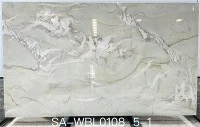


Dolce Vita marble slab with a warm beige and grey background, soft pink accents and layered natural veining

Dolce Vita marble kitchen countertop, backsplash and waterfall island with warm wood cabinetry in a luxury custom home

Dolce Vita marble bathroom vanity top with an integrated sink, mitered edges, matching backsplash and dark wood cabinetry

Dolce Vita marble bathtub deck with mitered edges, full-height apron panels and a white soaking tub in a luxury bathroom
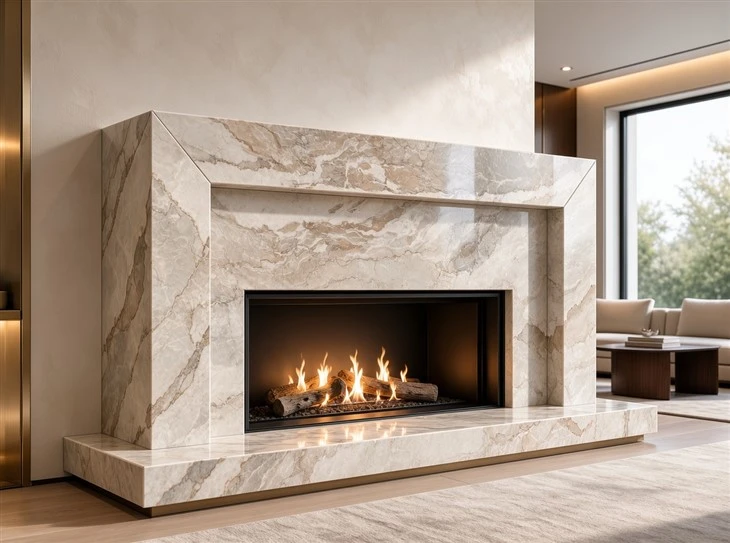
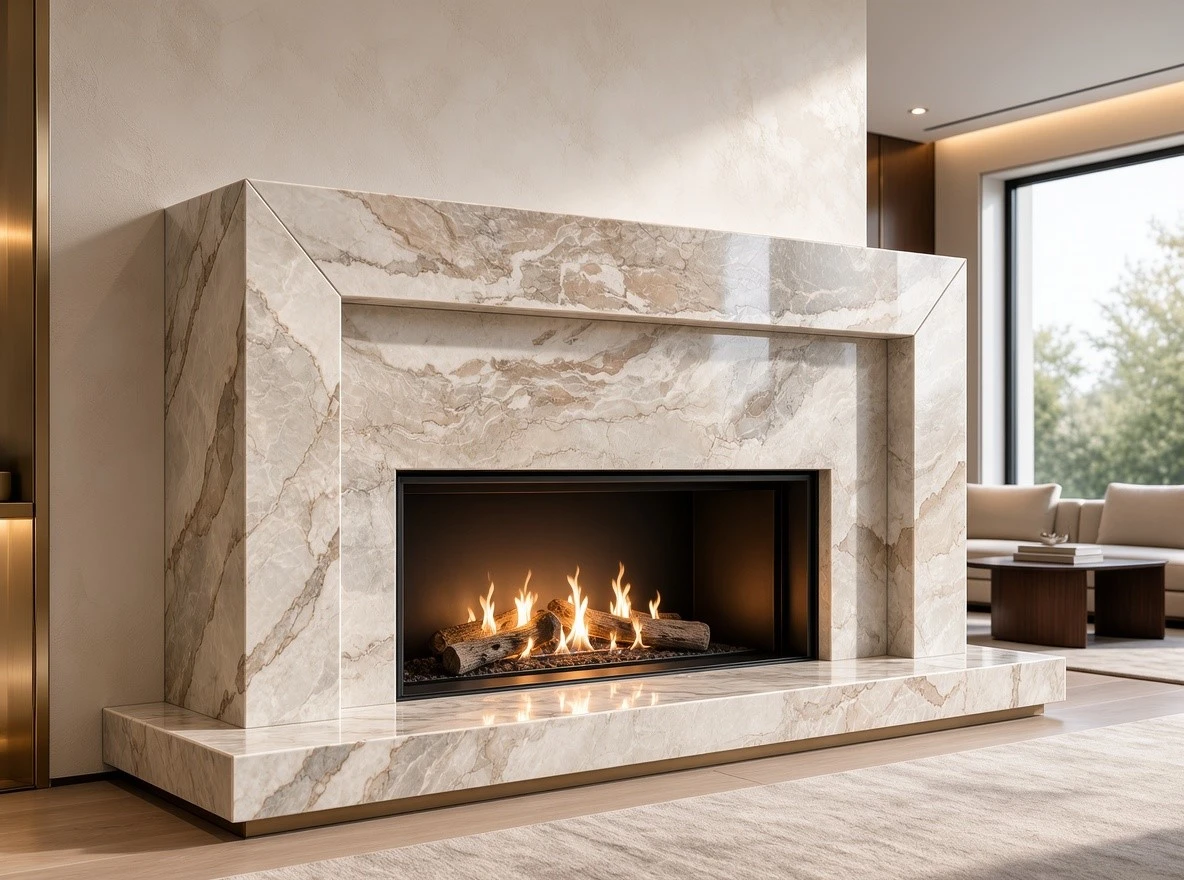
Dolce Vita marble fireplace surround and hearth with mitered edges in a contemporary luxury living room
Australian Dolce Vita Marble Slab
- Fast Delievery
- Quality Assurance
- 24/7 Customer Service
Executive Summary
Choose Dolce Vita marble when a project needs a warm, layered natural-stone composition rather than a uniform beige surface. The buying decision should be based on current slab review, usable yield, finish, thickness, fabrication scope and the planned relationship between adjoining pieces.
Dolce Vita marble slab, increasingly encountered in the market under the alternate name Austral Dream marble, is a natural marble from Australia. Its warm beige and grey background is animated by soft pink accents and layered natural veining. It is relevant to slab importers, distributors and fabricators, as well as contractors, designers, developers and builders purchasing finished stone. Landiview Stone can supply slabs subject to current availability or coordinate project-specific fabrication for kitchen islands, countertops, vanity tops, bathtub decks and fireplaces. Buyers should approve the actual slabs, finish, thickness, natural variation and fabrication documents before production.

Key Facts
Dolce Vita is Australian natural marble with warm beige-grey movement, soft pink accents and layered veining. The standard slab thickness is 18 mm; 20 mm and 30 mm slabs may be specially cut from selected blocks when the project, block availability and production plan support it.
| Buyer Question | Confirmed Product Information |
| Product name | Dolce Vita marble slab |
| Alternate commercial name | Austral Dream marble; both names are used in the market for this Australian stone. Naming and material classification should be confirmed in the purchase documents for the selected lot. |
| Material | Natural marble. External sellers sometimes describe commercially related material as dolomitic marble or dolomite; if geological classification or performance is critical, request lot-specific documentation or testing rather than relying only on a trade name. ASTM identifies calcite and dolomite as marble classifications within its dimension-marble specification. [1] |
| Origin | Australia |
| Color and visual character | Warm beige and grey background, soft pink accents and layered natural veining. Every slab is naturally variable. |
| Standard slab thickness | 18 mm |
| Other thickness options | 20 mm and 30 mm may be specially cut from selected blocks according to customer requirements, subject to suitable block availability and production review. |
| Stated slab thickness tolerance | ±1 mm. Measurement method and project acceptance criteria should be agreed in the contract, drawings or inspection standard before ordering. |
| Recommended finishes | Polished, honed and leathered |
| Recommended applications | Kitchen island and kitchen countertop; bathroom vanity top; bathtub deck; fireplace |
| Supply formats | Slabs for importers, distributors and fabricators; project-specific cut-to-size or finished products for professional project buyers. |
| Lot-specific items to confirm | Current slab dimensions and quantity, slab numbers, finish, surface condition, resin or mesh treatment, usable yield, tone and vein range, test documentation if required, fabrication scope, packing and destination logistics. |
Available Finishes and Processing Options
Polished, honed and leathered finishes can create materially different readings of the same Dolce Vita slab. Buyers should approve a representative finish sample together with current slab images because sheen, texture, resin treatment and lighting can change perceived color and contrast.
▌ Polished Finish
Polishing increases reflectivity and usually sharpens the contrast between the warm background, pink accents and stronger veins. It suits statement islands, vanity tops and fireplace components where visual depth is important. Reflections may make surface marks and etching more visible, so the intended use, care expectation and approved finish standard should be discussed before production.
▌ Honed Finish
A honed surface provides a lower-sheen, quieter appearance and can make the palette feel softer and more architectural. It is often considered for countertops, bathtub decks and fireplace surrounds. Honing does not remove marble's sensitivity to acidic substances, and the exact sheen level should be approved because "honed" can represent different factory standards.
▌ Leathered Finish
Leathering adds tactile surface variation and can emphasize mineral movement in a less reflective way. Texture depth, cleanability, edge finishing and suitability near joints or cutouts should be assessed with an actual finish sample. Availability depends on the selected slab condition, equipment and project specification.
▌ Thickness and Custom Processing
The standard slab thickness is 18 mm. If 20 mm or 30 mm is required, Landiview Stone can investigate suitable block selection and special slab cutting. Feasibility depends on block dimensions, soundness, expected yield and current production conditions. For finished work, processing may include cut-to-size fabrication, edge profiles, mitered build-ups, cutouts, backsplashes, aprons, dry layout and piece numbering according to approved shop drawings.
Recommended Applications
Dolce Vita marble is recommended for visually important interior surfaces where slab selection and vein composition can form part of the design. Application approval should still account for support, cutouts, joints, exposure, maintenance, local requirements and the responsibilities of qualified installers.
▌ Kitchen Island and Kitchen Countertop

The warm neutral palette can connect wood cabinetry, metal finishes and lighter wall surfaces without becoming visually flat. For a waterfall island or mitered edge, adjacent pieces should be mapped to preserve an intentional vein relationship. Buyers should review usable slab yield, seam locations, overhang support, appliance and sink templates, faucet clearances, edge geometry and the risk created by large cutouts.
When material and site conditions permit, a semi-cutout may be considered for a large sink or cooktop opening. Most cutting is completed at the factory while selected connections remain temporarily in place to improve handling stability. The remaining cuts are completed on site by the installation team; retained locations, tools and responsibility should be defined in the approved drawings and instructions.
▌ Bathroom Vanity Top
Dolce Vita can give a vanity top a softer, less clinical character, especially with a matching backsplash, apron or integrated-stone sink composition. The shop drawing should coordinate the actual sink template, faucet specification, spout reach, backsplash, cabinet interior, plumbing space and visible joint locations. Narrow bridges around basins require careful handling, packing and installation support.
As a practical starting point, Landiview Stone often reviews a 22-inch-deep bathroom countertop with nominal front, rear and side stone zones of 4 inches, 2.5 inches and 2.5 inches, providing a maximum opening depth of about 13 inches; if space is limited, the 4-inch zone may be reconsidered at 3.5 inches. These are coordination references, not universal design rules. Final dimensions must follow the actual templates, support design and project requirements.

▌ Bathtub Deck

A bathtub deck allows broad pieces to display the stone's layered movement and can be coordinated with an apron or adjacent wall material. Fabrication review should cover tub templates, access panels, joints, edge build-ups, substrate support, waterproofing interfaces and movement accommodation. The stone is a finish material, not a substitute for the specified waterproofing or structural system. Wet-area installation and sealing should follow project documents, local requirements and product-manufacturer guidance.
▌ Fireplace
The beige, grey and pink movement can create a warm focal element around a contemporary or traditional fireplace. A mitered surround can provide visual thickness, but successful work requires coordinated corner matching, joint widths, substrate conditions, mounting details and clearances. The stone, adhesive, backing and support system must be evaluated for the fireplace type, operating temperatures, local code and appliance-manufacturer instructions.
Why Choose This Stone
Dolce Vita is most compelling when the buyer wants warm neutral color with visible geological movement and soft pink detail. Its design value depends on the selected slabs and composition, so approval should focus on the actual material and planned cuts rather than a small sample or trade name alone.
- • A warm beige and grey base can bridge timber, bronze, black, cream and muted interior palettes.
- • Soft pink accents add identity without requiring the high contrast associated with some dramatic white marbles.
- • Layered natural veining supports large statement pieces, matched adjoining components and project-specific layouts.
- • Polished, honed and leathered options allow the same material family to be tuned for reflectivity, softness or tactile character.
- • The alternate name Austral Dream can help buyers locate commercially related stock, but the actual lot, classification and source documentation should still be checked.
- • Landiview Stone can support either slab procurement or a coordinated path from architectural information to finished, numbered and export-packed components.
Natural veining, color variation and some healed or open mineral features can be intrinsic to the material. These should not be confused automatically with structural cracks or fabrication damage. Inspection should consider feature type, location, stability and effect on handling, fabrication and intended use. Buyers should request current slab records and agree the acceptance range before ordering.
Comparison with Similar Stones
Compare Dolce Vita with other warm natural stones by approved slab appearance, geological or commercial classification, acid sensitivity, pattern scale, fabrication behavior and project-specific support needs. No trade name alone establishes performance, and each candidate lot should be reviewed on its own evidence.
| Stone Direction | Typical Visual Character | Material Category | Typical Uses | Buyer Considerations |
| Dolce Vita / Austral Dream | Warm beige and grey background, soft pink accents and layered natural veining | Sold here as Australian natural marble; some market listings use dolomitic marble or dolomite terminology | Islands, countertops, vanity tops, bathtub decks and fireplaces | Approve actual slabs, classification language, finish, thickness, usable yield, cutout strategy and layout. Treat as acid-sensitive marble unless reliable lot-specific evidence supports another care protocol. |
| Taj Mahal-type quartzite | Warm cream, beige and taupe movement, often with elongated soft veining | Natural quartzite when geologically verified | Countertops, islands, vanities and feature panels | Can offer a related warm direction but is not visually identical. Verify that the selected material is true quartzite, review fissures and processing, and obtain relevant test information where performance is critical. |
| Breccia-style warm marble | Beige, cream, rose or brown fragments with more broken, brecciated movement | Natural marble | Vanities, furniture, walls, fireplaces and selected countertops | Pattern may be more fragmented and higher contrast. Review repairs, resin, mesh, piece scale, matching plan and acid-sensitive maintenance expectations. |
| Warm beige limestone | More uniform beige field, sometimes with fossils or subtle clouds | Calcareous natural stone | Walls, floors, fireplace cladding and lower-contrast interiors | Usually quieter than Dolce Vita. Porosity, abrasion, finish, staining and acid sensitivity require project-specific evaluation. |
| Porcelain or sintered surface in a warm marble look | Manufactured repeatable design that may imitate beige-grey veining | Manufactured surface, not natural marble | Countertops, walls and selected furniture applications | May provide greater pattern repeatability, but edge construction, printed pattern depth, repairability and fabrication methods differ. Review manufacturer technical data and installation requirements. |
Frequently Asked Questions
Most purchase risk can be reduced by defining the actual slab lot, approved appearance, thickness and tolerance, finish, fabrication documents, inspection method, packing design and destination requirements before production. The answers below identify what is standard and what remains project-specific.
Q: Can you provide Dolce Vita marble samples?
A: Yes. Normally one or two samples can be provided without a sample charge, with typical sizes from 100 × 100 mm to 200 × 200 mm. Courier cost is paid by the customer, and sample availability depends on the current material. A small sample is useful for reviewing the finish, basic color family and surface character, but it cannot represent the full layered movement of a large slab. Buyers should also approve current slab images, videos and slab numbers.
Q: What is the slab thickness tolerance?
A: The stated standard tolerance is ±1 mm. Before ordering, the buyer and supplier should confirm the nominal thickness, measurement locations, measuring method and acceptance criteria in the contract, approved drawings or project inspection standard. Additional fabrication, surface finishing, resin treatment or local project requirements may affect how thickness is evaluated, so a single headline tolerance should not replace an agreed inspection method.
Q: How do you inspect Dolce Vita slab surface quality?
A: Inspection focuses on cracks or unstable features that may affect handling or fabrication, overall visual coordination, unusually large and discordant black areas, surface condition, and color or vein variation relative to the buyer-approved range. Natural veins, mineral lines, healed fissures, open fissures, structural cracks and processing damage are not treated as interchangeable terms. The feature's location, continuity, stability and effect on yield or intended use should be assessed, recorded and discussed where relevant.
Q: Can I see current slab photos and videos before ordering?
A: Yes, subject to actual stock availability. Landiview Stone can provide current-lot slab images or videos, slab numbers, surface-review information and an overview of the color and vein range. Digital records help remote selection but can be affected by lighting, camera settings and screens. The approval process should state which slabs are selected and whether any critical visual areas, obvious features or matching relationships need to be marked before cutting or packing.
Q: Can you supply cut-to-size and finished products, not only slabs?
A: Yes. Clients normally submit architectural drawings, after which the technical team identifies the stone scope and prepares stone shop drawings for approval. Current slabs are submitted for review; if unsuitable, block selection and special slab cutting may be investigated depending on project requirements. After drawings and slabs are approved, slab scans can be used in AutoCAD for cutting and vein-layout simulation. Following layout approval, the factory fabricates, dry lays, inspects, replaces nonconforming pieces when required, numbers pieces, protects vulnerable areas and prepares export packing. See how to order cut-to-size stone from China.
Q: Can Landiview Stone prepare stone shop drawings from architectural drawings?
A: Yes. The technical team can review architectural information, isolate the relevant stone scope and develop stone shop drawings that communicate dimensions, thicknesses, cutouts, edge details, visible surfaces, finishes, joints, reinforcement and fabrication requirements. The client and design team must review and approve the drawings before production. Stone shop drawings coordinate fabrication, but they do not replace the structural, code, waterproofing or installation responsibilities of locally licensed professionals. See what cut-to-size stone means for a project order.
Q: How do you help control the final vein layout and installed appearance?
A: After the shop drawings and selected slabs are approved, actual slab scans can be imported into AutoCAD to simulate cut positions, vein direction and visual relationships between adjoining pieces. The buyer reviews this plan before cutting. After fabrication, a factory dry layout checks the real components for damage, visual coordination and replacement needs; approved pieces can then be numbered against installation information. This workflow helps reduce information gaps, but natural variation, lighting, joints and site installation still influence the final appearance. See natural stone slab layout in AutoCAD.
Q: How do you protect slabs and finished stone during shipping?
A: Slabs are packed using a robust export crate, frame or A-frame/support design selected for the actual container and material risk. Finished products may receive custom foam, plywood separation, impact cushioning, edge protection and positioning elements. Sink or cooktop cutouts, backsplashes, narrow strips, vanity tops, fireplace parts, narrow wall panels and vulnerable corners may receive temporary support strips applied over protective film; these are removed before installation according to instructions. Regulated wood packaging should use ISPM 15-compliant material according to destination requirements. [3] Slab handling and unloading require trained procedures and suitable controls. [4] See how Landiview Stone protects natural stone during shipping.
Q: How should installed Dolce Vita marble be maintained?
A: Use a pH-neutral cleaner intended for natural stone, address spills promptly, and avoid unknown acidic or alkaline chemicals and abrasive tools. Marble is calcareous and can react with acidic solutions, so etching should not be confused with a removable surface stain. The Natural Stone Institute recommends mild non-acidic cleaning and following product-manufacturer directions. [2] Sealer selection and reapplication frequency depend on the particular stone, finish, exposure, use and sealer manufacturer's instructions. Test products in an inconspicuous area and consult a stone-care professional where required.
Q: Is Dolce Vita the same stone as Austral Dream marble?
A: The names Dolce Vita and Austral Dream are commonly used in the market for commercially related Australian stone. However, trade names are not a substitute for lot identification. Different suppliers also use marble, dolomitic marble or dolomite terminology. The quotation and contract should record the selected slab numbers or block, agreed material description, origin documentation if required, finish and approval records. When a project's performance criteria are critical, request relevant test documentation for the actual supplied lot.
Q: Is Dolce Vita marble suitable for a kitchen countertop?
A: It can be specified for kitchen islands and countertops when the buyer accepts the care profile of natural marble and the design is properly supported. Review seams, overhangs, sink and cooktop openings, faucet clearances, edge details and slab yield before fabrication. Use boards and trivets, respond quickly to spills and avoid acidic cleaning products. Local professionals should verify cabinetry, support, installation and code requirements; the stone supplier's drawings do not replace those responsibilities.
Q: Can you supply 20 mm or 30 mm Dolce Vita slabs?
A: Potentially, yes. The standard slab thickness is 18 mm, while 20 mm and 30 mm can be investigated through selected-block cutting according to customer requirements. Availability is not assumed. The production team must review suitable block dimensions, natural features, expected slab yield, thickness tolerance, finish, quantity and schedule. Buyers should treat special thickness as a project-specific order rather than standard stocked inventory.
Q: Which finish is best for Dolce Vita marble?
A: There is no single best finish. Polished generally increases reflection and vein contrast; honed produces a quieter, lower-sheen appearance; leathered adds tactile texture and reduces mirror-like reflection. Selection should consider design intent, touch, cleaning, edge work, likely wear and the visibility of etching or surface marks. Approve an actual finish sample and current slab images together because a small sample alone cannot show the complete pattern.
Q: What affects the price of Dolce Vita marble slabs or finished work?
A: Pricing is project-specific. Relevant factors include current slabs or selected-block requirements, dimensions, usable yield, thickness, finish, resin or mesh condition, pattern selection, cutting complexity, miter work, cutouts, dry layout, replacement allowance, packing and destination logistics. A slab-only quotation is not directly comparable with a finished-product quotation that includes shop drawings, layout coordination, fabrication, inspection and packaging. Send a consistent scope to each supplier for a meaningful comparison.
Q: What information should I send for a quotation?
A: Provide the required format, dimensions, quantity, thickness, finish, application and delivery destination. For finished products, include architectural drawings, schedules, templates and relevant details if available. Identify visual priorities such as matched joints, waterfall ends, bookmatching or areas where strong veins should be avoided. Also state required testing, inspection, packaging, documentation and target schedule. Landiview Stone can then respond with current availability, clarification questions and a project-specific quotation.
Why Landiview Stone
Landiview Stone supports two distinct buyer needs: slabs for importers, distributors and fabricators, and project-specific finished stone for contractors, developers, designers, builders and other professional buyers. The technical workflow is designed to connect approved information with fabrication, inspection, identification and export protection.
▌ Support for Slab Buyers
For slab purchases, Landiview Stone can support current slab selection, slab-image review, color and vein-range confirmation, surface inspection, slab identification and export packing. High-value or more vulnerable slabs may require a steel A-frame inside a fully enclosed plywood crate, with cushioning, separation, wrapping and restraining elements. Standard slab lots may use an open wooden frame with a load-bearing base, vertical or inclined supports, cushioning and container bracing. The final design depends on the stone, quantity, container plan, route and buyer requirements.
▌ Workflow for Custom Fabrication
- 1. Review architectural drawings and identify the stone scope.
- 2. Prepare stone shop drawings for client and design-team approval.
- 3. Submit available slabs; if unsuitable, investigate block selection and special slab cutting when appropriate.
- 4. Use approved slab scans in AutoCAD to simulate cutting and vein layout before production.
- 5. Fabricate to approved documents, then dry lay, inspect and number finished pieces.
- 6. Replace nonconforming pieces when required while considering adjacent color and veining.
- 7. Apply project-specific protection, including temporary reinforcement for vulnerable geometry, before export packing.
The factory dry layout is not merely a repeat of the digital plan. It reviews the actual fabricated components for chips, processing damage, unstable open features, unexpected visual differences and agreed acceptance criteria. Piece numbers can then connect the approved arrangement to installation drawings, helping the site team understand location, adjacency and orientation.
▌ Complex Assemblies and Digital Verification
For more complex fabricated and assembled stone products, the project team may create three-dimensional component models and conduct virtual assembly review in Autodesk Inventor or SolidWorks. The review can examine component relationships, material thicknesses, surface treatments, concealed reinforcement, internal clearances, cutout positions and potential interference before fabrication details are finalized. Verified information is then coordinated into plans, elevations, sections and fabrication details.
▌ International Project Experience
- • Marble furniture, bathroom vanity tops and shower wall panels for the Grand Hyatt Singapore renovation project
- • Stone supply for stations on Singapore's Thomson-East Coast Line
- • Interior stone products for the Wynn project in the United Arab Emirates
- • Marble products for public areas of the 255 East 77th Street luxury residential project in New York
- • Interior and exterior marble and granite products for three high-end custom homes on Tuckahoe, a private resort island in Massachusetts, USA
Request A Quote
For a useful quotation, send the required product format, dimensions, thickness, quantity, finish, application and delivery destination. Include architectural drawings, schedules or templates when the inquiry covers cut-to-size or custom-fabricated stone.
Looking for Dolce Vita marble slabs, selected-block cutting or finished stone products? Landiview Stone can check current slab availability, provide available slab photos or videos and prepare a scope-based quotation. For project work, the team can also coordinate stone shop drawings, scanned-slab vein-layout planning, dry-layout inspection, piece numbering and export packing.
Request A Project Quote Or Slab Availability
Hot Tags: Dolce Vita marble slab, Austral Dream marble, Australian marble slabs, beige grey pink marble, marble slab supplier, custom marble fabrication, Landiview Stone, Blue Roma Quartzite, Botticino Classic Marble Slabs For Floor, Bramante Maestro Quartzite Slab, Crema Marfil Marble For Floor Wall, Italian Calacatta White Marble, Namib Fantasy White Marble
Previous
No InformationYou Might Also Like


Send Inquiry