




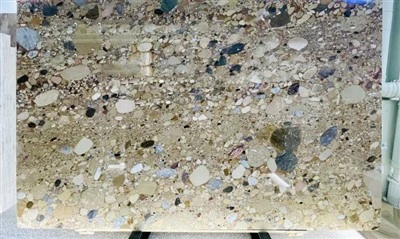
Agora Beige marble slab with soft beige tones and subtle natural veining

Agora Beige Marble kitchen countertop and waterfall island in a modern custom home

Agora Beige Marble bathroom vanity top with integrated stone sink

Agora Beige Marble floor tiles installed in a luxury custom home living room

Agora Beige Marble wall tiles installed behind the reception desk in a luxury hotel lobby
Agora Beige Marble Slab
- Fast Delievery
- Quality Assurance
- 24/7 Customer Service
Executive Summary
Agora Beige Marble is a natural marble from Turkey selected for warm beige interiors that need quiet white veining rather than a highly dramatic pattern. It is relevant to slab importers, distributors, fabricators, contractors, designers, developers and builders sourcing slabs or finished products. Standard slab thickness is 18 mm; 20 mm and 30 mm slabs may be produced from selected blocks depending on project requirements and block availability. Recommended finishes are polished and honed, with applications including kitchen islands and countertops, bathroom vanity tops, floor tiles and wall tiles. Procurement should include actual slab review, agreed acceptance criteria and application-specific fabrication and installation planning.
Landiview Stone can quote either current slabs or custom cut-to-size work. For a useful quotation, provide dimensions, thickness, quantity, finish, intended application, delivery destination and drawings if available.

Key Facts
The table below separates confirmed product information from items that must be checked against current slabs or a project specification. It deliberately avoids unverified performance values, fixed slab sizes, stock promises and universal suitability claims.
| Buyer information | Agora Beige Marble specification |
| Product name | Agora Beige Marble slab |
| Material | Natural marble |
| Origin | Turkey |
| Color and visual character | Warm beige background with subtle white veining. Natural variation should be reviewed on current slab images and, where practical, physical samples. |
| Recommended finishes | Polished; honed |
| Standard slab thickness | 18 mm |
| Additional thickness options | 20 mm and 30 mm slabs may be custom-sawn from selected blocks, subject to project requirements and suitable block availability. |
| Stated thickness tolerance | ±1 mm. The contract, drawings or inspection standard should define the measurement method and project requirement before order confirmation. |
| Recommended applications | Kitchen island and countertop; bathroom vanity top; floor tiles; wall tiles. Final suitability depends on design, testing where required, support, joints, traffic, wet-area conditions, installation system and local requirements. |
| Supply forms | Slabs; project-specific cut-to-size or finished stone products. |
| Current slab information | Slab photos, videos, slab numbers and visual range review are available upon request, subject to current slab availability. |
| Physical test data | Not stated on this page. Request relevant, current test documentation if the project specification requires it; do not treat generic marble values as product-specific values.[2] |
| Price, MOQ and lead time | Quoted case by case based on slab/block availability, selected range, thickness, finish, quantity, fabrication scope, packing and destination. |
Available Finishes and Processing Options
Polished and honed are the recommended finishes for Agora Beige Marble. The choice changes reflectivity, apparent color depth, tactile character and the way wear or etching may be perceived. Always approve a representative finish sample together with current slab imagery; one small sample cannot communicate the full slab range.
▌ Polished finish
A polished face increases reflectivity and usually makes beige tones and white veining read more distinctly. It is often chosen for vanity tops, feature walls and countertops where a refined surface is desired. Because marble is calcareous and sensitive to acids, polishing does not make the surface acid-proof; exposure, cleaning products and use conditions still matter.[1]
▌ Honed finish
A honed face has lower reflectivity and can create a quieter, more uniform visual effect. It is frequently considered for floors, walls and relaxed contemporary interiors. Finish designation alone does not establish slip resistance or wet-area suitability. Confirm the required test method, value, installation system and local code with the project team.
▌ Processing and approvals
Depending on the scope, processing may include cutting to size, edge finishing, sink or cooktop cutouts, tile calibration, surface inspection, dry layout and piece numbering. Large cutouts and narrow sections require particular review of geometry, support and transportation risk. A semi-cutout or temporary reinforcement may be considered where material and site conditions permit, but the retained connections, removal method and site responsibility must be documented in approved drawings.
Approval recommendation: Record slab number, usable dimensions, thickness, finish, visible face, resin/mesh treatment if present, acceptable color and vein range, repair policy, inspection method and packing scope in the purchase documents.
Recommended applications
Agora Beige Marble is recommended for countertops, vanity tops, floor tiles and wall tiles when the buyer accepts natural-marble variation and plans for appropriate fabrication, installation and care. Application approval should be based on the actual stone, geometry, use conditions, project specification and local requirements-not color alone.
▌ Kitchen islands and countertops

The warm beige field can connect cabinetry, timber, metal and neutral wall finishes without introducing an overly dominant pattern. For waterfalls, mitred build-ups, adjoining backsplashes or prominent seams, buyers should approve piece orientation and vein relationships on scanned slab layouts before cutting. Marble can etch when exposed to acidic substances, so the design team should align appearance expectations with actual kitchen use and the care plan.[1] Sink and cooktop openings reduce the remaining stone section; verify appliance templates, supports, edge distances, joints, handling access and installation sequence. Temporary reinforcement or a documented semi-cutout may reduce transportation exposure but does not replace suitable permanent support or professional installation.
▌ Bathroom vanity tops
Agora Beige Marble can give vanity areas a continuous, light-toned stone surface and may be coordinated with wall or floor elements. Selection should consider basin geometry, faucet and backsplash clearances, drain access, edge design and the narrow stone sections around cutouts. Wet-area detailing-including substrate, waterproofing, sealant joints and installation materials-must follow approved project specifications and qualified installers' recommendations. Use cleaning products suitable for calcareous natural stone; avoid assuming that a sealer prevents etching or eliminates maintenance.[1]

▌ Floor tiles

Beige marble flooring can create a visually continuous base across residential, hospitality or selected commercial interiors. Buyers should define tile module, thickness, finish, joint width, shade range and dry-layout expectations. Substrate condition, movement accommodation, setting materials, lippage criteria, traffic and cleaning regime can materially influence performance and appearance. For entrances and higher-traffic areas, grit is abrasive; mats and frequent dust removal help reduce scratching.[1] Slip-resistance requirements, especially in wet or public areas, must be evaluated against the governing project specification and local code using relevant test data.
▌ Wall tiles
On lobby, bathroom and feature walls, the stone's restrained movement can support either a monolithic field or a panelized composition. Panel dimensions, anchoring or bonding method, substrate, jointing, edge conditions and access for installation must be coordinated. For mechanically attached dimension stone, the broader design principle is to coordinate the stone, attachment, support and interfacing systems with project conditions; engineering responsibility remains with the project's qualified professionals.[3] Slab scans and dry layout can help control transitions across adjacent panels while preserving honest expectations about natural variation.

Comparison with Similar Stones
Agora Beige Marble should be compared with other beige stones by actual slab appearance, geological category, finish, application conditions and maintenance expectations. Commercial names can cover different quarries or selections, so this table is a shortlist guide rather than a substitute for samples, slab review or project-specific test data.
| Stone | Typical visual direction | Material category | Maintenance profile | Typical uses | Selection considerations |
| Agora Beige Marble | Warm beige field with subtle white veins | Natural marble | Use stone-suitable neutral cleaner; acids can etch calcareous stone.[1] | Countertops, vanity tops, floor tiles, wall tiles | Approve current slabs, thickness, finish, treatment and visual range. |
| Crema Marfil | Typically cream to beige, with selection-dependent veins or markings | Commercially traded Spanish beige dimension stone; confirm exact petrographic classification with the source | Specify care for the confirmed stone and finish; do not infer performance from the trade name alone. | Floors, walls, stairs, vanity tops and decorative work | Wide commercial selection ranges make sample-to-slab matching and lot review important. |
| Botticino Classico | Typically beige with lighter veins and fossil-like or cloudy movement | Italian calcareous dimension stone; confirm supplied classification and quarry selection | Calcareous-stone precautions generally apply; confirm finish-specific care. | Interior floors, walls, vanity tops and architectural details | Review vein density, tonal range, filled areas and consistency across quantities. |
| Jura Beige | Beige field often showing fossils and shell fragments | Natural limestone; Germany | Calcareous and acid-sensitive; finish and traffic affect care planning. | Floors, walls, stairs, facades and architectural elements where specified | Fossil content is a design feature; application and finish should be supported by relevant supplier data. |
Why Choose This Stone
Choose Agora Beige Marble when the design calls for a warm, low-contrast natural marble surface and the procurement team is prepared to approve actual slabs. Its value comes from the combination of a neutral beige field, fine white movement, polished or honed options and flexibility across slabs, tiles and fabricated components-not from a promise of uniformity.
- • Controlled visual warmth: the beige background can work with light or dark joinery, warm metals and neutral textiles.
- • Subtle movement: white veining provides natural variation without the strong directional drama of many statement marbles.
- • Finish flexibility: polished and honed surfaces support different reflectivity and design intentions.
- • Multiple procurement paths: buyers can source standard 18 mm slabs or discuss 20 mm and 30 mm custom-sawn slabs from selected blocks.
- • Layout potential: scanned-slab cutting plans can coordinate prominent islands, waterfalls, wall panels and adjoining pieces before fabrication.
Natural-feature note: veins, tonal movement, mineral markings and some healed or open geological features may occur in natural marble. They should not be automatically labeled as defects. Inspection must distinguish inherent characteristics and accepted processing treatments from unstable structural cracks, handling damage, fabrication defects or areas outside the agreed visual range.
Frequently Asked Questions
These answers address the information buyers commonly need before requesting samples, approving slabs or releasing custom stone for production. Contract documents and approved drawings should take precedence where project-specific requirements differ.
Q: Can you provide samples of Agora Beige Marble?
A: Yes. Normally 1–2 samples can be provided without a sample charge, subject to current material availability. Typical sample sizes range from 100 × 100 mm to 200 × 200 mm, and the customer pays the courier cost. A small sample is useful for checking base color, finish and material response, but it cannot show a full slab's vein movement or the complete range across a lot. For procurement decisions, review the sample together with current slab photos or videos and clearly identify the approved finish.
Q: What is your slab thickness tolerance?
A: The stated standard thickness tolerance is ±1 mm. Before ordering, the buyer and supplier should confirm the nominal thickness, where and how thickness will be measured, sampling frequency, treatment of local variations, and any tighter project requirement in the contract, approved drawings or inspection standard. Edge build-ups, mitred details, tile calibration, substrate tolerance and adjoining materials can require additional coordination. Do not assume that a nominal slab thickness alone defines the finished assembly thickness.
Q: How do you inspect Agora Beige Marble slab surface quality?
A: Inspection focuses on issues that may affect safe handling or fabrication and on whether the slabs fall within the buyer-approved visual range. Checks include cracks that may affect handling or cutting, overall pattern coordination, unusually large and visually discordant black areas, surface condition, and the accepted range of color and veining. The review should carefully distinguish natural veins, mineral markings, healed features and accepted resin or mesh treatments from unstable structural cracking, transport damage or processing defects. Acceptance criteria should be recorded before shipment because natural marble is not visually uniform.
Q: Can I see current slab photos and videos before ordering?
A: Yes, current-lot photos and videos can be provided when slabs are available. The review can include slab numbers, overall face images, selected close-ups, surface observations and confirmation of the color and vein range. Request consistent lighting, dimensions or a scale reference, and identification that links the media to the quoted slabs. Digital images are an important selection tool but can be affected by lighting, camera settings and screens; combine image approval with samples or in-person inspection when the project's visual tolerance is narrow.
Q: Can you supply cut-to-size and finished products, not only slabs?
A: Yes. Landiview Stone supplies project-specific cut-to-size and finished stone in addition to slabs. The usual workflow is: the client submits architectural drawings; the technical team develops stone shop drawings for review; current slab images are submitted, or selected blocks may be investigated for custom sawing if existing slabs are unsuitable; the client approves both drawings and slabs; slab scans are used for AutoCAD cutting and vein-layout simulation; approved pieces are fabricated; the factory performs dry layout, inspection, replacement of nonconforming pieces where needed, and piece numbering; vulnerable parts then receive appropriate protection, temporary reinforcement and export packing. See how to order cut-to-size stone from China.
Q: Can Landiview Stone prepare stone shop drawings from architectural drawings?
A: Yes. The technical team can review architectural information and prepare stone-specific shop drawings for client or design-team approval. The drawings may coordinate dimensions, thicknesses, visible faces, finishes, joints, cutouts, edge details, piece references and fabrication information. The client should provide the latest architectural drawings, schedules, appliance or fixture templates and written project requirements. Shop drawings are coordination and fabrication documents; they do not replace the structural, code, waterproofing or installation responsibilities of locally licensed professionals. Read the guide to what cut-to-size stone means for project procurement.
Q: How do you help control the final vein layout and installed appearance?
A: Selected slabs can be scanned and used as the visual base for an AutoCAD cutting and vein-layout simulation before physical cutting. The client reviews planned piece positions, directions and adjacency; after approval, fabrication follows the layout. Factory dry layout then checks the actual finished pieces together, supports replacement decisions where needed, and enables piece numbering for the installation team. This workflow reduces information gaps and helps align the approved layout with the expected installed appearance. It cannot eliminate natural variation, fabrication tolerances, photography differences or site-installation effects. See natural stone slab layout in AutoCAD.
Q: How do you protect slabs and finished stone during shipping?
A: Packing is designed around the actual stone form, geometry, weight, cutouts, handling method, container plan and route. Slabs may use robust export wooden frames or an A-frame/support arrangement selected for the load. Finished products may use liners, shock-absorbing materials, custom foam, separators, plywood support, edge protection and positioning elements. Sink or cooktop cutouts, long backsplashes, thin strips, vanity tops, fireplace parts, narrow wall panels and vulnerable corners may receive temporary support strips applied over protective film; these are removed before installation according to instructions. Solid-wood packaging must use materials compliant with destination-country requirements, including ISPM 15 where applicable.[5][6] Slab handling remains hazardous and requires trained procedures and suitable equipment.[4] See how to protect natural stone during shipping.
Q: How should Agora Beige Marble be maintained after installation?
A: Use a pH-neutral cleaner intended for natural stone, deal with spills promptly, and avoid unidentified acidic, strongly alkaline or abrasive products and tools. The Natural Stone Institute identifies marble as calcareous and therefore sensitive to acidic solutions; it recommends mild non-acidic cleaning, blotting spills, rinsing and drying with a soft cloth.[1] Use mats at entrances and non-scratch tools on floors. Sealer selection and reapplication intervals depend on the stone, finish, use, exposure and the sealer manufacturer's instructions. A sealer may help manage staining but should not be presented as preventing acid etching. Follow the stone supplier, product manufacturer, project specification and qualified maintenance professional.
Q: Is Agora Beige Marble suitable for kitchen countertops?
A: It can be used for kitchen islands and countertops when the owner accepts marble's care profile and the assembly is properly designed and installed. Buyers should consider acid etching, staining exposure, edge and cutout geometry, support, seams, finish and daily cleaning practices. Approve the actual slabs and prominent vein relationships before cutting. Large openings, cantilevers, mitred edges and narrow rails require project-specific review. Local fabricators and installers should verify templates, supports, movement, appliance clearances and installation conditions. Where the project requires measured performance, request relevant test data for the supplied material rather than relying on the product name.
Q: Is polished or honed Agora Beige Marble better for flooring?
A: Neither finish is universally better; the choice depends on appearance, traffic, wet exposure, cleaning regime and required slip-resistance criteria. Polished marble is more reflective and can show a richer visual depth, while honed marble gives a lower-sheen appearance. Finish names do not prove compliance with a project's slip requirement. For public, wet or high-traffic areas, the specifier should establish the applicable test method and acceptance value, then review relevant data for the actual finish. Substrate, setting system, jointing, entrance mats and ongoing grit removal also affect service conditions and appearance.[1]
Q: What slab thicknesses can you supply?
A: The standard slab thickness is 18 mm, and 20 mm or 30 mm slabs can be discussed as custom block-sawn options. The additional thicknesses depend on suitable block selection, project quantity, finished size, yield, current availability and production planning. State the nominal and acceptable thickness, finish, required net dimensions and edge treatment in the inquiry. For complex assemblies, thicker material is not automatically a substitute for proper support, reinforcement or engineering. The selected thickness should be coordinated with spans, cutouts, edge build-ups, installation system, adjacent finishes and local professional requirements.
Q: What affects the price of Agora Beige Marble?
A: Price is project-specific and is affected by the selected slab or block range, thickness, finish, quantity, usable yield, fabrication complexity, inspection, packing and delivery destination. Prominent vein matching, large finished sizes, mitred details, sink or cooktop openings, integrated components, tighter visual selection and replacement allowances can influence material usage and labor. Custom-sawn 20 mm or 30 mm slabs may have different block, sawing and yield economics from current 18 mm slabs. Send a cutting list or drawings for a meaningful quotation; a generic per-square-meter figure may omit important scope.
Q: Can I reserve specific slabs after approval?
A: Specific slab reservation can be discussed, subject to current availability and agreed commercial terms. The approval record should identify each slab number, dimensions, thickness, finish, visible condition and intended allocation. Confirm how long the reservation remains valid, what payment or deposit is required, whether slabs may be substituted, and which approval is needed for a substitution. For cut-to-size work, preserve traceability from approved slab images through the cutting layout, piece numbering, inspection and packing records.
Q: What information should I send for a quotation?
A: Provide the required product form, dimensions, thickness, quantity, finish, application and delivery destination. For slabs, add target slab size, selection range and whether current photos, video or physical inspection is required. For finished work, attach architectural drawings, stone schedules, cutting lists, quantity takeoffs, edge details, cutout or fixture templates, visible-face requirements and the desired approval process. Also state packaging, documentation, inspection and destination import requirements. Landiview Stone can then clarify available slabs, block-sawing feasibility, shop drawings, vein layout, fabrication scope and export protection without making unsupported assumptions.
Why Landiview Stone
Landiview Stone combines slab supply with project-specific technical coordination for buyers who need more than a generic material quotation. The methods below come from actual project workflows and factory practice; external standards are used only to explain broader stone, handling, attachment, maintenance or packaging principles.
▌ Slab supply support
Landiview Stone supplies natural stone in two principal forms: slabs for importers, distributors and fabricators; and project-specific cut-to-size or finished stone products for contractors, developers, designers, builders and other project buyers. For slab buyers, support can include current slab selection, slab-image review, confirmation of color and vein range, surface inspection, slab identification and export packing. Because current inventory changes, availability, dimensions and treatment are confirmed against the actual offered slabs.
▌ Cut-to-size and custom fabrication
For project work, the company can coordinate shop drawing review, slab scanning, AutoCAD cutting and vein-layout simulation, fabrication, dry-layout inspection, piece numbering, finished-product inspection, temporary reinforcement for vulnerable components and project-specific export protection. Dry layout is not merely a repeat of the digital plan: it checks the produced pieces as a complete composition, helps identify damage or visual mismatches, supports selection of replacement pieces and communicates approved relationships to the site team.
▌ Complex assemblies and project experience
For more complex products assembled from multiple stone and reinforcement components, the project team may use three-dimensional modeling and virtual assembly review to examine component relationships, thicknesses, finishes, concealed reinforcement, clearances and potential interference before fabrication details are finalized. The resulting plan views, elevations and sections support coordinated shop drawings, but do not transfer local engineering or installation responsibility away from qualified project professionals.
Landiview Stone's international project experience includes:
- Marble furniture, bathroom vanity tops and shower wall panels for the Grand Hyatt Singapore renovation project
- • Stone supply for stations on Singapore's Thomson-East Coast Line
- • Interior stone products for the Wynn project in the United Arab Emirates
- • Marble products for public areas of the 255 East 77th Street luxury residential project in New York
- • Interior and exterior marble and granite products for three high-end custom homes on Tuckahoe, a private resort island in Massachusetts, USA
Request a Quote
Check Slab Availability or Request a Project Quote
Looking for Agora Beige Marble slabs or custom cut-to-size stone? Send the required dimensions, thickness, quantity, finish, application and delivery destination. If drawings are available, include them with the inquiry.
Landiview Stone can confirm current slab availability, provide slab photos or videos, and prepare quotations for custom fabrication. For project orders, the team can also coordinate stone shop drawings, scanned-slab vein layout, dry-layout inspection, piece numbering and export packing, depending on project requirements.
Hot Tags: Agora Beige Marble slabs, Agora Beige Marble supplier, Turkish beige marble, beige marble slabs wholesale, polished beige marble, honed beige marble, cut-to-size marble, Landiview Stone
You Might Also Like
Send Inquiry