

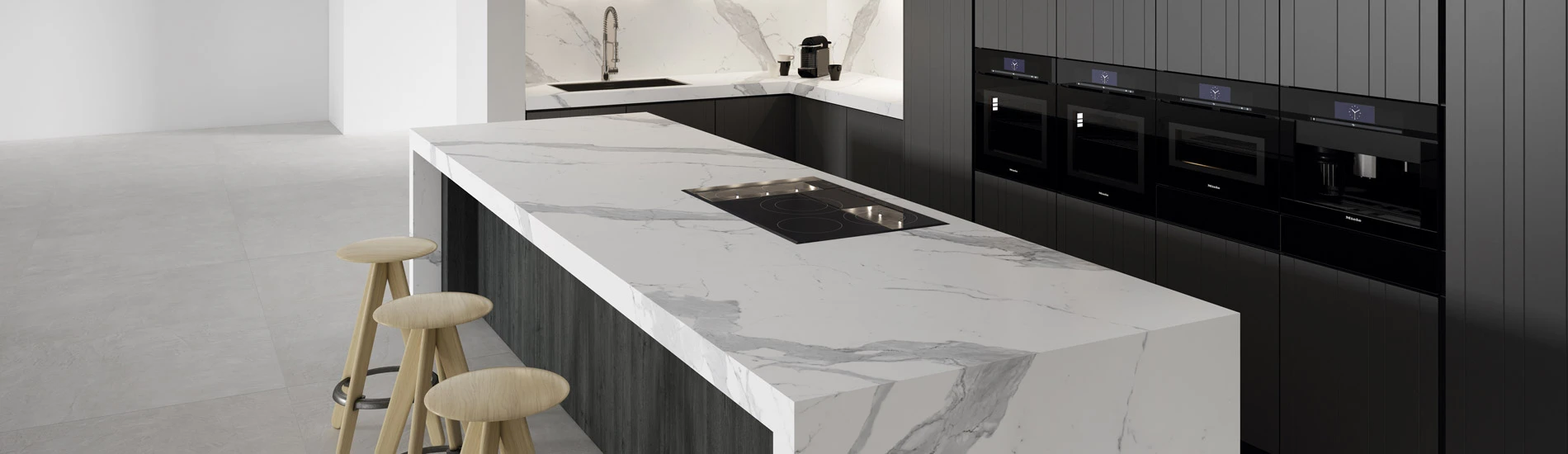


Finished Taj Mahal Quartzite countertop with integrated rectangular sink and protective surface film in the fabrication workshop.

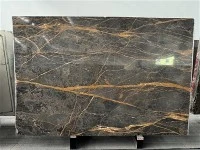
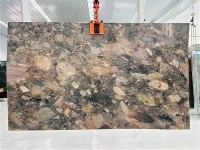
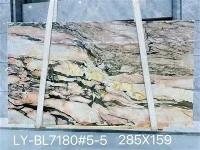
Full Taj Mahal Quartzite slab with a honed finish, warm off-white background and layered gray-beige natural movement.

Stone shop drawing for a guest-suite Taj Mahal Quartzite vanity showing plan, elevation, sections, dimensions, honed finish and reinforcement.

Rear view of a Taj Mahal Quartzite integrated sink countertop showing the assembled basin, underside support and reinforcement details.

Taj Mahal Quartzite integrated sink undergoing factory water-retention testing with drain sealed

Finished integrated stone sink countertop positioned inside a custom-shaped foam liner for handling and export protection.

Custom integrated sink countertop protected with foam, plywood lining and a timber crate structure before export.

Export wood crate for a stone integrated sink countertop secured with protective wrapping and multidirectional strapping.
Taj Mahal Quartzite Countertop With Integrated Sink
- Fast Delievery
- Quality Assurance
- 24/7 Customer Service
Executive Summary
This product is a project-specific Taj Mahal Quartzite countertop with an integrated stone sink, assembled from 20 mm honed slabs with miter joints at all edge connections. Because the basin is fabricated rather than supplied as a one-piece sanitary fixture, dimensional coordination, joint workmanship, support design, water testing and transport protection must be planned as one connected scope.
The design combines the countertop and basin into a visually continuous natural-stone composition. Taj Mahal Quartzite typically presents warm ivory, beige and soft gray movement, but every slab is unique. Current slab photos, videos, slab numbers and finish condition should therefore be approved for the actual order rather than inferred from a generic sample.
The illustrated workflow begins with a stone-specific shop drawing developed around the architectural and cabinet information. It records the vanity dimensions, basin position, faucet area, visible faces, sections, finish, stone thickness, reinforcement and assembly intent. The approved information then guides cutting, miter preparation, basin assembly, finishing, inspection and packing.

Key Facts
| Item | Project Information |
| Product | Custom vanity countertop with integrated rectangular stone sink |
| Stone | Taj Mahal Quartzite; actual tone, movement, fissures and appearance range depend on the selected slabs |
| Stone thickness | 20 mm slabs used to fabricate the countertop and integrated sink components |
| Surface finish | Honed finish for this illustrated project; alternative finishes are subject to project requirements and material response |
| Edge connections | All assembled edge connections use miter joints |
| Drawing scope | Plan, elevation, sections, three-dimensional diagrams, dimensions, visible-face rules and reinforcement intent |
| Quality-control hold point | Water-retention test performed because the basin is an integrated fabricated sink |
| Surface protection | Protective film applied after fabrication to reduce workshop and packing contamination |
| Transport protection | Geometry-specific foam, plywood lining, solid-wood crate, protective wrap and strapping |
| Buyer approvals | Drawings, current slabs, appearance range, finish, vein-layout proposal and project-specific inspection records as agreed |
What Is an Integrated Taj Mahal Quartzite Sink?

An integrated stone sink is fabricated from coordinated stone components so the basin and countertop read as one architectural product. In this case, 20 mm Taj Mahal Quartzite pieces form the horizontal deck, basin walls and related edges. The components are cut, mitered, assembled and finished to the approved geometry.
The word "integrated" describes the assembled visual and functional relationship. It does not mean the product was carved from one monolithic block or that joints disappear under every lighting condition. Joint lines, adhesive tone, edge geometry and natural vein transitions should be assessed against approved samples, drawings and realistic tolerances.
Design and Shop Drawing Coordination
A reliable integrated sink starts with a coordinated shop drawing, not with cutting. Basin dimensions, slope intent, drain interface, faucet clearance, cabinet support, access, miter locations and visible faces should be resolved before fabrication.
The Natural Stone Institute's Dimension Stone Design Manual includes guidance and typical detailing for countertops, wet areas, furniture, installation and maintenance, making it a useful technical reference alongside the project specification and local professional requirements [1].
- 1. Review architectural, interior, cabinet and plumbing information.
- 2. Prepare stone shop drawings showing dimensions, 20 mm material thickness, miter joints, basin geometry, drain location, finish and reinforcement.
- 3. Submit the drawings to the buyer and design team for review and approval.
- 4. Confirm current slabs, slab numbers, finish condition and acceptable natural appearance range.
- 5. Where visual continuity is important, use slab scans in AutoCAD to plan piece locations and vein relationships.
- 6. Fabricate, assemble, finish and inspect the actual product against approved documents.
- 7. Complete the agreed water test, protective treatment and export-packing sequence.
Landiview Stone shop drawings communicate the stone fabrication scope but do not replace structural, plumbing, waterproofing or installation design by locally licensed professionals. Final support, anchorage, sealants, drainage and code compliance remain subject to the project specification and responsible design parties.

How the 20 mm Miter-Jointed Construction Works

All edge connections in this illustrated integrated sink use miter joints. A miter brings two prepared edges together at an angle, helping the connected faces read as a controlled corner rather than exposing a simple square butt edge. Miter gluing and finishing are recognized natural-stone seaming techniques, but the appropriate adhesive, preparation, clamping and finishing procedure depends on the stone and application [4].
- • The 20 mm slab thickness must be represented consistently in the sections and assembly details.
- • Adjacent pieces should be selected with attention to color, vein direction and the visual transition across each corner.
- • Miter geometry, adhesive compatibility and cure conditions should follow the fabricator's qualified process and product-manufacturer instructions.
- • Natural mineral lines and healed fissures must be distinguished from open or unstable fissures, structural cracks and fabrication damage during inspection.
- • The cabinet and support system must carry the finished assembly without imposing unintended stress on the basin or mitered corners.
Slab Selection and Vein Layout
Taj Mahal Quartzite is valued for quiet, layered movement rather than a mechanically repeated pattern. The actual slab may contain changes in background tone, mineral concentrations, veins, healed fissures and other natural features. A small sample is useful for reviewing finish and basic color family, but it cannot represent the composition of a full slab.
For appearance-sensitive fabrication, selected slab images can be scaled and imported into AutoCAD. The proposed countertop and sink pieces are positioned on the scans to review vein direction, adjacent surfaces and usable yield before cutting. Buyer approval helps align the fabrication plan with the expected composition, while recognizing that photography, fabrication, jointing, lighting and site installation can affect the final appearance.
Why the Integrated Sink Requires a Water-Retention Test
A fabricated integrated sink must undergo a water-retention test because the basin contains assembled joints and is expected to hold and drain water in service. The test is a project quality-control check for visible leakage from the completed basin assembly; it is not a substitute for correct site plumbing, support, sealant work or installation.
For the illustrated test, the drain opening was temporarily sealed and the basin held water for observation. The agreed test method, duration, acceptance criteria and documentation should be established in the purchase specification. After testing, the assembly should be drained, dried and inspected before protective film and packing are finalized.

- • Confirm that the fabricated basin geometry and drain opening agree with the approved drawing.
- • Inspect miter-jointed corners and transitions under suitable lighting.
- • Observe the underside and surrounding assembly for visible moisture or leakage during the agreed test period.
- • Record corrective work and repeat the test when the agreed criteria are not met.
- • Keep factory water testing separate from the installer's site plumbing, connection and commissioning responsibilities.
Export Packing and Transport Protection

The sink opening, basin projection, mitered corners and long countertop edges create geometry that requires more than generic sheet wrapping. For this project, the finished surface received protective film, the product was nested in custom foam, the package was lined with plywood, and the assembly was enclosed in a solid-wood crate with external wrapping and multidirectional straps.
Internal protection is selected according to product geometry, weight, cutouts and lifting route. Vulnerable sink or cooktop cutouts, narrow backsplashes, thin strips, vanity tops, fireplace components, narrow wall panels and fragile corners may receive temporary support strips over protective film. Temporary reinforcement is transport protection only and should be removed before final installation in accordance with the supplied instructions.


Raw-wood crates and dunnage used in international trade may be subject to ISPM 15 phytosanitary measures. The standard covers wood packaging made from raw wood and excludes processed wood such as plywood; destination-country rules and compliant marking should be confirmed before shipment [3].
What Buyers Should Specify Before Ordering
A technically complete inquiry enables a useful quotation and reduces late-stage assumptions. Buyers should provide:
- • Architectural drawings, cabinet drawings, field dimensions and installation location;
- • Required Taj Mahal Quartzite appearance range, finish, 20 mm thickness and visible-face rules;
- • Sink dimensions, drain components, faucet specification, spout reach, backsplash condition and plumbing clearances;
- • Miter-joint expectations, support concept, reinforcement constraints and responsible design parties;
- • Slab-selection method and required approval materials for scan-based vein layout;
- • Water-test method, duration, acceptance criteria, photographs and inspection documents;
- • Site access, lifting limits, crate-opening method, unloading equipment and installation sequence;
- • Destination, shipping mode, labeling, packaging compliance and any non-stacking instruction.
Frequently Asked Questions
Q: Can you provide samples?
A: Yes. Normally one or two samples can be provided without a sample charge. Typical sizes range from 100 × 100 mm to 200 × 200 mm. Courier cost is paid by the customer. Availability depends on the current material. A sample is mainly useful for finish, basic color family and surface character; current slab images remain necessary for full-pattern approval.
Q: Can I see current slab photos and videos before ordering?
A: Yes. Subject to actual inventory, Landiview Stone can provide current-batch photos, videos, slab numbers, surface-condition observations and an overview of the available color and vein range. Buyers should approve identified slabs for the order because Taj Mahal Quartzite varies naturally.
Q: Can Landiview Stone prepare stone shop drawings from architectural drawings?
A: Yes. Landiview Stone can review architectural information, identify the stone scope and prepare stone shop drawings for client and design-team approval. Shop drawings communicate fabrication details but do not replace structural or installation responsibility held by locally licensed professionals. See What is cut-to-size stone?
Q: How do you help control the final vein layout and installed appearance?
A: Selected slabs can be scanned, scaled and used in AutoCAD cutting and vein-layout simulations. After buyer approval, fabrication follows the approved plan and finished pieces can be dry laid for inspection. This process reduces information gaps but cannot eliminate natural variation or the effects of fabrication, lighting and site installation. See Natural stone slab layout in AutoCAD.
Q: How is a countertop with an integrated sink protected for transportation?
A: Protection is designed around the geometry and may include liners, shock-absorbing materials, custom foam, separators, plywood support, edge protection and a solid-wood crate. Sink or cooktop cutouts, narrow backsplashes, thin strips, vanity tops, fireplace parts, narrow wall panels and fragile corners may receive temporary support strips over protective film. The strips are removed before installation according to instructions. Wood packaging must use ISPM 15-compliant materials when required by the destination [3]. See How to protect natural stone during shipping.
Q: How should the product be maintained after installation?
A: Use a pH-neutral cleaner intended for natural stone, blot spills promptly, rinse as appropriate and dry with a soft cloth. Avoid unidentified acidic or alkaline cleaners and abrasive tools. Sealer selection and reapplication frequency depend on the actual stone, finish, exposure, use and sealer manufacturer's instructions. Follow the project specification and professional installer's advice. These conservative practices align with Natural Stone Institute care guidance [2].
Q: Is the countertop and sink made from one solid block?
A: No. This product is assembled from 20 mm Taj Mahal Quartzite slab components. Every edge connection uses a miter joint, producing a coordinated integrated appearance while retaining fabricated joints.
Q: Why is a water-retention test required?
A: The fabricated basin contains miter-jointed connections and must hold water in use. Temporarily sealing the drain and retaining water allows the completed assembly to be observed for visible leakage under the agreed factory test conditions. The test does not replace site plumbing and installation checks.
Q: Can the dimensions, drain and finish be customized?
A: Project-specific dimensions, drain details, faucet clearances and finish can be reviewed against the stone, approved drawings and fabrication feasibility. Options are subject to current slab availability, material response, support requirements and the responsible design team's approval.
Q: Who is responsible for final installation and support?
A: Final responsibility should be defined by the project contract. Installation, cabinet support, anchorage, plumbing, waterproofing and sealant work should be completed or reviewed by qualified professionals in accordance with approved drawings, project specifications, local regulations and product-manufacturer instructions.
About Landiview Stone
Landiview Stone supplies natural stone in two principal forms: slabs for importers, distributors and fabricators, and project-specific cut-to-size or finished products for contractors, developers, designers, builders and other project buyers.
For slab buyers, the company supports current slab selection, slab-image review, color and vein-range confirmation, surface inspection, slab identification and export packing. For custom fabrication, the team can coordinate shop drawing review, slab scanning, AutoCAD cutting and vein-layout simulation, fabrication, dry-layout inspection, piece numbering, finished-product inspection, temporary reinforcement and project-specific export protection.
For complex assembled products, three-dimensional modeling and virtual assembly review may be used to examine component relationships, thicknesses, finishes, concealed reinforcement, clearances and potential interference before fabrication details are finalized.
Landiview Stone's international project experience includes:
- • Marble furniture, bathroom vanity tops and shower wall panels for the Grand Hyatt Singapore renovation project
- • Stone supply for stations on Singapore's Thomson-East Coast Line
- • Interior stone products for the Wynn project in the United Arab Emirates
- • Marble products for public areas of the 255 East 77th Street luxury residential project in New York
- • Interior and exterior marble and granite products for three high-end custom homes on Tuckahoe, a private resort island in Massachusetts, USA
Further Reading from Landiview Stone
Request a Quote
For a project-specific quotation, send the architectural or cabinet drawings, required dimensions, destination, quantity, finish, drain and faucet information, support concept and expected approval documents. Landiview Stone can then review the scope, identify missing coordination items and prepare a fabrication-oriented proposal subject to current slab availability.
Useful attachments include plans, elevations, sections, sink or drain templates, faucet specifications, finish references, field dimensions, required inspection records and packing or unloading constraints.
Contact Landiview Stone to discuss a Taj Mahal Quartzite countertop with an integrated sink for your project.
Request a Project-Specific Quote
Hot Tags: Landiview Stone, Taj Mahal quartzite countertop, integrated stone sink, custom quartzite vanity, 20 mm quartzite, miter joint stone sink, honed quartzite countertop, stone shop drawings, water-tested stone sink, export stone packing
You Might Also Like

Send Inquiry