

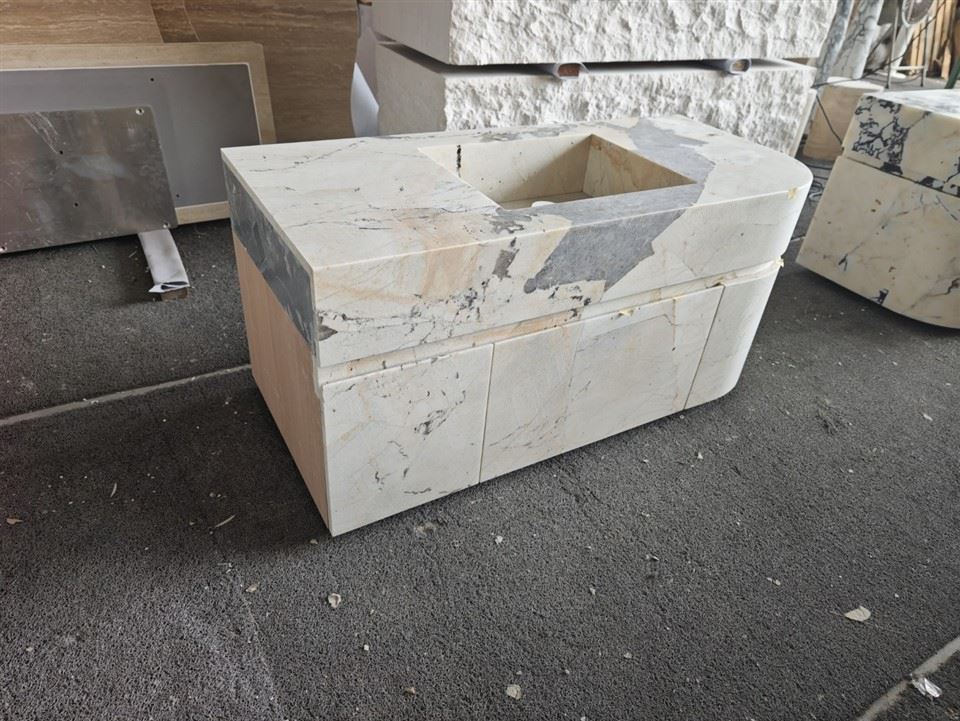

Front view of a factory-pre-assembled Patagonia Quartzite sink vanity with mitered stone panels, integrated basin and custom wood cabinet.

Rear view showing the Patagonia Quartzite countertop and integrated sink bonded to a custom wood cabinet during factory pre-assembly.
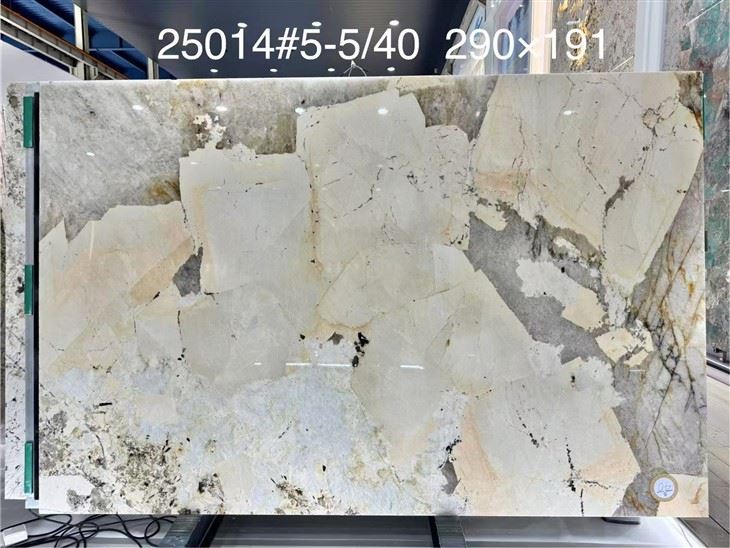
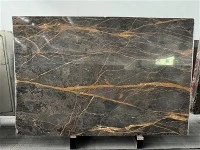
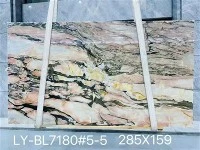
Patagonia Quartzite slab submitted for client review with cream, gray, charcoal and warm natural mineral movement.

AutoCAD cutting simulation positioning vanity components on the approved Patagonia Quartzite slab image.
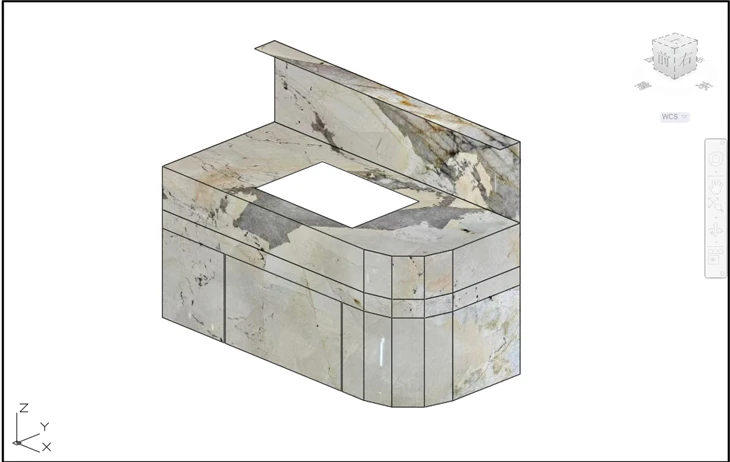
AutoCAD virtual assembly reviewing the countertop, integrated sink, backsplash, fascia and curved stone-clad end.
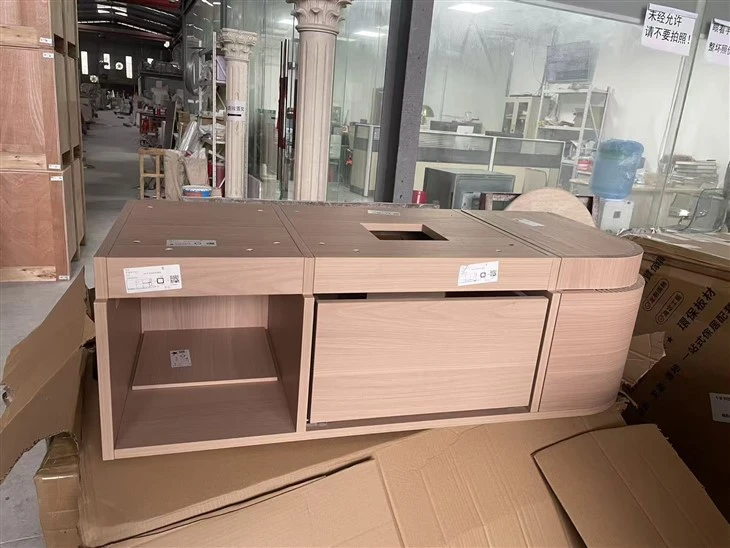
Custom multilayer solid-wood-board cabinet with drawers, plumbing access and a curved end before stone cladding.
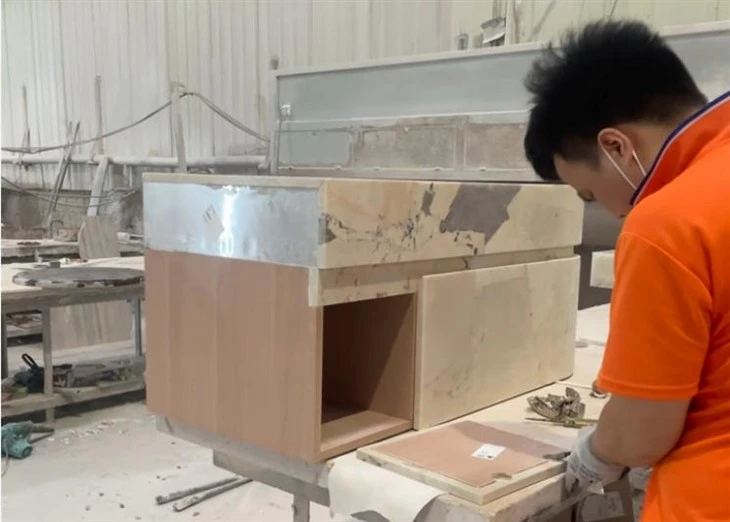
Factory pre-assembly with Patagonia Quartzite panels epoxy spot bonded to the custom wood cabinet.
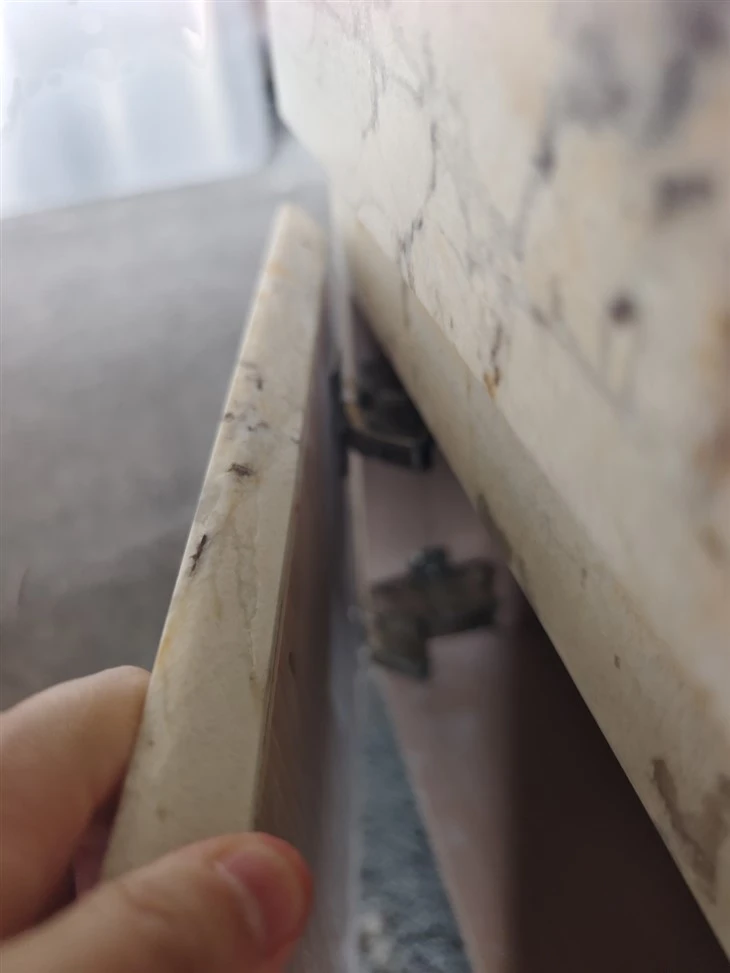
Close inspection of the hinge, moving cabinet panel and surrounding stone cladding during functional testing.
Patagonia Quartzite Countertop With Integrated Stone Sink And Pre-Assembled Wood Cabinet
- Fast Delievery
- Quality Assurance
- 24/7 Customer Service
Executive Summary
This product was not supplied as a loose stone countertop and a separate cabinet. Landiview Stone coordinated and pre-assembled the Patagonia Quartzite cladding, integrated stone sink and custom wood cabinet in the factory so that critical interfaces, moving parts and service clearances could be checked before export.
The project began with the client's architectural drawings. Landiview Stone developed product-specific shop drawings for approval, submitted the available Patagonia Quartzite slab for visual review, and used the approved slab image in AutoCAD to plan cutting positions, vein direction and relationships between adjoining stone components.
The approved design was fabricated from 18 mm-thick Patagonia Quartzite panels. All specified edge connections used miter joints. A specialist cabinet manufacturer produced the coordinated multilayer solid-wood-board cabinet, including the curved end, doors, drawers and service openings. The fabricated stone panels were then positioned and spot bonded to the cabinet with a project-specific two-part epoxy system.


Factory pre-assembly allowed the stone, cabinet, integrated sink, doors, drawers, hinges, runners and service spaces to be inspected as one finished unit. After alignment and functional checks, the integrated sink received a water-retention test. The accepted product was then protected with a custom foam enclosure, plywood inner protection, a solid-wood outer crate and waterproof wrapping for export.
Key Facts
| Item | Project Information |
| Product | Patagonia Quartzite countertop with integrated stone sink and pre-assembled wood cabinet |
| Stone construction | Fabricated from 18 mm-thick Patagonia Quartzite panels |
| Edge connections | Miter joints at all stone edge connections specified for this product |
| Design development | Client architectural drawings converted into project-specific stone shop drawings for review |
| Appearance planning | Current-slab review followed by AutoCAD cutting, vein-layout and virtual-assembly simulation |
| Cabinet construction | Custom multilayer solid-wood-board cabinet manufactured to the approved product geometry |
| Factory integration | Stone panels positioned and epoxy spot bonded directly to the coordinated wood cabinet before shipment |
| Cabinet hardware | Blum-brand hinges and drawer runners specified for this order |
| Integrated sink test | Water-retention test and visual examination of accessible sink joints before packing |
| Functional inspection | Door, drawer, hinge, runner, gap, alignment and stone-clearance checks on the assembled unit |
| Export protection | Custom foam enclosure, plywood inner protection, solid-wood outer crate and waterproof wrapping |
Production Workflow
The approval sequence resolves product dimensions, slab appearance, vein layout and stone-to-cabinet interfaces before irreversible cutting and bonding begin.
1. Review the client's architectural drawings and identify the countertop, sink, cabinet and installation scope.


2. Prepare product-specific shop drawings showing dimensions, sink geometry, visible faces, 18 mm panel construction, miter joints, cabinet relationships and service clearances for client or design-team approval.
3. Submit current Patagonia Quartzite slab photos or videos, slab identification and the visible color, vein and natural-fissure range, subject to current availability.


4. Import the approved slab image into AutoCAD and simulate the cutting positions and vein relationships before physical cutting.
5. Virtually assemble the simulated panels to review the countertop, sink surround, backsplash, fascia, curved end and adjoining visible faces.

6. Following approval, cut and fabricate the 18 mm Patagonia Quartzite panels according to the controlled layout.
-

7. Manufacture the custom multilayer solid-wood-board cabinet with the required curved geometry, doors, drawers, plumbing access and stone-support interfaces.
8. Position the fabricated stone panels on the cabinet and use project-specific two-part epoxy spot bonding to form the factory pre-assembled stone-and-cabinet unit. Install the specified Blum hinges and drawer runners.


9. Inspect stone alignment, miter joints, bonding, panel gaps, cabinet operation, hardware movement and clearances. Perform a water-retention test because the basin is an integrated stone sink.
10. Place the accepted assembly in a custom foam enclosure configured for the sink opening, mitered edges and curved end.
-
11. Add plywood inner protection to provide further separation, restraint, load distribution and impact protection. -
12. Secure the protected unit in a solid-wood outer crate and apply waterproof wrapping. Wood packaging must follow the requirements of the destination country, including ISPM 15 where applicable [2].
Factory Pre-Assembly of the Stone and Wood Cabinet
The main fabrication advantage is coordinated factory integration: the Patagonia Quartzite panels are bonded to the custom wood cabinet and tested as one assembly before export, rather than leaving the stone-to-cabinet fit to be resolved entirely on site.
The wood cabinet was manufactured specifically for the approved stone product. Its overall width, depth and height, curved end, drawer configuration, door positions, integrated-sink clearance, plumbing access and stone-cladding interfaces were coordinated with the approved shop drawings. This is important because the stone skin does not function independently. Cabinet geometry directly affects stone alignment, miter closure, door movement, drawer travel and access for final plumbing connections.
Before bonding, the fabricated Patagonia Quartzite panels were checked against their intended positions and orientation. The production team then aligned the countertop, front fascia, side and curved-end pieces with the cabinet structure. A project-specific two-part epoxy adhesive was applied using a spot-bonding method. This method creates controlled attachment points while allowing the bonding pattern, adhesive quantity and interface condition to be adapted to the component geometry. Adhesive selection, surface preparation, bond-line design and curing must follow the approved fabrication method and the adhesive manufacturer's instructions.
The stone cladding and cabinet were assembled progressively so that adjoining miter joints, visible gaps and surface transitions could be monitored. The integrated stone sink, countertop and cabinet openings were also checked together to confirm that the assembled geometry remained consistent with the approved design.
After the stone panels were bonded, the doors, drawers, Blum hinges and drawer runners were installed or adjusted on the assembled product. Repeated operating checks were used to examine:
- • door and drawer alignment relative to the surrounding stone faces;
- • opening and closing movement throughout the intended travel;
- • clearances between hinges, runners, drawer boxes, doors and stone cladding;
- • potential contact or interference at the mitered fascia and curved cabinet end;
- • access to plumbing and other service openings;
- • visible joint consistency after the cabinet hardware was adjusted; and
- • stability of the pre-assembled unit before protective packing.
Factory pre-assembly reduces the amount of stone-to-cabinet fitting required at the destination and allows dimensional or clearance problems to be identified while fabrication resources are still available. It does not eliminate site work. Qualified installers remain responsible for safe handling, final positioning, leveling, anchoring, plumbing and drainage connections, site waterproofing, surrounding finishes and compliance with the approved project documents and local regulations.
Vein Layout and Miter-Joint Control
Patagonia Quartzite varies from slab to slab. The stone name alone cannot define the final appearance. Current slabs, usable areas, vein scale, mineral movement, natural fissures, surface treatment, finish and component orientation must be reviewed together.
- • The approved slab image establishes a traceable visual basis for component placement.
- • AutoCAD layout relates every visible stone component to a planned area of the selected slab.
- • Virtual assembly reviews how the pattern moves across the countertop, fascia, backsplash, sink zone and curved end.
- • Miter joints create the intended built-up edge appearance while retaining the specified 18 mm panel construction.
- • Factory stone-to-cabinet assembly provides a final opportunity to review actual joints and visible alignment before packing.
The workflow helps align the approved vein layout with the expected appearance. Natural variation, cutting kerf, finishing, lighting and final site conditions can still influence the perceived result, so it should not be presented as an absolute appearance guarantee.
Quality Control and Integrated Sink Water Testing
An integrated stone sink requires more than a surface inspection. The completed basin and accessible joints receive a project-defined water-retention test, followed by examination for leakage or moisture migration.
Final inspection reviews accessible dimensions, surface condition, miter alignment, bonding, cabinet gaps, door and drawer operation, hardware clearances, service access and the relationship between moving parts and stone cladding. The water test evaluates the factory-assembled stone basin under agreed conditions. Drain fittings, plumbing connections, anchorage and site waterproofing remain subject to the approved scope, local requirements and qualified installation.
Inspection also distinguishes natural stone pattern, natural fissures, open or unstable fissures, structural cracking and fabrication damage. These conditions should be evaluated individually rather than treating every visible geological line as the same type of defect.
Export Packing for the Pre-Assembled Unit
The completed product combines heavy stone, an integrated sink opening, mitered edges, cabinet hardware and a curved end. Its export packing is therefore configured around the actual assembly rather than treated as a generic countertop package.
Internal protection can include a custom foam enclosure, plywood lining or dividers, edge protection, positioning blocks and temporary support at vulnerable areas. The protected unit is secured in a solid-wood outer crate and wrapped with waterproof film. Temporary reinforcement, when used, is for transport protection and must be removed in accordance with the supplied instructions before final installation.
Stone handling, loading and unloading require trained personnel, suitable lifting equipment and job-specific procedures because heavy stone products can create struck-by, caught-by and crushing hazards [3]. Raw-wood packaging must comply with destination-country phytosanitary rules; ISPM 15 addresses quarantine-pest risks associated with raw-wood packaging used in international trade [2].
Frequently Asked Questions
Q: Can you provide samples?
A: Yes. Normally one or two samples can be provided without a sample charge. Typical sizes range from 100 × 100 mm to 200 × 200 mm. Courier cost is paid by the customer. Availability depends on the current material. A small sample is useful for reviewing finish and general color but cannot represent the complete composition of a large Patagonia Quartzite slab.
Q: Can I see current slab photos and videos before ordering?
A: Yes. Landiview Stone can provide photos and videos of the current lot, slab numbers, surface observations and the available color, vein and natural-fissure range. Selection remains subject to actual inventory at the time of approval.
Q: Can Landiview Stone prepare stone shop drawings from architectural drawings?
A: Yes. Landiview Stone can identify the relevant scope and prepare fabrication-oriented stone shop drawings for client and design-team review. Shop drawings communicate the approved product information but do not replace the structural, code, waterproofing or installation responsibilities of locally licensed professionals. See What Is Cut-to-Size Stone?
Q: How do you help control the final vein layout and installed appearance?
A: The workflow combines slab imagery, AutoCAD cutting and vein-layout simulation, client approval, controlled fabrication and factory assembly inspection. These steps reduce information gaps but cannot eliminate natural variation or the visual effects of site lighting and installation. See Natural Stone Slab Layout in AutoCAD.
Q: Why are the stone and wood cabinet assembled in the factory?
A: Factory pre-assembly allows the stone faces, miter joints, integrated sink, cabinet geometry, doors, drawers, hinges, runners and service openings to be checked as one coordinated product. It reduces site stone-to-cabinet fitting, but qualified installers must still position, level, anchor and connect the product in accordance with the approved documents and local requirements.
Q: How are the Patagonia Quartzite panels attached to the cabinet?
A: For this order, the fabricated panels were positioned on the custom cabinet and attached with a project-specific two-part epoxy spot-bonding method. Surface preparation, adhesive compatibility, application, curing and bond-line design must follow the approved fabrication procedure and adhesive manufacturer's instructions.
Q: How is the pre-assembled countertop with integrated sink protected during shipping?
A: Protection is configured for the geometry and may include custom foam, plywood, edge protection, positioning blocks and temporary reinforcement. Sink or cooktop cutouts, narrow backsplashes, thin strips, vanity tops, fireplace parts, narrow wall panels and vulnerable corners may receive removable support over protective film. Wood packaging should comply with destination rules, including ISPM 15 where applicable [2]. See How to Protect Natural Stone During Shipping.
Q: How should the product be maintained after installation?
A: Use a pH-neutral cleaner intended for natural stone, address spills promptly, rinse and dry as appropriate, and avoid unidentified acidic or alkaline products and abrasive tools. The Natural Stone Institute recommends neutral cleaner or stone soap and following the cleaner manufacturer's directions [4]. Sealer selection and reapplication intervals depend on the stone, finish, exposure, use and sealer manufacturer's instructions. Follow project specifications and qualified installer or product-manufacturer guidance.
Q: Why is a water-retention test required?
A: The basin is an integrated stone assembly. The completed bowl and accessible joints are tested under agreed conditions and inspected for leakage or moisture migration before packing. Site drain connections, plumbing and waterproofing must still be completed and tested by qualified trades.
Q: What information is needed for a quotation?
A: Provide architectural and cabinet drawings, required dimensions, installation location, stone and finish preference, visible-face rules, sink and faucet data, drain configuration, backsplash conditions, cabinet and hardware expectations, destination and packing requirements. Pricing, technical review and current slab selection are project-specific.
About Landiview Stone
Landiview Stone supplies natural stone in two principal forms: slabs for importers, distributors and fabricators, and project-specific cut-to-size or finished stone products for contractors, developers, designers, builders and other professional buyers.
For slab buyers, Landiview Stone supports current-slab selection, slab-image review, color and vein-range confirmation, surface inspection, slab identification and export packing. For cut-to-size and custom-fabrication projects, the company can coordinate shop-drawing review, slab scanning, AutoCAD cutting and vein-layout simulation, fabrication, dry layout inspection, piece numbering, finished-product inspection, temporary reinforcement and project-specific export protection.
For assembled products such as this Patagonia Quartzite vanity, the workflow can also coordinate specialist cabinet manufacture, stone-to-cabinet interfaces, epoxy bonding, hardware installation, functional testing and export packing as one integrated production scope. More complex products may use three-dimensional modeling and virtual assembly review to examine component relationships, thicknesses, finishes, concealed reinforcement and potential interference before fabrication details are finalized.
Landiview Stone's international project experience includes:
- • Marble furniture, bathroom vanity tops and shower wall panels for the Grand Hyatt Singapore renovation project
- • Stone supply for stations on Singapore's Thomson-East Coast Line
- • Interior stone products for the Wynn project in the United Arab Emirates
- • Marble products for public areas of the 255 East 77th Street luxury residential project in New York
- • Interior and exterior marble and granite products for three high-end custom homes on Tuckahoe, a private resort island in Massachusetts, USA
Request A Quote
Send Landiview Stone your architectural or cabinet drawings, required dimensions, installation location, preferred stone and finish, sink and faucet information, drain requirements, cabinet configuration, hardware expectations, destination and packing requirements. Please also state whether you require a loose stone countertop, a separate cabinet, or a factory pre-assembled stone-and-cabinet unit.
The technical team can review the stone scope, cabinet interfaces, service clearances and approval deliverables, then prepare a project-specific quotation subject to current slab availability and finalized fabrication details.
Hot Tags: Landiview Stone, Patagonia Quartzite countertop, integrated stone sink, pre-assembled wood cabinet, factory pre-assembled vanity, stone shop drawings, AutoCAD slab layout.
You Might Also Like
Send Inquiry