▌ Executive Summary
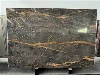
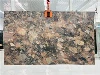
An Australian customer recently selected two bundles of in-stock 20 mm Camouflage Marble slabs from Landiview Stone. The order comprises 14 slabs, with seven slabs in each bundle. Because all 14 slabs were cut from the same block, the batch provides coordinated colour movement and brecciated pattern character across the order.
The selected slabs were originally polished, while the client required a matt surface. Rather than replacing the approved material, Landiview Stone returned both bundles to the factory finishing line and refinished the slab faces. The matt conversion has now been completed, and the quality-control team is checking the slabs before approval for the next project stage.

▌ Order and Material Details
- • Material: Camouflage Marble
- • Thickness: 20 mm
- • Quantity: 14 slabs
- • Bundle configuration: Two bundles, seven slabs per bundle
- • Batch relationship: All slabs cut from the same block
- • Original finish: Polished
- • Required finish: Matt, low gloss
- • Customer market: Australia
▌ Why Were the Slabs Refinished?

The customer had already approved the appearance of this specific Camouflage Marble batch. Reworking the selected slabs preserved the approved block selection while changing the surface from polished to the requested matt finish.
This approach is especially useful for natural stone because a replacement batch may not reproduce the same colour balance, fragment scale or vein movement. Refinishing allows the surface appearance to be adjusted without losing the visual continuity of the selected slabs.
▌ Matt Refinishing Workflow
- 1. Confirm the approved slab numbers, bundle quantities and required finish.
- 2. Return all 14 polished slabs to the factory finishing line.
- 3. Reprocess the slab faces to reduce gloss and create a consistent matt appearance.
- 4. Inspect each slab for surface uniformity, visible processing marks and overall finish consistency.
- 5. Test representative areas with a gloss meter and record the low-gloss result.
- 6. Complete final QC before the slabs proceed to packing or subsequent fabrication.
▌ Gloss Level and Quality Control
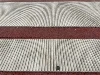
Gloss-meter readings on the refinished slabs are approximately 10 GU. This reading falls within the very-low-gloss range and produces a near-matt appearance with limited reflection. On natural marble, a lower-gloss finish can also make the surface colour appear lighter than the same stone in a polished finish.
Gloss readings are used together with visual and tactile inspection. Because Camouflage Marble contains strong tonal variation and complex brecciated movement, QC must assess multiple areas rather than rely on a single measurement point. The objective is a consistent project-appropriate finish across the full 14-slab batch, not an identical numerical reading at every location.


▌ Frequently Asked Questions
Q: Can polished marble slabs be changed to a matt finish?
A: Yes. Suitable polished marble slabs can be returned to a professional finishing line and mechanically refinished to reduce surface gloss. The final result should be checked for uniformity, processing marks and the agreed gloss range.
Q: What does a reading of approximately 10 GU indicate?
A: Approximately 10 GU indicates a very low-gloss, near-matt surface. The slab has minimal clear reflection and may appear lighter than the same marble with a polished finish.
Q: Why is it valuable to source slabs from the same block?
A: Slabs from the same block generally provide stronger continuity in colour family, mineral composition and pattern movement. Natural variation remains, but coordinated slab selection makes layout planning and visual matching more predictable.
Q: How does Landiview Stone check a refinished slab batch?
A: The QC process combines visual inspection, tactile review and gloss-meter testing across representative slab areas. The team checks finish consistency, visible processing marks and whether the completed batch matches the approved surface requirement before release.