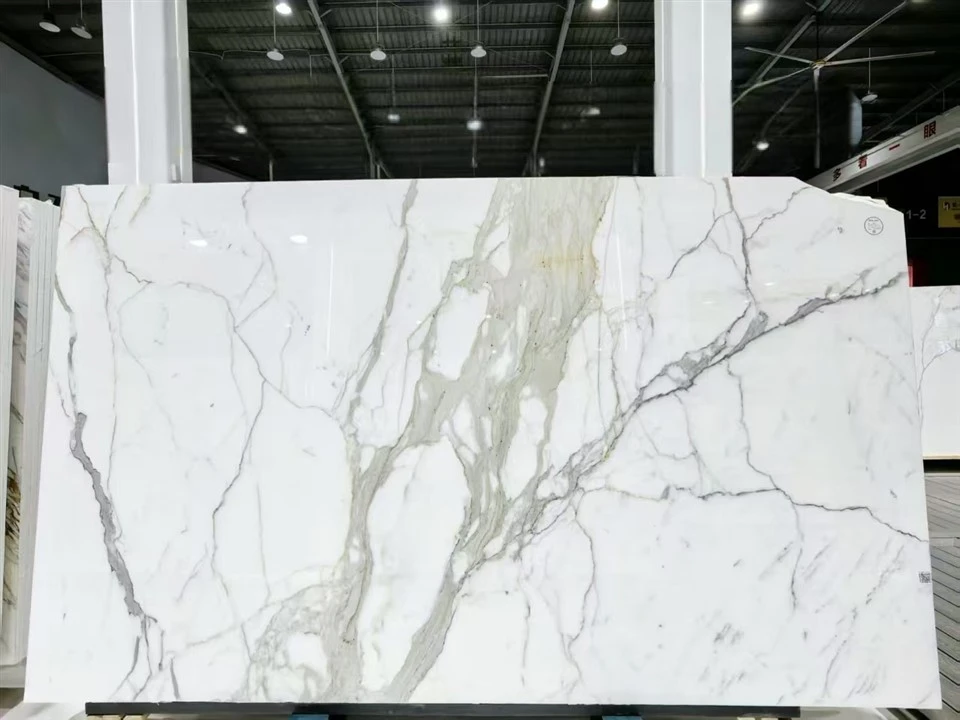
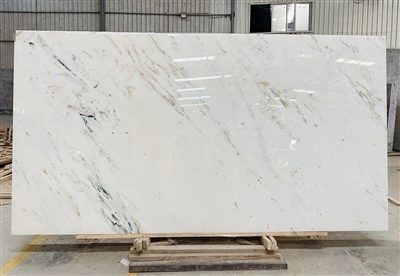
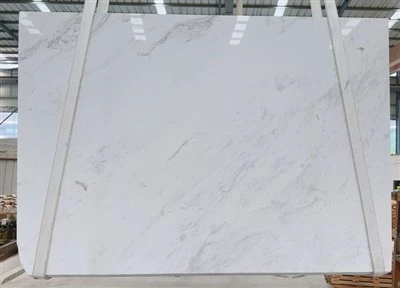
Calacatta marble is an Italian natural marble selected for a white background and prominent grey veining. It is intended for buyers who want expressive, individually selected slabs for luxury interiors rather than a uniformly patterned surface.
Landiview Stone supplies slabs to importers, distributors and fabricators, and can coordinate cut-to-size or finished products for contractors, developers, designers and builders. Typical applications include kitchen countertops and islands, vanity tops, floor tiles, tub decks and surrounds, and fireplace features. Standard slab thickness is 18 mm; 20 mm or 30 mm may be custom cut from selected blocks depending on project needs and material availability. Buyers should request current slab images, identify approved slabs, confirm finish and thickness, and align visual expectations before fabrication.
| Specification Item |
Buyer Information |
| Product |
Calacatta marble slab |
| Material category |
Natural marble; dimension marble includes natural stone finished or shaped into slabs, tiles or other units under the public scope of ASTM C503/C503M. [1] |
| Declared origin |
Italy |
| Appearance |
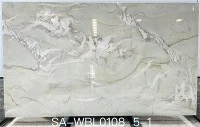
White background with grey veining. Each slab should be assessed individually for vein scale, direction, contrast and natural features. |
| Vein pattern preference |
Available visual directions may include bold, thick grey veins; golden or honey-toned undertones commonly associated with Calacatta Gold selections; and pencil-thin linear veins. Buyers can specify their preferred vein pattern during slab selection. Matching is subject to current slab or block availability, natural variation, required dimensions, usable yield and the approved appearance range. |
| Standard slab thickness |
18 mm |
| Optional thickness |
20 mm or 30 mm may be produced through block selection and custom cutting, subject to project requirements and current availability. |
| Thickness tolerance |
Stated supply tolerance: ±1 mm. The measurement method and project acceptance criteria must be confirmed in the contract, drawings or inspection standard before ordering. |
| Recommended finishes |
Polished or honed |
| Supply forms |
Current slabs; cut-to-size pieces; or project-specific finished stone products, subject to scope review. |
| Recommended interior applications |
Kitchen countertops and islands; bathroom vanity tops; floor tiles; tub decks and surrounds; fireplace surrounds and hearths. |
| Selection basis |
Current slab photos or videos, slab numbers, finish, preferred vein pattern, approved color and vein range, surface review, and project drawings where applicable. |
| Technical data |
No lot-specific test values are claimed on this page. Request reports when a project specification requires physical-performance verification; ASTM C503/C503M identifies relevant categories but does not replace project-specific testing or design review. [1] |
| Availability, MOQ, lead time and price |
Available upon request and subject to current slab or block availability, fabrication scope, quantity, finish, inspection and packing requirements. |
Available Finishes and Processing Options
▌ Recommended Finishes
• Polished: A polished face increases reflectivity and usually gives the white field and grey veins stronger visual contrast. It is often selected for statement islands, vanity tops and feature surrounds. Buyers should discuss expected wear, slip criteria where relevant and any project-specific care requirements with the designer and installer.
• Honed: A honed face has lower reflectivity and can suit quieter interiors, floors and wet-area compositions. It may make some surface changes less conspicuous than a high polish, but it is not stain-proof, acid-proof or maintenance-free. Approve the sheen level and sample before full production.
▌ Project Processing
• Dimensional cutting, edge finishing, cutouts, miters, grooves and other fabrication according to approved shop drawings
• Panel sequencing, bookmatching and vein-continuity planning based on the selected slabs and approved design
• Slab scanning and AutoCAD cutting and vein-layout simulation before project-based fabrication
• Temporary reinforcement or semi-cutout solutions for large sink and cooktop openings where material, geometry, transport and site conditions permit
• Factory dry layout, finished-piece inspection and piece numbering where required
• Final fabrication details subject to approved shop drawings, project specifications, local requirements and professional installation guidance
Calacatta marble is most effective where its large-scale veining can be deliberately positioned and viewed. Application approval should consider slab soundness, cutout geometry, finish, support, joints, exposure, maintenance expectations and the approved appearance range-not appearance alone.
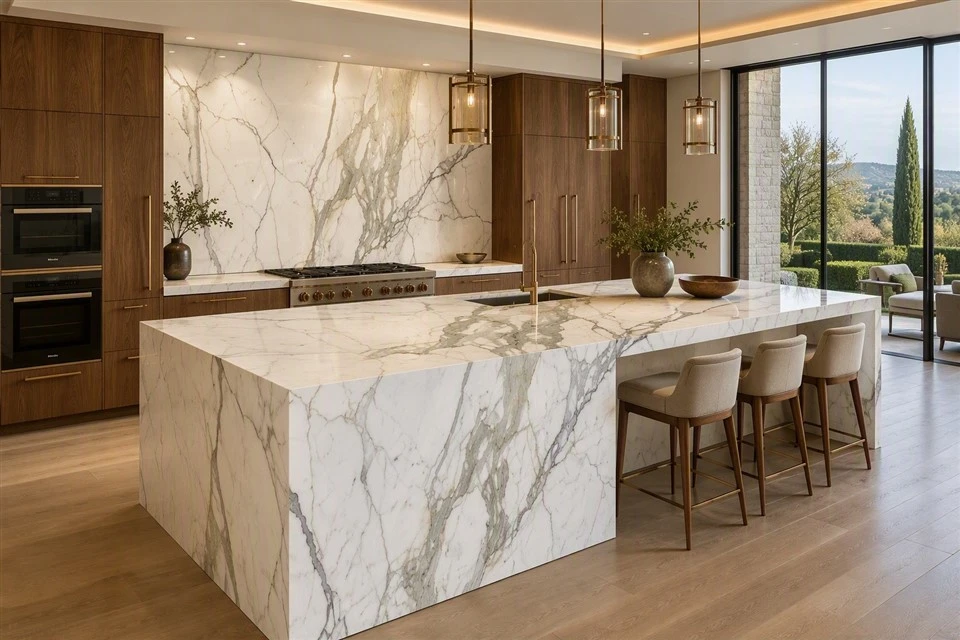
▌ Kitchen Countertops and Kitchen Islands
The white field and directional grey veins can turn an island into a visual anchor, especially when adjoining surfaces are planned from the same slab set. Confirm appliance, sink, faucet, overhang, seam and edge details before cutting. Acidic food and drink can affect calcareous stone, so spills should be handled promptly and the owner must accept marble's care profile. Large openings and narrow rails need special handling, packing and installation review.
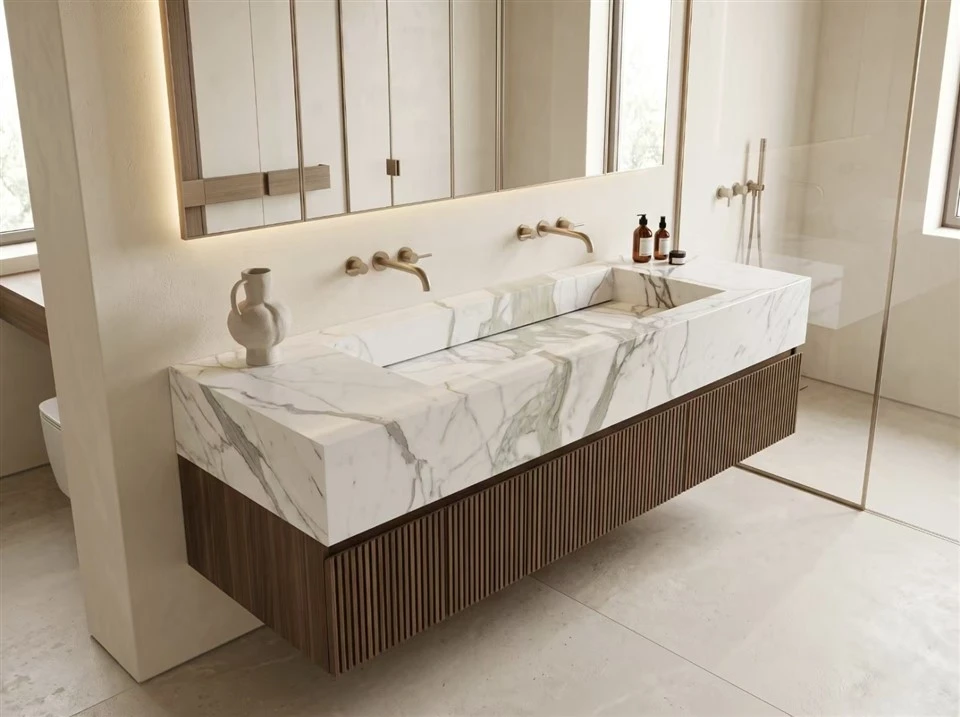
▌ Bathroom Vanity Tops
Vanity tops provide close-range visibility of Calacatta's veining and can coordinate with wall or floor stone. Shop drawings should resolve basin size, faucet reach, backsplash, cabinet clearance, edge profile and seams. Integrated basins, large cutouts and narrow front or rear rails require geometry-specific fabrication and transport protection. Sealant and cleaner selection should follow the relevant manufacturers' instructions.
▌ Floor Tiles
Large-format floor tiles can create a broad, continuous white-marble field with controlled vein rhythm. Buyers should define module size, thickness, finish, joint layout, shade range, dry-lay expectations and replacement allowance. Substrate preparation, movement accommodation, bonding system, slip requirements and installation methods are project matters to be determined by qualified professionals under applicable specifications and local rules.
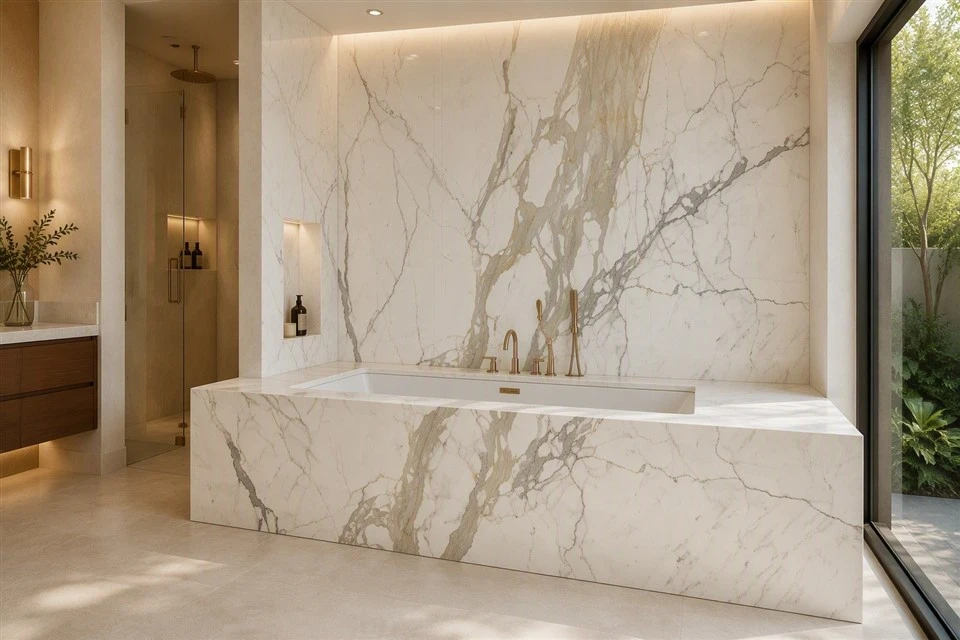
▌ Bathroom Tub Deck and Surround
A tub deck and full-height surround can use adjoining slabs to extend vein movement across horizontal and vertical planes. The package should coordinate faucet access, panel joints, corners, service access and interfaces with waterproofing and backing systems. Natural marble is not itself a complete waterproofing assembly; design and installation must comply with the project's wet-area system and qualified installer guidance.
▌ Fireplace Surround and Feature Wall
Calacatta marble can be used to create a coordinated fireplace surround and full-height feature wall, including symmetrical, bookmatched or vein-continuous compositions when suitable slabs are available. Slab selection and layout planning should consider the relationship between the fireplace opening, adjoining panels, corners and the overall wall composition. Final stone thickness, joints, backing, attachment method, clearances and exposure temperatures must be reviewed against the fireplace manufacturer's instructions, project specifications, local codes and professional design requirements. The stone's appearance or product name alone does not establish compliance with fire-safety requirements.
Calacatta marble is chosen primarily for design impact: a light background, visible grey movement and the individuality of natural slabs. Its value is strongest when the buyer can select the actual material and coordinate where prominent veins will appear in the finished work.
▌ Recognizable statement character
The combination of white background and broad grey veining gives large surfaces a strong focal quality. Because commercial naming and natural appearance can vary, procurement should be based on approved current slabs rather than name alone.
▌ Flexible project formats
The stone can move from slab supply into countertops, islands, vanity tops, tiles, tub surrounds and fireplace components. This allows one selected slab range to support several coordinated interior elements when quantity and yield permit.
▌ Vein-layout potential
Slab scans and CAD layout can help align piece locations, vein direction and relationships between adjoining parts before cutting. The process reduces information gaps; it does not eliminate natural variation, fabrication tolerances or site-installation effects.
▌ Appropriate for informed buyers
Calacatta is not selected as a maintenance-free surface. It suits projects where the design value of natural marble justifies current-slab approval, careful detailing, professional installation and an understood care routine.
Notice: Calacatta is generally treated as a high-value white marble. Actual price depends on the current slab or block, dimensions, usable yield, thickness, finish, vein character, quantity, fabrication complexity, inspection, packing and logistics. Request a quotation against a defined slab set and scope rather than relying on a generic price range.
Comparison with Similar Stones
Calacatta, Carrara, Statuario, natural quartzite and Calacatta-look engineered surfaces can all answer a light-surface brief, but they differ in material category, visual repeatability, care and procurement method. The fair comparison is project-specific and should include actual samples, slabs, finish and technical requirements.
| Material |
Typical Visual Direction |
Material Category |
Maintenance Considerations |
Typical Uses |
Buyer Selection Notes |
| Calacatta marble |
White background with prominent, individually varying veins; this product is specified with grey veining. |
Natural marble |
Use non-acidic, stone-appropriate care; surface can change with use and acidic contact. |
Statement islands, vanities, floors, bath surrounds and fireplace features. |
Approve current slabs, vein range, finish and layout; confirm provenance if contractually important. |
| Carrara marble |
Often a greyer field with finer or more dispersed grey movement, although lots vary. |
Natural marble |
Similar calcareous-stone care principles apply. |
Floors, wall panels, vanities, countertops and architectural work. |
Compare actual slabs rather than assuming all Carrara is visually uniform. |
| Statuario marble |
Usually selected for a light field and distinctive grey veining; commercial labels and lots vary. |
Natural marble |
Similar calcareous-stone care principles apply. |
Feature surfaces, bathrooms, furniture and selected countertops. |
Evaluate slab availability, vein scale and usable yield against the design. |
| Light natural quartzite |
May offer a light background and linear or clouded movement, depending on the geological variety. |
Natural quartzite |
Care and performance must be confirmed for the specific stone; do not assume a trade name proves geological category. |
Countertops, islands, walls and selected floors. |
Request reliable identification, current slabs and project-relevant test information where required. |
| Calacatta-look engineered quartz |
Designed pattern intended to resemble white marble; repeatability depends on brand and series. |
Engineered surface, not natural marble |
Follow the manufacturer's care, heat, chemical and fabrication instructions. |
Interior countertops, vanities and other manufacturer-approved uses. |
Check brand-specific slab size, pattern repeat, seam appearance, warranty and use limitations. |
| Calacatta-look porcelain or sintered surface |
Printed or designed marble-look pattern with product-controlled color and repeat. |
Manufactured ceramic or sintered surface |
Follow manufacturer instructions, especially for edges, impact, support and cleaning. |
Panels, floors, walls and manufacturer-approved countertops. |
Review print repeat, through-body appearance, edge treatment, substrate and installation system. |
Frequently Asked Questions
Q: Can you provide samples?
A: Yes. Normally one or two samples can be provided without a sample charge, subject to current material availability. Typical sample sizes range from 100 × 100 mm to 200 × 200 mm, and the customer pays the courier cost. A small sample helps review color, finish and basic material character, but it cannot represent the full vein movement or range of a large natural slab. For final approval, request current slab photos or videos and identify the accepted slab numbers.
Q: What is your slab thickness tolerance?
A: The stated slab thickness tolerance is ±1 mm. Before ordering, the buyer and supplier should confirm how thickness is measured, where measurements are taken, and whether the requirement applies to the raw slab, finished surface or fabricated piece. Record the agreed method and acceptance criteria in the contract, shop drawings or inspection standard, especially where adjoining pieces, edge build-ups, mechanical interfaces or calibrated tiles require tighter coordination.
Q: How do you inspect Calacatta slab surface quality?
A: Inspection focuses on cracks that may affect handling or fabrication, overall vein coordination, unusually large and visually discordant black areas, and whether color and vein variation remains within the buyer-approved range. The review must distinguish natural veining, natural fissures and other inherent features from structural cracks or processing defects that can affect use. Acceptance should be based on the agreed slab range, intended cutting plan, finish and project criteria rather than an oversimplified "defect-free" promise.
Q: Can I see current slab photos and videos before ordering?
A: Yes, subject to actual inventory. Landiview Stone can provide images or videos of the current lot, slab numbers, surface-review information and a discussion of the available color and vein range. Buyers should identify approved slabs and retain the corresponding records in the order documents. Lighting, camera settings and screens can alter perceived color, so remote review should be combined with samples or in-person inspection when the project demands a particularly narrow appearance range.
Q: Can you supply cut-to-size and finished products, not only slabs?
A: Yes. The usual workflow starts with the customer's architectural drawings. The technical team prepares stone shop drawings for review; current slab images are submitted, or block selection and custom cutting may be explored when existing slabs are unsuitable and the project warrants it. After drawings and slabs are approved, slab scans are used for AutoCAD cutting and vein-layout simulation. Following layout approval, fabrication proceeds. The factory then dry-lays the finished pieces, checks them, replaces nonconforming pieces as appropriate, assigns piece numbers and adds protection, temporary reinforcement and export packing based on vulnerable areas. See how to order cut-to-size stone from China.
Q: Can Landiview Stone prepare stone shop drawings from architectural drawings?
A: Yes. Many buyers provide architectural drawings rather than stone-specific fabrication information. Landiview Stone can extract the relevant stone scope and prepare shop drawings covering dimensions, thicknesses, openings, edges, visible faces, finishes, joints and other fabrication details for customer or design-team review. Approval is required before production. These drawings coordinate stone fabrication; they do not replace structural design, local code review, waterproofing design, attachment engineering or the responsibilities of locally licensed professionals and qualified installers. Read what cut-to-size stone means for project procurement.
Q: How do you help control the final vein layout and installed appearance?
A: After the shop drawings and actual slabs are approved, slab scans can be imported into AutoCAD to simulate piece locations, vein direction and visual relationships before cutting. The customer reviews the proposed layout; after fabrication, factory dry layout checks the actual pieces together, supports replacement decisions and establishes piece numbering for site installation. This workflow helps reduce information gaps between selection, cutting and installation, but natural variation, fabrication tolerances, lighting, jointing and site workmanship still affect the final view. See the guide to natural stone slab layout in AutoCAD.
Q: How do you protect slabs and finished stone during shipping?
A: Slabs use a robust export crate or A-frame/support arrangement designed for the actual container-loading plan. Finished products may receive liners, cushioning, custom foam, separators, edge protection and positioning support based on geometry. Sink or cooktop cutouts, long backsplashes, narrow strips, vanity tops, fireplace parts, narrow wall panels and vulnerable corners may receive temporary support strips applied over protective film; these are transport protection and should be removed before installation according to instructions. Raw-wood packaging must use ISPM 15-compliant material when required by the destination country. [3] Packaging does not remove the need for trained unloading and slab-handling procedures; OSHA identifies serious caught-by, crushed-by and struck-by hazards. [4] Read how natural stone is protected during shipping.
Q: How should Calacatta marble be maintained after installation?
A: Use a pH-neutral cleaner formulated for natural stone, blot or treat spills promptly, and avoid unknown acidic or alkaline products and abrasive tools. The Natural Stone Institute explains that calcareous stone is sensitive to acidic solutions and recommends mild, non-acidic cleaning, thorough rinsing and soft cloths or mops. [2] Sealer choice and reapplication timing depend on the specific marble, finish, use environment, installed condition and the sealer manufacturer's instructions; sealing should not be presented as protection against every stain or acidic surface reaction. Follow the project specification and professional installer or product-manufacturer guidance.
Q: Is Calacatta marble suitable for kitchen countertops?
A: It can be specified for kitchen countertops when the buyer accepts natural marble's appearance and care profile. The design should resolve slab layout, seams, edges, support, sink and cooktop openings, faucet clearance and transport protection before cutting. Owners should use stone-appropriate cleaners, handle spills promptly and recognize that acidic contact may alter a calcareous stone surface. A honed or polished finish is a design choice, not a guarantee against wear, staining or etching.
Q: What affects the price of Calacatta marble slabs?
A: Price is quotation-specific. Major factors include current slab or block availability, slab dimensions and usable yield, thickness, finish, vein character, lot consistency, quantity, selection requirements, fabrication complexity, inspection scope, packing and delivery terms. A heavily veined layout may also require more slabs to achieve the desired visual sequence. Send dimensions, quantity, finish, application and destination-and drawings for fabricated work-so the quotation can be based on an identifiable scope. No fixed price, MOQ or lead time is claimed on this page.
Q: Can Calacatta slabs be bookmatched or vein-matched?
A: Potentially, subject to the way the block was sawn, the available slab sequence, vein geometry, dimensions and project yield. "Bookmatch" and "vein match" should be defined on drawings because they are not interchangeable promises. Current slab scans can be arranged digitally for review, then approved layouts can guide cutting and dry-lay inspection. The process helps align the approved design intent with expected installation, but natural variation and site conditions prevent an absolute visual guarantee.
Q: What information should I send for a quotation?
A: For slabs, send required quantity, approximate dimensions, thickness, finish, acceptable appearance range, destination and any inspection or packing requirements. For finished products, also send architectural drawings, stone schedules, edge details, cutout information, joint intent and target installation sequence. State any required testing, documentation or tolerance criteria at inquiry stage. If details are incomplete, Landiview Stone can identify clarification items and develop stone shop drawings for review before fabrication scope is finalized.
Landiview Stone supplies natural stone in two principal forms: slabs for importers, distributors and fabricators, and project-specific cut-to-size or finished products for contractors, developers, designers, builders and other project buyers. The service emphasis is coordination from material review through export protection.
▌ Slab Supply
For slab buyers, Landiview Stone supports current slab selection, slab-image review, color and vein-range confirmation, surface inspection, slab identification and export packing. High-value or vulnerable slabs may require a steel A-frame with enclosed plywood protection or another loading-specific arrangement. Handling plans should recognize that large stone slabs present significant moving, loading and unloading hazards requiring appropriate equipment, procedures and training. [4]
▌ Cut-to-Size and Complex Products
For custom work, the company can coordinate shop drawing review, slab scanning, AutoCAD cutting and vein-layout simulation, fabrication, dry-layout inspection, piece numbering, finished-product inspection, temporary reinforcement for vulnerable components and project-specific export protection. For more complex fabricated assemblies, the team may use three-dimensional modeling and virtual assembly review to examine component relationships, thicknesses, surface treatments, concealed reinforcement and potential interference before details are finalized. Autodesk documents Inventor's interference analysis as a method for identifying components that unexpectedly occupy the same space. [5]
These technical descriptions come from actual project workflows and factory practice. External standards and guidance are used only to explain broader design, care, handling, packing or transport principles. The appropriate method must be evaluated for the specific stone, geometry, transport route, site conditions and project specification.
▌ Relevant International Project Experience
• Marble furniture, bathroom vanity tops and shower wall panels for the Grand Hyatt Singapore renovation project.
• Stone supply for stations on Singapore's Thomson-East Coast Line.
• Interior stone products for the Wynn project in the United Arab Emirates.
• Marble products for public areas of the 255 East 77th Street luxury residential project in New York.
• Interior and exterior marble and granite products for three high-end custom homes on Tuckahoe, a private resort island in Massachusetts, USA.
Project references describe Landiview Stone's stated supply experience and are not presented as endorsements by the owners, designers, contractors or brands named.
Notice: Project references describe Landiview Stone's stated supply experience and are not presented as endorsements by the owners, designers, contractors or brands named.