

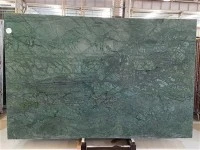
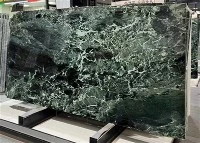


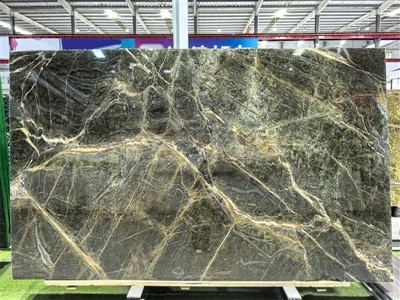
Indian Green Marble slab with deep green tones and intricate natural veining

Indian Green Marble kitchen island, countertop and full-height backsplash with dark wood cabinetry

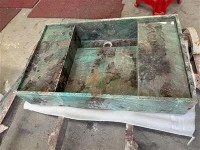
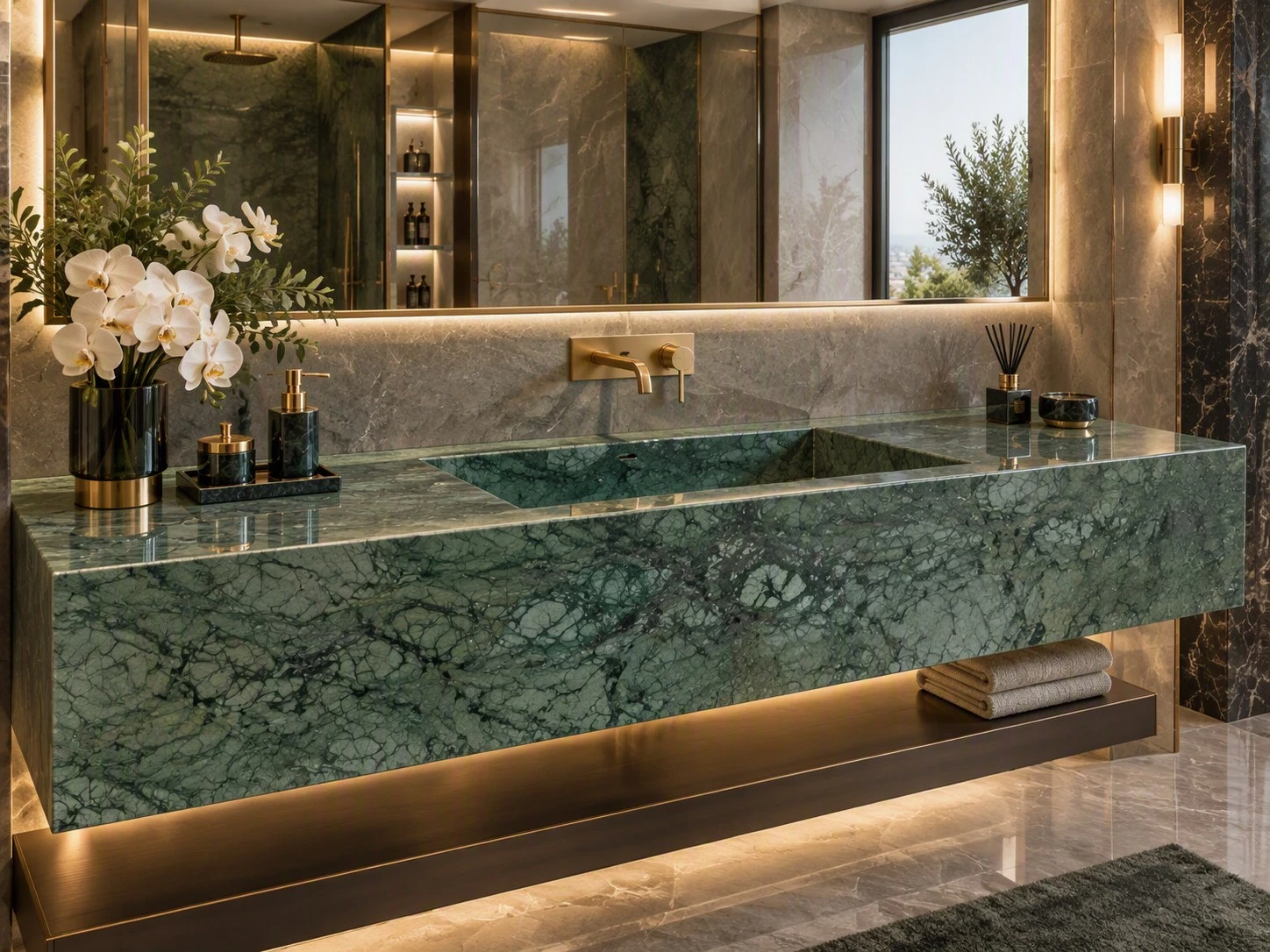
Indian Green Marble bathroom vanity top with an integrated stone sink and mitered front panel

Polished Indian Green Marble floor tiles with visible joints in a luxury hotel lobby

Indian Green Marble wall tiles surrounding bronze elevators in a luxury lobby

Indian Green Marble interior staircase with matching treads and risers in a luxury custom home

Indian Green Marble bathtub deck with mitered panels and integrated lighting in a luxury bathroom

Indian Green Marble fireplace surround with mitered edges in a luxury custom home living room
Indian Green Marble Slab
- Fast Delievery
- Quality Assurance
- 24/7 Customer Service
Executive Summary
Indian Green marble is a classic, comparatively accessible green natural stone for buyers who want a strong botanical color and active natural movement without positioning the material only as a rare collector stone. Approve the actual slab range and intended finish before purchasing, because every slab varies.
Indian Green marble slab is sourced from India and presents a deep green background crossed by complex veins and fragmented mineral movement. It is intended for slab importers, distributors, fabricators and project buyers sourcing kitchen islands, countertops, vanity tops, floor or wall tiles, interior stairs, bathtub decks and fireplaces. Landiview Stone can supply slabs or coordinate project-specific cut-to-size and finished products. Purchasing should begin with current slab review, scope confirmation and a quotation based on thickness, finish, quantity, fabrication and destination.

Key Facts
The standard offering is an 18 mm Indian natural marble slab with a deep green background and complex patterning. Polished, honed and leathered finishes are recommended; 20 mm and 30 mm slabs may be specially cut from selected blocks when the project and available material permit.
| Attribute | Confirmed Product Information |
| Product name | Indian Green marble slab |
| Material | Natural marble |
| Origin | India |
| Color and visual character | Deep green background with complex natural veining and movement |
| Standard slab thickness | 18 mm |
| Alternative thicknesses | 20 mm and 30 mm may be custom cut from selected blocks according to buyer requirements and material availability |
| Stated thickness tolerance | ±1 mm; confirm measurement method and project-specific acceptance criteria in the contract, drawings or inspection standard |
| Recommended finishes | Polished, honed and leathered |
| Recommended applications | Kitchen islands and countertops; bathroom vanity tops; floor tiles; wall tiles; interior staircases; bathtub decks; fireplaces |
| Supply forms | Slabs and project-specific cut-to-size or finished products |
| Selection basis | Approval of current slab images, videos, slab numbers, surface condition, color range and vein range, subject to availability |
| Commercial position | A classic green marble widely used internationally and generally positioned at an accessible price level; quotations remain lot- and scope-specific |
Performance requirements should be specified for the intended use. ASTM C503/C503M publicly describes categories of properties addressed for dimension marble, but no project-specific test value is claimed for this material on this page. [1]
Available Finishes and Processing Options
Finish selection changes both the visual depth of the green field and the way natural movement is perceived. Buyers should review a representative sample and, for appearance-sensitive work, approve the finish on the actual selected lot before production.
▌ Polished Finish
Polishing increases reflectivity, deepens the dark green appearance and makes the intricate movement more pronounced. It is the strongest choice for statement islands, vanity tops, fireplace surrounds and formal wall panels where a vivid, refined surface is desired.
▌ Honed Finish
A honed surface reduces glare and produces a calmer, softer green. The lower reflection can help broad floors, stairs and wall areas feel more architectural, although the chosen honing level, traffic conditions and maintenance expectations should be approved before production.
▌ Leathered Finish
A leathered finish introduces tactile relief and a more organic appearance. Because relief and sheen depend on the slab structure and processing method, buyers should approve a physical finish sample and confirm cleaning expectations for the intended application.
▌ Processing Options
- • Cut-to-size tiles, panels, treads, risers, countertops, vanity tops, bathtub-deck parts and fireplace components, subject to approved drawings.
- • Edge finishing, mitred assemblies, cutouts, piece numbering and dry-layout inspection according to the project scope.
- • Slab scanning and AutoCAD cutting and vein-layout simulation for visual coordination before cutting.
- • Three-dimensional modeling and virtual assembly review for complex multi-part products when the geometry warrants it.
Fabrication details, tolerances, support, joints and installation methods must follow approved project documents, local requirements and qualified professional guidance.
Recommended Applications
Indian Green marble works best where the design benefits from a decisive dark-green focal surface. The key aesthetic decision is not simply the application type, but how the selected slabs, seams, finish and vein distribution shape the final composition.
▌ Kitchen Island and Kitchen Countertop
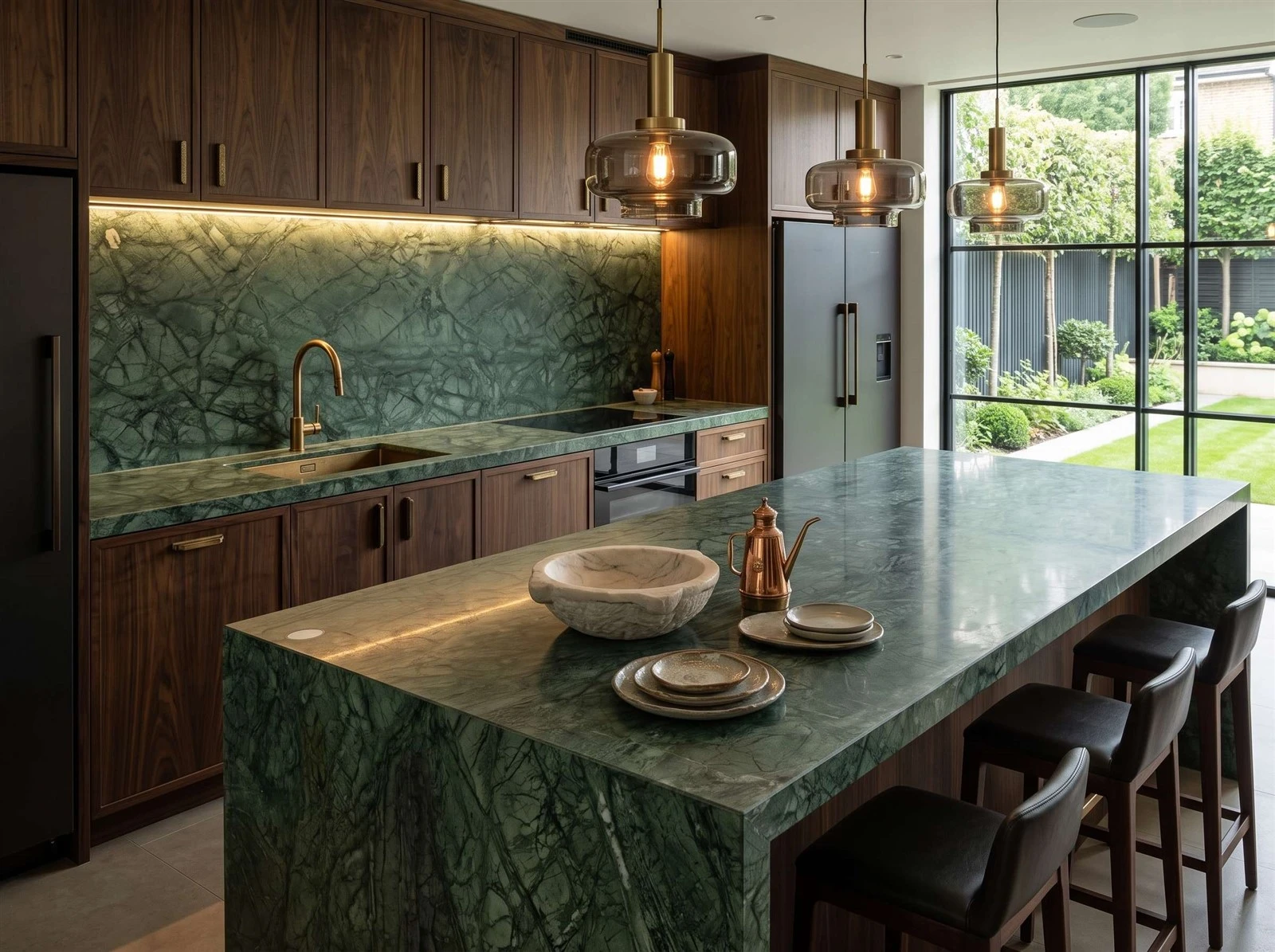
Indian Green marble gives a kitchen a saturated natural focal point, especially beside warm wood cabinetry, brushed metal and restrained wall finishes. For large islands, select slabs for the desired balance of quieter green fields and denser movement; coordinate seams, visible edges, cutouts and adjacent panels before cutting. Marble is calcareous and acid-sensitive, so buyers should align care expectations with the end user. [2]
▌ Bathroom Vanity Top
On a vanity, the stone creates a jewel-like green band that works well with brass, bronze, dark timber and neutral wall surfaces. Review basin cutouts, faucet clearances, front aprons and mitred returns in the shop drawings, and plan temporary transport support around narrow bridges or large openings.
▌ Floor Tiles

Polished tiles create a reflective, formal floor in lobbies and residential interiors, while honed tiles give the same green movement a quieter expression. Establish tile size, joint grid, slip-performance requirement, finish, lot range and installation system for the actual project; traffic, wet conditions and local rules must guide final selection.
▌ Wall Tiles
Large green wall panels or tiles turn circulation areas and elevator lobbies into a continuous stone composition. Slab allocation should control the distribution of dense and open pattern areas, while joint positions, anchors or setting systems and substrate requirements must be resolved by the project team. [3]

▌ Interior Staircases

Matching treads and risers create a visually continuous green stair with strong depth and rhythm. Buyers should coordinate nosing geometry, thickness, vein direction, slip requirements, substrate and edge protection. Stair installation and structural support remain subject to approved project details and local requirements.
▌ Bathtub Deck
A bathtub deck in Indian Green marble forms an enveloping green frame, particularly effective with mitred fascia panels and warm concealed lighting. Confirm opening dimensions, access requirements, seams, support, wet-area detailing and sealant interfaces before fabrication; installers should follow project specifications and product-manufacturer instructions.

▌ Fireplace

A fireplace surround uses the deep green field as a focused architectural frame against lighter walls. Slab layout can align movement across the header, legs and hearth, while mitred edges can create thicker-looking profiles. Clearance, substrate, heat-related detailing and installation must comply with the fireplace manufacturer, project requirements and local codes.
Why Choose This Stone
Choose Indian Green marble when the brief calls for a classic deep-green natural surface with complex movement and a more accessible commercial position than many rare decorative stones. Its value depends on approving the actual lot and planning the pattern for the finished design.
Indian Green marble has been used in international markets across residential, hospitality and commercial interiors. The color is distinctive enough to anchor a design, yet it pairs naturally with timber, warm metals, black accents and pale neutral stones. The material can move from a single focal piece, such as an island or fireplace, to coordinated floors, walls and stairs.
Natural variation is part of the product. Buyers should distinguish normal veining, mineral changes and natural fissures from open or unstable cracks, processing damage or areas outside the agreed appearance range. Price is not determined by the commercial name alone; current block or slab availability, dimensions, usable yield, selection, thickness, finish, processing, packing and logistics all affect the quotation.
Comparison with Similar Stones
Indian Green marble is selected primarily for its deep color, active natural pattern and recognizable marble character. Similar green stones may look close in photographs but can differ in mineral composition, acid sensitivity, fabrication response, testing requirements, availability and price.
| Stone | Typical Visual Direction | Material Category | Typical Uses | Buyer Considerations |
| Indian Green marble | Deep green field with complex, sometimes web-like or fragmented movement | Natural marble; confirm the selected lot and any geological documentation | Statement countertops, vanities, floors, walls, stairs, bathtub decks and fireplaces | Calcareous-care expectations; approve actual slabs, fissures, finish, yield and matching plan |
| Verde Alpi | Dark to medium green with prominent pale veining and a dramatic alpine character | Commercial green marble; confirm geological classification and source documents for the selected material | Feature walls, floors, counters and decorative installations | Often a more dramatic, premium visual; compare lot range, slab size, resin treatment and price |
| Verde Guatemala / Rajasthan Green | Rich green background with lighter veins; commercial naming can overlap with Indian green varieties | Commercial green marble or serpentine-rich stone depending on source; verify the specific lot | Floors, walls, counters, stairs and decorative work | Do not rely on the trade name alone; confirm origin, composition, finish behavior and project suitability |
| Green quartzite | Green mineral field ranging from quiet layers to bold crystalline movement | Natural quartzite | Countertops, islands, walls and demanding decorative surfaces | Usually different hardness and fabrication behavior; require actual test data, slab approval and fabricator capability |
| Green granite | Granular or flowing green pattern, commonly more crystalline than marble | Natural granite | Counters, floors, walls and exterior or higher-use applications when testing supports the use | Different visual language and maintenance profile; confirm finish, test data and exact variety |
Commercial stone names are not always geological classifications. ASTM currently lists separate dimension-stone specifications for marble, granite, quartz-based stone and serpentine, so buyers should confirm the selected lot rather than infer performance from a trade name. [1]
Frequently Asked Questions
The safest procurement path is to approve the current lot, define thickness and appearance criteria in writing, coordinate drawings and vein layout for fabricated work, and match packing and care instructions to the actual product and destination.
Q: Can you provide Indian Green marble samples?
A: Yes. Normally one or two samples can be provided without a sample charge, with typical sizes from 100 × 100 mm to 200 × 200 mm. Courier cost is paid by the customer, and sample availability depends on the current material. A small sample is useful for checking finish and general color family, but it cannot represent the full pattern of a large slab. Buyers should also approve current slab images or videos before ordering.
Q: What is your Indian Green marble slab thickness tolerance?
A: The stated standard slab thickness tolerance is ±1 mm. Before ordering, the buyer and supplier should confirm the measurement method, sampling frequency, reference thickness and project acceptance criteria in the contract, approved drawings or inspection standard. Fabricated-product tolerances may differ from raw-slab thickness tolerance and should be defined separately.
Q: How do you inspect Indian Green marble slab surface quality?
A: Inspection focuses on cracks that may affect handling or fabrication, overall pattern coordination, unusually large black areas that are visually inconsistent, and color or vein variation relative to the buyer-approved range. Natural veining, mineral changes and stable natural fissures must be assessed carefully and not automatically treated as defects; open or unstable cracks, processing damage and out-of-range appearance require separate judgment.
Q: Can I see current slab photos and videos before ordering?
A: Yes, subject to actual inventory. Landiview Stone can provide current-lot photographs or videos, slab numbers, surface-review information and confirmation of the visible color and vein range. Final approval should identify the selected slabs and agreed acceptance points. Screen color, lighting and camera conditions can affect digital appearance, so physical samples or additional close-ups may be appropriate for sensitive projects.
Q: Can you supply cut-to-size and finished products, not only slabs?
A: Yes. The typical workflow is: the customer submits architectural drawings; the technical team prepares stone shop drawings for review; current slab images are submitted, or block selection and special cutting may be investigated if available slabs are unsuitable; after drawings and slabs are approved, slab scans are used for AutoCAD cutting and vein-layout simulation; approved pieces are fabricated, dry laid, inspected, replaced when nonconforming, numbered, protected, temporarily reinforced where needed and export packed. Read how to order cut-to-size stone from China.
Q: Can Landiview Stone prepare stone shop drawings from architectural drawings?
A: Yes. The technical team can identify the stone scope in architectural drawings and prepare stone-specific shop drawings covering dimensions, thicknesses, joints, cutouts, edges, finishes, visible surfaces and agreed fabrication details. Drawings require review and approval by the customer or design team. Stone shop drawings do not replace the structural, code, waterproofing or installation responsibility of locally licensed professionals. See what cut-to-size stone means.
Q: How do you help control the final vein layout and installed appearance?
A: After slab and shop-drawing approval, 1:1 slab scans can be imported into AutoCAD to plan cut locations, vein direction and relationships between adjacent pieces. The buyer reviews the proposed layout before cutting. After fabrication, dry layout checks actual pieces, supports replacement decisions and enables piece numbering for installation. This process reduces information gaps but cannot remove natural variation or site-installation effects. Learn about natural stone slab layout in AutoCAD.
Q: How do you protect slabs and finished stone during shipping?
A: Slabs use a robust wooden crate, A-frame or support arrangement designed for the actual container-loading plan. Finished products may use liners, cushioning, custom foam, plywood separators, edge protection and positioning supports. Sink or cooktop openings, narrow backsplashes, thin strips, vanity tops, fireplace parts, narrow wall panels and vulnerable corners may receive removable support strips over protective film. Reinforcement is temporary transport protection and should be removed before installation as instructed. Regulated solid-wood packaging should use ISPM 15-compliant material where the destination requires it. [4] Read the guide to protecting natural stone during shipping.
Q: How should Indian Green marble be maintained after installation?
A: Use a pH-neutral cleaner intended for natural stone, blot spills promptly, rinse as appropriate and avoid unidentified acidic or alkaline cleaners and abrasive tools. Marble is calcareous and can react with acids. [2] Sealer selection and reapplication intervals depend on the stone, finish, exposure, product and use conditions; follow the sealer manufacturer, project specification and qualified stone professional. Test unfamiliar products in an inconspicuous area first.
Q: Is Indian Green marble suitable for kitchen countertops?
A: It can be specified for kitchen countertops when the buyer accepts the behavior and care requirements of natural marble. The deep green field can create a strong contrast with wood cabinetry and warm metal fixtures, but acidic foods may etch calcareous stone and spills should be handled promptly. [2] Approve slabs, seams, cutouts, edge details, support and care guidance before fabrication; do not treat sealing as protection against every form of etching or damage.
Q: What affects the price of Indian Green marble?
A: Price is project-specific. Important factors include current block or slab availability, slab dimensions and usable yield, color and vein selection, thickness, finish, resin or mesh treatment, quantity, cutting complexity, edges, cutouts, layout review, dry laying, replacement allowance, packing and destination logistics. Compare quotations against the same approved scope rather than relying only on a square-metre price.
Q: Can you supply 20 mm or 30 mm Indian Green marble slabs?
A: Potentially yes. The standard slab thickness is 18 mm, while 20 mm and 30 mm may be specially produced by selecting suitable blocks and cutting them to the requested thickness. This is subject to block availability, achievable slab dimensions, quantity, finish and commercial feasibility. Submit the required thickness, dimensions, quantity and application for a current assessment.
Why Landiview Stone
Landiview Stone supports both slab trading and project-specific fabricated stone. The practical difference is coordination: buyers can combine material selection with drawing review, digital slab layout, factory inspection, piece identification and shipping protection under one project workflow.
▌ Supply Scope
Landiview Stone supplies natural stone in two principal forms: slabs for importers, distributors and fabricators, and project-specific cut-to-size or finished stone products for contractors, developers, designers, builders and other project buyers.
For slab buyers, support can include current slab selection, slab-image review, color and vein-range confirmation, surface inspection, slab identification and export packing.
▌ Technical Workflow
For cut-to-size and custom work, coordination can include shop drawing review, slab scanning, AutoCAD cutting and vein-layout simulation, fabrication, dry-layout inspection, piece numbering, finished-product inspection, temporary reinforcement for vulnerable components and project-specific export protection. The workflow is based on Landiview Stone's documented internal process.
- 1. Review architectural drawings and identify the stone scope.
- 2. Prepare stone shop drawings for customer and design-team approval.
- 3. Submit available slabs; if unsuitable, investigate block selection and special slab cutting when appropriate.
- 4. Use approved slab scans in AutoCAD to simulate cutting and vein layout before production.
- 5. Fabricate to approved documents, then dry lay, inspect and number finished pieces.
- 6. Replace nonconforming pieces when required while considering adjacent color and veining.
- 7. Apply project-specific protection, including temporary reinforcement for vulnerable geometry, before export packing.
For complex multi-part products, the project team may use three-dimensional part modeling and virtual assembly review to examine component relationships, material thicknesses, surface treatments, concealed reinforcement and possible interference before fabrication details are finalized.
▌ International Project Experience
- • Marble furniture, bathroom vanity tops and shower wall panels for the Grand Hyatt Singapore renovation project
- • Stone supply for stations on Singapore's Thomson-East Coast Line
- • Interior stone products for the Wynn project in the United Arab Emirates
- • Marble products for public areas of the 255 East 77th Street luxury residential project in New York
- • Interior and exterior marble and granite products for three high-end custom homes on Tuckahoe, a private resort island in Massachusetts, USA
Project references describe scope experience and do not imply that every service or specification automatically applies to the current product. The applicable process is confirmed against each inquiry.
Request A Quote
For a useful quotation, send the intended application, required dimensions, thickness, quantity, finish and delivery destination. Attach architectural or stone drawings when available, and state whether the inquiry is for slabs, cut-to-size pieces or fully fabricated products.
Landiview Stone can check current Indian Green marble slab availability and provide slab photographs, videos and identification details, subject to stock. For custom work, include drawings, cutouts, edge details, visible surfaces and any vein-matching priorities so the quotation can reflect the actual scope. Project support may include stone shop drawings, slab selection, scanned-slab cutting and vein-layout simulation, dry-layout inspection, piece numbering, temporary reinforcement and export packing.
Hot Tags: Indian Green marble slab, Indian Green marble supplier, green marble slabs, cut-to-size marble, Landiview Stone, Dreaming Green Marble Slabs, Dreaming Peacock Green Marble Slabs Decoration, Grey Marble, Ice Jade Green Marble For Countertop, Raggio Verde Marble Slab Tile, Snowflake Green Marble For Flooring
Previous
No InformationYou Might Also Like


Send Inquiry