



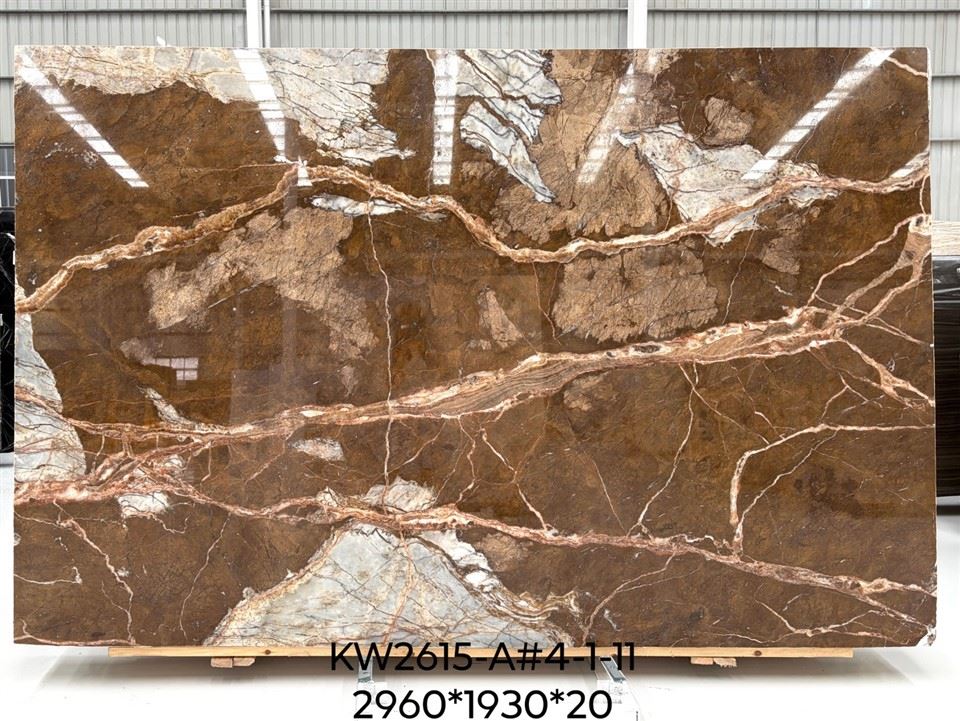

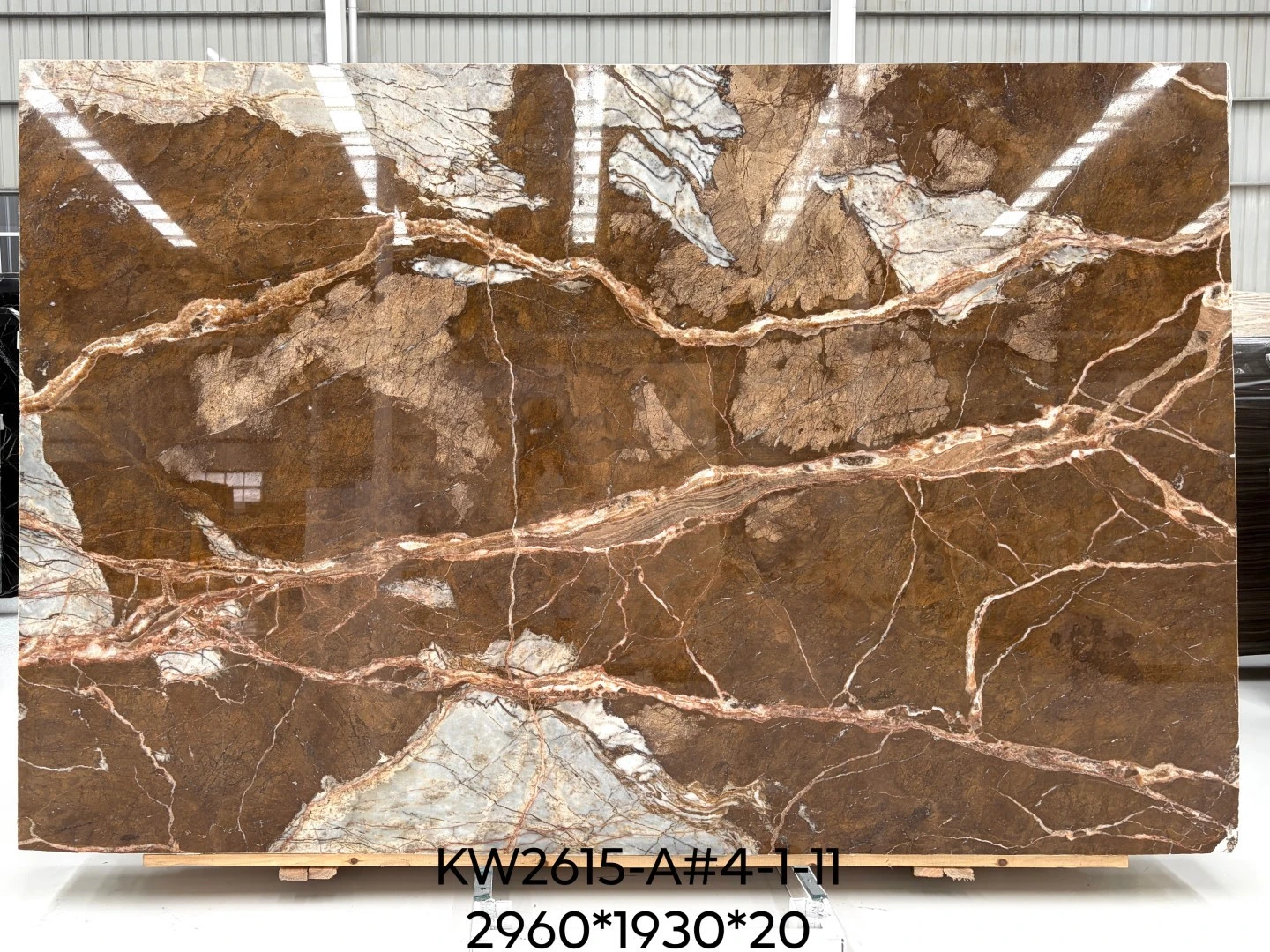
Polished Brown Fusion Marble slab with a rich brown background, large white mineral formations and dramatic copper-toned veining displayed in Landiview Stone showroom
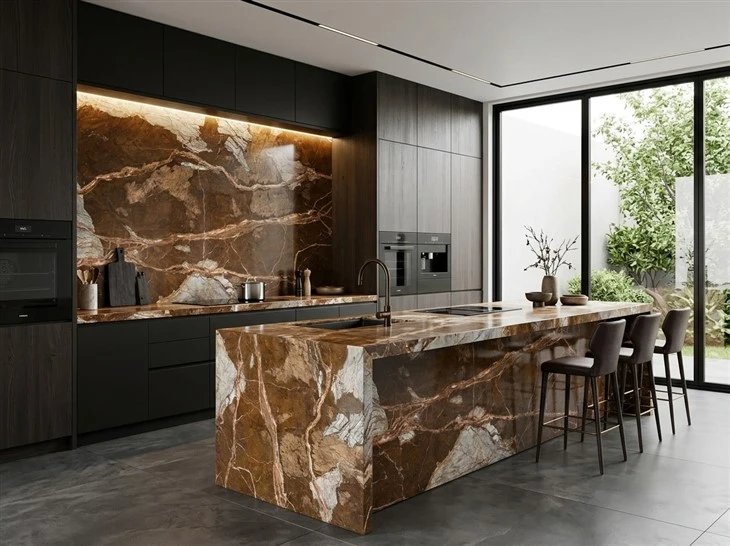
Brown Fusion Marble waterfall kitchen island, countertop and full-height backsplash in a modern luxury kitchen
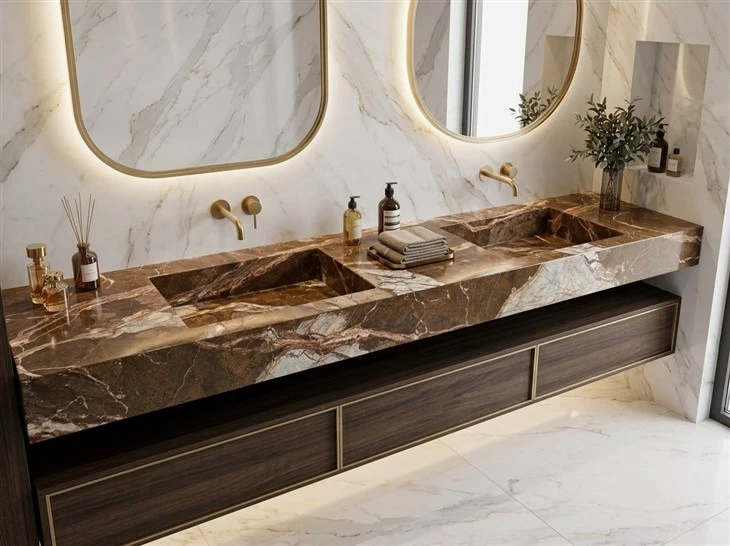
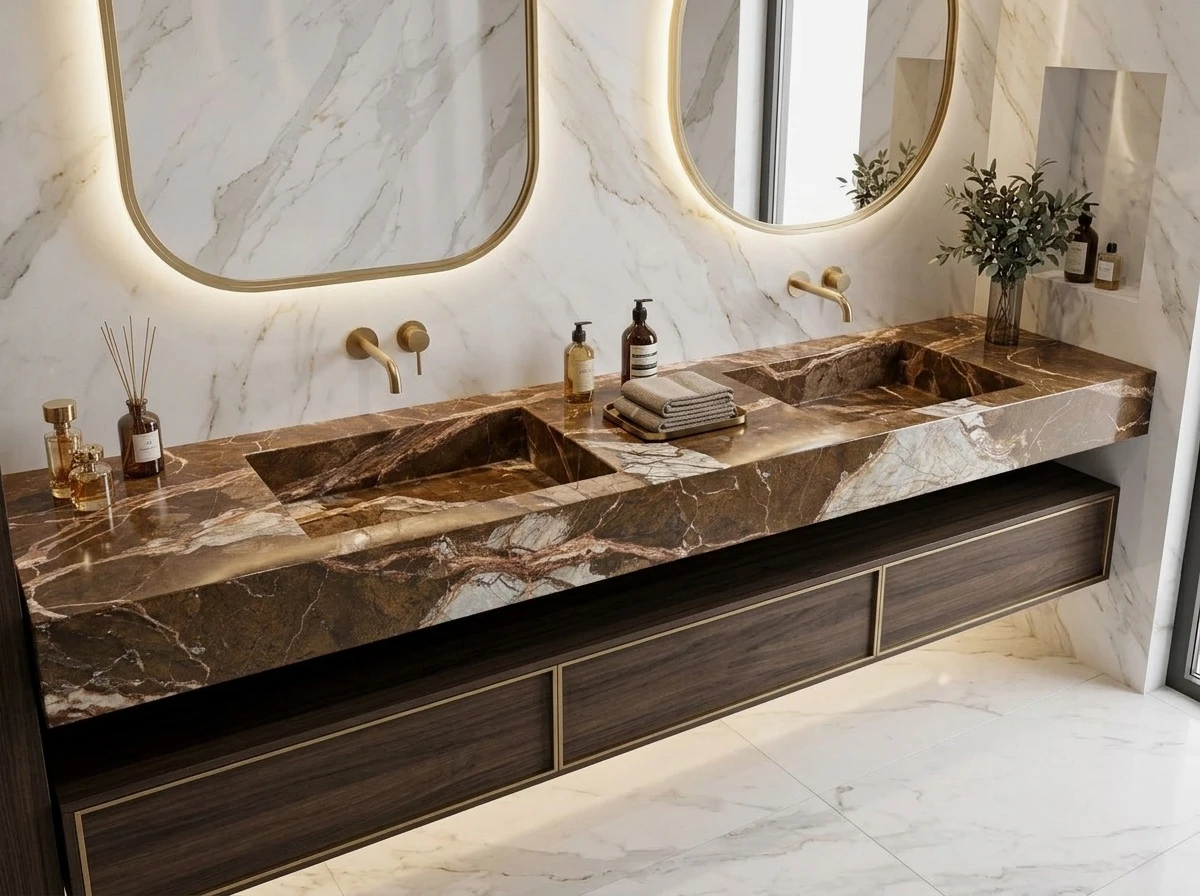
Brown Fusion Marble double vanity countertop with two integrated stone sinks and mitered front edge in a modern bathroom
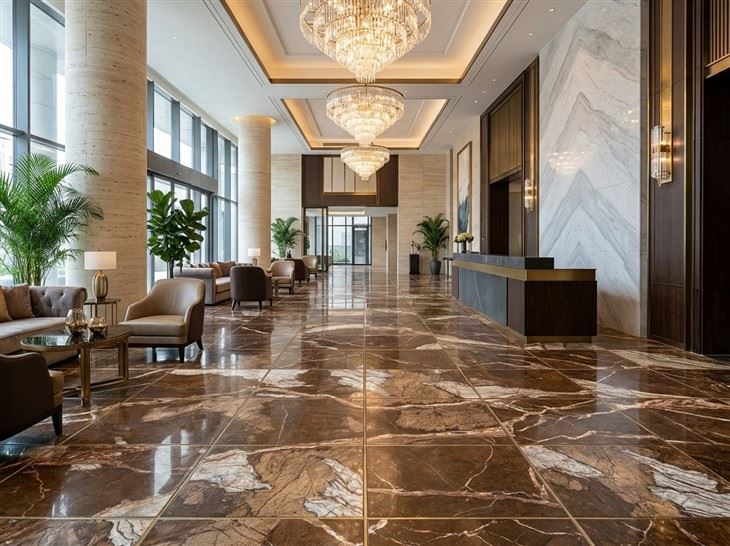
Brown Fusion Marble large-format polished floor tiles with dramatic brown and white veining in a luxury hotel lobby
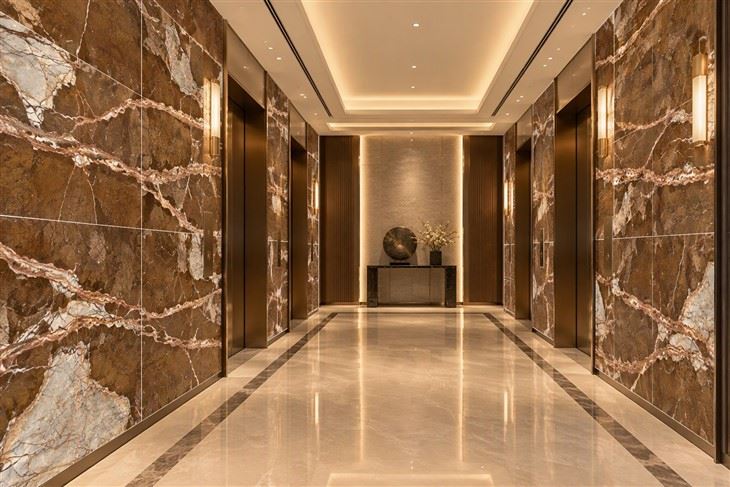
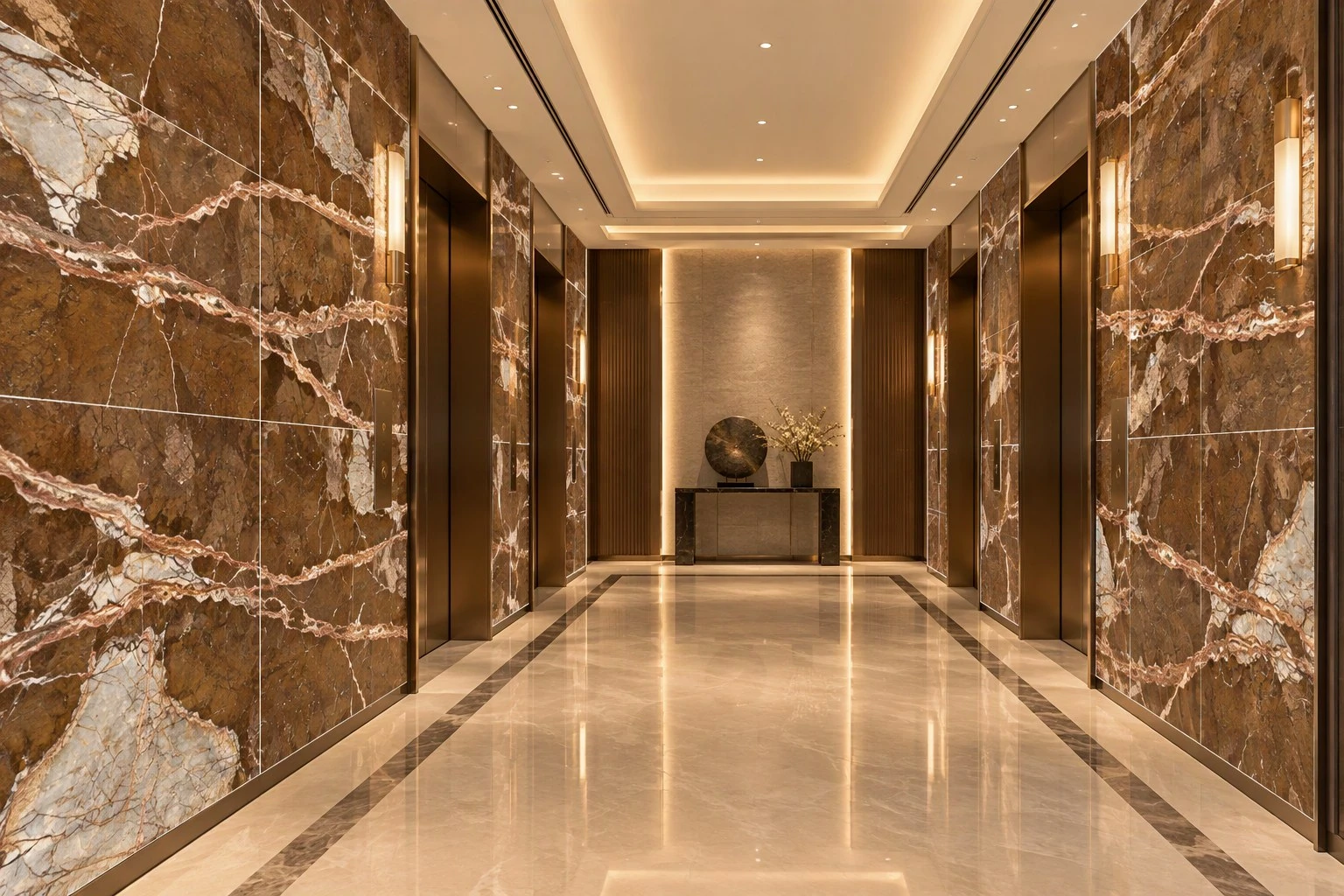
Brown Fusion Marble large-format wall tiles with continuous brown and white veining in a luxury elevator lobby
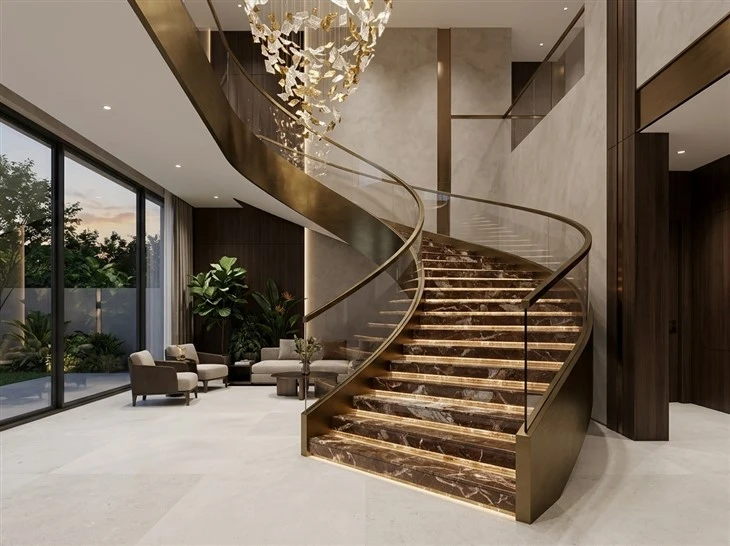
Brown Fusion Marble curved interior staircase with illuminated stone treads and risers in a luxury modern residence
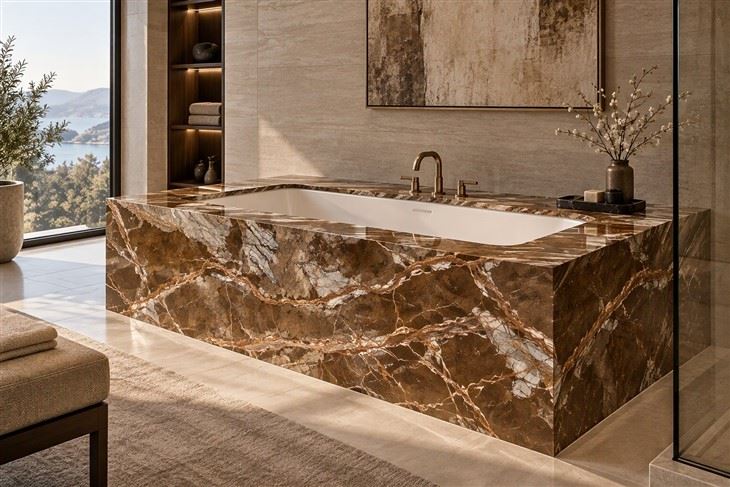
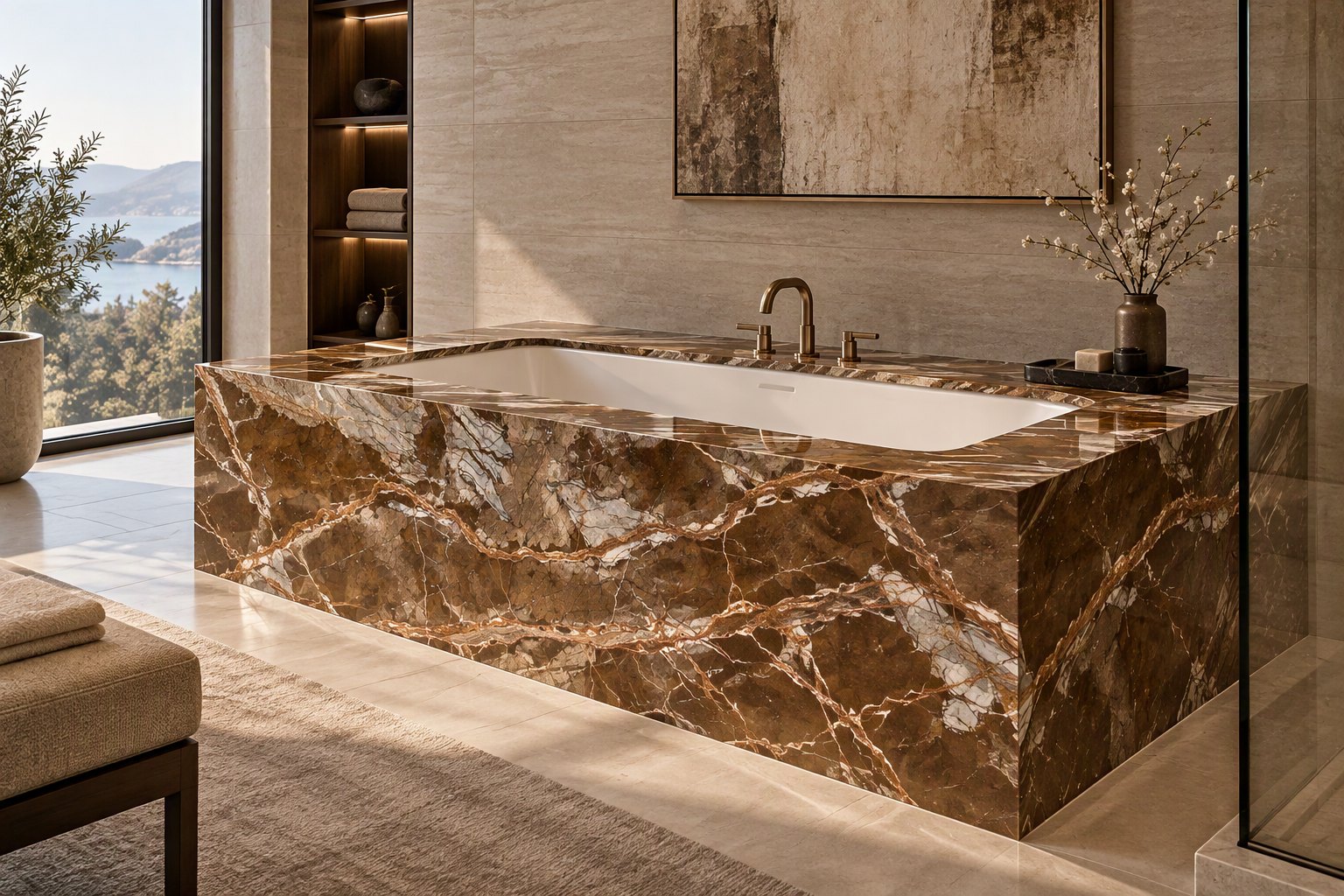
Brown Fusion Marble bathtub deck and surround with mitered corners and continuous veining in a luxury modern bathroom
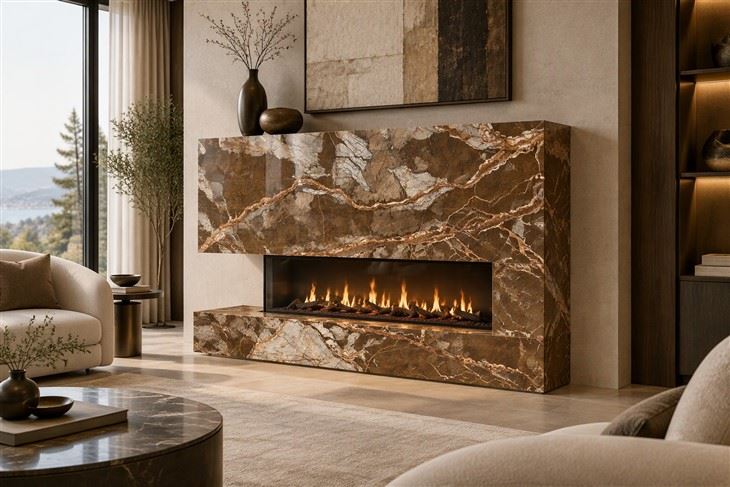
Brown Fusion Marble fireplace surround and raised hearth with mitered edges and continuous dramatic veining in a luxury living room
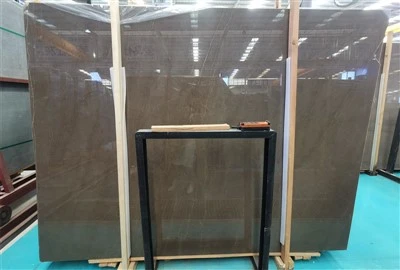
Turkish Brown Fusion Marble Slab
- Fast Delievery
- Quality Assurance
- 24/7 Customer Service
Executive Summary
Brown Fusion Marble is suited to buyers who want a strongly directional brown natural stone for focal surfaces rather than a visually uniform background. The safest purchasing route is to approve the actual slab lot, intended finish and vein layout before fabrication.
Brown Fusion Marble is relevant to slab importers, distributors, fabricators, stone contractors, interior designers, developers and builders sourcing a high-impact natural marble. Its brown field, broad white mineral areas and copper-toned lines can create a warm, layered composition across kitchen islands, vanity tops, floors, walls, stairs, bathtub surrounds and fireplaces.
Landiview Stone can supply slabs subject to current availability or coordinate cut-to-size and finished products from approved drawings and slabs. Because each slab varies, procurement should define acceptable color and vein range, thickness, finish, visible surfaces, layout priorities, inspection criteria, packing and destination requirements.
Key Facts
The standard offering is an 18 mm natural marble slab from Turkey. Project-specific 20 mm or 30 mm slabs may be produced by selecting suitable blocks for special cutting, subject to block availability, yield and approval.
| Product Attribute | Confirmed Information |
| Product name | Brown Fusion Marble slab |
| Material | Natural marble |
| Origin | Turkey |
| Visual character | Rich brown background, large white mineral formations and dramatic copper-toned veining |
| Standard slab thickness | 18 mm |
| Optional thickness | 20 mm and 30 mm may be specially cut from selected blocks according to project needs, subject to suitable block availability and confirmed yield |
| Recommended finishes | Polished, honed and leathered |
| Recommended applications | Kitchen islands and countertops; bathroom vanity tops; floor tiles; wall tiles; interior staircases; bathtub decks and surrounds; fireplace surrounds and hearths |
| Natural variation | Color distribution, white mineral formations, copper-toned veins, fissures and usable yield vary by slab and lot; approve actual slabs for visual-critical work |
| Testing | Lot-specific test reports are available upon request when available; no unverified performance value is claimed on this page |
Note: ASTM C503/C503M describes dimension marble as natural stone sawed, cut or otherwise finished into blocks, slabs or tiles and identifies relevant material properties and sampling for building use. Project specifications should identify the applicable standard, test edition, jurisdiction and acceptance criteria rather than relying on a commercial stone name alone. [1]
Available Finishes and Processing Options
Polished, honed and leathered finishes are recommended. Finish approval should be made on the current material because gloss, color depth, tactile character and the visibility of natural features change with surface treatment.
▌ Polished Finish
Polishing gives the brown field greater depth and makes the white formations and copper-toned veins read more vividly. It is the strongest option for statement islands, vanity tops and vertical features where reflected light can emphasize the composition. Buyers should approve an actual finish sample and consider glare, etching visibility and maintenance expectations.
▌ Honed Finish
A honed surface reduces reflectivity and produces a quieter, more architectural appearance. It can make the material easier to coordinate with timber, bronze metalwork and low-sheen cabinetry. Honed marble may show handling marks, oils or tonal changes differently from polished marble, so the cleaning and sealing system should be agreed for the installed use.
▌ Leathered Finish
Leathering introduces a tactile, low-gloss texture and can strengthen the stone's earthy character. Texture depth and cleaning behavior depend on the finishing process and the slab's mineral structure. A representative sample should confirm touch, sheen, edge treatment and suitability for the intended horizontal or vertical surface.
▌ Project-Specific Fabrication
Depending on approved drawings and material availability, processing may include cut-to-size panels, mitred or built-up edges, visible-edge polishing, sink or cooktop cutouts, matching returns, stair components, fireplace parts, bathtub surrounds, dry layout and piece numbering. Large openings and narrow sections require project-specific risk review; temporary reinforcement or a semi-cutout approach may be considered where appropriate.
Recommended Applications
Brown Fusion Marble works best where its large-scale movement can be treated as part of the architecture. Reserve the strongest slab areas for focal faces, coordinate adjacent cuts and avoid deciding piece placement only after fabrication.
▌ Kitchen Island and Kitchen Countertop
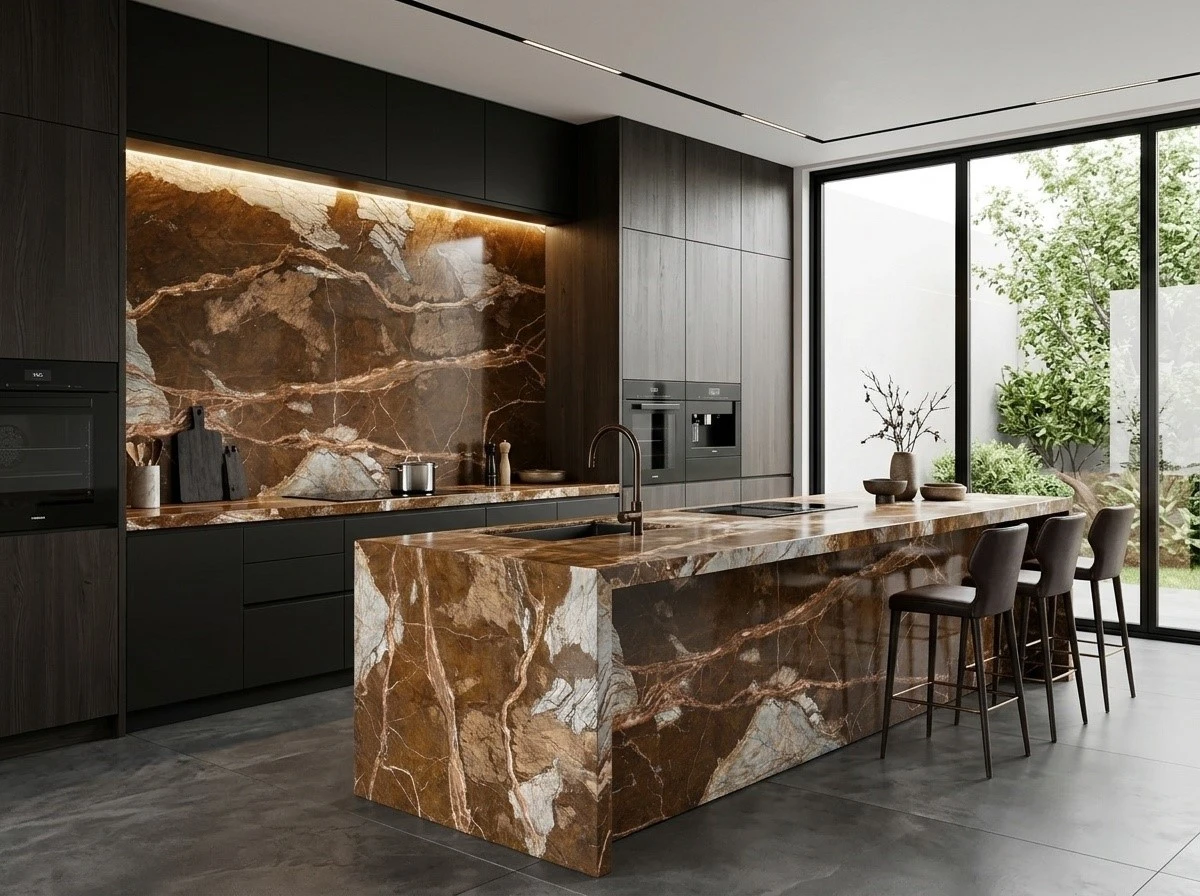
A large island can display the brown field and white mineral formations as a continuous visual centerpiece, especially with waterfall ends or a full-height matching backsplash. Slab layout should prioritize the main viewing face, vein transitions across mitred edges, cutout location and usable yield. Marble is acid-sensitive, so buyers should accept that citrus, wine and acidic foods can etch the finish even when a sealer is used.
▌ Bathroom Vanity Top
Against light walls or dark timber cabinetry, Brown Fusion Marble creates a warm, furniture-like vanity with strong visual depth. Integrated stone sinks or thick mitred aprons can intensify the monolithic effect, but drain geometry, bowl slope, faucet clearances, seams and vulnerable cutout areas must be coordinated in the shop drawings.
▌ Floor Tiles
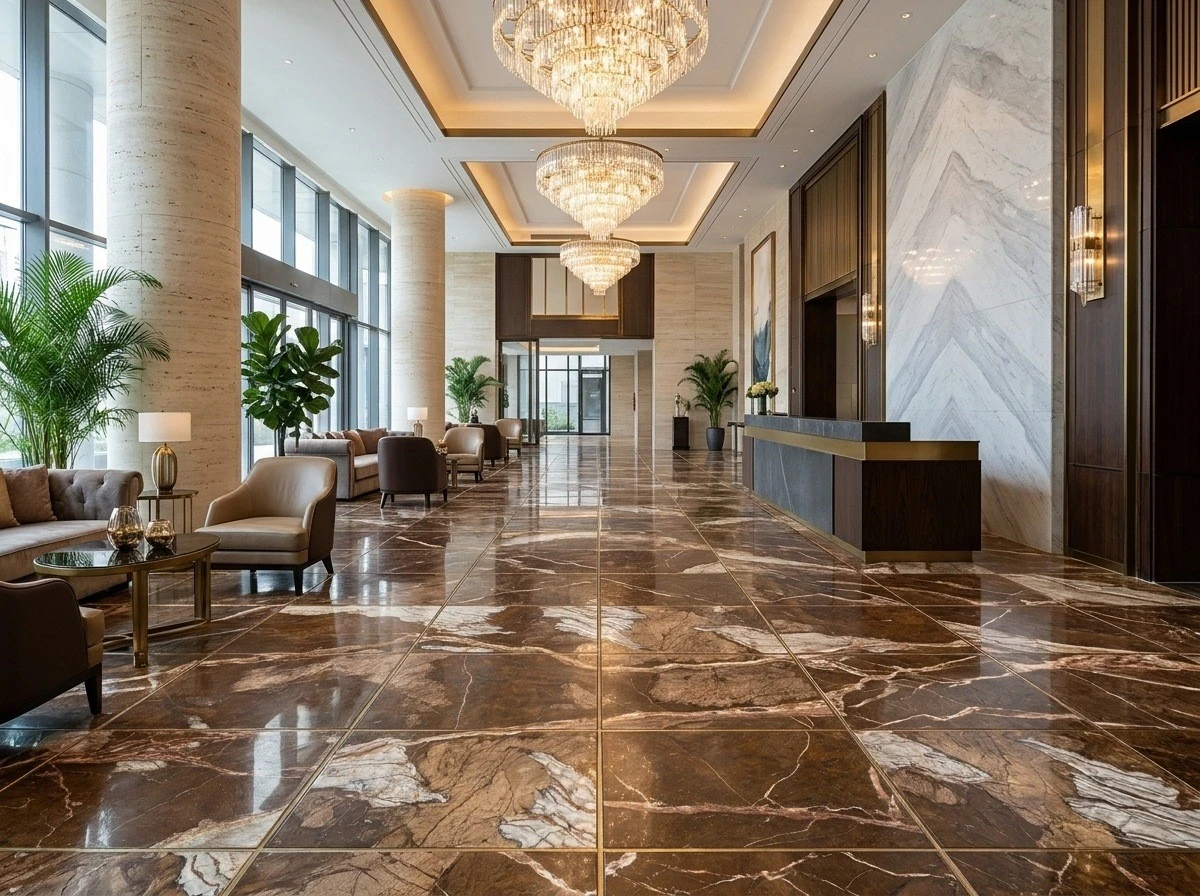
Large-format floor tiles can turn the material's broad white areas and copper-toned veins into an expansive patterned field for lobbies and formal interiors. Tile grouping, directional arrows and dry layout help prevent visually disconnected placement. Finish, slip resistance, substrate, traffic level, joint design and maintenance must be assessed for the specific project.
▌ Wall Tiles
Wall panels allow the marble to function as an architectural artwork, particularly when repeated slabs are sequence-matched or arranged around doors, elevators and lighting. The design should coordinate vein direction, panel joints, anchoring or setting method, substrate and local code requirements.
▌ Interior Staircases
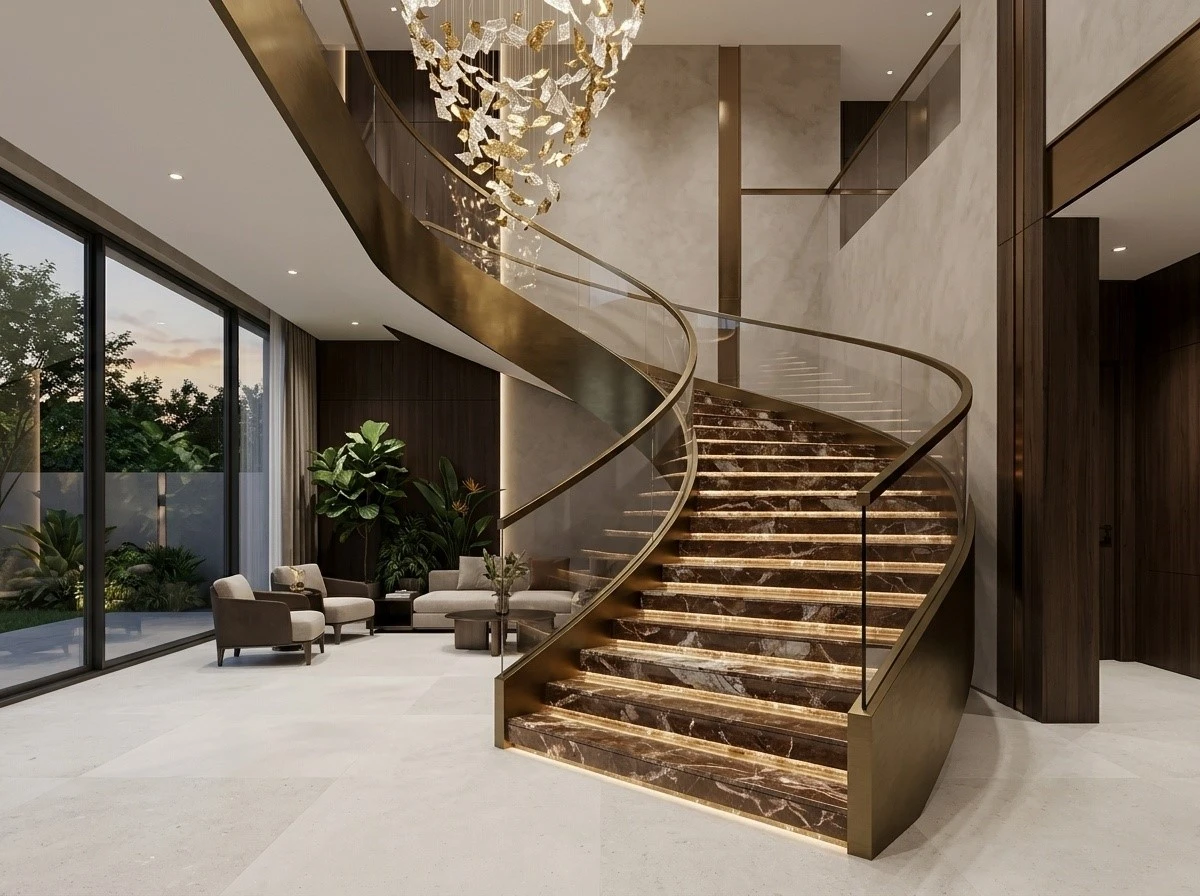
Treads and risers can convert the copper-toned movement into a rhythmic composition visible from the approach. Selection should balance visual flow with tread finish, nosing detail, support, piece thickness, edge vulnerability and applicable slip and building-code requirements. Structural and installation design remains the responsibility of qualified local professionals.
▌ Bathtub Deck and Surround
A coordinated deck, apron and side return can create a single sculptural volume around the bathtub. The strongest result comes from planning the front elevation first, then aligning the top and side pieces. Waterproofing, substrate movement, access panels, fixture clearances, joints and sealing details must be resolved by the project team.
▌ Fireplace Surround and Hearth
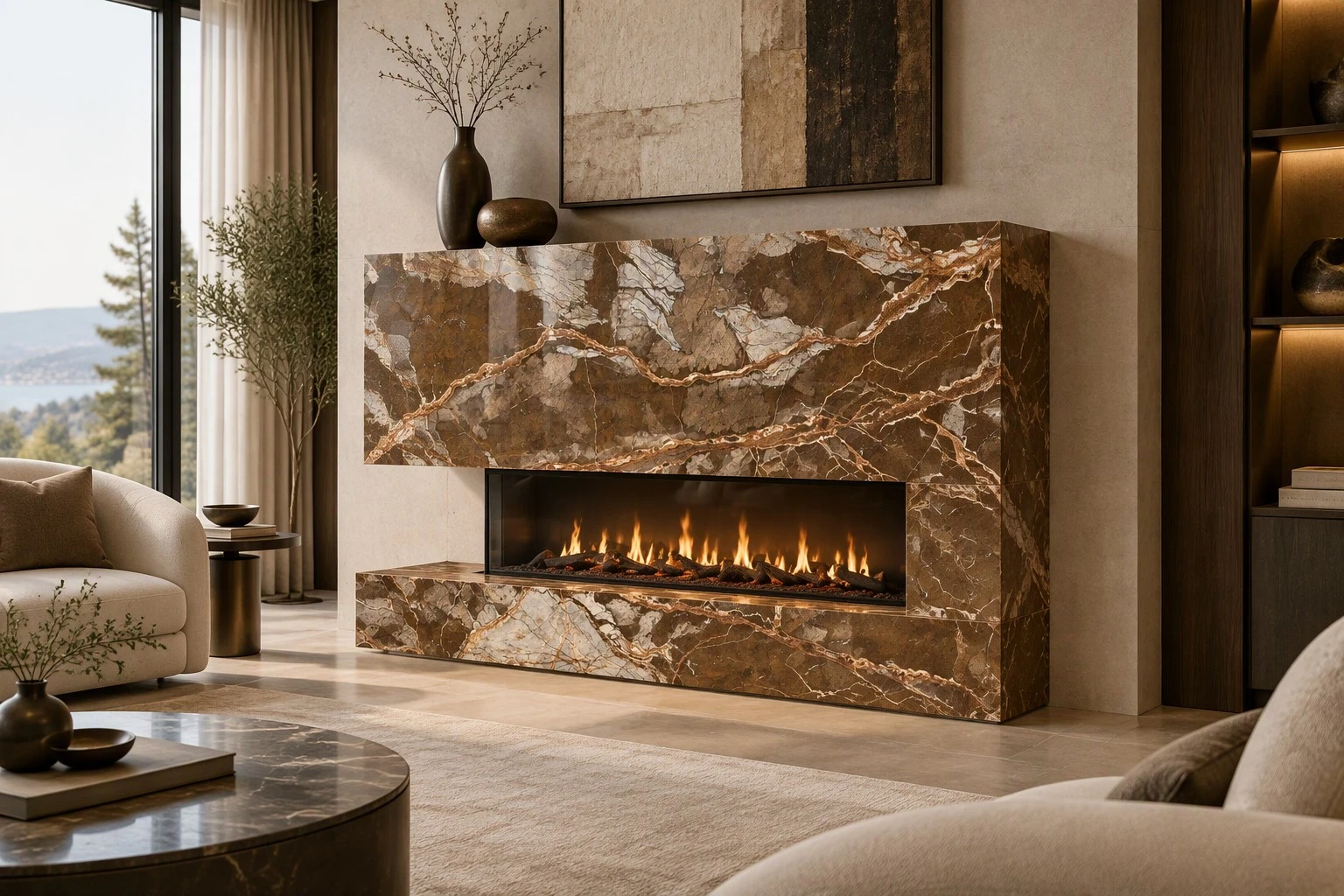
The warm brown palette complements flame, timber and bronze-toned interiors, while the white formations add contrast around the fire opening. Material selection must be coordinated with the fireplace manufacturer, applicable codes, required clearances, substrate and thermal conditions; decorative stone supply does not replace fire-rated system design.
Why Choose This Stone
Choose Brown Fusion Marble when the brief calls for a warm brown statement stone with large pale mineral areas and energetic copper-toned lines. Its value lies in the individuality of the actual slabs and the ability to compose those slabs around the finished design.
- • Strong visual identity for focal islands, vanity furniture, feature walls, stairs, bathtub enclosures and fireplaces.
- • A mixed palette of brown, white and copper tones that can bridge dark timber, light plaster, bronze metal and neutral flooring.
- • Large-scale movement suitable for bookmatched, sequence-matched or selectively composed layouts when the available slabs permit.
- • Multiple finish directions: reflective and saturated when polished, quieter when honed, and more tactile when leathered.
- • Supply flexibility as 18 mm slabs or, where suitable blocks are available, special-cut 20 mm or 30 mm material.
Brown Fusion Marble should not be selected as though every slab were identical. Ask for current slab images or videos, slab numbers, dimensions, finish, surface observations and an agreed visual range. For fabricated work, confirm which stone areas are assigned to focal faces and how seams, mitres and adjacent components relate.
Comparison with Similar Stones
Brown Fusion Marble is distinguished by the combination of a rich brown field, broad white mineral formations and copper-toned linear movement. Compare actual slabs, geological category and maintenance behavior instead of choosing from commercial names alone.
| Stone | Typical Visual Direction | Material Category | Typical Uses | Buyer Considerations |
| Brown Fusion Marble | Rich brown background, large white mineral formations and dramatic copper-toned veins | Natural marble | Islands, vanities, floors, walls, stairs, bathtub surrounds and fireplaces | Approve actual slabs and layout; expect natural variation and marble's acid sensitivity |
| Emperador Dark | Dark brown field with lighter web-like veins and cloudy mineral movement | Natural marble | Floors, walls, vanities, fireplaces and decorative interiors | Usually reads more uniform and web-veined; compare current slab darkness, fissures and resin treatment |
| Sequoia Brown | Strong linear brown, beige and gray banding with wood-grain character | Commonly traded as marble or crystalline stone; classification should be confirmed for the selected source | Feature walls, vanities, furniture, floors and stairs | More directional and banded; orientation has a major effect on the final composition |
| Brown natural quartzite | Varies from layered brown movement to dramatic multicolor mineral patterns | Natural quartzite when geologically verified | Countertops, islands, walls and high-use surfaces | Often selected for greater scratch resistance, but classification, fissures, finish, edge behavior and actual test data must be verified |
| Brown engineered quartz | More repeatable color or controlled veining, depending on design | Manufactured surface | Countertops, vanities and interior cladding within manufacturer limitations | Offers consistency but not the same natural slab composition; confirm heat, UV, fabrication and warranty limits with the manufacturer |
Frequently Asked Questions
Most purchasing risk can be reduced by defining the actual slab lot, visual range, thickness, finish, fabrication scope, inspection method and packing requirements before production. The answers below identify what can be confirmed and what remains project-specific.
Q: Can you provide Brown Fusion Marble samples?
A: Yes. Normally one or two samples can be provided without a sample charge, with typical sizes from 100 × 100 mm to 200 × 200 mm. Courier cost is paid by the customer, and availability depends on the current material. A small sample is useful for reviewing finish and basic color family but cannot represent the full composition of a large Brown Fusion Marble slab. Buyers should also approve current slab images or videos for visual-critical orders.
Q: What is your Brown Fusion Marble slab thickness tolerance?
A: The stated slab thickness tolerance is ±1 mm. Before ordering, the buyer and Landiview Stone should confirm the nominal thickness, measurement method, sampling locations, finish condition and acceptance standard in the contract, approved drawings or inspection criteria. Finished-product thickness may also be affected by calibration, surface finishing, reinforcement, built-up edges and the specific fabrication detail.
Q: How do you inspect Brown Fusion Marble slab surface quality?
A: Surface review focuses on cracks that may affect handling or fabrication, overall pattern coordination, unusually large and visually discordant black areas, and color or vein variation relative to the buyer-approved range. Natural mineral formations, veins and stable fissures must be distinguished carefully from defects that affect use or agreed quality. Inspection criteria should be documented because the acceptability of a natural feature depends on its location, stability, intended cut and project expectations.
Q: Can I see current slab photos and videos before ordering?
A: Yes, subject to actual inventory. Landiview Stone can provide current-lot photographs or videos, slab numbers, available dimensions, surface observations and a review of the lot's color and vein range. Buyers should identify the approved slabs in the order documents. Lighting, camera settings and screen display can affect perceived color, so physical samples and agreed inspection methods remain useful when color control is critical.
Q: Can you supply cut-to-size and finished products, not only slabs?
A: Yes. The customer submits architectural drawings, and the technical team develops stone shop drawings for review. Current slabs are proposed, or block selection and special slab cutting may be investigated when appropriate. After drawings and slabs are approved, slab scans are used in AutoCAD for cutting and vein-layout simulation. Following layout approval, the factory fabricates, dry lays, inspects, replaces nonconforming pieces when required, numbers pieces and applies project-specific protection, temporary reinforcement and export packing. See how to order cut-to-size stone from China.
Q: Can Landiview Stone prepare stone shop drawings from architectural drawings?
A: Yes. The technical team can identify the relevant stone scope and prepare stone shop drawings showing dimensions, thicknesses, cutouts, edges, visible surfaces, finishes, joints and fabrication details for client and design-team review. Approved shop drawings guide production, but they do not replace the responsibilities of locally licensed architects, engineers, waterproofing consultants, fireplace specialists or installers for structural adequacy, code compliance and installation design. See what cut-to-size stone means for project procurement.
Q: How do you help control the final vein layout and installed appearance?
A: Approved slab scans are imported into AutoCAD to simulate piece locations, cutting and vein relationships before fabrication. After approval, production follows the coordinated layout; finished pieces are then dry laid, checked and numbered to communicate position and orientation to the installer. This process reduces information gaps but cannot eliminate natural variation, fabrication tolerances or site installation influences. See natural stone slab layout in AutoCAD.
Q: How do you protect slabs and finished stone during shipping?
A: Slabs use a robust export crate, frame or A-frame/support arrangement designed around the actual container and load. Finished products may use liners, shock-absorbing material, custom foam, plywood separation, edge protection and positioning elements. Sink or cooktop cutouts, narrow backsplashes, thin strips, vanity tops, fireplace parts, narrow wall panels and vulnerable corners may receive removable support strips over protective film. Solid-wood packaging is assessed for ISPM 15 compliance and destination requirements [3]. The receiving party must use trained procedures because heavy slabs can shift or fall during unloading and handling [4]. See how natural stone is protected during shipping.
Q: How should installed Brown Fusion Marble be maintained?
A: Use a pH-neutral cleaner formulated for natural stone, a soft cloth or clean mop, and prompt spill cleanup. Avoid vinegar, lemon, acidic bathroom cleaners, abrasive powders and harsh tools because marble is calcareous and acid-sensitive; acids can etch the surface [2]. Use coasters and trivets, dust-mop floors to remove abrasive grit, and use a squeegee in wet areas. A sealer may help reduce staining when appropriate, but it does not make marble acid-proof. Follow the sealer and cleaner manufacturers' instructions and consult a stone-care professional for stains or etching.
Q: Is Brown Fusion Marble suitable for a kitchen countertop?
A: It can be used for kitchen countertops and islands when the buyer accepts marble's maintenance profile. The material offers strong visual impact, but acidic food and drink can etch the finish, and impacts can damage vulnerable edges or cutout areas. Confirm the slab, finish, cutout reinforcement, seam positions, support, overhangs and installation design. Use cutting boards, trivets and prompt cleaning rather than treating the surface as maintenance-free.
Q: Can Brown Fusion Marble be supplied in 20 mm or 30 mm thickness?
A: Yes, 20 mm or 30 mm material may be specially cut from selected blocks according to project requirements. Feasibility depends on suitable block availability, block dimensions, geological condition, expected recovery, finish and quantity. The buyer should confirm nominal thickness, tolerance, slab dimensions, surface treatment, reinforcement and acceptance criteria before the block-cutting plan is approved. Standard slab thickness is 18 mm.
Q: What information is needed for an accurate quotation?
A: Provide the required form of supply, dimensions, thickness, quantity, finish, application and delivery destination. For finished products, include architectural drawings, edge profiles, cutouts, visible faces, seam preferences, surface finish, tolerances, installation sequence and packing restrictions. Pricing depends on current slab or block availability, usable yield, selection range, fabrication complexity, dry layout, replacement allowance, packing and logistics, so quotations should be compared against the same approved scope.
Q: What should an importer confirm before placing a slab order?
A: Confirm current slab numbers, dimensions, nominal thickness and tolerance, finish, net usable area, visible color and vein range, resin or mesh treatment if present, surface observations, quantity, packing method, inspection method and destination. The importer should also define whether photos, live video, third-party inspection or physical samples form part of approval. Unloading and storage plans should be prepared by trained personnel using equipment and racks suitable for the load [4].
Why Landiview Stone
Landiview Stone supports both slab procurement and project-specific fabrication. The practical advantage is a documented path from drawing and slab approval through vein planning, production inspection, piece identification and export protection.
Landiview Stone supplies natural stone in two principal forms: slabs for importers, distributors and fabricators, and project-specific cut-to-size or finished stone products for contractors, developers, designers, builders and other project buyers.
▌ Support for Slab Buyers
Support can include current slab selection, slab-image review, confirmation of color and vein range, surface inspection, slab identification and export packing. Availability, dimensions, finish and inspection scope are confirmed against the current lot.
▌ Workflow for Cut-to-Size and Custom Stone
- 1. Review architectural drawings and identify the stone scope.
- 2. Prepare stone shop drawings for client and design-team approval.
- 3. Submit available slabs; if unsuitable, investigate block selection and special slab cutting when appropriate.
- 4. Use approved slab scans in AutoCAD to simulate cutting and vein layout before production.
- 5. Fabricate to approved documents, then dry lay, inspect and number finished pieces.
- 6. Replace nonconforming pieces when required while considering adjacent color and veining.
- 7. Apply project-specific protection, including temporary reinforcement for vulnerable geometry, before export packing.
For complex fabricated and assembled products, the team may use Autodesk Inventor or SolidWorks to build component models and perform virtual assembly review. This can help examine relationships, internal clearances, material thicknesses, surface treatments, concealed reinforcement and possible interference before fabrication details are finalized. The review supports coordination and does not replace local engineering or installation responsibility.
▌ International Project Experience
- • Marble furniture, bathroom vanity tops and shower wall panels for the Grand Hyatt Singapore renovation project
- • Stone supply for stations on Singapore's Thomson-East Coast Line
- • Interior stone products for the Wynn project in the United Arab Emirates
- • Marble products for public areas of the 255 East 77th Street luxury residential project in New York
- • Interior and exterior marble and granite products for three high-end custom homes on Tuckahoe, a private resort island in Massachusetts, USA
Project references describe supply experience and do not imply endorsement by the named owners, operators or project teams.
Request A Project Quote Or Slab Availability
For a useful quotation, send the required supply form, dimensions, thickness, quantity, finish, application and delivery destination. Include drawings when the inquiry involves cut-to-size or fabricated components.
Ask Landiview Stone for current Brown Fusion Marble slab availability, numbered slab photographs or videos, and the available color and vein range. For project orders, provide architectural drawings and identify visible faces, edge details, cutouts, joints and installation priorities. The team can then evaluate shop drawing support, slab yield, vein-layout planning, fabrication, dry-lay inspection and export packing according to the confirmed scope.
Availability, lead time and pricing are subject to the current material, approved specifications, fabrication requirements, quantity and destination logistics.
Hot Tags: Brown Fusion Marble, Brown Fusion Marble slab, Turkish brown marble, brown marble supplier, marble slabs, cut-to-size marble, Landiview Stone
You Might Also Like



Send Inquiry