Table of Contents
- 1. Executive Summary
- 2. Key Facts
- 3. How Cutting Direction Changes the Finished Appearance
- 4. How the Six Faces of a Layered Stone Block Display the Bedding
- 5. Stone Examples and Expected Patterns
- 6. Choosing the Right Cut for the Application
- 7. Buyer's Approval and Production Workflow
- 8. Quality Control and Order Specification
- 9. Frequently Asked Questions
- 10. About Landiview Stone
- 11. Authoritative References
Executive Summary
The same patterned stone can produce two markedly different architectural surfaces. When the saw cuts across the bedding and displays the layers as long lines, the market normally calls the result vein cut. When the saw runs approximately parallel to the bedding, the face tends to show clouds, islands, rings or broad tonal movement and is called cross cut. Supplier terminology is not perfectly consistent worldwide, so purchase documents should define both the required visual result and the cut plane.
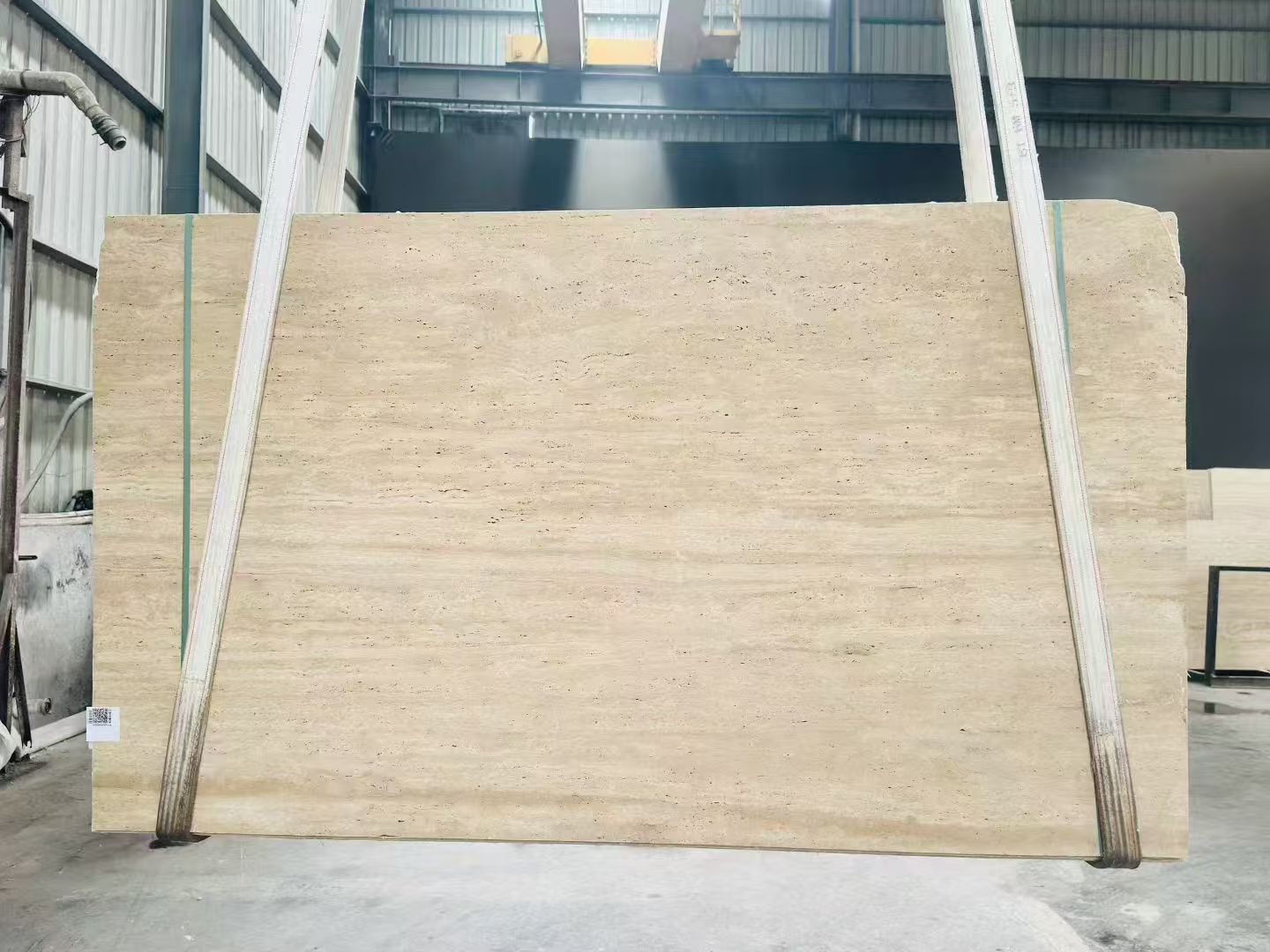

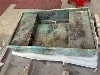
Travertine makes this relationship easy to understand. The reference quarry-block photograph reviewed for this guide shows near-horizontal strata continuing around two vertical faces, while the top face is more irregular and mottled. A vertical slab through that block would reveal linear bands; a horizontal slice would reveal a less directional field. The U.S. Geological Survey notes that sedimentary rocks often display layering or bedding, and its travertine specimen description specifically identifies a banded texture [1][2].
For procurement, do not specify only "vein cut" or "cross cut." State the intended visual direction, identify the approved slab face, and require layout approval when joints, corners, stairs, wall panels or repeated modules must align.
Key Facts
| Buyer Question | Direct Answer |
| What is vein cut? | A cut that presents bedding as long, linear, directional bands on the finished face. |
| What is cross cut? | A cut approximately parallel to bedding that presents clouded, floral, circular or mottled movement. |
| Which stones show the difference best? | Layered travertines, strongly banded limestones, onyxes and wood-grain commercial marbles. |
| Does cutting direction change stone identity? | No. It changes the exposed pattern and may affect directional behavior, but it does not create a different stone species. |
| Can a sample represent the order? | Only partly. A small sample is useful for finish and color family, not full pattern scale or range. |
| What should control production? | Approved current slabs or block, shop drawings, slab scans, cutting orientation, piece layout and written acceptance criteria. |
How Cutting Direction Changes the Finished Appearance
Think of geological bedding as a stack of uneven sheets. A face that intersects many sheets shows their edges as parallel or gently undulating lines. A face that follows one sheet exposes the internal variation of that layer. Real blocks are less regular than this model: bedding can dip, fold, thicken, fade or be interrupted by pores, fissures and mineral-filled zones.
- • Vein cut: linear, architectural and strongly directional; suitable when the design needs visual flow.
- • Cross cut: clouded, floral or mottled; suitable when the design needs a quieter field or easier blending across modules.
- • Face direction: rotating a vein-cut piece turns horizontal movement into vertical movement without changing the cutting method.
- • Corner continuity: adjacent returns require deliberate slab allocation and miter planning; natural continuity must not be assumed.
ASTM C1527/C1527M covers material characteristics, physical requirements and sampling for travertine dimension stone, including absorption, density, compressive strength, modulus of rupture, abrasion resistance and flexural strength [3]. Cutting direction is therefore a design and production decision, not a substitute for project-specific technical verification.
How the Six Faces of a Layered Stone Block Display the Bedding
When the bedding in a travertine or other strongly layered stone block is approximately horizontal, the six block faces reveal the same geological structure in different ways. The top and bottom faces are broadly parallel to the bedding and therefore tend to show cross-cut or fleuri movement. The four vertical faces intersect the bedding and therefore tend to show vein-cut bands. The directions below are based on the block in its photographed quarry orientation; front, back, left and right are practical viewing labels rather than geographic directions.

A layered block does not contain six unrelated vein directions. Its four vertical faces show intersecting views of the same bedding system, while its top and bottom faces expose surfaces broadly parallel to that bedding.
| Block Face | Face Orientation | Expected Vein Appearance | Pattern Type |
| Top | Horizontal face, broadly parallel to the bedding | No single set of uniform parallel bands; the face mainly shows clouded, mottled, island-like or pore-rich movement. | Cross-cut / fleuri appearance |
| Bottom | Horizontal face, broadly parallel to the bedding | Similar in character to the top face, usually with clouded, mottled or irregular pore patterns, although the exact markings will differ by layer. | Cross-cut / fleuri appearance |
| Front | Vertical face intersecting the bedding | The bands generally extend from left to right, creating horizontal linear movement when the face is viewed directly. | Vein-cut appearance |
| Back | Vertical face parallel to the front face | The bands also extend from left to right, creating horizontal linear movement when the face is viewed directly. | Vein-cut appearance |
| Left | Vertical face intersecting the bedding | The bands generally extend from front to back but still appear as horizontal lines when the left face is viewed directly. | Vein-cut appearance |
| Right | Vertical face parallel to the left face | The bands also extend from front to back but still appear as horizontal lines when the right face is viewed directly. | Vein-cut appearance |
The top and bottom belong to the same pattern category but should never be expected to match exactly because they expose different elevations within the block. Likewise, opposite vertical faces may share the same overall band direction without being mirror images. Local pores, fissures, mineral deposits and color changes can vary across the full block thickness.
Stone Examples and Expected Patterns
| Commercial Stone Name | Vein-Cut Appearance | Cross-Cut Appearance | B2B Buyer Considerations |
| Italian Silver Travertine | Silver-gray, beige and charcoal bands with strong linear movement. | Clouded gray-beige field, irregular pores and softer tonal islands. | Approve gray range, dark bands, pore treatment, fill color and slab sequence. |
| Italian Roman Travertine | Cream to beige parallel layers associated with classical Roman architectural character. | Warm, relatively calm field with cloudy or floral variation. | Confirm quarry selection, lot consistency, open versus filled voids and exterior suitability. |
| Turkish Classic Beige Travertine | Warm beige linear layers, sometimes with lighter and darker rhythmic bands. | Soft beige clouds, rings and scattered pores suited to modular floors. | Define color selection, tile calibration, fill, finish and shade-mixing rules. |
| White Wooden Marble | Fine gray-white lines resembling timber grain; highly directional. | Broader, less linear gray-white movement that may appear cloudy or wavy. | Trade names vary. Approve actual slabs and specify grain direction on every piece. |
Commercial names identify a market selection, not a guaranteed geological classification or appearance, for example, "White Wooden Marble" can refer to different sources in different markets. Samples, current slab images and test documentation should control the transaction.
Choosing the Right Cut for the Application
Choose vein cut when direction, rhythm and matched joints are part of the design language. Choose cross cut when a broad, organic field and easier visual distribution across many pieces are more important than continuous lines.

Vein-cut stone is often effective for lobby walls, fireplace surrounds, vanity elevations, elevator surrounds, stair risers and long corridors. Horizontal bands can widen a composition; vertical bands can emphasize height. Cross-cut stone is often easier to distribute across large floors, bathrooms and repeated tile grids because individual pieces do not demand one continuous line.
Neither cut is universally stronger, more durable or more expensive. Usable yield, block dimensions, defect distribution, finish, thickness, testing and application can matter more. The Natural Stone Institute's travertine education material emphasizes selection, fabrication, installation, maintenance, uses and limitations for interior and exterior applications [4].

Buyer's Approval and Production Workflow
- 1. Review architectural drawings and identify every visible face, joint, return and grain-direction requirement.
- 2. Define vein cut or cross cut by visual result and by its relationship to the block bedding.
- 3. Review available blocks or current slabs, including face/back identification, dimensions, defects and usable yield.
- 4. Prepare stone shop drawings showing piece sizes, thicknesses, finishes, edges, anchors, cutouts and vein arrows.
- 5. Import approved slab scans into AutoCAD and simulate cutting, matching, joint transitions and replacement allowance.
- 6. Fabricate to approved documents, then dry lay representative assemblies or the complete layout where specified.
- 7. Inspect dimensions, finish, fill, repairs, edge quality, color range, grain direction and numbering before packing.
- 8. Protect vulnerable pieces, separate finished faces, secure crates and issue packing lists matched to piece marks.
For long linear panels, the layout should reserve enough neighboring material to preserve rhythm. For staircase treads and risers, arrows should show whether movement runs across the stair width, along travel direction or vertically on risers. For mitered returns, the shop drawing should identify both the visible seam and the intended vein transition.
Quality Control and Order Specification
A technically complete purchase specification should separate appearance approval from engineering acceptance. Appearance approval covers current lot, range, cut direction, orientation, sequence, finish, filling and repair visibility. Engineering acceptance covers dimensions, tolerances, physical properties, support, attachment and application conditions.
- • State commercial name, quarry or origin where required, approved lot and acceptable range.
- • Define vein cut or cross cut, plus grain arrows on elevations and piece drawings.
- • Specify thickness, finish, filled or unfilled pores, resin, mesh and permitted repairs.
- • Require current slab photographs or scans with unique slab identification.
- • Define dry-layout scope, viewing distance, joint logic and who approves replacements.
- • Request applicable test reports for the exact material and intended use.
- • Coordinate crate type, face protection, labels, unloading method and destination rules.
Frequently Asked Questions
Q: What is the simplest difference between vein cut and cross cut?
A: Vein cut shows long directional bands; cross cut shows a softer clouded, floral or mottled pattern.
Q: Are vein cut and cross cut different stones?
A: No. They can come from the same block. The difference is the orientation of the sawn face relative to bedding.
Q: Is vein-cut travertine always cut parallel to the bedding?
A: Industry wording varies. To avoid ambiguity, specify that the finished face must expose linear bedding bands and show the required direction with arrows.
Q: Which cut is better for large floors?
A: Cross cut often blends more easily across repeated tiles, but vein cut can work when a deliberate directional layout is approved.
Q: Which cut is better for feature walls?
A: Vein cut is commonly selected for strong rhythm and continuity. Cross cut is appropriate when the design calls for an organic, non-linear backdrop.
Q: Can a small sample approve the full pattern?
A: No. Use a sample for finish and basic color, then approve current slabs or a block for pattern scale and range.
Q: Can vein-cut pieces be installed with vertical veins?
A: Yes. The fabricated piece can be rotated, but shop drawings and piece labels must preserve the approved orientation.
Q: Is cross cut always more uniform?
A: No. Cross cut is less linear, but clouds, pores, mineral concentrations and color islands can still vary substantially.
Q: Does filled travertine require special approval?
A: Yes. Approve fill color, pore coverage, finish, repair visibility and intended environment because these affect appearance and service expectations.
Q: What information is needed for an accurate quotation?
A: Provide drawings, quantities, dimensions, thickness, finish, cut direction, orientation, filling, edge work, layout approval, inspection, packing, destination and applicable testing requirements.
About Landiview Stone
Landiview Stone supplies natural stone in two principal forms: slabs for importers, distributors and fabricators, and project-specific cut-to-size or finished products for contractors, developers, designers, builders and other project buyers.
For slab buyers, Landiview Stone supports current slab selection, slab-image review, color and vein-range confirmation, surface inspection, slab identification and export packing. For custom fabrication, the team can coordinate shop drawing review, slab scanning, AutoCAD cutting and vein-layout simulation, fabrication, dry-layout inspection, piece numbering, finished-product inspection, temporary reinforcement for vulnerable items and project-specific export protection.
For more complex fabricated or assembled stone products, three-dimensional modeling and virtual assembly review may be used to examine component relationships, material thicknesses, finishes, concealed reinforcement and potential interference before fabrication details are finalized.
Landiview Stone's international project experience includes:
- • Marble furniture, bathroom vanity tops and shower wall panels for the Grand Hyatt Singapore renovation project
- • Stone supply for stations on Singapore's Thomson-East Coast Line
- • Interior stone products for the Wynn project in the United Arab Emirates
- • Marble products for public areas of the 255 East 77th Street luxury residential project in New York
- • Interior and exterior marble and granite products for three high-end custom homes on Tuckahoe, a private resort island in Massachusetts, USA