▌ Executive Summary
Landiview Stone secured this high-end custom home countertop order in September 2026. The project comprises 18 countertop sets fabricated entirely from 20 mm Taj Mahal Quartzite with a leathered surface. The scope covers the kitchen island, kitchen worktops and bathroom countertops.
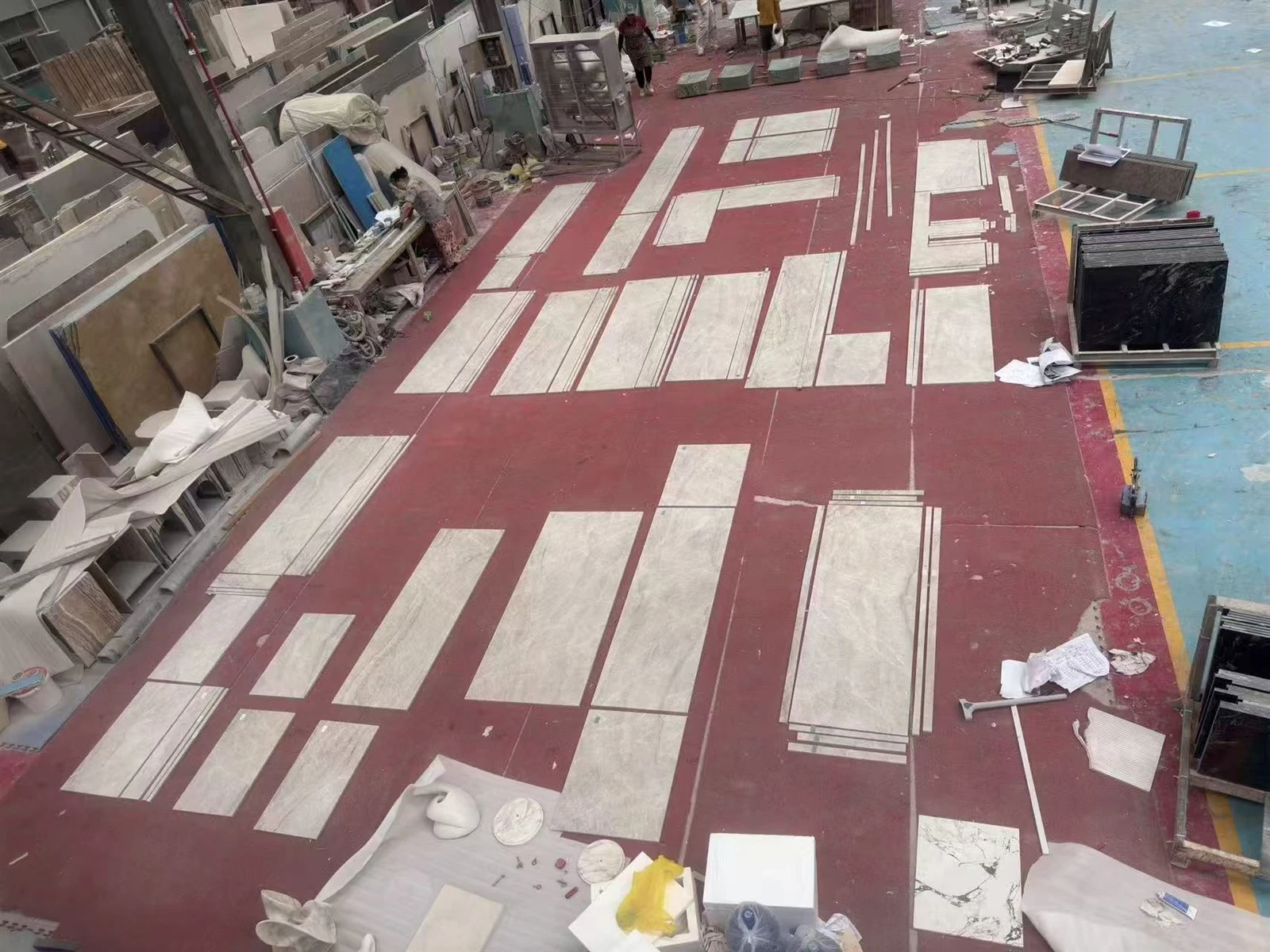
The project has progressed from shop drawing approval and slab confirmation through scanned-slab AutoCAD cutting simulation. Factory cutting is now complete, and the cut panels are being dry laid in coordinated groups to verify quality, color movement, vein relationships and component matching before assembly.
▌ Project Scope and Material Specification
- • Project type: high-end custom home in the United States
- • Quantity: 18 complete countertop sets
- • Applications: kitchen island, kitchen countertops and bathroom countertops
- • Material: Taj Mahal Quartzite
- • Thickness: 20 mm
- • Surface finish: leathered
- • Edge construction: predominantly mitered joints
- • Current stage: panels cut and under factory dry-layout inspection
▌ Why Shop Drawings Come First
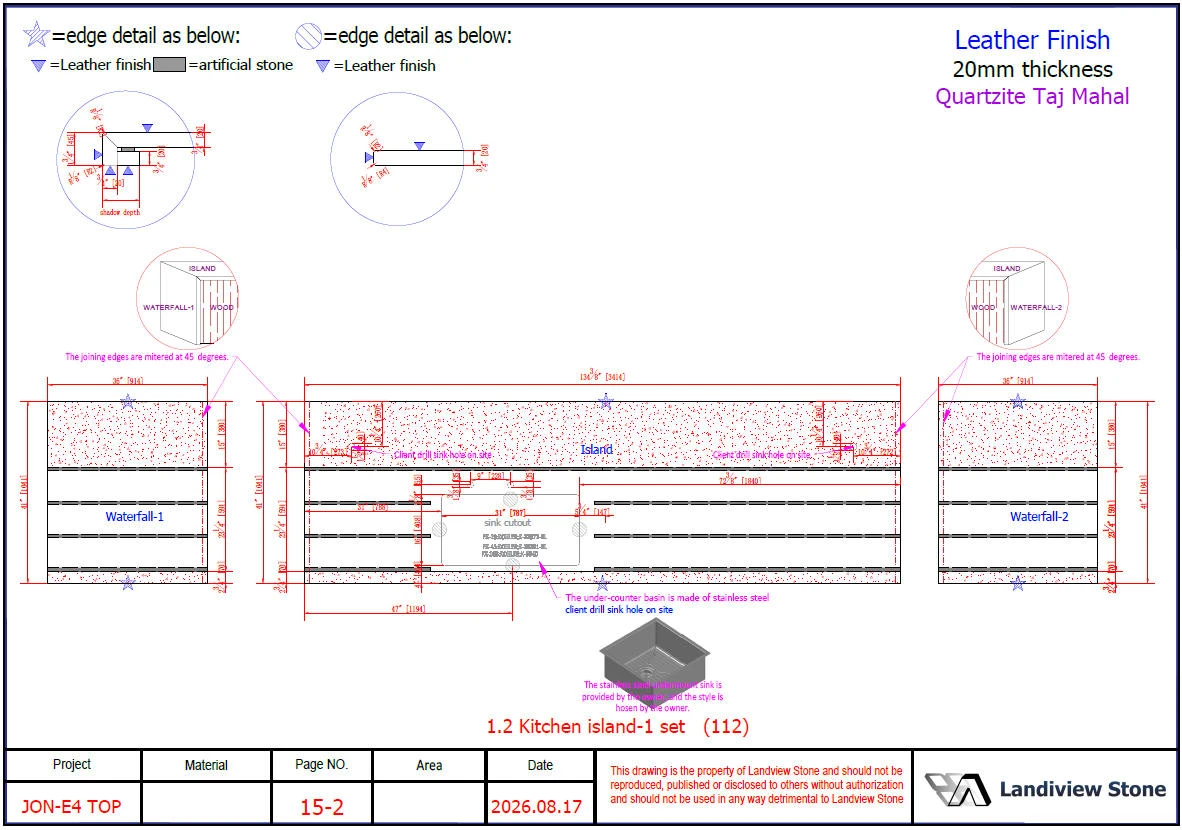
Shop drawings convert the design intent into fabrication information that can be reviewed before stone is cut. For this project, the drawings define countertop geometry, panel divisions, dimensions, cutouts, edge build-ups, mitered connections and finish requirements. Client approval established the technical basis for slab layout and production.
▌ Scanned-Slab AutoCAD Cutting and Vein Layout
After the Taj Mahal Quartzite slabs and shop drawings were approved, slab scan images were imported into AutoCAD. Each required panel was positioned over the actual slab image to simulate cutting, review usable areas and plan how the natural movement would continue across adjoining components.
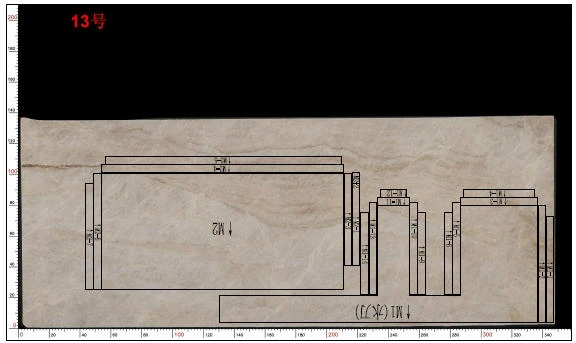
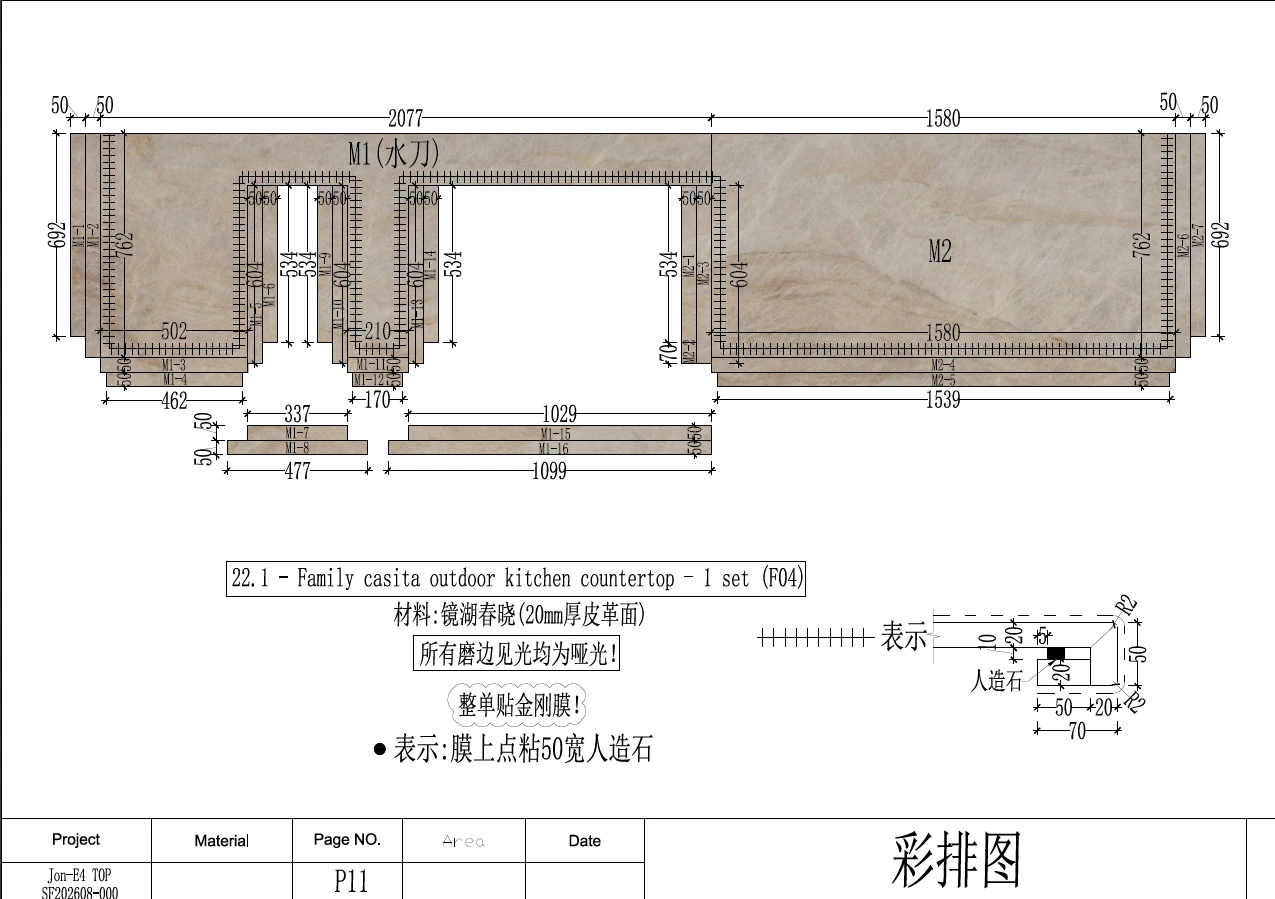
The cut panels were then virtually assembled to show the expected countertop composition, including the kitchen island and waterfall connections. This approval step allowed the client to review the proposed stone distribution and visual relationships before physical cutting began.
▌ Factory Dry-Layout Inspection After Cutting
With cutting complete, the panels are being arranged in the factory according to the approved AutoCAD layout. Reviewing complete countertop groups rather than isolated pieces makes it easier to identify unsuitable areas and evaluate how adjacent surfaces will read after assembly.
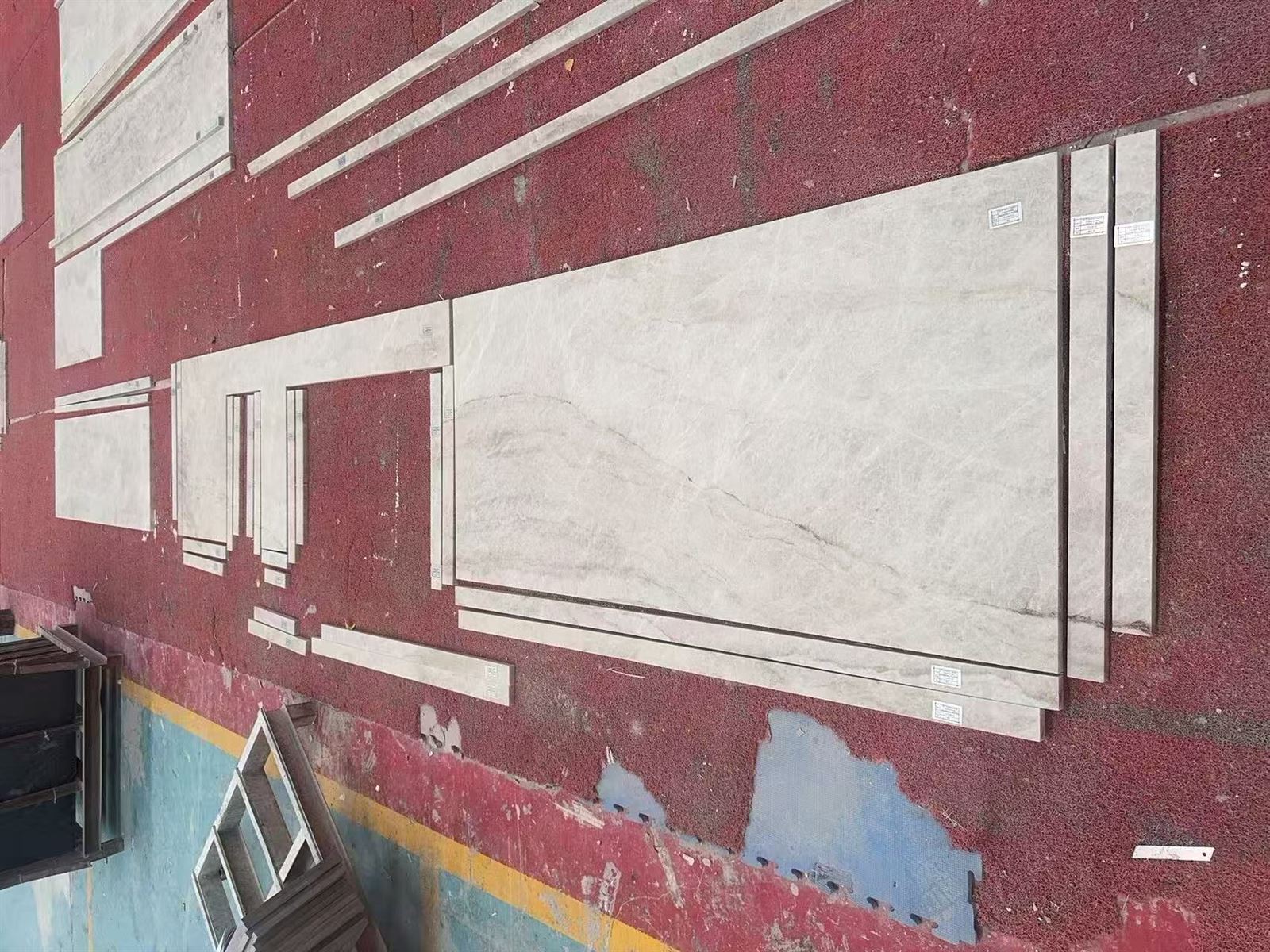
- • Confirm panel identity, dimensions and orientation against the approved documents
- • Review color range, natural veining and visual balance across each countertop set
- • Check relationships between main surfaces, edge strips, returns and waterfall panels
- • Identify pieces that do not meet the required quality standard
- • Replace nonconforming pieces while maintaining compatibility with adjoining stone
▌ Remaining Fabrication, Protection and Export Packing
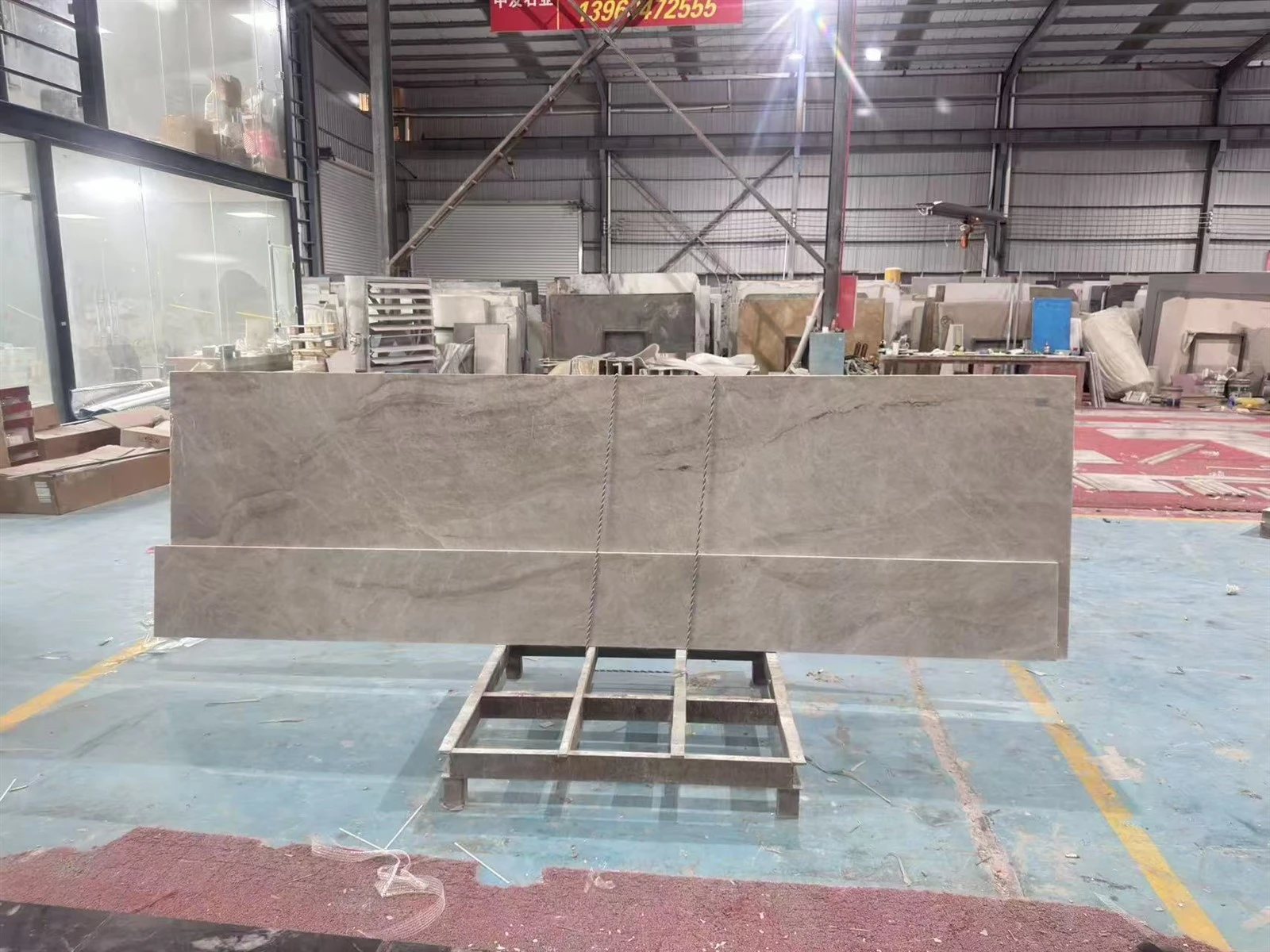
Following dry-layout approval, the panels will move into final fabrication. Because most countertop edges use mitered joints, the relevant components will be bonded to form the specified finished profiles and complete countertop assemblies.
After final inspection, the stone will receive a water-based protective sealer. Finished components will then be placed in shock-absorbing inner packaging, normally with foam separation and plywood protection around the packed group. A strong solid-wood outer crate and waterproof wrapping will provide the final export protection.
▌ Complete Countertop Production Workflow
- 1. Prepare shop drawings from the client's design intent for review and approval.
- 2. Submit images of available Taj Mahal Quartzite slabs for client selection and confirmation.
- 3. Import approved slab scans into AutoCAD, simulate panel cutting and virtually assemble the countertop layout for approval.
- 4. Cut the panels, complete the factory dry layout, remove nonconforming pieces and produce compatible replacements where required.
- 5. Bond the approved components to form the complete countertops, including the specified mitered edge assemblies.
- 6. Inspect the finished products and apply a water-based protective sealer.
- 7. Use shock-absorbing inner packaging with foam separation and plywood protection around the products.
- 8. Complete the packing with strong solid-wood outer crates and waterproof wrapping for transport.
▌ Frequently Asked Questions
Q: What is the current production status of this countertop project?
A: All countertop panels have been cut. Landiview Stone is currently carrying out factory dry-layout inspection, quality selection and replacement of any pieces that do not meet the project requirements. Mitered assembly, final inspection, sealing and export packing remain to be completed.
Q: Why are scanned slab images used in AutoCAD before cutting?
A: Scanned slab images allow the required panels to be positioned over the actual stone appearance. This supports material-yield planning, vein placement, adjoining-panel coordination and client review before irreversible cutting begins.
Q: What is checked during the factory dry layout?
A: The inspection checks panel identity, size, orientation, visible quality, color range, natural veining and the relationships between adjoining surfaces and edge pieces. Unsuitable panels can then be replaced before final assembly.
Q: How will the finished Taj Mahal Quartzite countertops be protected?
A: After fabrication and inspection, the finished stone will receive a water-based protective sealer. The products will then be separated with cushioning material, protected with plywood, packed in solid-wood export crates and wrapped against water exposure during transportation.
▌ About Landiview Stone
Landiview Stone supplies natural stone in two principal forms: slabs for importers, distributors and fabricators, and project-specific cut-to-size or finished stone products for contractors, developers, designers, builders and other project buyers.
For slab buyers, Landiview Stone supports current slab selection, slab-image review, color and vein-range confirmation, surface inspection, slab identification and export packing.
For cut-to-size and custom-fabrication projects, the company can coordinate shop drawing review, slab scanning, AutoCAD cutting and vein-layout simulation, fabrication, dry-layout inspection, piece numbering, finished-product inspection, temporary reinforcement for vulnerable components and project-specific export protection.
For more complex fabricated and assembled stone products, the project team may use three-dimensional modeling and virtual assembly review to examine component relationships, material thicknesses, surface treatments, concealed reinforcement and potential interference before fabrication details are finalized.
Landiview Stone's international project experience includes:
- • Marble furniture, bathroom vanity tops and shower wall panels for the Grand Hyatt Singapore renovation project
- • Stone supply for stations on Singapore's Thomson-East Coast Line
- • Interior stone products for the Wynn project in the United Arab Emirates
- • Marble products for public areas of the 255 East 77th Street luxury residential project in New York
- • Interior and exterior marble and granite products for three high-end custom homes on Tuckahoe, a private resort island in Massachusetts, USA